
The following blog post is for entertainment and informational purposes only. It is not intended to provide medical advice or diagnosis. Please consult your doctor before making any health-related decisions.
Spermidine is a naturally occurring polyamine, and research over the past decade has linked it to autophagy activation, mitochondrial protection, and reduced oxidative stress, making it one of the more rigorously studied compounds in spermidine anti aging science. Evidence is strongest in preclinical models. Our anti-aging longevity protocols incorporate spermidine alongside other compounds with emerging clinical evidence. Human trial data continues to accumulate.
Key health benefits of spermidine
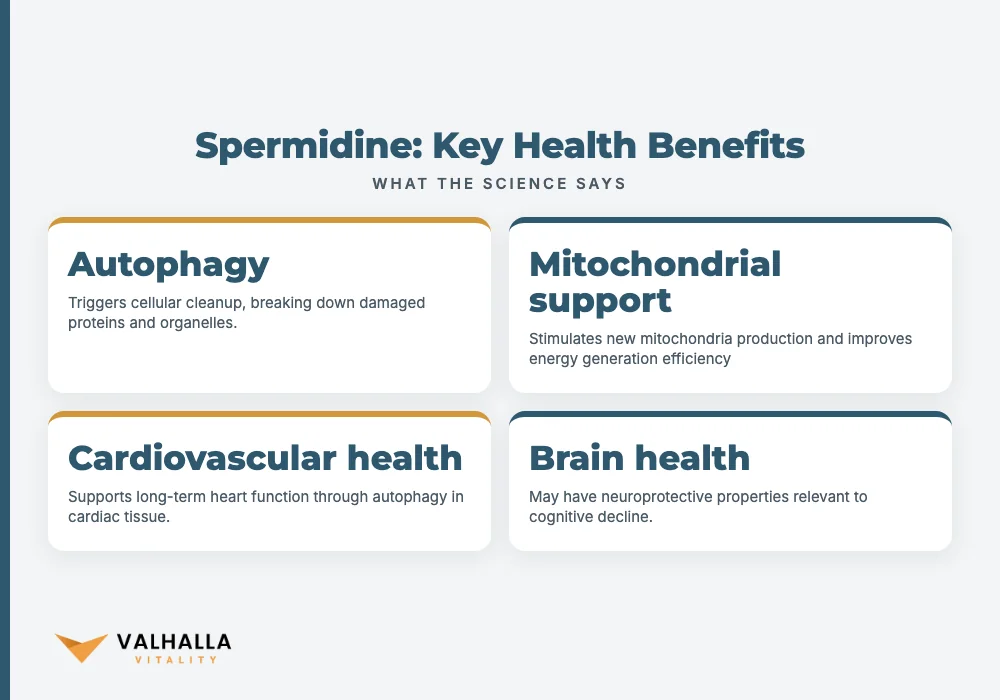
Research has connected this polyamine to several distinct mechanisms, each relevant to understanding the health benefits of spermidine:
- Autophagy activation: Spermidine triggers cellular cleanup, breaking down damaged proteins and organelles before they accumulate and disrupt normal cell function.
- Mitochondrial support: It may stimulate the production of new mitochondria and improve their efficiency at generating energy from nutrients.
- Oxidative stress reduction: Animal studies have linked spermidine to lower levels of lipid peroxidation markers in aged tissue.
- Cardiovascular health: Autophagy in cardiac tissue is one proposed mechanism through which spermidine may support long-term heart function.
- Brain health: Preclinical research suggests spermidine may have neuroprotective properties relevant to age-related cognitive decline.
- Immune modulation: Evidence indicates it may boost macrophage activity and enhance white blood cell responses to immune challenges.
- Skin integrity: Spermidine has been associated with collagen support and antioxidant protection from environmental aging factors.
What does spermidine do for aging?
The spermidine anti aging case rests on multiple cellular mechanisms running in parallel rather than a single pathway. Autophagy activation is the best-documented. Secondary mechanisms include sirtuin stimulation, mitochondrial protection, nitric oxide production, and immune modulation.
Autophagy is the cell's built-in recycling program. As cells age, they accumulate misfolded proteins, dysfunctional mitochondria, and other debris that disrupts metabolism and triggers chronic inflammation. Spermidine activates autophagy by inhibiting acetyltransferases, the enzymes that normally keep autophagy genes switched off. This allows cells to run their own cleanup programs without requiring caloric restriction.
Beyond autophagy, spermidine may stimulate sirtuin production. Sirtuins regulate gene expression and support DNA repair, two processes that deteriorate as cells age. Maintaining sirtuin activity may help preserve genomic stability over time, which is one reason researchers treat it as a candidate spermidine longevity supplement.
Spermidine may also enhance immune function by increasing white blood cell production and stimulating macrophage activity. Macrophages clear cellular debris, fight infections, and regulate inflammatory responses. Maintaining robust macrophage activity becomes increasingly important as the immune system undergoes age-related changes.
Research published in the journal Nitric Oxide found that spermidine increased nitric oxide (NO) levels in cells. Nitric oxide helps regulate blood pressure, supports circulation, and reduces vascular inflammation. These effects extend the spermidine anti aging benefits beyond the cellular level into the cardiovascular system.
How does spermidine promote autophagy?
Spermidine promotes autophagy through an epigenetic mechanism. It inhibits acetyltransferases, releasing a brake on autophagy-related gene transcription. This makes it one of the few dietary compounds known to activate autophagy directly through gene regulation rather than through metabolic stress.
Spermidine autophagy benefits matter because cellular debris accumulation is a core driver of age-related disease. Misfolded proteins, damaged mitochondria, and oxidized lipids build up when autophagy is insufficient. Their presence fuels chronic inflammation and contributes to conditions ranging from neurodegeneration to cardiovascular disease.
A 2025 study by Borsky et al. in Nutrition Research Reviews examined spermidine's distinct role in both mitophagy and autophagy, finding mechanistic features that differentiate it from urolithin A, another autophagy-promoting compound. Understanding these differences matters when comparing spermidine longevity supplement options.
The heart is one organ where autophagy's protective role is especially well documented. Yamaguchi (2019) in Circulation Journal described cardiac autophagy as essential to preserving heart muscle structure and function as the organ ages. Spermidine's ability to activate this pathway may be relevant to long-term cardiovascular protection.
A 2024 review by Yu et al. in Critical Reviews in Food Science and Nutrition highlighted another dimension: spermidine's interaction with gut microbiota may amplify its systemic anti-aging effects, adding downstream impacts on inflammation and metabolic health beyond what direct cellular action alone would provide.
Spermidine anti aging and mitochondrial function
Mitochondria are the cell's energy producers. Their decline is central to aging. Spermidine mitochondrial function research suggests this compound may support mitochondria in two distinct ways: stimulating biogenesis (the formation of new mitochondria) and improving the respiration efficiency of existing ones.
One study found that spermidine raised mitochondrial respiration rates in muscle cells, increasing the speed at which those cells produce ATP from nutrients. The same research showed spermidine inhibited p21, a gene strongly linked to cellular senescence.
Senescent cells stop dividing and release inflammatory signals that accelerate aging in surrounding tissue. Blocking p21 activation may help reduce this cascade over time.
Oxidative damage to mitochondria also appears to decline with spermidine treatment. Studies in aged mice showed lower malondialdehyde (MDA) levels after four weeks of treatment, indicating reduced lipid peroxidation and better mitochondrial membrane integrity. The relevance extends beyond individual cells: organs with high energy demands, including the heart, brain, and skeletal muscle, are most affected by mitochondrial decline with age. Protecting mitochondrial quality in these tissues is one of the clearest channels through which spermidine anti aging effects may operate.
For a broader overview of how spermidine supports systemic longevity, including its effects beyond individual cells, see the dedicated guide.
What are the benefits of liposomal spermidine?
Liposomal delivery wraps spermidine in a phospholipid bilayer, the same structural material that forms cell membranes. This encapsulation is designed to protect spermidine from breakdown during digestion and improve its delivery to target tissues.
Standard oral spermidine must survive acidic stomach conditions and hepatic first-pass metabolism before entering systemic circulation. These processes reduce the fraction of an oral dose that reaches cells intact.
Liposomal spermidine benefits come from potentially bypassing some of this degradation, delivering more active compound to where autophagy activation occurs. Higher intracellular concentration matters for the epigenetic mechanism, since spermidine must reach sufficient levels to inhibit acetyltransferases and unlock autophagy gene expression.
When comparing formats, a few practical factors are worth evaluating:
- Delivery format: Liposomal encapsulation may offer better absorption than standard pills or non-encapsulated powders, particularly for people seeking reliable intracellular delivery.
- Source material: Wheat germ extract is among the most common natural-source inputs used in spermidine supplements.
- Third-party testing: Independent potency verification reduces the risk of mislabeling, which affects all categories of dietary supplements.
- Complementary ingredients: Some formulas pair spermidine with cofactors that may support the broader autophagy pathway.
Gastrointestinal tolerability is a secondary consideration. Higher oral doses of non-encapsulated spermidine can cause digestive discomfort; the lipid coating may reduce this. For the full breakdown of pill, tablet, tincture, and liposomal options, the guide to spermidine supplement delivery forms covers the tradeoffs in detail.
Head-to-head clinical comparisons between liposomal and non-liposomal spermidine in humans remain limited. Current evidence for liposomal spermidine benefits is largely extrapolated from bioavailability data on other liposome-encapsulated compounds.
How much spermidine should you take for longevity?
No single validated amount has been established for humans. Individual factors including dietary intake, metabolic health, and overall clinical profile all shape what is appropriate. A licensed provider determines the right approach after reviewing your health intake and lab markers, rather than applying a fixed population target.
Dietary spermidine provides a meaningful baseline. Sesame, wheat germ, aged cheeses, mushrooms, and fermented foods like natto are among the richest natural sources.
Populations with traditionally high spermidine intake, such as those following Mediterranean or Japanese dietary patterns, consume substantial amounts through food alone. A detailed look at spermidine content across different foods and supplement options covers which sources contribute most.
Supplementation decisions build on that dietary baseline. Guarente et al. (2024) in Cell Metabolism reviewed the landscape of human anti-aging trials and noted a shift toward individualized dosing frameworks rather than fixed population targets for compounds like spermidine. Biomarker-guided approaches are increasingly favored.
Is spermidine effective at slowing cellular aging?
The spermidine anti aging evidence is strongest in preclinical models, where results are consistent across multiple species. Spermidine extends lifespan in yeast, nematodes, and fruit flies.
The mechanisms identified in these models, autophagy activation, mitochondrial protection, and oxidative stress reduction, are conserved across species, which makes the animal data more translatable than is typical for many compounds.
Human evidence is maturing. Guarente et al. (2024) in Cell Metabolism, reviewing human anti-aging trials, identified spermidine among compounds with sufficient mechanistic rationale and preliminary clinical support for continued formal study. A 2026 review by Pandolfi et al. in Molecular Biology Reports noted growing clinical interest in spermidine's effects on cognitive aging specifically. Earlier observational research also linked higher dietary spermidine intake with reduced mortality from specific age-related causes in older adult cohorts.
For a focused look at how spermidine affects cellular aging in humans, including what the emerging data shows, see the detailed overview.
The compound addresses several aging pathways simultaneously. That breadth distinguishes spermidine anti aging research from more narrowly focused approaches in longevity science.
Spermidine, oxidative stress, and skin health
Oxidative stress accelerates most visible signs of aging. Free radicals damage cell membranes, alter protein structure, and degrade DNA in a cascade that compounds over decades.
Spermidine oxidative stress research positions it as an indirect antioxidant. Rather than neutralizing free radicals directly, spermidine upregulates the cell's own antioxidant enzyme systems.
In aged mice, spermidine reduced malondialdehyde levels after four weeks of supplementation, indicating less oxidative damage to cell membranes. Lower MDA levels correspond to greater membrane integrity across skin, muscle, and organ tissue.
Applied topically or taken as a supplement, spermidine has been linked to improved collagen production and protection from UV-driven oxidative damage. These effects may translate to reduced wrinkle depth, more even skin tone, and better hydration. The cosmetic research base is smaller than the systemic research base, but the underlying mechanism is the same.
Age spots and skin dullness often trace to chronic low-grade inflammation combined with accumulated oxidative damage. Addressing both through one compound is part of what makes spermidine relevant to visible skin aging, alongside its deeper cellular effects.
Spermidine and brain aging
The same cellular failures that drive systemic aging are central to neurodegeneration: impaired autophagy, mitochondrial dysfunction, and oxidative stress all accumulate in the aging brain. Spermidine addresses each pathway.
A 2026 review by Pandolfi et al. in Molecular Biology Reports examined spermidine's effects in the aging brain specifically, finding preclinical evidence for neuronal survival, reduced neuroinflammation, and improved cognitive markers in aged animal models.
Clinical trials are beginning to investigate whether these findings translate to humans, making brain aging one of the more active areas of current spermidine anti aging research.
The gut-brain axis may add another route. A 2024 analysis by Yu et al. in Critical Reviews in Food Science and Nutrition found that spermidine interacts with gut microbiota in ways that may affect neurological aging pathways, a dimension not captured by studies focused only on direct cellular action.
Cognitive decline tends to accelerate when cellular maintenance systems fail. Spermidine's effects on autophagy and mitochondrial health may help maintain the conditions that support neural function longer.
Youthavar: a spermidine anti aging formula
[Youthavar Antiaging Synergy](/blog/youthavar-antiaging-synergy-the-best- spermidine-food-supplement) pairs spermidine with botanicals including olive leaf extract, goji berry extract, and vitamin E. The combination is designed to address both the intracellular mechanisms of aging and the surface-level markers that often accompany cellular decline.
Spermidine drives the core mechanism in the formula, activating autophagy and supporting mitochondrial health. Olive leaf extract adds polyphenols that may reduce oxidative damage from free radicals.
Goji berry extract provides vitamins, minerals, and amino acids that may support skin resilience against UV exposure and environmental stressors. Vitamin E helps maintain membrane integrity and moisture retention.
Formulations like Youthavar reflect the approach at Valhalla Vitality: combining a mechanistic trigger with complementary compounds that address downstream aging effects simultaneously, under licensed provider oversight.
Ready to explore your options?
Book Your Consultation with a licensed provider to review whether spermidine or a broader anti-aging protocol fits your health profile.
FAQ
What does spermidine do for aging?
Spermidine activates autophagy, the cellular process that removes damaged proteins and dysfunctional organelles, while also supporting mitochondrial function and reducing oxidative stress. Together, these mechanisms address several core drivers of cellular aging. Research across multiple model organisms consistently shows lifespan extension, and human evidence continues to accumulate.
How does spermidine promote autophagy?
Spermidine inhibits acetyltransferases, enzymes that suppress the expression of autophagy-related genes, allowing cells to activate their own cleanup programs without caloric restriction. This epigenetic mechanism is distinct from other known autophagy inducers. The result is more efficient removal of the cellular debris that accumulates with age.
What are the benefits of liposomal spermidine?
Liposomal spermidine encapsulates the compound in a phospholipid layer that may protect it from digestive breakdown, potentially improving absorption and intracellular delivery. Higher bioavailability may support more reliable autophagy activation compared to standard oral forms. Direct clinical comparisons between the two formats in humans are still limited.
How much spermidine should you take for longevity?
No universally validated amount has been established for humans, since diet, metabolic status, and health history all shape what is appropriate. A licensed provider determines the right approach after reviewing your intake and lab markers. Wheat germ, aged cheese, and mushrooms also contribute meaningful dietary spermidine alongside any supplementation.
Is spermidine effective at slowing cellular aging?
Preclinical evidence across yeast, nematodes, and fruit flies consistently shows lifespan extension consistent with the spermidine anti aging pattern, and human data reviewed by Guarente et al. (2024) in Cell Metabolism indicates sufficient mechanistic support for continued clinical study. The compound addresses multiple aging pathways simultaneously. Confirmation in large-scale human trials is ongoing.
Sources
- Yu L et al. (2024). Gut microbiota and anti-aging: Focusing on spermidine. Critical Reviews in Food Science and Nutrition. PubMed
- Pandolfi S et al. (2026). Spermidine in the aging brain: mechanisms, preclinical evidence, and clinical perspectives. Molecular Biology Reports. PubMed
- Borsky P et al. (2025). Distinct roles of urolithin A and spermidine in mitophagy and autophagy: implications for dietary supplementation. Nutrition Research Reviews. PubMed
- Guarente L et al. (2024). Human trials exploring anti-aging medicines. Cell Metabolism. PubMed
- Yamaguchi O (2019). Autophagy in the Heart. Circulation Journal. PubMed
You May Also Like
 Spermidine
 Supplement Forms: Pills, Tablets & Tincture
Spermidine supplement forms include pills, tablets, and tinctures. Compare bioavailability, side effects, and how a provider picks the right form for you.
October 30, 2026 ETRead more → Spermidine
 Benefits: Science, Safety, and How It Works
Spermidine benefits include autophagy, cardiovascular support, hair growth, and longevity support. Learn what the science shows and how to start.
October 29, 2026 ETRead more → Spermidine
Best Spermidine Supplement Guide: What the Research Shows
Best spermidine supplement selection starts with understanding autophagy, food sources, and key quality criteria. Here is what the research shows.
October 29, 2026 ETRead more →