
The following blog post is for entertainment and informational purposes only. It is not intended to provide medical advice or diagnosis. Please consult your doctor before making any health-related decisions.
Spermidine benefits center on autophagy, the cellular recycling process that clears damaged organelles and makes room for healthy renewal. The body produces this polyamine naturally, but levels fall with age, and the research connecting that decline to chronic disease spans more than two decades. Population data links adequate intake to cardiovascular protection, reduced cognitive decline risk, and longer lifespan. For a detailed look at the cellular mechanism, the guide to spermidine's role in cellular autophagy is a solid starting point.
What is spermidine?
Spermidine is a polyamine, a class of nitrogen-rich molecules present in nearly every living cell. The body synthesizes it from the amino acid ornithine, and gut bacteria add more through fermentation of dietary fiber. It was first isolated from semen, which gave it its name, but it functions across all tissues, including cardiac muscle, neurons, and hair follicles.
Production declines gradually after early adulthood. A 2020 review in Critical Reviews in Food Science and Nutrition found that falling polyamine levels track closely with the functional decline and disease burden that define aging (Ekmekcioglu, 2020). Research has focused on spermidine benefits primarily because of this age-related production decline, and the practical response is straightforward: raise intake through food first, and supplement when diet falls short.
Spermidine benefits at a glance
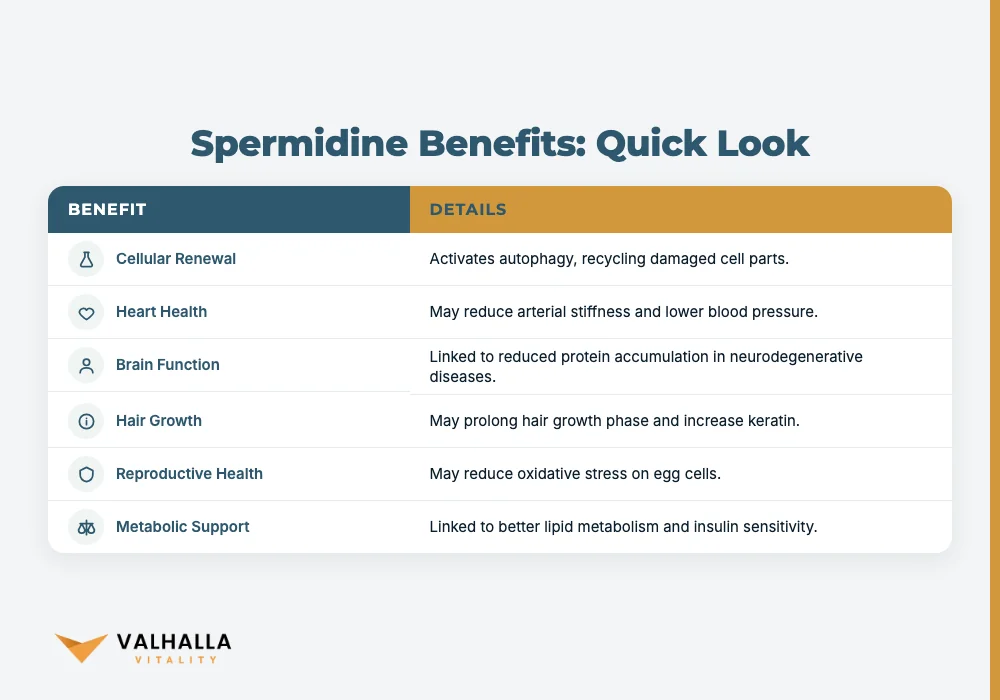
Before exploring each area in depth, here is a summary of the documented spermidine benefits:
- Autophagy activation: breaks down damaged cellular components and recycles them into new structures, reducing debris accumulation
- Cardiovascular protection: may reduce arterial stiffness, lower blood pressure, and reduce the risk of heart failure
- Cognitive resilience: linked to reduced accumulation of proteins associated with Alzheimer's disease and Parkinson's disease
- Hair follicle support: may prolong the anagen growth phase and increase keratin production in the scalp
- Reproductive support: may reduce oxidative stress on egg cells and moderate stress hormones that disrupt hormonal balance in both sexes
- Metabolic improvement: linked to better lipid metabolism and improved insulin sensitivity, particularly in diet-induced obesity models
- Anti-inflammatory action: reduces cellular stress that feeds chronic systemic inflammation
- Longevity correlation: higher dietary intake associates with longer lifespan across long-term population studies
What are the health benefits of spermidine?
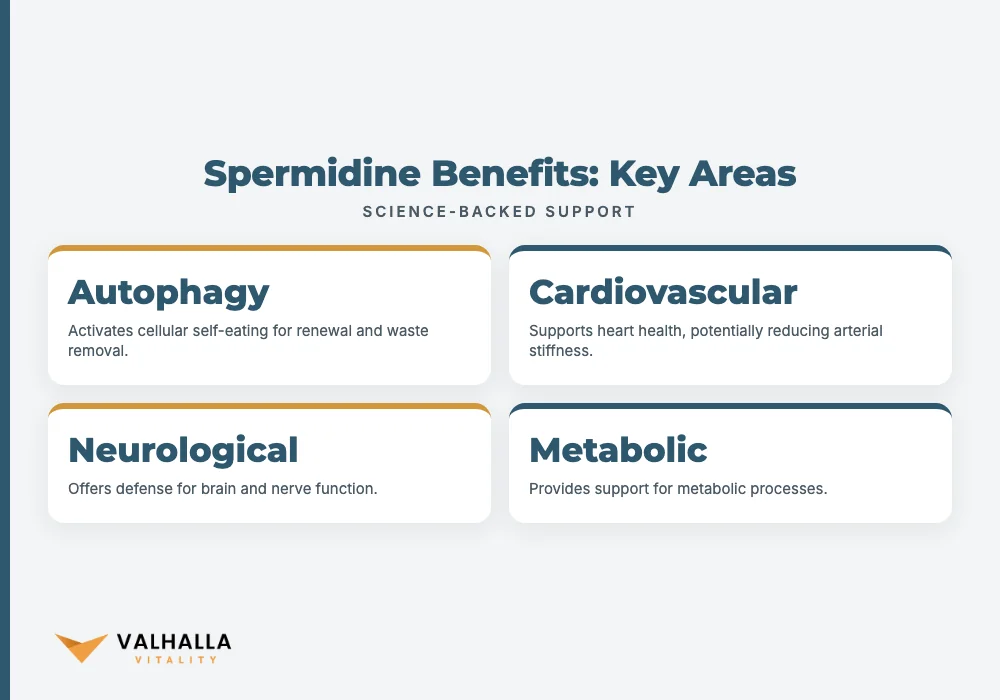
The spermidine benefits most consistently documented in research fall into four categories: cellular maintenance through autophagy, cardiovascular protection, neurological defense, and metabolic support.
Autophagy and cellular renewal
Autophagy means, literally, self-eating. It is the mechanism by which cells dismantle worn-out components, including dysfunctional mitochondria, misfolded proteins, and damaged organelles, and repurpose the building blocks for new structures. Spermidine is one of the few dietary compounds that reliably activates this pathway.
The mechanism runs through histone acetyltransferase inhibition. By suppressing these enzymes, spermidine shifts gene expression toward autophagy-promoting proteins. The result is more efficient cellular housekeeping.
Autophagy slows with age. Debris accumulates. That accumulation drives chronic inflammation and cellular dysfunction, which are early events in most age-related diseases. Spermidine autophagy research consistently supports the idea that maintaining this pathway may be one of the most direct interventions for slowing the cellular trajectory of aging.
Cardiovascular support
Among the documented spermidine benefits, cardiovascular effects have the most mechanistic support. A 2019 review in Biochemical Society Transactions found that spermidine may protect heart health in part because cardiomyocytes, the contractile cells of the heart, appear to import polyamines through a cell-type-specific mechanism, suggesting cardiac tissue is particularly sensitive to spermidine availability (Nilsson et al., 2019).
Proposed mechanisms include reduced arterial stiffness, lower resting blood pressure, and inhibited plaque formation in vessel walls. Autophagy in cardiac cells plays a direct role here: clearing damaged mitochondria maintains contractile strength and reduces the risk of hypertrophy and heart failure over time.
Cognitive protection
Neurons with active autophagy clear misfolded proteins more efficiently, reducing the accumulation associated with Alzheimer's disease and Parkinson's disease. The polyamine decline seen in aging may be one factor that makes the aging brain progressively more vulnerable to neurodegeneration.
Beyond autophagy, spermidine shows anti-inflammatory effects across multiple tissue types. Chronic low-grade neuroinflammation is an early driver in neurodegenerative conditions, and reducing inflammatory signaling at the cellular level may slow that process. Both pathways are plausible and likely act together rather than independently.
Metabolic effects and weight
Animal studies showed that spermidine supplementation improved metabolic outcomes in diet-induced obesity, with the proposed mechanism running through improved intestinal barrier function and insulin signaling via autophagy. Healthy lipid metabolism, which spermidine may support, ties directly to metabolic disease risk and lifespan.
Oxidative stress provides a secondary route. Spermidine may reduce oxidative damage, which lowers the cellular stress that disrupts insulin signaling. Better autophagy, lower oxidative burden, and reduced inflammation interact here, making the metabolic spermidine benefits cumulative rather than attributable to a single mechanism.
Reproductive function
Spermidine may support fertility by reducing oxidative stress on oocytes during egg production and by moderating cortisol, the stress hormone that disrupts the hormonal balance needed for reproductive function in both men and women. The evidence here is more preliminary than in cardiovascular or cognitive research, but it is mechanistically consistent with spermidine's broader antioxidant and anti-inflammatory profile.
Spermidine longevity: what the population data shows
The spermidine benefits documented in long-term population data make a compelling case. A 20-year cohort study, referenced in a 2020 review of the nutritional evidence for longevity (Ekmekcioglu, 2020), found that higher dietary spermidine intake correlated with longer lifespan and significantly lower all-cause mortality. Two decades of correlation in a human population study is not easy to dismiss.
The mechanisms explaining this pattern are likely additive: autophagy maintains cellular function, cardiovascular protection reduces mortality from heart disease, and anti-inflammatory effects lower the chronic disease burden that shortens life at older ages. No single pathway accounts for the full effect.
Spermidine longevity research continues to build. The current body of evidence supports including spermidine-rich foods in any long-term dietary strategy aimed at healthy aging. A more detailed breakdown of how spermidine supports longevity at a systemic level covers the mechanisms across organ systems.
Does spermidine help with hair growth?
Yes. The spermidine benefits for hair follicles are specific and mechanistic, not merely associational. Hair follicles are among the most actively cycling structures in the body, and spermidine appears to support that cycling through direct action on keratinocytes, the cells that produce keratin.
Spermidine may stimulate keratinocyte activity and prolong the anagen phase, which is the active growth phase of the follicle cycle. Shorter anagen phases mean shorter, thinner hair over time. A decline in spermidine has been proposed as one age-related contributor to this pattern, alongside genetics and hormonal changes.
Scalp inflammation provides a second route. Chronic inflammation around follicles impairs their function and accelerates the shift toward shorter growth cycles. Spermidine's anti-inflammatory properties may therefore address follicle health through two pathways simultaneously, which gives it a different profile from interventions that target only one mechanism.
Hair loss has multiple causes. Spermidine is not a substitute for evaluating hormonal or genetic factors, but it may improve the cellular environment in which follicles operate. The full evidence picture is in the research summary of spermidine for hair growth.
What foods are naturally high in spermidine?
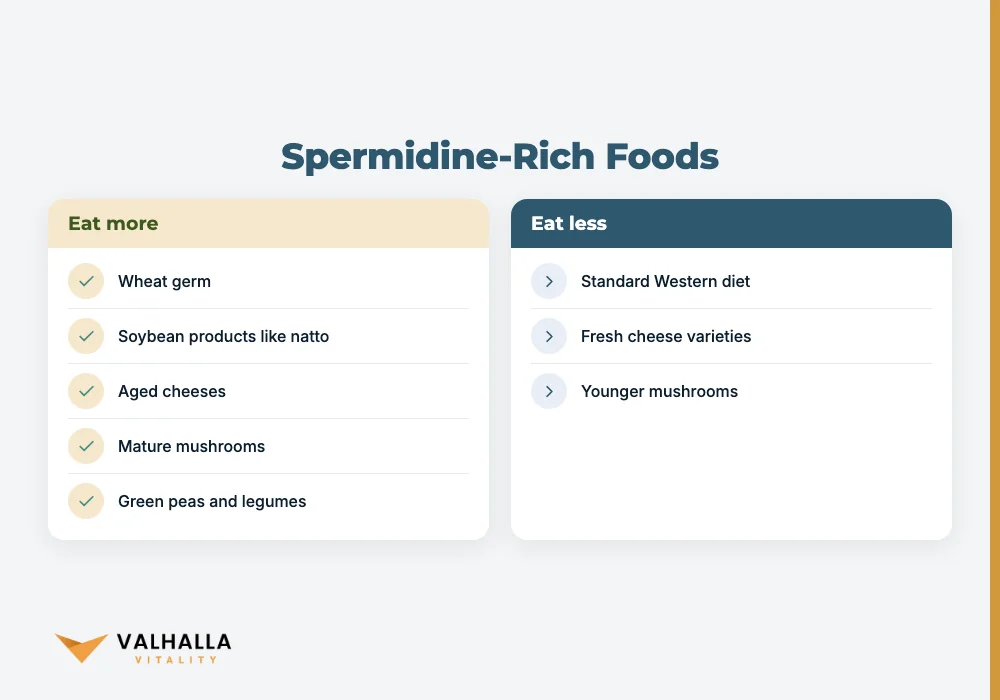
Spermidine food sources are the most direct and accessible way to raise intake. Reaching the intake levels associated with meaningful spermidine benefits typically requires building meals consistently around the highest-content options.
The richest choices include:
- Wheat germ: consistently the highest-density plant source in published dietary analyses
- Soybean products: natto, tempeh, and tofu, with natto typically ranking highest among fermented soy foods
- Aged cheeses: fermentation and aging concentrate polyamines relative to fresh cheese varieties
- Mushrooms: particularly mature varieties, which accumulate more than younger ones
- Green peas and legumes: broadly available and contribute at moderate but consistent levels
- Whole grains: rice, oats, and barley provide steady contributions across multiple meals
Gut bacteria are an often-overlooked source. Bacterial fermentation of dietary fiber in the colon generates spermidine independently of what is absorbed from food. A diverse, prebiotic-rich diet supports the bacterial populations responsible for this production, so gut health functions as a separate channel for maintaining circulating spermidine levels.
For a complete ranked breakdown with serving context, the top spermidine food sources guide covers the full picture. Most adults eating a standard Western diet consistently fall short of the intake levels associated with the longevity benefits described in population studies.
Is spermidine safe to take daily?
Spermidine is produced by the body throughout life, so the immune and metabolic systems are already equipped to process it. Human trials and animal studies have not identified significant adverse effects at supplemental amounts.
A 2023 review in Expert Reviews in Molecular Medicine assessed the safety profile of nutritional longevity compounds including spermidine and found the tolerance record favorable, with no serious adverse events reported in human studies at typical supplemental intake levels (Kahraman et al., 2023). For guidance on how intake is typically structured to support tolerability, the spermidine dosage guide is a practical reference.
Spermidine side effects: what to expect
Mild gastrointestinal effects, such as transient nausea or loose stools, have appeared in some study participants at higher intake levels. These effects tend to be short-lived and often resolve as the body adjusts. Starting gradually rather than jumping to a high intake level reduces their likelihood.
People on immunosuppressant medications, those with oncology diagnoses, and pregnant or breastfeeding individuals should consult a licensed provider before starting spermidine supplements. The compound interacts with cell proliferation pathways, which carries clinical relevance in those settings.
For otherwise healthy adults without these considerations, daily use appears well-tolerated based on the current body of evidence.
Liposomal spermidine and other supplement formats
Standard oral supplements face a bioavailability challenge that can limit how much of the labeled spermidine benefits actually reach systemic circulation. Spermidine is water-soluble, and a portion of any oral dose is metabolized before absorption. Two products with identical labeled amounts can produce meaningfully different results in practice because of this variable.
Liposomal spermidine addresses this by encasing the compound in phospholipid vesicles that protect it through the digestive environment and improve uptake at the intestinal wall. The same principle has been applied to liposomal vitamin C and glutathione. In practice, liposomal formats may require a lower total intake to achieve comparable effects.
Other formats, including standard capsules, tablets, and liquid tinctures, remain widely available. Each involves trade-offs in stability, cost, and convenience. A comparison of spermidine delivery options including liposomal formats helps clarify which format suits specific needs.
Spermidine dosage for adults: how much per day?
Spermidine dosage for adults is not a fixed number. Baseline levels vary between individuals based on diet, gut microbiome composition, age, and genetics. A licensed provider determines the appropriate amount after reviewing labs and intake history, not from population averages alone.
What the research does clarify is that the intake levels associated with the cardiovascular and longevity spermidine benefits seen in population studies appear to be higher than what most Western diets provide through food alone. That gap is why supplementation is recommended alongside a spermidine-rich diet, not as a replacement for it.
Valhalla Vitality's Youthavar pairs spermidine with cycloastragenol using an absorption matrix that addresses the bioavailability challenge both compounds share in standard oral formats. Starting with dietary spermidine food sources and discussing whether supplementation is appropriate for your specific situation is the practical entry point.
Ready to explore your options?
To discuss whether spermidine supplementation is appropriate for your health profile, Book Your Consultation with a licensed provider.
FAQ
What are the main spermidine benefits?
Spermidine benefits include autophagy activation for cellular renewal, cardiovascular protection through reduced arterial stiffness and plaque formation, cognitive resilience through improved protein clearance in neurons, and a correlation with longer lifespan in long-term population studies. Hair follicle support, anti-inflammatory effects, and improved metabolic function are additional documented areas. Most effects compound over years rather than weeks.
What foods are highest in spermidine?
The richest dietary sources of spermidine are wheat germ, fermented soy products such as natto and tempeh, aged cheeses, mature mushrooms, green peas, and legumes. Gut bacteria also generate spermidine from fermentable dietary fiber, so a diverse, high-fiber diet supports circulating levels through a separate channel.
Is spermidine safe for long-term daily use?
Based on human trials and a 2023 safety review (Kahraman et al., 2023), spermidine is well-tolerated at supplemental levels, with no serious adverse events reported. Mild gastrointestinal effects have occurred at higher intakes but are generally transient. People with specific health conditions or those on immunosuppressants should discuss use with a licensed provider first.
Does spermidine help with hair growth?
Evidence supports spermidine for hair growth through two mechanisms: prolonging the anagen growth phase of follicle cycling by stimulating keratinocyte activity, and reducing scalp inflammation that impairs follicle function. It is most useful as part of a broader approach to hair health rather than a standalone treatment.
How should I start with spermidine supplementation?
A licensed provider determines the appropriate form and intake level after reviewing your health history and relevant labs. Incorporating spermidine-rich foods such as wheat germ, natto, and aged cheese is a practical dietary first step, and a provider consultation clarifies whether supplements are warranted for your specific situation.
Sources
- Nilsson BO et al. (2019). Beneficial effects of spermidine on cardiovascular health and longevity suggest a cell type-specific import of polyamines by cardiomyocytes. Biochemical Society Transactions. PubMed
- Ekmekcioglu C (2020). Nutrition and longevity - From mechanisms to uncertainties. Critical Reviews in Food Science and Nutrition. PubMed
- Kahraman C et al. (2023). Toxicology of pharmaceutical and nutritional longevity compounds. Expert Reviews in Molecular Medicine. PubMed
You May Also Like
 Spermidine
 Supplement Forms: Pills, Tablets & Tincture
Spermidine supplement forms include pills, tablets, and tinctures. Compare bioavailability, side effects, and how a provider picks the right form for you.
October 30, 2026 ETRead more → Spermidine
Best Spermidine Supplement Guide: What the Research Shows
Best spermidine supplement selection starts with understanding autophagy, food sources, and key quality criteria. Here is what the research shows.
October 29, 2026 ETRead more → Spermidine
Foods High in Spermidine: Top Dietary Sources Ranked
Foods high in spermidine include wheat germ, soybeans, mushrooms, and peas. Ranked by content, with practical intake guidance and research context.
October 29, 2026 ETRead more →