Oral Testosterone for Women: Benefits, Safety and Evidence

The following blog post is for entertainment and informational purposes only. It is not intended to provide medical advice or diagnosis. Please consult your doctor before making any health-related decisions.
Oral testosterone for women is a hormone therapy option that may support libido, mood, bone density, and muscle strength in women with clinically confirmed low testosterone levels. Women produce testosterone naturally in the ovaries and adrenal glands, and a deficiency generates a wide-ranging symptom picture that overlaps with other hormonal conditions. Lab testing is required before any treatment begins. To understand whether testosterone therapy for women fits your situation, a medical evaluation is the necessary first step.
What are the symptoms of low testosterone in women?
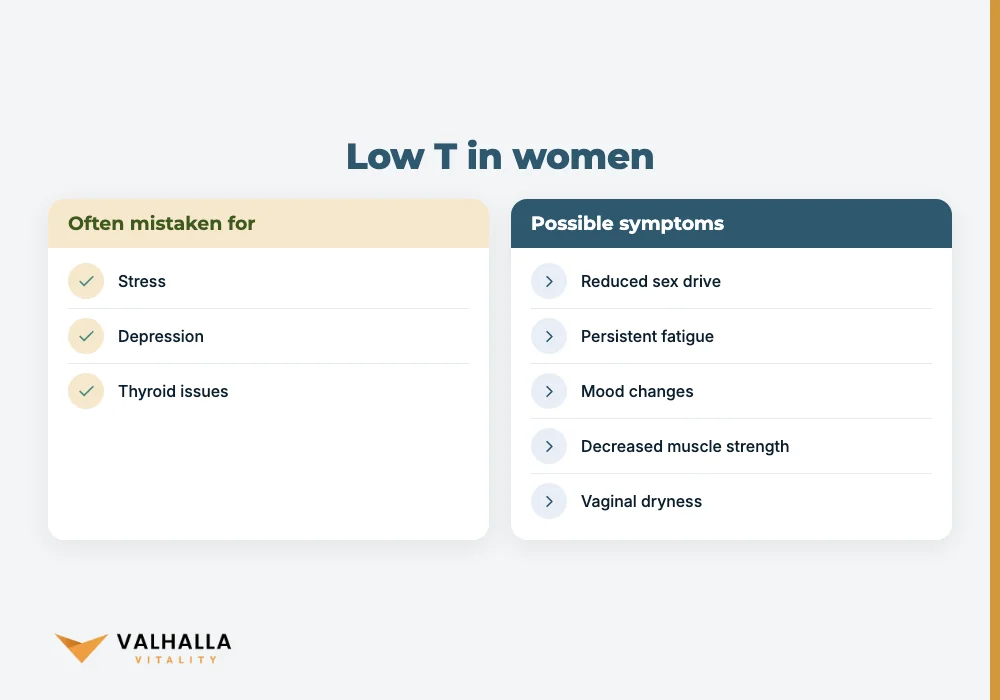
Low testosterone in women symptoms are broad and frequently mistaken for stress, depression, or thyroid dysfunction. The symptom overlap is significant enough that a provider will not diagnose testosterone deficiency in women on symptoms alone. Lab results are required.
Common symptoms associated with low testosterone include:
- Reduced sex drive or difficulty becoming aroused
- Persistent fatigue that rest does not resolve
- Mood changes including irritability, low motivation, and emotional flatness
- Decreased muscle strength and difficulty maintaining lean body mass
- Reduced bone density, raising long-term osteoporosis risk
- Cognitive changes such as difficulty concentrating
- Vaginal dryness and discomfort during intercourse
A 2025 review by Khera et al. in Sexual Medicine Reviews found that testosterone deficiency in women is widely under-recognized, partly because diagnostic reference ranges have not been standardized for female patients to the same degree as for men [S5]. That gap means symptoms often go unattributed for years.
Testosterone levels decline naturally with age, accelerating during perimenopause and menopause. Deficiency can also occur earlier in life. In those cases, the symptom pattern may surface well before midlife.
How oral testosterone for women works
Traditional female testosterone treatment has relied on transdermal creams, patches, and injections. Oral testosterone for women is a newer alternative that delivers the hormone through the gastrointestinal tract, typically in the form of testosterone undecanoate.
Miller et al. (2023) traced the development of oral testosterone therapy in Sexual Medicine Reviews, noting that earlier oral formulations were limited by high liver exposure from first-pass hepatic metabolism [S6]. Newer formulations were redesigned to route absorption through the lymphatic system rather than the portal circulation. That shift substantially improves the safety profile and makes oral delivery a more practical option.
Oral testosterone is not approved for use in women in the United States. Any prescription is off-label, which means a licensed provider must individually review your labs, symptoms, and health history before writing one. Availability varies by state.
If you want a side-by-side look at delivery formats before speaking with a provider, the delivery method comparison for testosterone therapy covers how oral and injectable routes differ across absorption, monitoring requirements, and practical convenience.
Is oral testosterone for women safe?
For appropriately screened candidates, oral testosterone appears to carry an acceptable safety profile at doses determined by a licensed provider. Monitoring is a required part of that equation, not optional.
The primary historic concern was liver damage from first-pass hepatic metabolism in early oral formulations. That concern applies substantially less to current options. Goldstein et al. (2025) reviewed newer oral testosterone undecanoate preparations in Sexual Medicine Reviews and found that updated formulations significantly reduce liver exposure compared to earlier versions [S1]. This development makes oral testosterone more viable for women who prefer not to use injections or topical creams.
Side effects that may occur include acne, increased body hair, voice changes, and mood shifts. These are dose-related. Regular lab monitoring allows a provider to detect upward drift in testosterone levels before androgenic side effects take hold.
Women who are pregnant, breastfeeding, or have certain hormone-sensitive conditions are not candidates. A thorough intake form and provider review screen for these factors before any prescription is written.
Nappi et al. (2022) reviewed pharmacological treatments for female sexual dysfunction in The Urologic Clinics of North America and identified testosterone therapy as one of the options with consistent clinical evidence in women, particularly for hypoactive sexual desire disorder [S4].
Who may qualify for oral testosterone therapy?
Not every woman experiencing fatigue or low libido is a candidate. A licensed provider makes that determination after reviewing labs and intake information.
Women who may qualify typically have confirmed low testosterone on a hormone panel, symptoms that align with testosterone deficiency rather than another condition, and no contraindications such as pregnancy, hormone-sensitive cancers, or certain cardiovascular conditions. Age is not a strict barrier. Testosterone deficiency in women can occur during reproductive years. A younger woman experiencing relevant symptoms may be evaluated the same way a perimenopausal woman would: based on lab results and symptom history, not age alone.
Some women are evaluated for alternative approaches before testosterone therapy is considered. Enclomiphene for women with low testosterone covers a different mechanism that some providers use in specific clinical contexts, particularly when preserving ovarian function is a priority.
At Valhalla Vitality, the intake process works as follows: complete an online medical intake form, a licensed provider reviews it within 24 business hours, and if therapy is appropriate, a prescription goes to a partner US compounding pharmacy. Delivery takes approximately 3 to 7 business days from the pharmacy. Availability varies by state.
How does testosterone therapy improve libido in women?
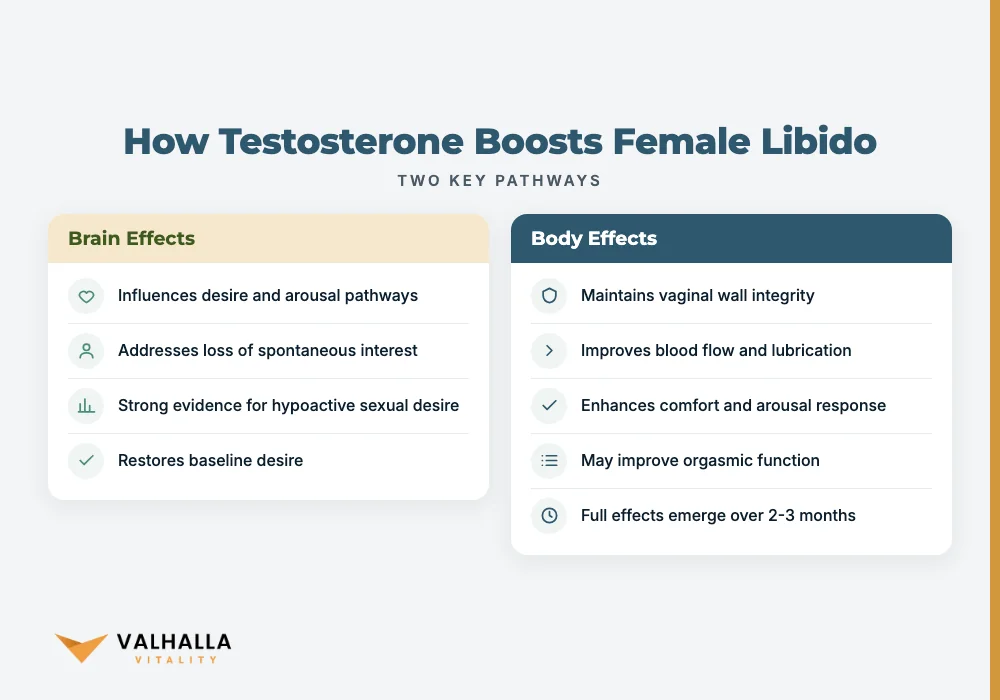
Testosterone therapy for women improves libido through two pathways: central effects on the brain circuits that govern sexual motivation, and peripheral effects on the sensitivity and health of genital tissues.
Centrally, the hormone influences neural pathways involved in desire and arousal. Women with testosterone deficiency often describe a loss of spontaneous interest in sex rather than a specific physical complaint. Nappi et al. (2022) identified hypoactive sexual desire disorder as the primary sexual health condition where testosterone therapy has the strongest evidence base in women [S4]. Restoring adequate testosterone levels may help re-establish baseline desire in women who have experienced this kind of flat, absent drive.
Peripherally, testosterone maintains vaginal wall integrity, blood flow, and lubrication. Low levels contribute to vaginal dryness and reduced physical sensitivity. Testosterone women libido improvements often include enhanced comfort and arousal response once adequate levels are restored.
Orgasmic function may also improve. Some women with testosterone deficiency report difficulty reaching orgasm or reduced intensity. That pattern may improve with consistent treatment.
Timing matters. Most women notice early changes in libido and mood within several weeks. Full effects on sensation and arousal typically emerge over two to three months of consistent therapy. No specific outcome can be assured before a provider reviews an individual case.
Mood, muscle strength, and bone health
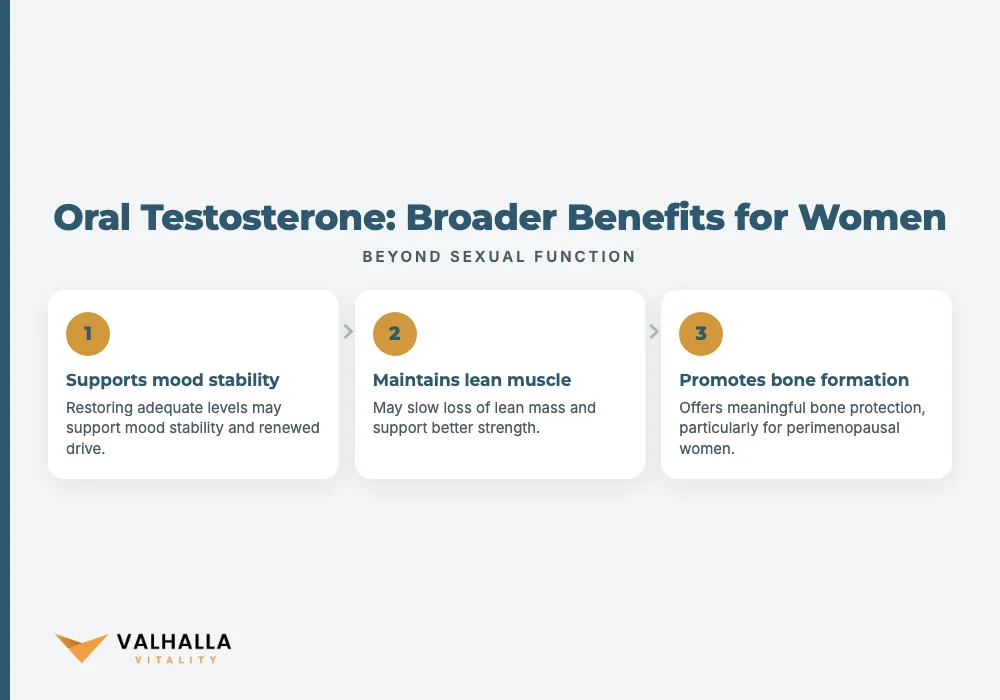
The benefits of oral testosterone for women extend beyond sexual function. The hormone directly affects mood regulation, lean muscle maintenance, and bone density.
Testosterone is involved in regulating stress hormones. Women with testosterone deficiency frequently report elevated anxiety, low motivation, and a diminished sense of purpose that does not respond to lifestyle adjustments alone. Restoring adequate levels may support mood stability and renewed drive. This mood effect is often the first change women report after starting female testosterone treatment.
On muscle and strength: testosterone supports protein synthesis in muscle tissue. As women age, declining testosterone contributes to gradual loss of lean mass and functional strength. Oral testosterone for women may slow that process and support better strength maintenance during resistance training. The clinical goal is preserving physical function, not optimizing performance.
Bone health is the third major benefit. Testosterone deficiency in women is associated with reduced bone mineral density and elevated osteoporosis risk. Testosterone promotes osteoblast activity, which drives bone formation. Women hormone replacement therapy that includes testosterone may offer meaningful bone protection, particularly in perimenopausal and postmenopausal women already experiencing accelerated bone loss.
These benefits accumulate with consistent, monitored therapy over months. Stopping and restarting creates hormonal instability that reduces the chance of a lasting effect.
What is the correct testosterone dosage for women?
No universal dose applies. A licensed provider determines the appropriate dose after reviewing lab results, symptoms, health history, and any other active therapies. For context on what a lab panel actually measures during treatment, target testosterone levels during TRT explains what healthy ranges look like for both women and men.
Doses used in women's testosterone therapy are substantially lower than those prescribed for men. The goal is to return testosterone levels to the normal physiological range for adult women. That range is narrow. Too little produces no benefit. Too much increases androgenic side effects. This narrow window is why self-directed testosterone use without provider oversight carries real clinical risk.
Can women take testosterone pills daily?
The frequency and timing depend on the specific formulation prescribed. Most oral testosterone undecanoate preparations are taken daily, with food, to optimize lymphatic absorption. Some formulations are taken twice daily. A licensed provider sets the schedule based on the formulation selected and the patient's individual response.
Consistency matters more than convenience here. Testosterone levels fluctuate between doses. Irregular dosing creates hormonal instability that works against the therapy's clinical goal. Skipping doses does not simply reduce benefit proportionally. It can disrupt the steady state the therapy is trying to establish.
For a fuller look at what clinical evidence shows about oral testosterone formulations and how they perform, oral TRT efficacy research covers the published evidence in detail.
Ready to discuss your options?
If these symptoms and questions are familiar, speaking with a licensed provider is the practical next step. Book Your Consultation to start the intake process and find out whether oral testosterone for women is appropriate for your situation.
FAQ
Is oral testosterone approved for use in women?
No. Oral testosterone is not currently approved for use in women in the United States. Any prescription is off-label, meaning a licensed provider must individually review your case and determine whether therapy is clinically appropriate for you.
What are the most common symptoms of low testosterone in women?
The most frequently reported low testosterone in women symptoms include reduced libido, persistent fatigue, mood changes including irritability and low motivation, decreased muscle strength, and vaginal dryness. Because these symptoms overlap with other conditions, lab testing is required before treatment is considered.
How does testosterone therapy for women differ from standard hormone therapy?
Standard women hormone replacement therapy typically addresses estrogen and progesterone. Testosterone therapy targets different symptoms, primarily hypoactive sexual desire disorder along with muscle and bone health. It is used alongside estrogen-based therapy in some women, or independently, depending on what lab results and symptoms indicate.
Can oral testosterone cause side effects in women?
Yes. Possible side effects include acne, increased body hair, voice changes, and mood shifts. These are dose-related and more likely when testosterone levels exceed the normal female physiological range. Regular lab monitoring allows a provider to detect and manage side effects before they become established.
How long does it take to notice results from testosterone therapy?
Most women report early changes in libido and mood within several weeks of starting treatment. Effects on muscle strength and bone density take months of consistent therapy to become apparent. Individual response varies and depends on baseline hormone levels, overall health, and consistent adherence to the prescribed regimen.
Sources
- Goldstein I et al. (2025). Newer formulations of oral testosterone undecanoate: development and liver side effects. Sexual Medicine Reviews. PubMed
- Nappi RE et al. (2022). Medical Treatment of Female Sexual Dysfunction. The Urologic Clinics of North America. PubMed
- Khera M et al. (2025). Testosterone deficiency and treatments: common misconceptions and practical guidance for patient care. Sexual Medicine Reviews. PubMed
- Miller JA et al. (2023). Oral testosterone therapy: past, present, and future. Sexual Medicine Reviews. PubMed
You May Also Like
 Oral testosterone
Oral Testosterone Therapy: Options, Benefits, and Risks
Oral testosterone therapy delivers TRT in pill form. Learn how testosterone undecanoate capsules work, who qualifies, and key side effects to watch.
October 6, 2026 ETRead more → Oral testosterone
Oral Testosterone vs Injection: Choosing Your TRT Method
Oral testosterone vs injection explained: compare bioavailability, liver impact, and convenience to find the TRT method that fits your lifestyle.
October 4, 2026 ETRead more → Oral testosterone
Oral Testosterone Supplements: Effectiveness Guide
Oral testosterone supplements may restore hormonal balance without injections. Learn how they work, bioavailability, side effects, and TRT options.
October 4, 2026 ETRead more →