
The following blog post is for entertainment and informational purposes only. It is not intended to provide medical advice or diagnosis. Please consult your doctor before making any health-related decisions.
Oral testosterone therapy is a medically supervised treatment for confirmed low testosterone using prescription capsules taken by mouth, not needles, gels, or patches. Prescription testosterone capsules designed for lymphatic absorption now give men a clinically validated alternative to injectable TRT. A licensed provider reviews your intake and lab results before determining whether this approach is appropriate for you. Availability varies by state.
What prescription oral testosterone medications are available?
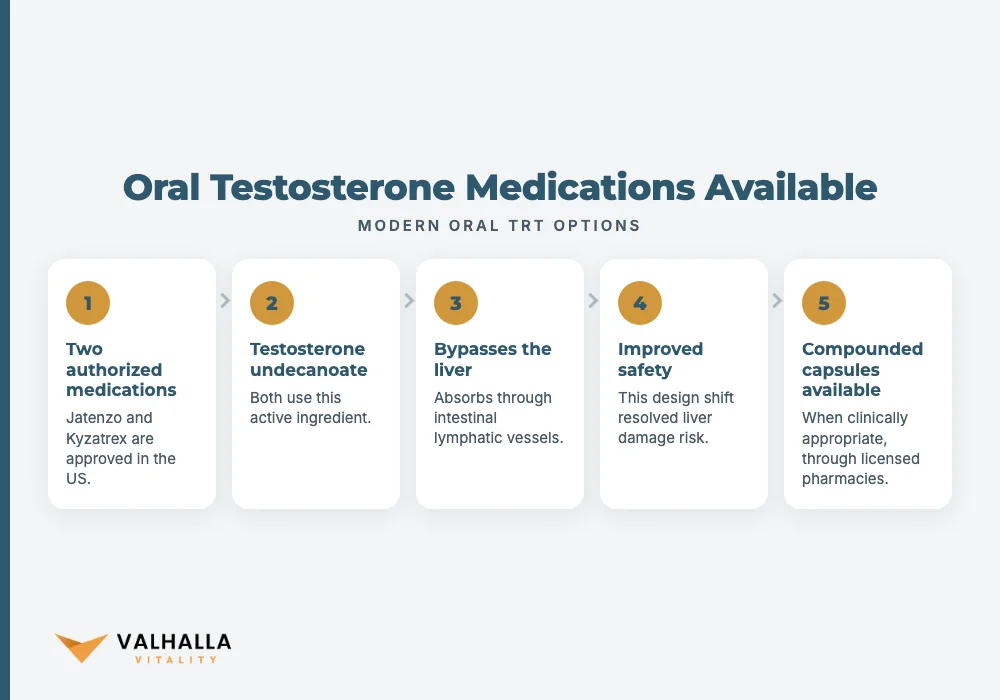
Two oral testosterone medications are currently authorized in the United States. Both use testosterone undecanoate, the formulation choice that defines modern oral TRT options.
Earlier oral testosterone compounds relied on 17-alpha-alkylated molecules that passed directly through the liver on first absorption. Liver toxicity was the predictable result. Modern testosterone undecanoate absorbs through the intestinal lymphatic vessels instead, bypassing portal circulation on its first pass. That design shift changed which oral testosterone options are clinically viable.
| Medication | Active ingredient | FDA approval |
|---|---|---|
| Jatenzo | Testosterone undecanoate | 2019 |
| Kyzatrex | Testosterone undecanoate | 2022 |
A 2023 review by Miller et al. in Sexual Medicine Reviews traced the full development arc, noting that testosterone pills for men based on undecanoate represent the most clinically meaningful advance in oral testosterone therapy since earlier formulations were abandoned due to liver damage risk. The shift from hepatic to lymphatic absorption resolved the core safety limitation.
Compounded testosterone replacement capsules are also available through licensed 503A and 503B partner pharmacies when a provider determines they are clinically appropriate. The prescribing provider reviews your complete lab picture, confirms a clinical indication, and determines the dose after reviewing those results. Patients do not select their own dose.
Is oral testosterone as effective as injections?
Yes. For many men with confirmed low testosterone, this approach can reach target hormone levels comparably to intramuscular injections. The delivery pattern differs in ways that matter clinically and practically.
Injections create a sharp testosterone peak shortly after administration, followed by a gradual decline before the next dose. Some men notice mood and energy fluctuations with that peak-and-trough pattern. Oral testosterone undecanoate, taken with meals, absorbs steadily through the lymphatic route and tends to produce more consistent circulating levels across the day.
For a detailed comparison of how oral testosterone and injection delivery methods differ across absorption, monitoring requirements, and practical convenience, the differences matter differently for each patient.
TRT without injections appeals to men who want to avoid needles, avoid routine clinic visits, and integrate hormone replacement into a daily oral routine. Not every man responds identically to any single delivery method. A provider evaluates your labs and health history before recommending one approach over another.
Benefits of oral testosterone therapy for men with low T
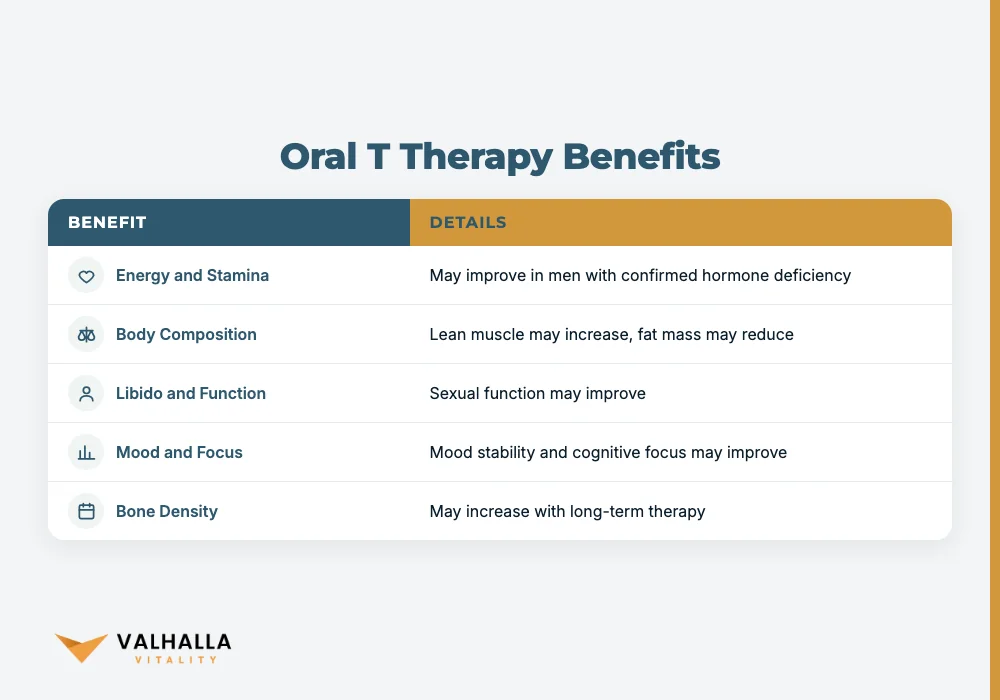
Symptoms of low testosterone accumulate gradually. Persistent fatigue that does not resolve with rest, declining libido, mood instability, reduced motivation, and loss of lean muscle mass are common presentations in men who later test in the clinically low range. When a provider confirms low testosterone through a blood panel, restoring levels with this treatment may support several of these areas.
Potential benefits documented in clinical research include:
- Energy and stamina may improve in men with confirmed hormone deficiency
- Lean muscle mass may increase and fat mass may reduce with sustained, monitored treatment
- Libido and sexual function may improve
- Mood stability and cognitive focus may improve
- Bone mineral density may increase with long-term therapy
These are potential outcomes, not certain results for every patient. Response depends on baseline hormone levels, consistency of treatment, and how well the therapy is monitored and adjusted over time.
Low testosterone treatment options span several delivery formats, including injections, topical gels, pellets, and oral testosterone capsules. The best fit for any individual depends on their lab picture, health history, and lifestyle preferences. Oral TRT options specifically suit men who want a provider-monitored, needle-free daily routine.
What are the side effects of oral testosterone therapy?
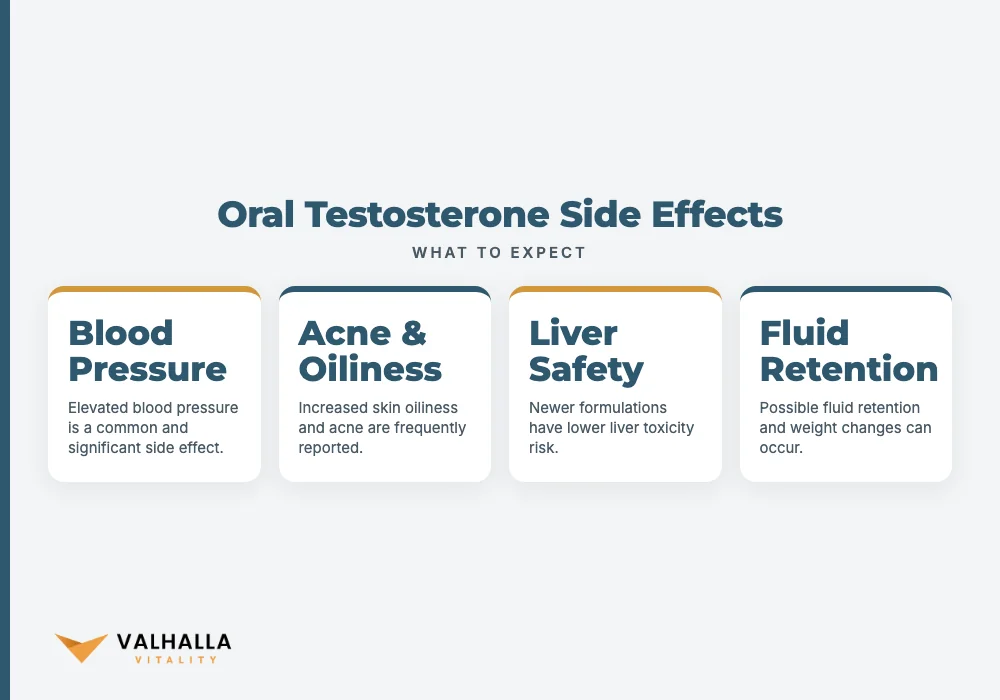
The most commonly reported side effects include elevated blood pressure, acne and increased skin oiliness, changes in libido, irritability, headache, and elevated red blood cell count (polycythemia).
Elevated blood pressure is the most clinically significant. Jatenzo side effects documented in prescribing information specifically flag hypertension, and this concern is associated with this treatment broadly. Regular cardiovascular monitoring is a standard component of responsible prescribing.
A 2025 review by Goldstein et al. in Sexual Medicine Reviews examined newer oral testosterone undecanoate formulations and their liver safety data. The review confirmed that modern lymphatically absorbed formulations carry substantially lower liver toxicity risk than older 17-alpha-alkylated compounds, but noted that liver function monitoring remains appropriate and should not be discontinued even with newer formulations.
Additional side effects associated with testosterone replacement capsules include:
- Fluid retention and possible weight changes
- Gynecomastia, meaning development of excess breast tissue in men
- Elevated PSA, requiring ongoing prostate monitoring
- Increased body hair
- Insomnia in some patients
- Suppression of natural testosterone production over time
Side effects do not make this treatment unsafe. They make supervised, lab-monitored prescribing necessary. A licensed provider adjusts care based on lab findings rather than waiting for problems to become serious.
How long does oral testosterone therapy take to work?
Early shifts in energy and mood are often noticed within the first weeks of starting treatment. Changes in body composition, libido, and physical function typically take months of consistent, supervised treatment to become apparent.
Labs are the most reliable indicator. A provider checks serum testosterone and key safety markers after the initial period to confirm blood levels are within the therapeutic range. Levels below target prompt a dose review. Levels above the appropriate range require adjustment too. Neither situation resolves without regular lab follow-up.
Testosterone biology does not flip a switch. Results build over months, and the provider-led monitoring process is what keeps the trajectory on course. The physiology varies between individuals: some men reach stable therapeutic levels relatively quickly, while others require multiple rounds of adjustment.
Is oral testosterone safe for long-term use?
When properly prescribed and monitored, modern prescription testosterone undecanoate is considered appropriate for long-term use. A 2023 review by Miller et al. in Sexual Medicine Reviews evaluated multiple long-term clinical trials and found that properly monitored oral TRT with testosterone undecanoate produced stable hormone levels and an acceptable side-effect profile in well-selected patients.
Long-term safety depends on continuous monitoring. Providers track hematocrit, PSA, liver enzymes, blood pressure, and lipid panels at intervals matched to each patient's individual risk profile. These check-ins are the mechanism by which early side effects are identified and managed before they escalate.
Testosterone replacement capsules progressively suppress the body's natural hormone signaling axis, which reduces sperm production. This effect intensifies with duration of use. Men who plan to have children need to raise this concern directly with a provider before starting any form of testosterone replacement.
How the treatment path works in practice
Oral testosterone therapy requires a provider's prescription and a baseline lab panel. No legitimate path to prescription oral testosterone bypasses these steps.
A man with symptoms consistent with low testosterone completes a telehealth intake and undergoes bloodwork. The provider reviews total testosterone, free testosterone, hematologic markers, and metabolic values. If labs support a diagnosis and there are no contraindications, the provider writes a prescription, with the dose determined after reviewing all results. The prescription goes to a compounding pharmacy, with delivery in approximately three to seven business days from the pharmacy handoff.
Monitoring during treatment typically includes repeat testosterone levels, hematocrit, PSA, comprehensive metabolic panel, and blood pressure measurements. Check frequency is higher in early months, then spaces out once levels are stable and the safety picture is clearly established.
Valhalla Vitality provides this provider-guided path for men evaluating low testosterone treatment options. Provider review is completed within 24 business hours of intake submission.
Oral TRT options are not interchangeable protocols. Appropriate candidacy depends on individual labs, health history, and the provider's clinical assessment. For a closer look at the clinical evidence for oral testosterone replacement therapy, data from more than a decade of undecanoate formulations provides a substantially clearer picture of who benefits and under what conditions.
Ready to talk to a provider?
Treatment begins with a lab review, not a self-assessment. Book Your Consultation to connect with a licensed provider who can evaluate your labs and determine whether this path is appropriate for you.
FAQ
Are testosterone pills for men the same as over-the-counter testosterone boosters?
No. Prescription oral testosterone contains regulated testosterone hormone and requires a licensed provider's order and ongoing lab monitoring. Over-the-counter testosterone boosters are supplement products that do not contain pharmaceutical testosterone and are not subject to clinical prescribing standards.
How does oral testosterone therapy differ from topical gel or patches?
Oral therapy uses daily capsules taken with food, while gels and patches deliver testosterone through the skin. Each method has a different absorption profile, practical application requirements, and monitoring considerations. A licensed provider selects the most appropriate delivery method based on individual labs and health history.
Does testosterone therapy affect fertility?
Yes. Testosterone replacement suppresses the natural hormone signaling that supports sperm production, and this effect intensifies over months of use. Men who plan to have children should discuss fertility implications directly with a provider before starting any form of testosterone therapy.
Who is generally not a candidate for oral testosterone therapy?
Men with confirmed or suspected prostate cancer, significantly elevated PSA, severe cardiovascular disease, or active liver disease are typically not appropriate candidates. A provider reviews each individual's full medical history and current labs to determine eligibility.
Is oral testosterone therapy available in all states?
Availability varies by state, depending on state telemedicine laws and prescribing regulations. A provider reviews coverage at intake.
Sources
You May Also Like
 Oral testosterone
Oral Testosterone Therapy: Options, Benefits, and Risks
Oral testosterone therapy delivers TRT in pill form. Learn how testosterone undecanoate capsules work, who qualifies, and key side effects to watch.
October 6, 2026 ETRead more → Oral testosterone
Oral Testosterone vs Injection: Choosing Your TRT Method
Oral testosterone vs injection explained: compare bioavailability, liver impact, and convenience to find the TRT method that fits your lifestyle.
October 4, 2026 ETRead more → Oral testosterone
Oral Testosterone Supplements: Effectiveness Guide
Oral testosterone supplements may restore hormonal balance without injections. Learn how they work, bioavailability, side effects, and TRT options.
October 4, 2026 ETRead more →