
The following blog post is for entertainment and informational purposes only. It is not intended to provide medical advice or diagnosis. Please consult your doctor before making any health-related decisions.
Turkesterone supplements are concentrated ecdysteroid extracts from plants, primarily ajuga turkestanica extract. They are not produced in the human body. They also do not bind to androgen receptors, which makes them mechanically different from testosterone and most traditional anabolic compounds. Early research suggests they may support muscle protein synthesis and recovery, though large-scale human trials remain limited. If you are weighing whether this supplement fits your goals, reviewing what current ecdysteroid evidence actually shows is a better starting point than marketing copy.
What are turkesterone supplements?
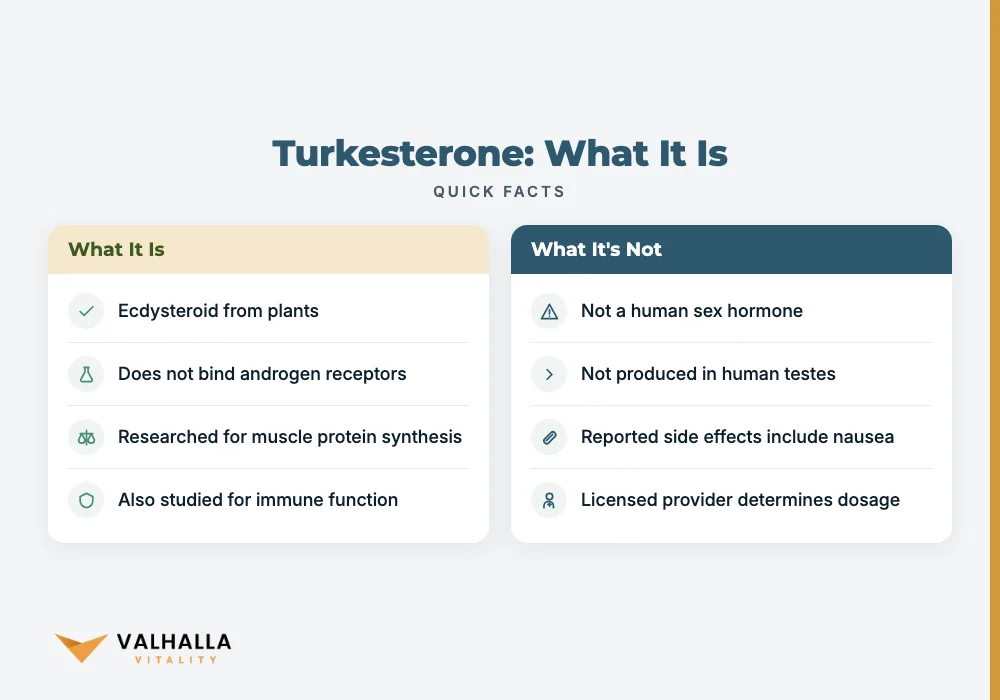
Turkesterone is an ecdysteroid, a class of compounds that plants produce naturally. The main commercial source is ajuga turkestanica extract, a flowering herb cultivated in Central Asia and parts of Eastern Europe. It is not produced in human testes or adrenal glands. That is testosterone's territory, not turkesterone's.
At a glance:
- Source: Ajuga turkestanica, a Central Asian herb with high ecdysteroid content
- Compound class: Ecdysteroid; not a sex hormone
- Receptor activity: Does not appear to bind androgen receptors
- Main research areas: Muscle protein synthesis, training recovery, immune function
- Reported side effects: Nausea, bloating, acne, upset stomach
- Dosage: A licensed provider determines the dose after reviewing your intake
What are the benefits of turkesterone for men?
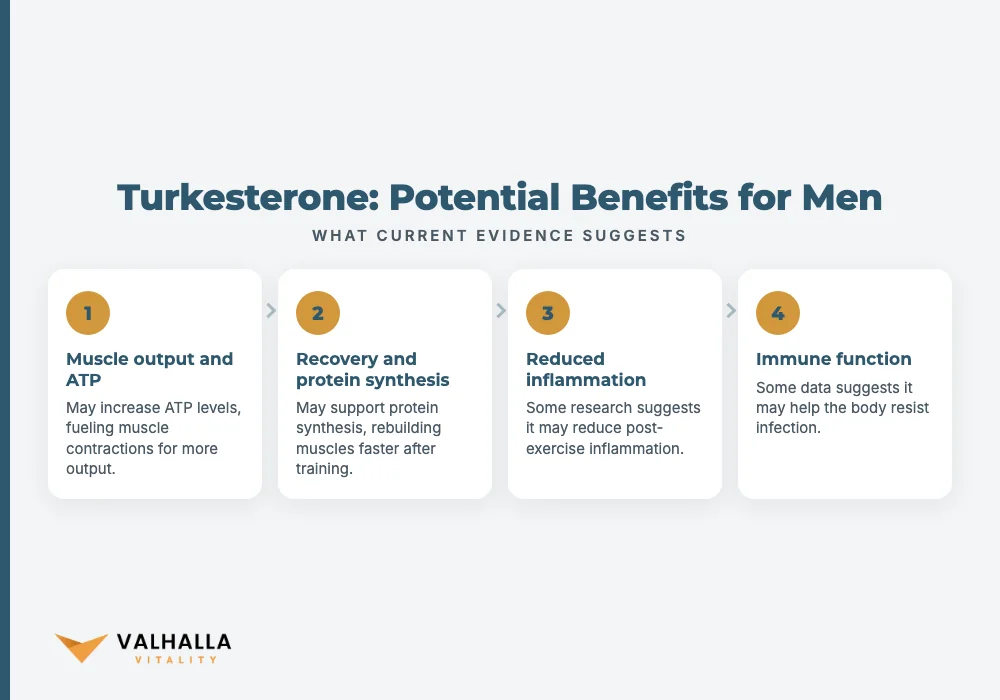
Turkesterone benefits for men center on muscle growth and training recovery. The case for it is reasonable, but large human trials have not yet confirmed the effects seen in smaller studies. Here is what current evidence points to.
Muscle output and ATP. Ecdysteroids may increase adenosine triphosphate (ATP) levels in muscle tissue. ATP is the direct fuel for muscle contractions. Greater availability may support more output during both strength and endurance sessions. Users who have taken them consistently report completing more demanding workouts without a proportional rise in post-session fatigue. This is anecdotal, but it tracks with the proposed ATP mechanism.
Recovery and protein synthesis. Turkesterone may support protein synthesis, the process muscles use to rebuild after training. Faster rebuilding could shorten recovery windows between hard sessions. Some research also suggests ecdysteroids may reduce post-exercise inflammation, which compounds that recovery effect.
Immune function. Some data suggests turkesterone may help the body resist infection more effectively. This is less studied than the muscle-related effects, but it matters for athletes who train at high frequency.
For a broader look at the health effects documented in ecdysteroid research, that resource goes deeper into the current evidence base.
Can women take turkesterone?
Yes. Turkesterone does not bind to androgen receptors. That means it does not produce the androgenic side effects that rule out many performance supplements for women, such as voice deepening, increased facial hair, or hormonal suppression.
Women focused on lean mass support or faster recovery have used turkesterone without reports of hormone-related disruption. The safety profile, based on animal studies, does not suggest sex-specific risks beyond the gastrointestinal effects that appear in all users. Human data specific to women remains thin. A licensed provider should review your health history before you start.
How does turkesterone compare to creatine?
Different tools, overlapping goals.
Creatine is one of the most studied performance supplements. It replenishes phosphocreatine stores in muscle, which directly boosts ATP for explosive efforts. The evidence for modest strength and power gains is strong across dozens of controlled human trials. Turkesterone research is earlier-stage, drawing mainly on animal models and smaller human studies.
Where creatine targets ATP replenishment almost exclusively, ecdysteroid muscle growth through turkesterone may also work through protein synthesis pathways that creatine does not address. That is why some people combine turkesterone supplements with creatine rather than treating them as mutually exclusive.
Turkesterone vs testosterone is a different comparison. Testosterone is a systemic human hormone affecting mood, libido, bone density, and red blood cell production. Turkesterone is a plant extract. It does not act through those same channels. For men with clinically low testosterone levels, turkesterone is not a substitute for hormone therapy. When low testosterone is the actual concern, a licensed provider will typically assess targeted options, including enclomiphene for testosterone support, before recommending plant-based extracts.
What is the best time to take turkesterone supplements?
Taking turkesterone supplements with food is the most consistent practical recommendation. Gastrointestinal side effects, particularly nausea and upset stomach, appear more likely on an empty stomach. Food slows absorption and may reduce that reaction.
Beyond that, no confirmed optimal timing window exists in human clinical data. Some users split intake around training sessions. Others take it at a consistent time each day, independent of workout schedule. Turkesterone dosage should be reviewed by a licensed provider rather than self-selected from a product label. Labels often reflect marketing conventions rather than clinically validated ranges.
Can turkesterone cause erectile dysfunction?
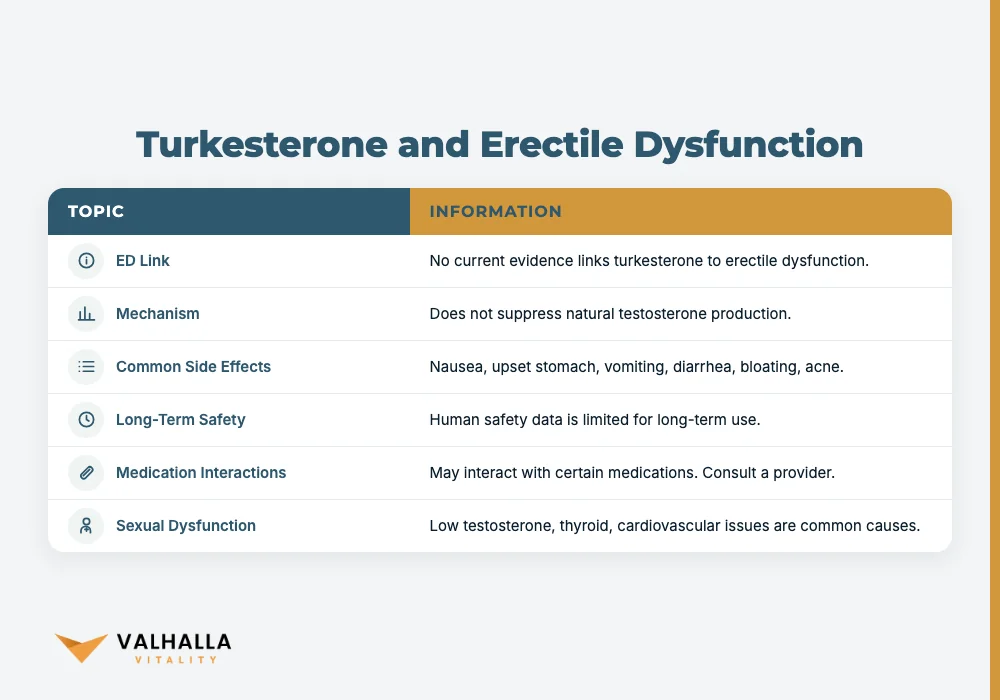
No current evidence links turkesterone supplements to erectile dysfunction. This question arises because many performance compounds work through the hypothalamic-pituitary-gonadal axis, suppressing natural testosterone production and impairing sexual function. Turkesterone does not appear to work through that axis. It does not suppress the body's own hormone output based on available studies.
For men concerned about androgenic side effects more broadly, the article on androgenic risks and ecdysteroid supplements covers that research specifically. For men experiencing actual sexual dysfunction, low testosterone, thyroid issues, and cardiovascular factors are far more common causes than supplement use. A provider can run labs and give an accurate picture.
Common turkesterone side effects include:
- Nausea and upset stomach (most common, particularly without food)
- Vomiting and diarrhea
- Bloating
- Acne
Long-term human safety data is limited. Turkesterone supplements may also interact with certain medications, so disclose your current medications to a provider before starting.
Valhalla Vitality works with licensed providers who review whether supplement options fit your health profile before you proceed. Availability varies by state.
Get personalized guidance
Connect with a licensed provider through Book Your Consultation to find out whether turkesterone supplements are appropriate for your health profile.
FAQ
What is ajuga turkestanica extract?
Ajuga turkestanica extract is the plant-based source most commonly used to produce turkesterone supplements. The plant is native to Central Asia and contains naturally high concentrations of ecdysteroids. It is distinct from Tribulus Terrestris, which is a separate herb with a different research profile and different active compounds.
How is turkesterone different from anabolic steroids?
Anabolic-androgenic steroids (AAS) are synthetic compounds that bind to androgen receptors and trigger widespread hormonal changes, including suppression of the body's own testosterone production. Turkesterone is a naturally occurring ecdysteroid from plants and does not bind to androgen receptors. This difference means it does not carry the same hormonal suppression risks associated with AAS use.
Does turkesterone raise testosterone?
No direct evidence shows turkesterone raises testosterone levels. It does not act through the same receptor pathways testosterone uses, so there is no established mechanism for raising T. Users who report improved performance or faster recovery appear to be experiencing independent ecdysteroid effects, not testosterone-driven changes.
Are turkesterone supplements regulated like pharmaceuticals?
No. Turkesterone supplements are sold over the counter as dietary supplements and are not evaluated or approved like pharmaceutical drugs. Product labeling is often inconsistent, and purity varies between manufacturers. Working with a licensed provider who can assess product quality and whether it suits your situation reduces the risk that comes with this regulatory gap.
Sources
You May Also Like
 Turkesterone
 Muscle Growth: What the Research Shows
Turkesterone muscle growth research reviewed: how this ecdysteroid may support protein synthesis, timelines, safety, and what to ask before starting.
October 30, 2026 ETRead more → Turkesterone
 Bodybuilding: What Athletes Need to Know
Turkesterone bodybuilding explained: how ecdysteroids work, what studies show, results timeline, and why provider review matters before you start.
October 30, 2026 ETRead more → Turkesterone
How Turkesterone Works: Mechanism, Benefits, Safety
How turkesterone works: it triggers PI3K-driven protein synthesis without activating androgen receptors. Mechanism, benefits, and safety covered.
October 30, 2026 ETRead more →