
The following blog post is for entertainment and informational purposes only. It is not intended to provide medical advice or diagnosis. Please consult your doctor before making any health-related decisions.
When athletes buy turkesterone, they are choosing a phytoecdysteroid backed by a growing and credible published record. A 2024 review in Nutrients documented the compound's potential to support muscle protein synthesis and athletic recovery without binding to androgen receptors the way synthetic steroids do. That mechanistic distinction explains why ecdysteroid compounds like turkesterone are studied separately from conventional anabolic agents in sports science, and it is the starting point for any honest buying decision.
What does turkesterone do for your body?
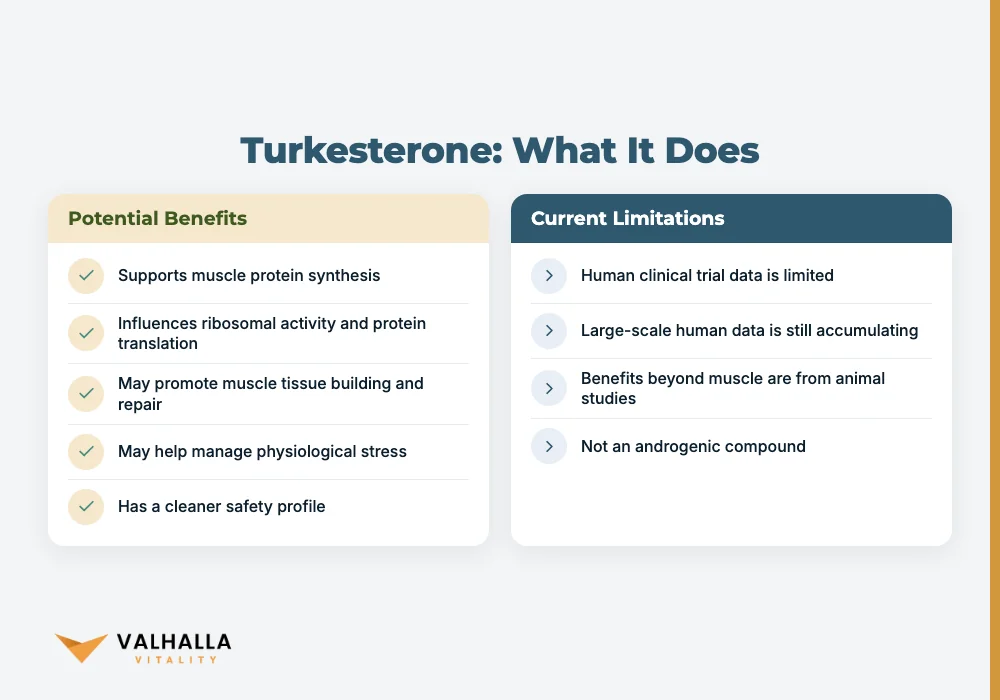
Turkesterone supports muscle protein synthesis through a non-androgenic pathway. This is the core finding. Synthetic anabolic compounds work by binding to androgen receptors and triggering hormonal cascades throughout the body. Turkesterone does not do that. Instead, it operates through the PI3K/Akt signaling pathway, influencing ribosomal activity and protein translation to promote muscle tissue building and repair.
A 2024 systematic review by Todorova et al. in Nutrients documented this mechanism in detail, describing turkesterone's prominent potential in sport and healthy nutrition. The non-androgenic route is both the source of turkesterone's benefits and the reason for its substantially cleaner safety profile compared to conventional anabolic compounds.
Beyond muscle tissue, animal model studies have found anti-inflammatory effects, improved glucose regulation, and cardiovascular tissue support. Human clinical trial data remains limited, which is the honest context any review of turkesterone supplements must acknowledge upfront. The mechanistic evidence is strong. The large-scale human data is still accumulating.
Turkesterone also functions as an adaptogen, meaning it may help the body manage physiological stress more effectively. For athletes navigating heavy training loads, this stress-buffering potential on cortisol and recovery processes is as relevant as any direct anabolic signal.
Turkesterone benefits at a glance
| Benefit area | What the evidence suggests | Evidence tier |
|---|---|---|
| Muscle protein synthesis | May support increased synthesis via non-androgenic pathway | Animal + mechanistic |
| Tissue recovery | May reduce repair time after training-induced damage | Animal models |
| Anti-inflammatory activity | May lower key inflammatory markers | Animal models |
| Blood glucose regulation | May help stabilize glucose response | Animal models |
| Adaptogenic support | May buffer physiological and psychological stress | Mechanistic |
| Immune function | May support baseline immune activity | Preclinical |
Data reflects findings summarized in Todorova et al. (2024). Human randomized controlled trial evidence remains limited.
Turkesterone muscle growth: what the studies found
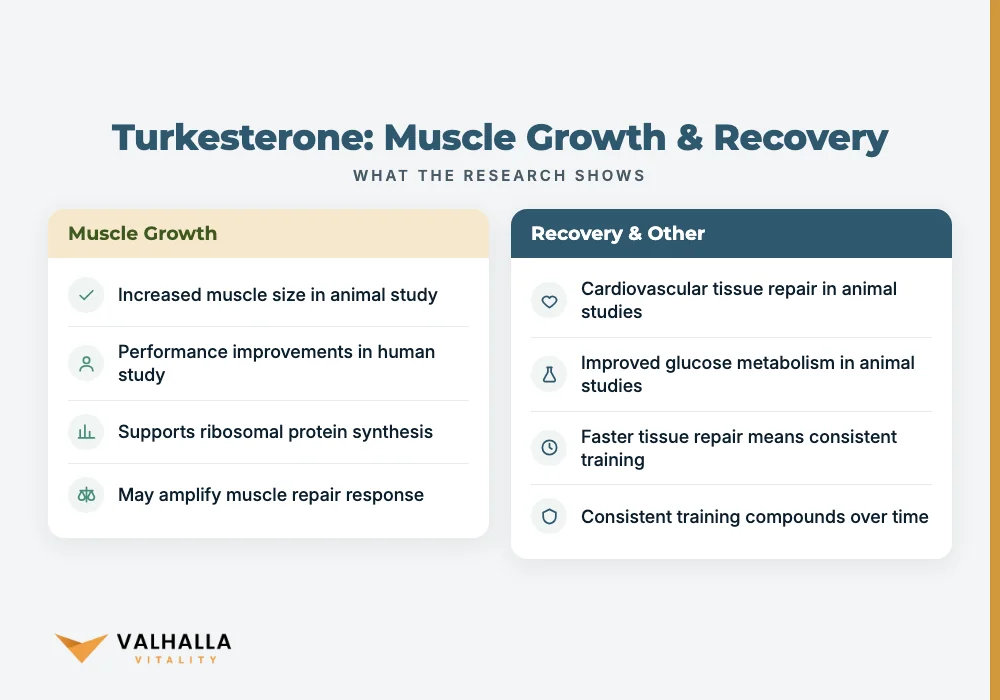
The muscle growth data is where the clearest research signals appear. In a controlled animal study referenced in the scientific literature, subjects given turkesterone alongside regular exercise showed a statistically significant increase in muscle size over 21 days. A separate human study compared weightlifters receiving turkesterone against a placebo group. The turkesterone group showed measurable performance improvements.
These are not large-scale randomized controlled trials. That matters, and you should factor it in. But the results are consistent with the mechanistic picture: by supporting ribosomal protein synthesis, turkesterone may give muscle tissue a better environment for repair and growth after training stress.
Protein synthesis is the underlying driver of adaptation. Each training session creates micro-damage in muscle fibers. The repair process, when conditions support it, deposits slightly more tissue than what was damaged. Turkesterone may amplify that repair response, and over weeks and months of consistent training, that contribution could accumulate meaningfully.
Animal studies on mice and sheep also demonstrated benefits in cardiovascular tissue repair and glucose metabolism. These findings matter for athletic performance because cardiovascular efficiency directly affects how quickly working muscles receive oxygen and nutrients during and after training.
For those exploring how turkesterone fits into structured athletic training programs and recovery protocols, the recovery dimension is as important as the muscle-building one. Faster tissue repair means more consistent training. Consistent training compounds over time. That is how athletic adaptation works.
How ecdysteroid supplements compare to anabolic steroids
This question comes up in nearly every turkesterone conversation. The answer is direct.
Anabolic steroids bind to androgen receptors. They produce strong anabolic effects, but they also suppress endogenous testosterone production, stress the liver, alter lipid profiles, increase cardiovascular risk, and can create physiological dependency. Users often require post-cycle therapy and ongoing hormonal monitoring. The clinical literature on these risks is extensive and unambiguous.
Turkesterone does not bind to androgen receptors. It does not suppress testosterone. There is no post-cycle recovery required, no liver enzyme monitoring needed, no hormonal axis to restore after stopping. The mechanism is structurally different, which is why ecdysteroid supplements are classified as dietary supplements rather than controlled substances in most jurisdictions.
The practical trade-off is effect magnitude. Turkesterone may support natural muscle growth and performance adaptations over time, but it does not replicate the dramatic tissue changes associated with high-dose anabolics. That is an honest description of a different compound category, not a criticism. Different risk-to-benefit profile. Many athletes find it more appropriate for long-term use. Athletes who buy turkesterone are choosing that different risk-to-benefit profile deliberately.
Natural food sources vs. turkesterone supplements
Turkesterone occurs naturally in several plants. Spinach contains measurable ecdysteroid concentrations. Certain yam varieties do too. The presence of these compounds in common vegetables is part of what makes turkesterone a legitimate subject of nutritional science rather than a purely synthetic construct.
The practical limitation is concentration. People looking to buy turkesterone supplements should understand that dietary ecdysteroid intake from food sits far below the amounts studied in research settings. A generous serving of spinach provides meaningful vitamins, minerals, and a small quantity of ecdysteroids, but it does not deliver the concentrated amounts needed to produce the effects documented in turkesterone research.
This concentration gap is the main reason people choose to buy turkesterone in supplement form rather than relying on dietary intake. The compound is not foreign to human physiology or diet. The supplement form delivers what nature provides in dilute amounts, at concentrations a licensed provider can evaluate in the context of your individual health picture.
What to look for when you buy turkesterone supplements
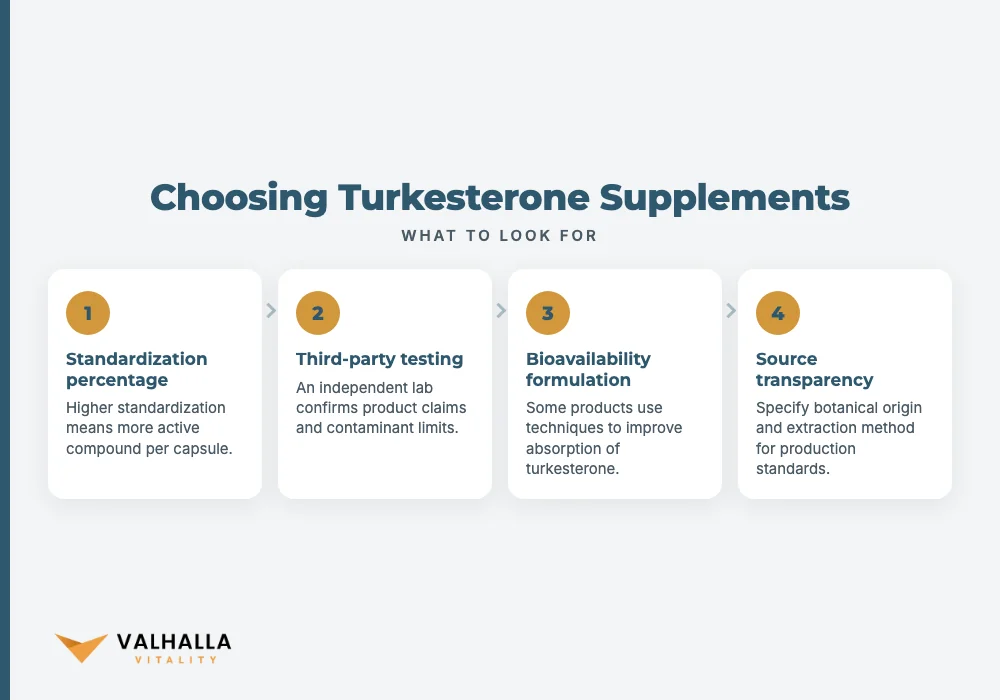
Not all turkesterone products are equivalent. Every ecdysteroid supplement on the market differs in standardization, testing rigor, and bioavailability formulation. Knowing what to evaluate before you buy turkesterone supplements can make the difference between an effective protocol and wasted money.
Standardization percentage. Products should clearly list their ecdysteroid standardization, verified through manufacturer testing. A higher standardization means more active compound per capsule rather than primarily filler or plant matrix material.
Third-party testing. A Certificate of Analysis from an independent laboratory confirms the product contains what it claims and that contaminants are within acceptable limits. Reputable manufacturers make this document available on their product pages or on request.
Bioavailability formulation. Turkesterone has limited bioavailability in its basic extracted form. Some products use cyclodextrin complexing or other techniques that may improve absorption. When a formulation specifies its bioavailability technology, that signals more rigorous product development.
Source transparency. Turkesterone is typically extracted from Ajuga turkestanica. Manufacturers who specify the botanical origin and extraction method demonstrate production standards that vague sourcing claims do not.
Valhalla Vitality's Boostavar combines turkesterone with ecdysterone and epicatechin. Each compound in that blend has an independent research record in muscle physiology and recovery. The formulation uses a process designed to preserve ingredient integrity through manufacturing.
For a fuller look at the documented health applications of turkesterone across athletic and general wellness contexts, the evidence landscape is more substantive than most supplement categories of comparable size.
Is It Worth It to Buy Turkesterone?
The research on turkesterone for athletes is more substantial than for many supplements in this category. The mechanistic rationale is scientifically coherent. The safety profile is substantially better than anabolic alternatives. And the 2024 review by Todorova et al. in Nutrients specifically described turkesterone's prominent potential in sport and healthy nutrition, a characterization that reflects genuine scientific interest rather than manufacturer marketing.
The honest qualifiers still apply. Most strong data comes from animal models. Human RCT data is limited. Someone who requires robust large-scale human trial data before spending money should wait for that literature to develop.
Someone comfortable with a plausible mechanism, consistent animal evidence, a cleaner safety profile than alternatives, and a growing body of peer-reviewed interest has a rational basis for deciding to buy turkesterone supplements today.
Does turkesterone have side effects?
Reported side effects are minimal in the available literature. Because turkesterone does not bind to androgen receptors, it does not trigger the hormonal disruptions associated with anabolic steroids, including testosterone suppression, liver strain, altered lipid profiles, or cardiovascular stress. This is also why androgenic concerns about hair loss and acne that follow conventional anabolic use are not part of turkesterone's documented profile.
The most commonly reported practical issue is gastrointestinal discomfort when the supplement is taken on an empty stomach. Taking it with a meal appears to address this in most cases.
For a detailed look at how ecdysteroid safety data addresses androgenic risk signals in the literature, available evidence is currently reassuring but not exhaustive. Anyone with pre-existing health conditions or who takes prescription medications should speak with a qualified healthcare provider before adding any supplement to their protocol.
How long does it take for turkesterone to work?
There is no universal answer. Individual response depends on training status, nutrition quality, sleep, and a range of variables that no generic turkesterone dosage guide can fully account for.
The controlled animal study showing significant muscle size increases used a 21-day protocol. Human studies examining ecdysteroid supplementation have generally run 8 to 12 weeks. Most people who report subjective improvements, such as faster recovery and reduced soreness, notice something within the first few weeks. Structural changes in muscle tissue take longer to manifest.
When you buy turkesterone without a realistic timeline expectation, premature conclusions about effectiveness are the most common outcome. Consistency is the variable that matters most. The compound works through cumulative tissue adaptation over time, not through acute single-session spikes. Commit to a proper trial window, maintain your training load, and give the compound adequate time before drawing conclusions.
Talk to a provider before you start
A licensed provider can review your health intake and let you know whether a natural bodybuilding supplement like turkesterone fits your current goals and health picture. Book Your Consultation to get a personalized evaluation.
FAQ
What is the best turkesterone dosage?
A licensed provider determines the appropriate amount after reviewing your health intake, training history, and any current medications. There is no single universal dose, and self-selecting amounts based on online guides bypasses the clinical context that makes a supplementation protocol safe and effective.
Can I get enough turkesterone from food alone?
Foods like spinach and certain yam varieties contain natural ecdysteroids, including small amounts of turkesterone, but at concentrations far below those studied for performance or recovery applications. Dietary intake alone is unlikely to produce the effects documented in research, which is why concentrated supplement forms exist.
Is turkesterone a controlled substance?
Turkesterone is classified as a dietary supplement in most jurisdictions because it does not bind to androgen receptors or produce the hormonal effects associated with anabolic steroids. Regulatory status may vary by country, so checking local guidelines is advisable outside the US.
How does turkesterone differ from synthetic steroids?
Turkesterone stimulates protein synthesis through a non-androgenic pathway and does not suppress endogenous testosterone production or cause the hormonal side effects linked to anabolic steroids. Its effect magnitude is more moderate, and so is its risk profile. It is a plant-derived compound in a categorically different class from synthetic anabolics.
Sources
- Todorova V et al. (2024). Ecdysterone and Turkesterone-Compounds with Prominent Potential in Sport and Healthy Nutrition. Nutrients. PubMed
You May Also Like
 Turkesterone
 Muscle Growth: What the Research Shows
Turkesterone muscle growth research reviewed: how this ecdysteroid may support protein synthesis, timelines, safety, and what to ask before starting.
October 30, 2026 ETRead more → Turkesterone
 Bodybuilding: What Athletes Need to Know
Turkesterone bodybuilding explained: how ecdysteroids work, what studies show, results timeline, and why provider review matters before you start.
October 30, 2026 ETRead more → Turkesterone
How Turkesterone Works: Mechanism, Benefits, Safety
How turkesterone works: it triggers PI3K-driven protein synthesis without activating androgen receptors. Mechanism, benefits, and safety covered.
October 30, 2026 ETRead more →