
The following blog post is for entertainment and informational purposes only. It is not intended to provide medical advice or diagnosis. Please consult your doctor before making any health-related decisions.
Turkesterone bodybuilding has attracted real interest from athletes pursuing natural anabolic support without the risks tied to androgenic compounds. Turkesterone is a plant-derived ecdysteroid from Ajuga turkestanica that may support muscle protein synthesis through non-androgenic pathways distinct from testosterone. A review of the range of ecdysteroid health effects studied to date is a useful starting point before discussing this option with a provider. A licensed provider can assess whether this supplement fits your training goals and current health profile.
What is turkesterone and how does it differ from conventional anabolics?
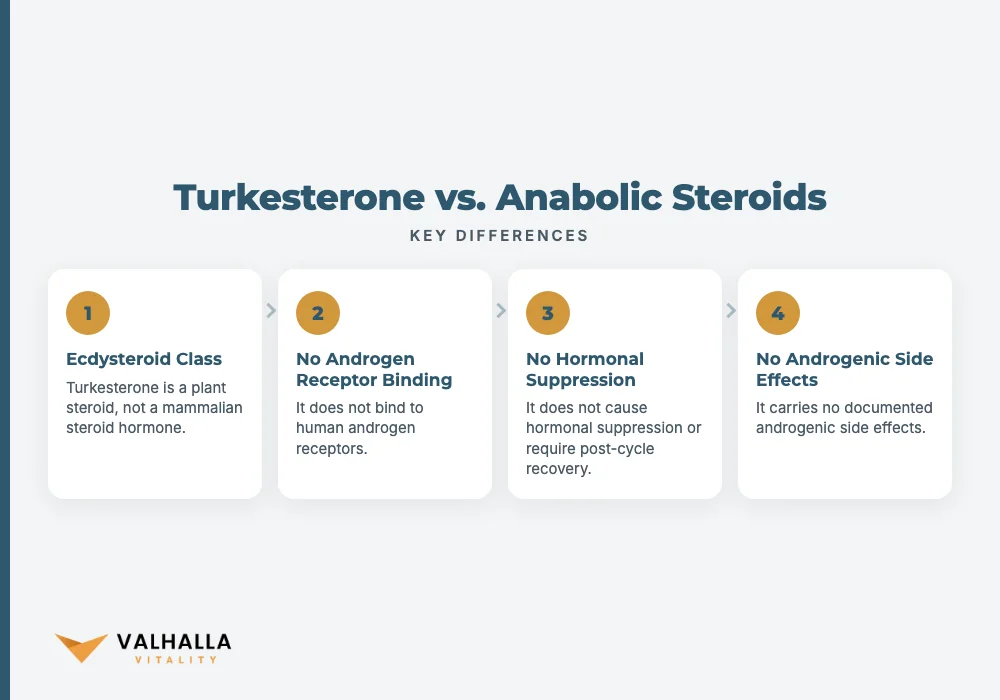
Turkesterone belongs to the ecdysteroid class, a family of steroid hormones found in plants, insects, and certain aquatic organisms. These compounds share structural features with mammalian steroid hormones, and that resemblance is what prompted researchers in the 1960s to ask a straightforward question: could consuming them produce anabolic effects in humans? The answer, clarified across decades of investigation, is that ecdysteroids do not bind to human androgen receptors. That single fact separates them categorically from anabolic-androgenic steroids.
The compound is sourced primarily from Ajuga turkestanica, a flowering plant native to Central Asia. Traditional medicine systems in the region used extracts from this plant for various applications long before modern supplement interest emerged. Contemporary products typically standardize extracts to a defined ecdysteroid percentage. That standardization figure is one of the most important quality indicators when evaluating products in the natural anabolic supplements space, because unstandardized extracts can vary widely in actual active content per serving.
Because turkesterone does not activate androgen receptors, it does not cause hormonal suppression, does not require post-cycle recovery protocols, and carries no documented androgenic side effects. This separates it sharply from both anabolic-androgenic steroids and testosterone-based therapies. The absence of androgenic activity is the defining feature for athletes evaluating the risk profile.
Scientists in the 1960s hypothesized that if the structural resemblance between ecdysteroids and testosterone corresponded to similar biological activity, these plant compounds could become a meaningful tool for supporting muscle development. That hypothesis drove early animal experiments. Results in mouse liver protein metabolism, published in 1978, provided insufficient evidence for human muscle application. The hypothesis never died; the research just moved slowly.
How turkesterone bodybuilding supplements work for muscle growth
The proposed mechanism centers on protein synthesis stimulation rather than androgen signaling. Research suggests turkesterone accelerates the body's incorporation of amino acids into muscle protein, amplifying the synthetic response that resistance training already initiates.
Carbohydrate and lipid metabolism are also involved. Ecdysteroids appear to shift metabolic priorities toward muscle tissue anabolism, including facilitating stem cell differentiation into muscle cell lineages. A secondary effect cited in the literature is cortisol buffering. Intense training elevates cortisol, which drives muscle protein breakdown. Turkesterone may reduce this catabolic pressure during high-output training phases, helping preserve mass that would otherwise be lost.
The mechanism does not produce the acute androgenic response that conventional anabolic agents create. The effect is cumulative, progressive, and dependent on sustained supplementation alongside consistent resistance training. A more detailed look at how turkesterone works inside muscle cells covers the biochemical pathways at length. The practical summary: if the mechanism operates as the research proposes, it does so without compromising endocrine function.
What the research actually shows: a turkesterone bodybuilding timeline
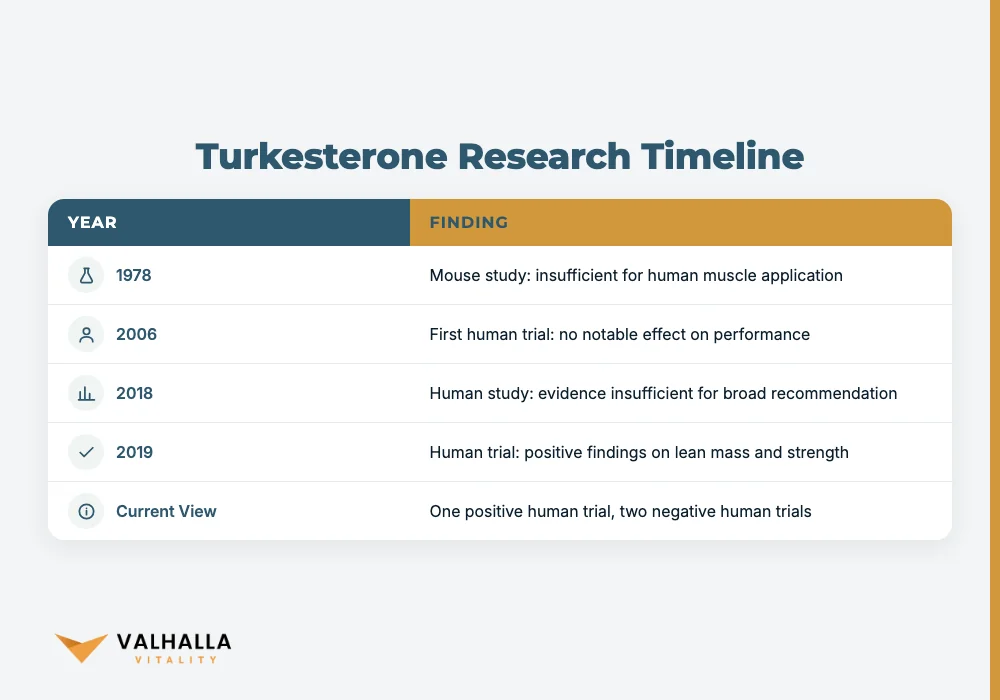
Understanding the evidence for turkesterone bodybuilding requires tracing the full research history, not just the most recent positive study.
Key milestones in the evidence record:
| Year | Study focus | Outcome |
|---|---|---|
| 1978 | Mouse liver protein synthesis | Insufficient basis for human muscle application |
| 2006 | First resistance-trained human trial | No notable effect on key performance markers |
| 2018 | Human muscle adaptation study | Evidence still insufficient for broad recommendation |
| 2019 | 10-week trial in resistance-trained bodybuilders | Positive findings on lean mass and strength |
The 2019 study is the primary reference for turkesterone bodybuilding claims. A structured 10-week protocol in resistance-trained men produced positive outcomes for lean mass and strength output. It is one study. One positive result does not constitute clinical consensus, and the two earlier negative human trials belong to the same evidence base. Both matter.
Social media accelerated the compound's profile well beyond what the science warranted. Prominent fitness content creators began recommending turkesterone after the 2019 results circulated. At least one creator moved from user to manufacturer within the same content cycle; others followed. Some documented mixed or limited personal results over extended protocols. One creator who ran a 60-day turkesterone bodybuilding series advised viewers to assess whether the cost justified the evidence, given the price of quality standardized extracts relative to the available research at the time. That tension between hype and evidence has not resolved since.
The full picture is four decades of research, two negative human trials, one positive human trial, and a biologically plausible mechanism that has not yet been tested in a definitive dose-response study.
Does turkesterone actually build muscle?
Early evidence suggests it may support lean muscle development when paired with consistent resistance training. That is the honest answer, and the 2019 human trial provides the most direct support for it.
The 2019 study found positive changes in lean mass and strength across a 10-week protocol in resistance-trained subjects. The compound does not function like an androgenic anabolic agent. It does not force rapid hypertrophy through receptor saturation. What the mechanism proposes is a more efficient use of available amino acids for muscle repair and development, combined with reduced catabolic breakdown during demanding training phases.
Athletes entering a turkesterone bodybuilding protocol who expect results comparable to pharmaceutical androgenic interventions will find the evidence does not support that expectation. Athletes treating turkesterone as one component within a well-designed training and nutrition program are working with a more realistic frame. The compound's proposed anti-catabolic effects may be as valuable in practice as any direct anabolic signal, particularly during high-volume training blocks where recovery is the limiting factor.
The safety data reinforces the rationale for interest. No meaningful changes in testosterone, liver enzyme activity, kidney markers, or androgenic biomarkers appear in current published research on treated subjects. A natural anabolic supplement that does not disrupt the body's hormonal environment while potentially supporting protein synthesis occupies a genuinely distinct niche.
Dismissing turkesterone entirely overstates the negative evidence. Overclaiming certainty based on the 2019 trial overstates the positive. The accurate position is preliminary evidence of a real effect, awaiting replication.
Should you take turkesterone before or after a workout?
Current evidence does not identify an optimal timing window for turkesterone supplementation. For athletes asking about turkesterone before or after workout, the answer is consistent: timing precision within a single day matters less than showing up consistently across the full protocol. That is the direct answer.
Resistance exercise triggers a coordinated hormonal recovery response. A 2017 analysis by Kraemer and colleagues published in the Journal of Applied Physiology documented post-exercise peaks in testosterone, growth hormone, and IGF-1 in resistance-trained subjects. This hormonal environment after training is when protein synthesis runs at its highest natural rate. Taking a compound that may enhance protein synthesis within or around that window has biological logic, even without dedicated turkesterone timing trials to confirm the advantage directly.
In practice, most athletes on turkesterone bodybuilding protocols divide their daily intake across two doses taken with food. One near training time and one at a separate point in the day is a common approach. This also addresses the GI sensitivity some users report when taking the compound on an empty stomach. Taking it with a meal or caloric beverage resolves this issue for most people.
What the evidence does not support is the idea that precise timing determines outcomes. Turkesterone's effect is cumulative, not acute. There is no subjective surge tied to any individual dose. The compound builds to a functional tissue concentration over weeks. Shifting a dose by a few hours produces no meaningful difference. Missing days does. A provider familiar with your full supplementation picture can advise on timing and stacking if you are combining multiple compounds.
How long does turkesterone take to show results?
Based on the available human research on turkesterone bodybuilding outcomes, plan for a minimum of 10 weeks before drawing conclusions about your individual response.
The 2019 study ran 10 weeks and produced its positive results by the endpoint. No shorter trial has documented comparable positive changes. This timeline reflects the cumulative nature of ecdysteroid supplementation: there is no first-week effect. Ecdysteroid concentration builds gradually, and the downstream changes in protein synthesis efficiency accumulate on the same slow schedule.
Most reports from practitioners working with this compound describe the first three to four weeks as largely imperceptible. Changes in training recovery quality and modest improvements in output tend to appear around weeks four through six for individuals who respond. Lean mass changes measurable by body composition assessment are rarely meaningful before the eight-week mark.
This extended turkesterone results timeline creates a self-assessment challenge. Gradual changes are easy to attribute to other factors, such as a dietary improvement, better sleep, or a training program adjustment, that happened to coincide with beginning supplementation. Controlling those variables during the assessment period gives the most interpretable result.
Supplement quality directly shapes outcomes on this timeline. Reviewing what to look for in a quality turkesterone supplement before purchasing is practical due diligence. Unstandardized extracts or low-ecdysteroid-concentration products may show no results simply because the active compound is not present in amounts that matter.
Is turkesterone worth it for bodybuilding?
The calculation depends on what you are comparing it to and what you are trying to accomplish.
Within the natural anabolic supplements category, turkesterone has more evidence behind it than most plant-based performance compounds. One positive human trial and a biologically plausible non-androgenic mechanism exceeds what the majority of comparable supplements can produce. The safety profile, with no documented androgenic activity or HPTA suppression, keeps the risk side of the ledger low.
The cost question is legitimate and was documented by early adopters in the fitness content community. Quality standardized extracts carry a meaningful monthly cost compared to well-established compounds with decades of replicated research behind them. Creatine monohydrate, to name one example from the same natural performance supplement category, has a far larger evidence base and is widely available at a fraction of the per-month expense. That comparison matters when deciding whether turkesterone fits a supplementation budget.
The honest framing: turkesterone bodybuilding supplementation is a reasonable choice for athletes who have already addressed the fundamentals, meaning training, nutrition, sleep, and recovery management, and are looking to add a well-tolerated natural anabolic support compound with at least preliminary evidence behind it. It is not a shortcut. It is not a substitute for foundational habits. Treating it as a support layer on top of a solid program is the evidence-consistent way to approach it.
For athletes already operating under a provider-guided hormonal health protocol, the non-androgenic mechanism is relevant. Turkesterone does not interfere with the HPTA or complicate hormone monitoring the way androgenic compounds do, which makes it a potentially compatible addition to other supervised protocols, pending professional review.
Turkesterone dosage for athletes: what to know
For turkesterone dosage, athletes work with a licensed provider who determines the appropriate amount after reviewing individual health profile, labs, and current supplementation stack. No universally applicable dose exists, and published research has not established a dose-response curve.
The 2019 study used a specific protocol that produced positive results, but that protocol has not been compared to varying dose levels across multiple trials. Without that comparative data, manufacturer label recommendations represent starting-point guidance rather than evidence-backed therapeutic targets. Body weight, dietary protein intake, training volume, and individual metabolic differences all affect how the compound functions in any specific person.
At Valhalla Vitality, a provider reviews your intake before any supplementation protocol begins. That baseline assessment gives you an objective comparison point that self-selected experimentation without data cannot provide. Without a baseline, distinguishing the supplement's contribution from concurrent changes in training, nutrition, or sleep is genuinely difficult.
Duration is the clearest evidence-supported variable. Consistent use across 10 weeks or more is the pattern associated with positive outcomes. Using the compound for two to four weeks and concluding it is ineffective ignores the established timeline entirely. Long-term consistent use was identified in early turkesterone bodybuilding research as a key factor in observing meaningful results.
Safety profile: what makes turkesterone different from androgenic compounds
Turkesterone's safety data is one of the most consistently cited strengths in the ecdysteroid supplement benefits literature, and the current evidence is largely reassuring.
Published research finds no significant effect on liver enzyme activity, kidney function markers, testosterone levels, LH, FSH, or any other measurable HPTA parameter in treated subjects. No androgenic activity has been documented in human trials. That means no post-cycle hormonal suppression, no dependency on continued use to maintain endocrine function, and no androgenic side effects. This is the specific combination that makes turkesterone bodybuilding supplementation different from most conventional performance-enhancing approaches.
GI sensitivity is the most commonly reported practical issue. It typically presents as mild nausea or discomfort and occurs most often when the supplement is taken on an empty stomach. Taking it with a meal resolves this for most users.
Hair-related questions come up regularly in discussions of ecdysteroid supplements. The absence of androgen receptor binding addresses the primary mechanism behind androgenic hair effects, but individual responses warrant direct evaluation. A specific review of whether turkesterone affects hair covers the available evidence if that is a relevant concern.
Pregnant and nursing individuals should avoid turkesterone supplements without explicit provider guidance. Anyone with pre-existing hormonal or metabolic conditions should discuss the compound's profile with a licensed provider before starting. Absence of documented adverse events in small-sample published trials is meaningful but not the same as a confirmed long-term safety record.
Integrating turkesterone bodybuilding into a structured training program
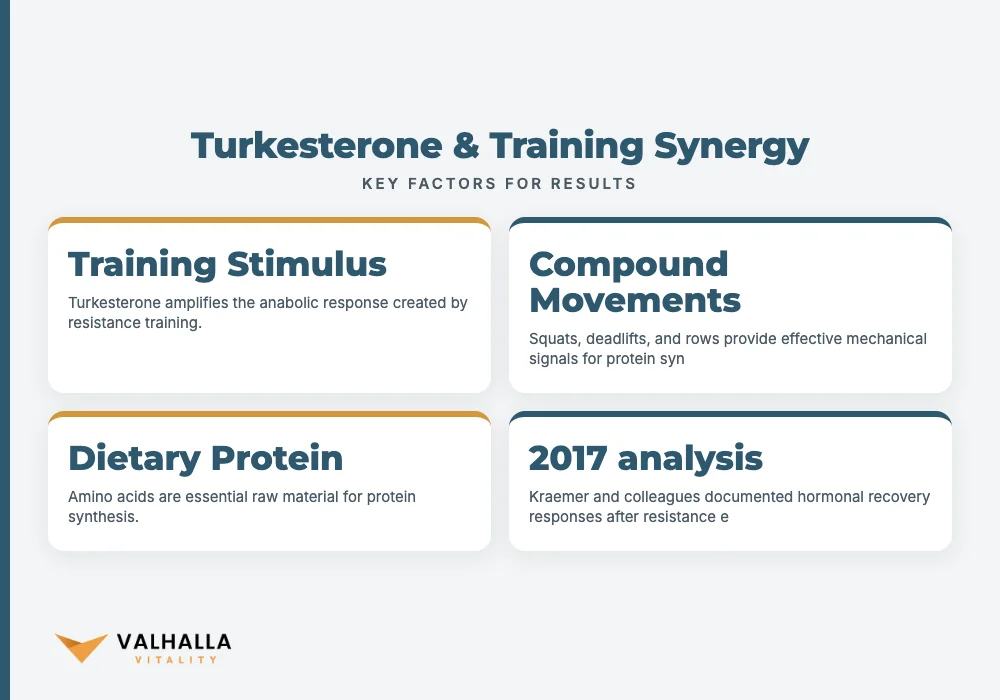
Turkesterone does not function independently of training. The mechanism requires a training stimulus to amplify. This is not a caveat; it is how the compound operates biologically.
Resistance training generates the primary anabolic stimulus through mechanical stress, muscle fiber damage, and the subsequent repair process. A 2017 analysis by Kraemer and colleagues in the Journal of Applied Physiology documented the hormonal recovery responses following resistance exercise, with testosterone, growth hormone, and IGF-1 peaks measurable after hard sessions. Turkesterone's proposed enhancement of protein synthesis works within this same biological context. It may amplify the response that training creates. It cannot generate that response without the training stimulus.
Compound strength movements under progressive overload provide the mechanical signal that protein synthesis acts on most effectively. Overhead press, squats, deadlifts, and rows create widespread muscular demand across multiple movement planes. Higher-volume training blocks pair particularly well with turkesterone's proposed anti-catabolic effect, because the preservation of muscle protein during hard recovery periods is most valuable precisely when training output is high and breakdown pressure is greatest.
Dietary protein is the substrate. The synthesis machinery needs amino acids as raw material. Turkesterone may improve how efficiently those amino acids are incorporated, but it cannot compensate for insufficient dietary protein. Leucine-rich protein sources distributed across the training day remain a foundational requirement independent of any supplement.
Sleep and recovery determine how the cumulative ecdysteroid concentration translates into visible adaptation. Cutting sleep to train more volume does not accelerate results. It undermines the recovery process that turkesterone supplementation is working within.
For a more complete picture of how natural turkesterone fits a structured training program, dedicated resources walk through practical integration considerations across different training phases.
Considering turkesterone with provider guidance
If you are exploring turkesterone bodybuilding supplementation and want an assessment tailored to your individual health profile, Book Your Consultation with a licensed provider to review your options.
FAQ
Does turkesterone actually build muscle?
Early evidence, including a 2019 human trial over 10 weeks in resistance-trained athletes, found positive changes in lean mass and strength. The evidence base remains small, and independent replication is needed before stronger conclusions are warranted. The compound appears to support protein synthesis as part of a structured training program rather than produce dramatic standalone results.
How long does turkesterone take to show results?
The most cited human trial ran 10 weeks before positive results were measurable at the endpoint. The first three to four weeks are typically imperceptible. Planning for a 10-to-12-week assessment window with consistent training and nutrition provides the most honest evaluation of your personal response.
Should you take turkesterone before or after a workout?
Current research does not identify a confirmed optimal timing window for turkesterone supplementation. Many athletes split their daily intake across two doses with food, with one near training time. Consistency across days has more impact on outcomes than timing precision within any single day.
What is the best dose of turkesterone for muscle growth?
No universal dose has been established through dose-response research in humans. A licensed provider determines the appropriate amount after reviewing your individual health profile and labs. Self-selected dosing based on manufacturer labels does not replace an individualized assessment.
Is turkesterone safe for long-term use?
Current research shows no adverse effects on liver enzymes, kidney markers, or hormonal function in healthy adults across the study periods tested. Long-term human data beyond 12 weeks remains limited. Discussing your individual profile with a licensed provider before beginning a sustained protocol is the appropriate step.
Sources
- Kraemer WJ et al. (2017). Recovery responses of testosterone, growth hormone, and IGF-1 after resistance exercise. Journal of Applied Physiology. PubMed
You May Also Like
 Turkesterone
 Muscle Growth: What the Research Shows
Turkesterone muscle growth research reviewed: how this ecdysteroid may support protein synthesis, timelines, safety, and what to ask before starting.
October 30, 2026 ETRead more → Turkesterone
How Turkesterone Works: Mechanism, Benefits, Safety
How turkesterone works: it triggers PI3K-driven protein synthesis without activating androgen receptors. Mechanism, benefits, and safety covered.
October 30, 2026 ETRead more → Turkesterone
Natural Turkesterone for Muscle Growth: What to Know
Natural turkesterone from Ajuga turkestanica may support muscle growth and recovery without androgenic side effects. Here's what the evidence shows.
October 27, 2026 ETRead more →