Telomere Support Supplement: Cycloastragenol & Longevity

The following blog post is for entertainment and informational purposes only. It is not intended to provide medical advice or diagnosis. Please consult your doctor before making any health-related decisions.
A telomere support supplement is any compound formulated to slow or partially address the shortening of telomeres, the protective sequences at the ends of chromosomes that erode each time a cell divides. Cycloastragenol and spermidine are the two most studied candidates in anti-aging cellular health research, each targeting cellular aging through a distinct mechanism. If you want to understand what a provider-guided approach looks like before deciding, the anti-aging longevity page covers the full framework.
What are telomeres, and why does their length matter?
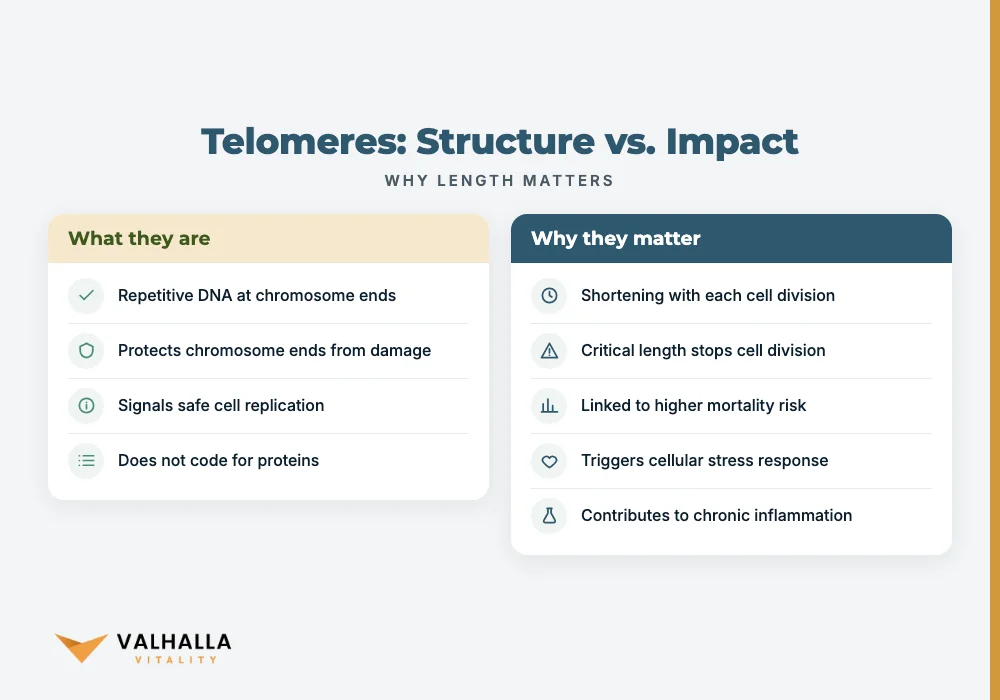
Every chromosome ends in a stretch of repetitive DNA called a telomere. The sequence does not code for proteins. Its job is structural: it keeps chromosome ends from degrading or fusing with neighboring chromosomes, and it signals to the cell whether replication can safely continue. Each round of cell division trims a small portion of that sequence. When a telomere reaches a critical minimum length, the cell enters replicative senescence, stops dividing, and can no longer replenish the surrounding tissue.
Telomere length and aging are linked at a population level, not just a molecular one. A 2018 meta-analysis in Ageing Research Reviews found that shorter telomere length was significantly associated with higher all-cause mortality risk across a large pool of studies (Wang et al., 2018). A 2016 genetic analysis in Experimental Gerontology strengthened that case by using naturally occurring genetic variants as instruments to isolate the effect of telomere length on health outcomes, adjusting for many confounders that affect observational data (Hamad et al., 2016). The association held.
Beyond mortality statistics, shortened telomeres trigger a stress response within the cell. This activates pathways that promote inflammatory signaling, sometimes called the senescence-associated secretory phenotype. Senescent cells do not merely stop functioning. They actively alter the environment of surrounding tissue, contributing to the chronic low-grade inflammation associated with aging. That systemic effect is why telomere biology matters beyond any single cell.
Most large-scale studies measure telomere length in white blood cells, which may not reflect telomere dynamics in other tissues. Individual variation is wide. Telomere length is best understood as one informative biomarker within a larger picture, which is why any decision about a telomere support supplement should involve a licensed provider reviewing current labs.
Key compounds in telomere support supplement research
| Compound | Proposed mechanism | Research stage |
|---|---|---|
| Cycloastragenol | Telomerase activation in somatic cells | Cell and early human studies |
| Spermidine | Autophagy induction; mitochondrial quality control | Animal and early human studies |
| Vitamin D | Telomerase activity modulation | Observational and population data |
| Omega-3 fatty acids | Oxidative stress reduction near telomere sites | Intervention and observational studies |
| Plant polyphenols | Anti-inflammatory and antioxidant protection | Epidemiological associations |
Vitamin D, omega-3s, and polyphenols are well-documented in existing longevity content. This article focuses on what that coverage leaves out: the mechanistic difference between cycloastragenol and spermidine, how the evidence is actually structured for each, and what a provider considers before recommending any telomere support supplement.
How does telomerase affect cellular aging?
Telomerase is the enzyme that rebuilds telomere sequences. Without it, every cell division is a one-way transaction. Chromosome ends grow shorter. Eventually the cell stops dividing.
The mechanism is precise. Telomerase carries an internal RNA sequence that mirrors the telomere repeat unit. Each time the enzyme engages a chromosome end, it extends the sequence using that template, then repositions and extends again. This ratcheting approach allows cells with consistent telomerase expression, like bone marrow stem cells, to sustain tissue renewal across a lifetime without exhausting their telomeres.
The problem is that telomerase is active primarily in stem cells and germline cells, not in the somatic cells that make up most adult tissues. High telomerase activity in somatic cells would allow indefinite division. That is how tumors form. So the body keeps telomerase tightly suppressed in most tissues, a controlled trade-off between replicative aging and cancer risk.
This trade-off is central to anti-aging cellular health research. Research published in Cell in 2025 placed this biology within a "precision geromedicine" framework, where molecular aging markers like telomere length inform individualized health interventions calibrated to a person's specific biological state (Kroemer et al., 2025). A 2025 analysis in Trends in Genetics added that transcriptomic data can track gene expression shifts across tissue types, extending the molecular picture beyond telomere measurement alone (Huang et al., 2025).
The practical implication: telomerase activation is a legitimate and studied target for natural longevity supplements. The goal is selective, moderate upregulation, not unrestricted promotion. Cycloastragenol research has specifically examined whether the compound's effect stays within a range unlikely to promote aberrant cell growth.
What supplements support telomere health?
Three functional categories of natural longevity supplements are relevant here. Telomerase activators attempt to rebuild what cell division erodes. Autophagy promoters clear damaged cellular material before it accumulates. Antioxidants and anti-inflammatories slow the environmental damage that accelerates shortening. Cycloastragenol occupies the first category. Spermidine occupies the second. Most popular longevity compounds fall into the third.
What is cycloastragenol and how does it work?
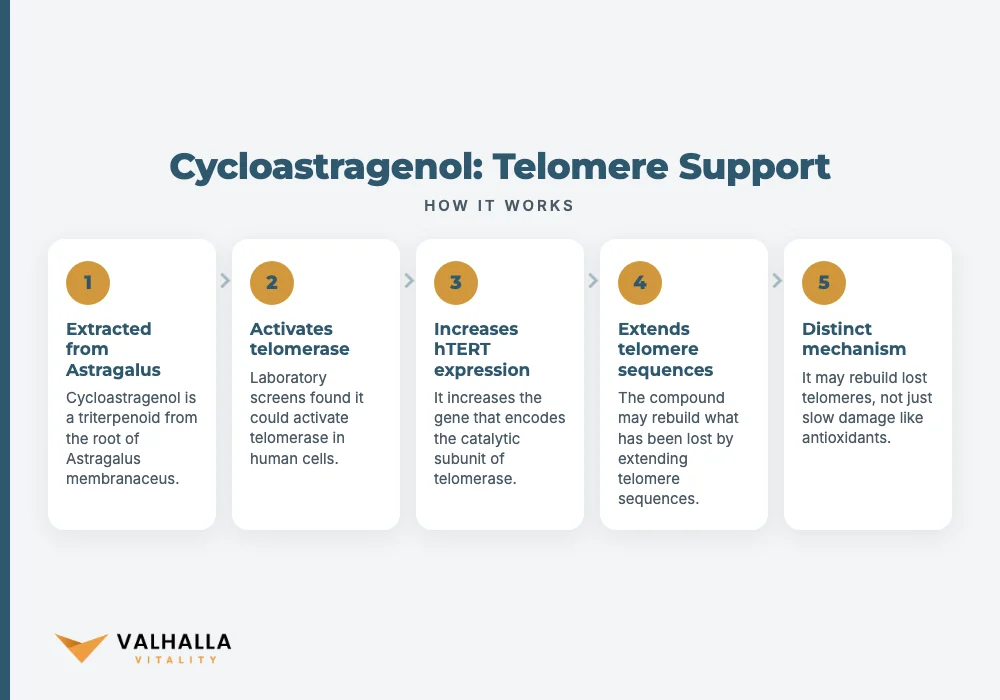
Cycloastragenol is a triterpenoid extracted from the root of Astragalus membranaceus, a plant with a long history in traditional medicine for supporting immune function and vitality. Its relevance to telomere biology was discovered through a different path: laboratory screens for small molecules capable of activating telomerase in human cells.
The research pathway is worth understanding. Screenings identified several compounds within Astragalus root extract that could increase hTERT expression, the gene encoding the catalytic subunit of telomerase. Cycloastragenol emerged as the most potent of these candidates. Follow-up studies examined its behavior in immune cells, skin fibroblasts, and other somatic cell types where telomere shortening is directly relevant to tissue aging.
Cycloastragenol benefits are mechanistically distinct from what antioxidant supplements do. Rather than only slowing the rate of damage, the compound may rebuild what has already been lost by extending telomere sequences in cells where telomerase would otherwise be dormant. That is a different category of claim, and it rests on a more direct mechanism than most longevity supplements carry.
Most evidence remains in cell cultures and animal models. Early human data exists and is encouraging, but large-scale clinical trials are still limited. Current findings are best described as promising and mechanistically plausible, not definitively established at scale in humans. For a detailed look at the study designs and documented side effect profile, see the cycloastragenol benefits and effects review.
Cycloastragenol dosage: why individual assessment matters
Laboratory research on cycloastragenol has tested a range of concentrations. That data does not translate cleanly into a single general-use recommendation. Body weight, liver metabolism, concurrent medications, and genetic variation in enzyme activity all influence how the compound behaves in any specific person. A licensed provider determines the appropriate cycloastragenol dosage after reviewing labs and health history. This principle applies to any telomere support supplement evaluated through a provider-guided telehealth intake, not just cycloastragenol.
Spermidine longevity benefits: the autophagy connection
Spermidine is a naturally occurring polyamine found in everyday foods. Concentrated dietary sources include wheat germ, soybeans, aged cheese, peas, mushrooms, and green vegetables. Polyamine levels decline with age. That decline correlates with reduced autophagy, the cellular recycling process that degrades and clears damaged proteins and organelles before they accumulate and impair cell function.
Spermidine longevity research focuses on restoring this recycling activity. Animal studies have shown spermidine extending lifespan in several model organisms by maintaining mitochondrial quality and proteostasis, the balance between protein synthesis and breakdown. Early human studies have examined its effects on cellular aging markers with results that support the animal findings but remain preliminary.
Spermidine also carries an anti-inflammatory dimension. By supporting mitochondrial function and reducing the accumulation of damaged cellular material, it may lower the chronic low-grade inflammation that accelerates many aging-related conditions. This connects to the growing research consensus that autophagy, mitochondrial health, and systemic inflammation operate as co-drivers of biological aging rather than independent processes.
Spermidine is also notable because meaningful amounts can be obtained through ordinary food. This gives it a dietary foundation that few other natural longevity supplements can claim. For a comprehensive look at the polyamine research and how spermidine differs from spermine, see the spermidine and spermine longevity overview.
Where cycloastragenol directly targets telomere repair, spermidine addresses the broader cellular maintenance machinery that keeps cells functional between divisions. Combining both in a single telomere support supplement formula targets cellular aging from two distinct directions.
Can you increase telomere length naturally?
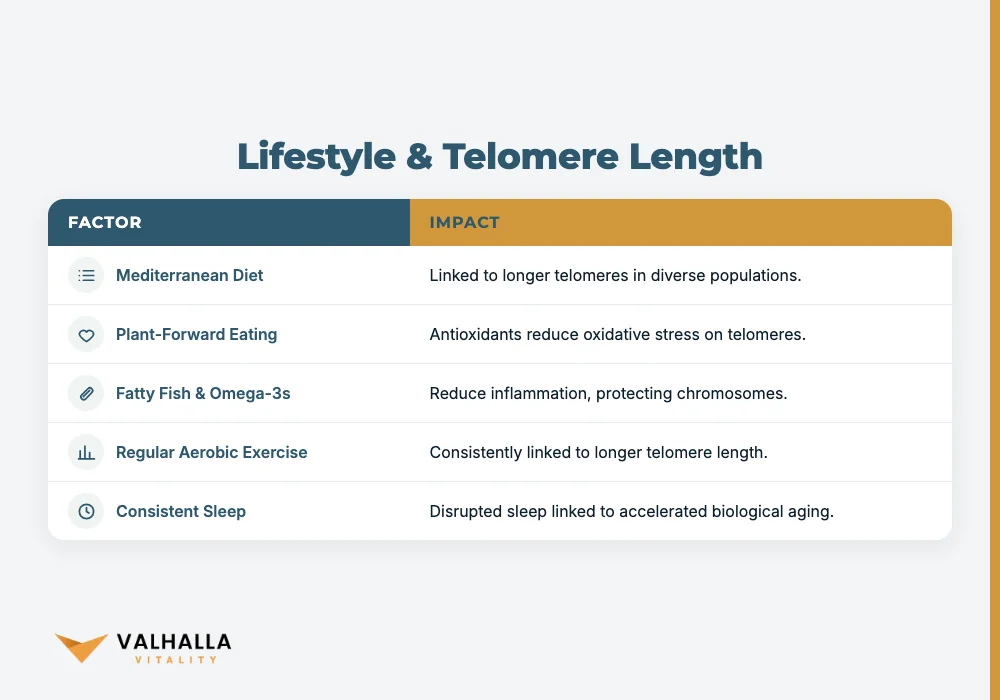
Lifestyle changes can slow telomere shortening, and some evidence suggests they may support modest maintenance. A 2020 systematic review and meta-analysis in Advances in Nutrition found that adherence to a Mediterranean-style diet, rich in vegetables, legumes, fish, olive oil, nuts, and whole grains, was positively associated with longer telomere length across pooled study populations (Canudas et al., 2020). The effect was modest. The consistency across diverse populations, however, was notable.
The evidence does not suggest that lifestyle changes can extend telomeres beyond a person's genetic baseline or fully address significant erosion. What it does show is that consistent habits can maintain what remains, and that maintenance matters. Population-level data links well-preserved telomere length to meaningfully better biological age profiles in older adults.
Lifestyle factors with the clearest research support:
- Plant-forward eating. Fruits, vegetables, legumes, flaxseed, and whole grains supply antioxidants and polyphenols that reduce the oxidative stress associated with telomere shortening. Nuts contribute both antioxidants and anti-inflammatory fats.
- Fatty fish and omega-3s. These reduce inflammatory activity that directly contributes to chromosomal erosion over time.
- Coffee and seaweed. Both appear in observational data with neutral-to-positive associations for telomere-related markers, though the evidence is weaker than for the overall Mediterranean pattern.
- Regular aerobic exercise. Moderate-intensity activity is consistently linked to longer telomere length in observational research. Sedentary behavior shows the opposite pattern.
- Consistent, sufficient sleep. Short or disrupted sleep is associated with accelerated biological aging markers, including telomere attrition.
- Stress reduction. Chronic psychological stress elevates cortisol and oxidative burden. Both are linked to faster telomere shortening in the population data.
- No tobacco. Smoking is one of the most reliably documented accelerators of telomere shortening, appearing consistently across different study designs and populations.
- Limit alcohol and processed meat. These appear consistently on the negative side of telomere length and aging research.
A telomere support supplement works on top of this foundation, not in place of it. Lifestyle choices reduce the erosion rate. Compounds like cycloastragenol may address the repair mechanism. Both matter for a coherent approach to anti-aging cellular health.
What are the best supplements for longevity and telomere support?
The natural longevity supplements category is large, and marketing claims routinely outpace the evidence. A practical evaluation comes down to three questions: does the compound have a studied mechanism specifically relevant to telomere or cellular aging biology; is the evidence from human trials or only from cells and animals; and does the product disclose ingredient sourcing, standardization, and third-party testing?
Cycloastragenol and spermidine meet the mechanism criterion more directly than most competitors in this space. Cycloastragenol has documented effects on telomerase activity in cell research, with early human data. Spermidine has documented effects on autophagy in animals and preliminary human studies. Neither carries the depth of large-scale trial data that established compounds like omega-3 fatty acids carry. That is an honest limitation. It should inform expectations, not dismiss the mechanism.
Third-party testing documentation also matters. Cycloastragenol products vary considerably in the concentration and purity of the active compound. Some products use astragaloside IV, a related compound from the same plant, which has different potency and pharmacokinetics. A quality product specifies exactly which compound is present, at what standardized percentage, and provides testing data to support the label claim.
Youthavar combines cycloastragenol and spermidine in a daily formula, targeting both telomere repair and cellular recycling simultaneously. For a breakdown of how the two ingredients are intended to work together and what the supporting research shows, the Youthavar antiaging synergy overview covers the rationale in detail.
What a provider evaluates before recommending a telomere support supplement
This step receives almost no attention in the top-ranking content on this topic. It is also the most clinically important one.
Before recommending any telomere support supplement, a licensed provider considers: current health status and any diagnosed conditions; medications that could interact with telomerase-active compounds; baseline labs reflecting inflammatory markers, oxidative stress indicators, and metabolic health; and the individual's existing diet and lifestyle profile. For cycloastragenol specifically, a personal or family history of certain cancers warrants explicit discussion before starting, given that telomerase activation carries context-dependent risk.
The intake review at Valhalla Vitality covers these variables through an online medical questionnaire, reviewed by a licensed provider within 24 business hours. If labs reveal factors that would change the recommendation, those are addressed before any protocol is finalized. This sequence, assessment before recommendation, is what differentiates a structured telehealth evaluation from a self-directed supplement purchase.
A 2025 analysis in Aging Clinical and Experimental Research made this point directly: healthy aging interventions produce better outcomes when behavioral, dietary, and pharmacological components are coordinated into a coherent plan rather than applied in isolation (Gianfredi et al., 2025). A provider review is the structure that makes that coordination possible.
Take the next step
To find out whether a telomere support supplement fits your current health picture, Book Your Consultation with a licensed provider.
FAQ
What supplements support telomere health?
Cycloastragenol and spermidine have the most direct research support for telomere biology. Cycloastragenol may activate telomerase to slow shortening, while spermidine supports autophagy and mitochondrial quality. Vitamin D, omega-3 fatty acids, and plant polyphenols offer additional protective roles through antioxidant and anti-inflammatory pathways.
Can you increase telomere length naturally?
Diet and consistent lifestyle habits can slow telomere shortening and may support modest maintenance. A 2020 meta-analysis in Advances in Nutrition found that Mediterranean-style eating was positively associated with longer telomere length. Regular aerobic exercise, adequate sleep, stress management, and avoiding tobacco also show supportive associations in the research literature.
What is cycloastragenol and how does it work?
Cycloastragenol is a triterpenoid extracted from Astragalus membranaceus root. Laboratory research shows it activates hTERT, the catalytic subunit of telomerase, allowing the enzyme to extend telomere sequences in somatic cells. Most evidence comes from cell and animal studies, with early human data still developing.
How does telomerase affect cellular aging?
Telomerase rebuilds telomere sequences that shorten with every cell division. In most adult tissues, the enzyme is kept at low activity to prevent unchecked cell proliferation. Selectively increasing telomerase activity in somatic cells is a core focus of anti-aging cellular health research, and cycloastragenol is among the compounds studied for this effect.
What are the best supplements for longevity and telomere support?
Cycloastragenol for telomerase activation and spermidine for autophagy induction have the strongest mechanistic cases in this category. Vitamin D, omega-3 fatty acids, B vitamins, and polyphenol-rich foods play supporting roles. A licensed provider can review your individual labs and health history to determine which combination, if any, is appropriate for you.
Sources
- Wang Q et al. (2018). Telomere Length and All-Cause Mortality: A Meta-analysis. Ageing Research Reviews. PubMed
- Hamad R et al. (2016). Telomere length and health outcomes: A two-sample genetic instrumental variables analysis. Experimental Gerontology. PubMed
- Kroemer G et al. (2025). From geroscience to precision geromedicine: Understanding and managing aging. Cell. PubMed
- Huang Y et al. (2025). Unraveling aging from transcriptomics. Trends in Genetics: TIG. PubMed
- Canudas S et al. (2020). Mediterranean Diet and Telomere Length: A Systematic Review and Meta-Analysis. Advances in Nutrition. PubMed
- Gianfredi V et al. (2025). Aging, longevity, and healthy aging: the public health approach. Aging Clinical and Experimental Research. PubMed
You May Also Like
 Semaglutide
 Sodium vs Semaglutide: Key Differences Explained
Semaglutide sodium vs semaglutide: how these GLP-1 formulations compare in structure, side effects, and what a provider weighs before prescribing.
November 5, 2026 ETRead more →
Wegovy Insurance Coverage: What Plans Actually Cover
Wegovy insurance coverage requires prior authorization and medical criteria. Learn how to qualify, appeal a denial, and what Medicare covers in 2025.
November 5, 2026 ETRead more → Featured
At Home STI Test: How It Works, Accuracy & Privacy
At home STI test kits let you screen for chlamydia, HIV, and more with private, rapid STI results. Learn how to use them and what to do next.
November 5, 2026 ETRead more →