
The following blog post is for entertainment and informational purposes only. It is not intended to provide medical advice or diagnosis. Please consult your doctor before making any health-related decisions.
Enclomiphene benefits men with low testosterone by working through the body's own hormonal signaling pathway rather than delivering testosterone from outside. As a selective estrogen receptor modulator (SERM), it blocks estrogen feedback at the hypothalamus and pituitary, prompting a rise in LH and FSH, which drive the testes to produce more testosterone. This approach raises enclomiphene testosterone levels while the natural regulatory loop stays active. For men finding the right low testosterone treatment path, that mechanism determines which benefits are realistic and what monitoring to expect.
This guide draws on peer-reviewed literature and clinical guidelines to explain what enclomiphene benefits are supported by evidence, how the mechanism works, and how SERM therapy for men fits into the broader landscape of low testosterone treatment. Dosing is not covered here. That decision belongs to a licensed provider who has reviewed individual labs.
What are the health benefits of enclomiphene?
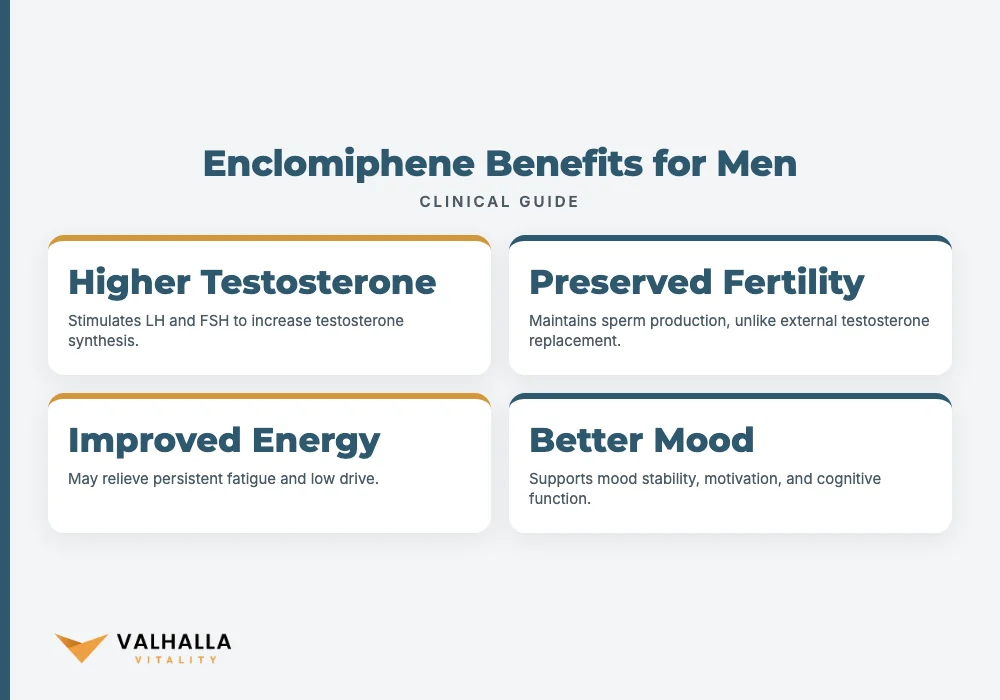
Enclomiphene benefits cluster around hormone normalization and the downstream effects that follow when testosterone reaches a healthy range. A 2025 systematic review and meta-analysis in Archives of Endocrinology and Metabolism (Hohl et al.) confirmed that enclomiphene raises testosterone in men with hypogonadism across multiple randomized controlled trials.
A 2016 expert review in Expert Opinion on Pharmacotherapy (Rodriguez et al.) outlined the physiological rationale for its use as a low testosterone treatment for men with secondary hypogonadism specifically, where the testes are functional but pituitary signaling falls short.
Based on that evidence base, the primary enclomiphene benefits documented in clinical research include:
- Higher testosterone levels. Enclomiphene stimulates LH and FSH release, which drives testicular testosterone synthesis. Men with secondary hypogonadism who have functional testes but inadequate pituitary output may see meaningful increases in circulating testosterone.
- Preserved fertility. Because enclomiphene works through the HPG axis rather than replacing testosterone externally, testicular function, including sperm production, continues during treatment. This is the most clinically significant distinction from TRT.
- Improved energy and reduced fatigue. Low testosterone is a recognized cause of persistent fatigue and low drive. Correcting levels to the normal range may relieve these symptoms in men who are symptomatic at baseline.
- Better mood and psychological well-being. Testosterone receptors are widely distributed throughout the brain. Adequate levels are associated with mood stability, motivation, and cognitive function, and correcting a deficit may improve all three.
- Support for healthier body composition. Testosterone influences fat distribution and lean muscle maintenance. Raising enclomiphene testosterone levels may support a shift toward lower fat mass and better metabolic health over time.
- Maintained endogenous production. Unlike exogenous testosterone, enclomiphene keeps the hypothalamic-pituitary-gonadal (HPG) axis active. The body's own production machinery stays engaged throughout treatment.
Not all these enclomiphene benefits appear equally in every patient. Baseline hypogonadism severity, age, lifestyle, and other conditions all influence outcomes. A licensed provider weighs these variables before determining whether enclomiphene is appropriate for a specific individual.
How does enclomiphene increase testosterone naturally?
Enclomiphene increases testosterone by removing the estrogen brake on the hypothalamic-pituitary axis. Under normal conditions, rising estrogen tells the hypothalamus and pituitary to reduce GnRH, LH, and FSH output. This negative feedback keeps the system in balance. In men with secondary hypogonadism, this feedback can be disproportionately suppressive, keeping testosterone output lower than warranted.
Enclomiphene blocks estrogen receptors at these control sites. The pituitary perceives less estrogenic signal. It responds by releasing more LH. More LH travels to the testes and binds to Leydig cells, which then synthesize more testosterone. The entire cascade runs through the body's own endocrine machinery. No testosterone enters from outside.
This is what distinguishes natural testosterone optimization through enclomiphene from hormone replacement. The testes are being asked to produce, not bypassed.
Enclomiphene is the trans-isomer of clomiphene citrate. Clomiphene contains both the cis-isomer (zuclomiphene) and the trans-isomer. The trans-isomer drives the testosterone-raising effect at the pituitary. The cis-isomer has a longer half-life and contributes to side effects sometimes seen with clomiphene in men, particularly visual disturbances. Isolating enclomiphene was intended to retain efficacy while reducing tolerability concerns, as reviewed in Rodriguez et al. (2016).
A 2022 systematic review by Huijben et al. in Andrology examined clomiphene citrate for male hypogonadism across multiple studies and found consistent increases in testosterone and gonadotropin levels. The Hohl et al. (2025) meta-analysis built on this with RCT-level evidence specifically for enclomiphene, providing higher-quality data for clinical decision-making.
Men who want more detail on how enclomiphene supports natural testosterone production will find a thorough mechanistic breakdown in that resource.
Is enclomiphene a safe alternative to TRT?
Enclomiphene is not a direct substitute for TRT. It is a different therapy with a different mechanism, a different side effect profile, and clinical indications that do not overlap completely with TRT. The enclomiphene vs TRT choice depends on the cause of low testosterone, fertility intentions, and what the clinical evaluation reveals.
What enclomiphene offers that TRT does not
The most clinically significant enclomiphene benefit over TRT is fertility preservation. TRT introduces exogenous testosterone, which suppresses the pituitary's LH and FSH output. Without that stimulation, the testes no longer produce sperm at normal levels.
A 2025 review in Nature Reviews Urology (Naelitz et al.) confirmed that TRT reliably suppresses spermatogenesis and that restoring fertility after stopping TRT can be slow and variable. Enclomiphene does not carry this liability. Sperm production continues alongside the rise in testosterone, making SERM therapy the clinically preferred first consideration when fertility preservation matters.
There is also a practical argument for preserving HPG axis activity long-term. A man on enclomiphene retains physiological flexibility that can be harder to reclaim after extended TRT use.
What TRT offers that enclomiphene may not
TRT has decades of clinical use and an extensive safety and efficacy database. A 2024 health technology assessment (Cruickshank et al.) reviewed TRT's effects and safety in hypogonadal men comprehensively and confirmed consistent testosterone normalization across multiple delivery forms.
For men with primary hypogonadism, where testicular damage prevents testosterone production regardless of LH levels, enclomiphene has no pathway to work through. TRT bypasses this problem by delivering testosterone directly, making it the appropriate choice when the issue is at the gonadal level rather than the pituitary level.
Deciding between TRT and SERM-based treatment is a clinical conversation. A provider who has reviewed the full labs and intake is the right person to guide that decision.
Monitoring requirements for both therapies
Both enclomiphene and TRT require ongoing lab work. European Academy of Andrology guidelines (Corona et al., 2020) recommend regular monitoring of testosterone, hematocrit, and lipid markers for men on any hypogonadism treatment. For enclomiphene specifically, estradiol monitoring matters because blocking estrogen receptors centrally can affect estrogenic activity in other tissues. A well-run protocol tracks both testosterone and estradiol, not one in isolation.
Can enclomiphene improve mood and energy levels?
Yes, enclomiphene may improve mood and energy when the underlying cause is low testosterone. Testosterone receptors are present throughout the brain. The EAA guidelines (Corona et al., 2020) list depressed mood, fatigue, and reduced motivation as recognized symptoms of hypogonadism. When testosterone returns to a normal range, men who were symptomatic due to its deficiency often report improvement in these areas.
The mechanism is direct in one sense: correcting a hormonal deficit removes a physiological barrier to normal mood and energy regulation. What determines whether that correction is the right lever is whether low testosterone is actually causing those symptoms.
Fatigue and low mood have many causes. Disrupted sleep. Chronic stress. Thyroid dysfunction. Cardiovascular issues. These can all mimic hypogonadism without responding to testosterone correction. A clinician evaluating the full picture is better positioned to identify whether hormone normalization is what the situation requires.
For men whose symptoms are genuinely tied to low testosterone, the mood and energy improvements that follow from raising enclomiphene testosterone levels can be among the most practically meaningful enclomiphene benefits in daily life. The randomized controlled trials reviewed by Hohl et al. (2025) tracked symptom scores alongside hormone levels, and improvements in both domains appeared consistently across the study populations evaluated.
Enclomiphene weight loss and metabolic health
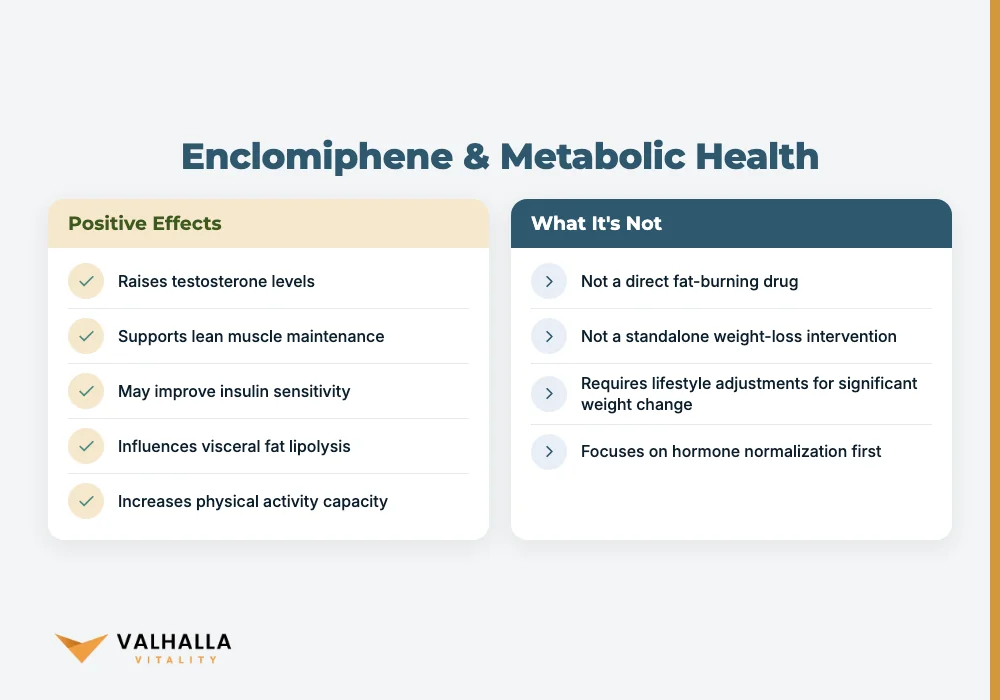
Enclomiphene weight loss, understood as a direct fat-burning effect, is not what the drug does. What enclomiphene does is raise testosterone. Testosterone has well-documented effects on body composition and metabolic function, and those effects are relevant to men dealing with weight and metabolic concerns.
Low testosterone in men is associated with higher visceral fat accumulation, reduced lean muscle mass, and poorer insulin sensitivity. These patterns can reinforce each other.
Excess visceral fat produces aromatase, which converts testosterone to estrogen, further suppressing LH output from the pituitary. Correcting the hormonal deficit through enclomiphene may interrupt part of this feedback cycle.
The metabolic pathways through which testosterone influences body composition include:
- Testosterone promotes muscle protein synthesis, which supports lean mass maintenance. Higher lean mass raises resting metabolic rate.
- Adequate testosterone is associated with improved insulin sensitivity and glucose uptake, contributing to better blood sugar regulation over time.
- Testosterone influences lipolysis in adipose tissue, particularly visceral fat, which responds more readily to hormonal changes than subcutaneous fat.
- Improved energy from corrected hypogonadism may increase physical activity capacity, contributing to better energy balance overall.
Whether these effects sum to clinically significant weight change without accompanying lifestyle adjustments is less clear. Clinical research evaluating enclomiphene benefits focuses primarily on testosterone normalization and body composition outcomes, not on enclomiphene as a standalone weight-loss intervention.
A man starting enclomiphene should expect hormone normalization first. Body composition changes, if they follow, come alongside a broader health picture that includes exercise, diet, and sleep quality.
For more on the connection between enclomiphene and body composition, that resource examines the evidence directly.
What is the correct enclomiphene dosage for men?
There is no single correct enclomiphene dosage for men. A licensed provider determines the appropriate dose after reviewing baseline blood work, which typically includes total and free testosterone, LH, FSH, estradiol, hematocrit, and a standard metabolic panel. The dose may be adjusted at follow-up based on how hormone levels respond.
This boundary is firm in responsible clinical practice. Online communities circulate dosing numbers drawn from anecdotes, not from individual lab values or clinical histories. Taking too little is ineffective. Taking too much can push estradiol excessively high, introducing new symptoms and risks.
The enclomiphene dosage guide that matters for any specific man is the one written after a clinical evaluation, built from actual lab data. What does not vary is the process: get labs, see a provider, follow the individualized protocol, and track the response at follow-up appointments.
Lab timing matters too. Morning draws are standard for testosterone because levels peak earlier in the day. A provider reviewing only afternoon values may misread the baseline and build the starting dose on flawed data. Getting the baseline right is the foundation for realizing enclomiphene benefits safely and effectively.
Working with a provider: what enclomiphene treatment involves
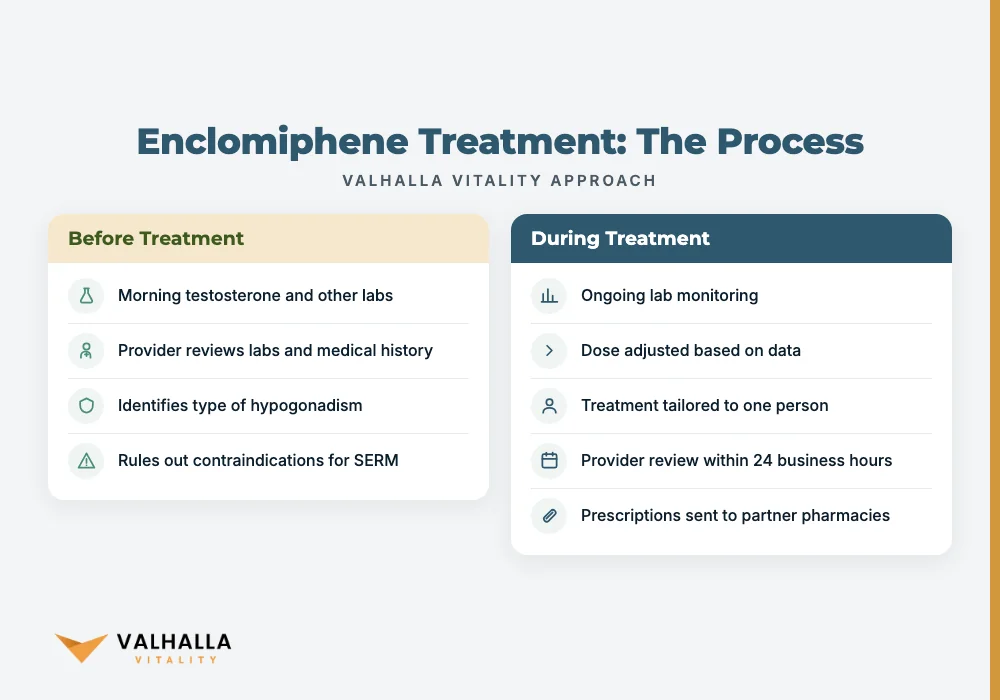
The path from recognizing symptoms to starting treatment requires several steps that cannot be safely skipped.
Lab work first. A morning testosterone draw, combined with LH, FSH, and estradiol, gives the provider what is needed to identify the type of hypogonadism, confirm the hormonal baseline, and assess estrogenic activity. These numbers inform both the initial prescription and all subsequent dose decisions.
Provider review comes next. A licensed provider reads the labs alongside a detailed medical intake. This review distinguishes secondary hypogonadism, where enclomiphene benefits are achievable, from primary hypogonadism or other conditions that call for a different approach. It also identifies contraindications that rule out SERM therapy for certain individuals.
Monitoring is ongoing. After starting treatment, follow-up labs check whether testosterone and estradiol are within target ranges and whether hematocrit or other markers have shifted. The dose is adjusted based on data. This iterative process is what turns a generic protocol into something tailored to one person.
At Valhalla Vitality, provider review of submitted intakes is completed within 24 business hours. Prescriptions are sent to US partner compounding pharmacies, with delivery arriving within three to seven business days. Availability varies by state.
For the full breakdown of what labs are ordered and what a provider monitors throughout treatment, the guide on what to watch for during enclomiphene treatment covers the clinical monitoring criteria in practical terms.
Who is a good candidate for enclomiphene?
The clearest candidate for enclomiphene is a man with documented secondary hypogonadism, meaning low testosterone caused by insufficient pituitary signaling in a man whose testes remain responsive to LH stimulation.
This distinguishes it from primary hypogonadism, where testicular damage or failure means the testes cannot produce testosterone regardless of how much LH is present. Enclomiphene benefits apply in the first case and have no mechanism to work through in the second.
Men for whom fertility is a priority are often specifically directed toward enclomiphene over TRT. The spermatogenesis suppression documented in Naelitz et al. (2025) can take months to resolve after stopping TRT, and recovery is not certain for all men. Enclomiphene sidesteps this problem by working with the reproductive axis rather than suppressing it.
Age is relevant but not a hard cutoff. Younger men with symptomatic secondary hypogonadism and men who want to retain fertility options are the most common candidates in clinical practice. Older men with the same underlying diagnosis may also qualify, depending on evaluation.
Some men are not good candidates for SERM therapy. A history of certain hormone-sensitive conditions, active visual disturbances, or liver concerns may rule it out. The intake and provider review process exists to identify these contraindications before any prescription is written.
Lifestyle factors matter alongside clinical factors. Regular exercise, adequate sleep, a balanced diet, and limited alcohol use all affect testosterone levels independently. Enclomiphene benefits are most fully realized when lifestyle inputs that support hormonal health are already being addressed, not deferred.
Take the next step
Book Your Consultation to connect with a licensed provider who can review your intake, order baseline labs, and determine whether enclomiphene is an appropriate option for your situation.
FAQ
What are the documented enclomiphene benefits for men?
Enclomiphene benefits for men with secondary hypogonadism include higher testosterone levels, preserved fertility, improved energy, better mood, and support for healthier body composition. These outcomes follow from normalizing testosterone through HPG-axis stimulation rather than external replacement. The degree of benefit varies based on baseline hormone levels and overall health.
How does enclomiphene differ from TRT?
Enclomiphene stimulates the body's own testosterone production by removing the estrogen brake on the pituitary. TRT introduces testosterone directly, which typically shuts down natural output and suppresses sperm production. The key practical difference for most men is fertility: enclomiphene preserves it, TRT does not.
Can enclomiphene improve mood and energy?
Enclomiphene may improve mood and energy in men whose symptoms are caused by low testosterone. Restoring testosterone to a healthy range addresses the hormonal basis of those symptoms. If fatigue or mood problems have other root causes, correcting testosterone alone is unlikely to resolve them.
What is the correct enclomiphene dosage for men?
A licensed provider determines the dose after reviewing baseline labs that include testosterone, LH, FSH, and estradiol. There is no universal number that applies across all men, and dosing without clinical oversight carries real risks. Follow-up blood work is used to adjust the protocol over time.
Does enclomiphene help with weight loss?
Enclomiphene may support better body composition as a secondary effect of raising testosterone, which promotes lean muscle maintenance and improved insulin sensitivity. It is not a direct fat-loss treatment, and expecting significant weight reduction from enclomiphene alone goes beyond what the current evidence supports.
Sources
- Hohl A et al. (2025). Clomiphene or enclomiphene citrate for the treatment of male hypogonadism: a systematic review and meta-analysis of randomized controlled trials. Archives of Endocrinology and Metabolism. PubMed
- Rodriguez KM et al. (2016). Enclomiphene citrate for the treatment of secondary male hypogonadism. Expert Opinion on Pharmacotherapy. PubMed
- Huijben M et al. (2022). Clomiphene citrate for men with hypogonadism: a systematic review and meta-analysis. Andrology. PubMed
- Naelitz BD et al. (2025). Testosterone replacement therapy and spermatogenesis in reproductive age men. Nature Reviews Urology. PubMed
- Cruickshank M et al. (2024). The effects and safety of testosterone replacement therapy for men with hypogonadism: the TestES evidence synthesis and economic evaluation. Health Technology Assessment. PubMed
- Corona G et al. (2020). European Academy of Andrology (EAA) guidelines on investigation, treatment and monitoring of functional hypogonadism in males. Andrology. PubMed
You May Also Like
 Enclomiphene
 Before and After: Physical Changes Explained
Enclomiphene before and after: what physical changes to expect, how the results timeline unfolds, and why provider monitoring matters for outcomes.
October 21, 2026 ETRead more → Enclomiphene
 Vision Side Effects: Eye Floaters & More
Enclomiphene vision side effects include eye floaters, blurry vision, and light sensitivity. Know the warning signs and when to contact your provider.
October 21, 2026 ETRead more → Enclomiphene
 Drug Test: Detection, WADA, and Disclosure
Enclomiphene drug test detection depends on the test type. Learn how workplace panels, military screening, and WADA rules treat this SERM.
October 21, 2026 ETRead more →