
The following blog post is for entertainment and informational purposes only. It is not intended to provide medical advice or diagnosis. Please consult your doctor before making any health-related decisions.
Oral testosterone steroids are prescription capsules that restore testosterone levels in men with clinically confirmed deficiency. They address the same hormonal gap as injections and gels, but through a daily pill taken with food. A licensed provider determines whether this form of testosterone medication for men fits a patient's labs and medical history before any prescription is written. For men who qualify, the oral route may support energy, sexual function, and muscle health.
How does oral testosterone work in the body?
Oral testosterone undecanoate absorbs through the intestinal lymphatic system, which largely bypasses first-pass liver metabolism. That distinction separates it from earlier oral testosterone formulations that caused liver toxicity because they were processed directly through the portal vein. Modern testosterone undecanoate capsules are both more reliable and considerably safer than the methyltestosterone tablets used decades ago. A 2023 review in Expert Opinion on Investigational Drugs confirmed that newer oral preparations have resolved many of the absorption and stability challenges that limited earlier tablet formulations [S4].
The molecule is the same. The delivery mechanism is what changed.
Once in systemic circulation, testosterone behaves identically regardless of delivery route. It binds to androgen receptors in muscle, bone, and reproductive tissue, where it stimulates protein synthesis after exercise and supports the recovery process that builds lean mass over time. This anabolic effect helps explain why testosterone replacement therapy can improve body composition in men with confirmed deficiency. Bone mineralization benefits directly, since testosterone plays a key role in skeletal density maintenance. Red blood cell production may also increase, as testosterone signals bone marrow to produce more erythrocytes. For men undergoing this treatment, restoring adequate hormone levels may alleviate fatigue, support libido, and help stabilize mood across weeks and months of consistent treatment.
Medical conditions that oral testosterone steroids treat
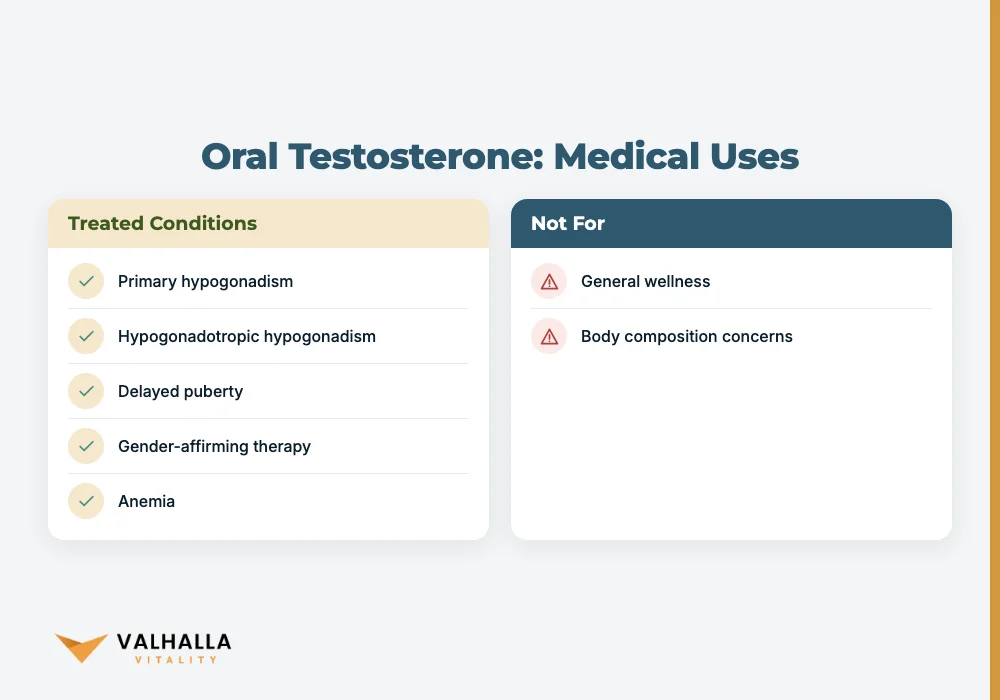
Oral testosterone steroids have a defined set of clinical indications. They correct confirmed hormonal deficiency, not general wellness or body composition concerns. A licensed provider determines the dose after reviewing labs.
Common indications include:
- Primary hypogonadism (congenital or acquired): testicular dysfunction from cryptorchidism, bilateral torsion, orchitis, Klinefelter syndrome, chemotherapy, orchiectomy, or toxic exposure. Serum testosterone is low; gonadotropins are elevated.
- Hypogonadotropic hypogonadism: deficient pituitary or hypothalamic stimulation from tumors, trauma, or radiation. Testosterone is low; gonadotropins are normal or below normal.
- Delayed puberty: oral testosterone may initiate secondary sex characteristic development in adolescents when puberty is significantly delayed.
- Gender-affirming hormone therapy: testosterone is part of medically supervised masculinizing protocols for transgender men.
- Anemia: testosterone may stimulate red blood cell production in the bone marrow in qualifying cases.
- Bone density preservation: low testosterone accelerates bone loss; therapy may reduce fracture risk in appropriate patients.
Is oral testosterone as effective as injections?
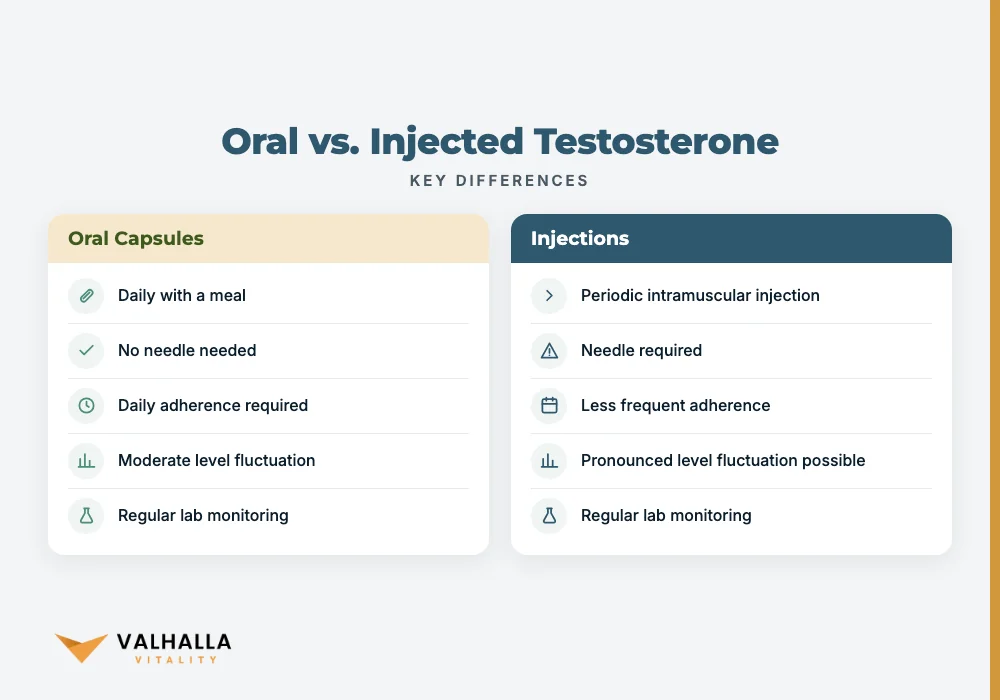
Yes, for patients who absorb the medication adequately and take it consistently with a fat-containing meal. Testosterone undecanoate capsules reach therapeutic serum levels in most qualifying patients when taken as directed. When weighing the TRT oral vs injection decision, the practical tradeoffs look like this:
| Factor | Oral (testosterone undecanoate) | Injectable |
|---|---|---|
| Administration | Daily capsules with a meal | Periodic intramuscular injection |
| First-pass hepatic effect | Largely bypassed via lymphatic absorption | None |
| Needle required | No | Yes |
| Daily adherence | Required | Less frequent |
| Lab monitoring | Regular | Regular |
| Level fluctuation | Moderate | Can be pronounced between doses |
Both routes require regular blood work to keep testosterone within the therapeutic range. The differences between oral and injectable TRT go deeper than delivery method alone. The right choice depends on individual absorption, lifestyle, and a provider's clinical judgment. Patients who struggle with daily adherence may find an injection schedule easier to maintain. Patients who avoid needles often prefer capsules.
The hormone is the same. The pharmacokinetics differ.
What are the side effects of oral testosterone steroids?
The most common testosterone side effects from oral therapy include acne, hair thinning, mood changes, elevated hematocrit, and blood pressure increases. Oral forms require liver monitoring in addition to the standard hormone panel, and all testosterone therapy carries the risk of suppressing natural hormone production.
Side effects to monitor during treatment:
- Acne and oily skin, which may appear early in therapy
- Hair thinning or acceleration of male-pattern baldness in genetically predisposed men
- Mood changes including irritability or increased emotional reactivity
- Elevated hematocrit, which may increase cardiovascular risk if left unmonitored
- Blood pressure increases that can compound long-term cardiovascular burden
Liver function warrants attention with any oral hormone therapy. Modern testosterone undecanoate capsules absorb primarily through lymphatic channels, reducing direct hepatic first-pass load substantially compared to older formulations. Even so, liver function tests remain part of standard hormone therapy monitoring. A 2025 systematic review and meta-analysis in Clinical and Translational Gastroenterology examined TRT outcomes in men with metabolic liver conditions and concluded that hepatic monitoring throughout treatment remains clinically appropriate [S2].
Oral health is a less-discussed area of risk. A 2026 scoping review in the Journal of Sports Medicine and Physical Fitness identified associations between anabolic-androgenic steroid use and adverse oral health outcomes in humans [S1]. Monitoring during oral testosterone steroids therapy should extend beyond routine hormone panels.
One consequence applies to all testosterone delivery forms. Exogenous testosterone suppresses natural production through negative feedback on the hypothalamic-pituitary axis. Abrupt discontinuation may leave a temporary gap before endogenous levels recover. That transition requires medical guidance, not self-management.
Is oral testosterone safe for long-term use?
Long-term safety depends on consistent monitoring and open communication with a provider, not solely on the delivery form. Standard practice during ongoing testosterone replacement therapy includes periodic checks of serum testosterone, hematocrit, PSA, liver enzymes, and lipid panels. These labs allow early detection of changes before they become clinically significant. Without monitoring, even a well-tolerated therapy can produce harm that goes undetected.
Individual responses vary. Age, cardiovascular baseline, metabolic health, and comorbidities all shape how a patient tolerates sustained therapy. Men with elevated cardiovascular risk or active prostate concerns may not be candidates for long-term TRT in any form.
Availability varies by state for telehealth-based low testosterone treatment.
Men who are not candidates for long-term testosterone therapy due to fertility goals or other contraindications may benefit from exploring alternative testosterone replacement therapy approaches, such as stimulating agents that support endogenous production rather than suppressing it.
What is the best oral testosterone medication available?
Among currently approved options in the United States, testosterone undecanoate capsules represent the primary class of oral testosterone steroids for adult men. KYZATREX completed a full clinical development program and received approval to treat testosterone deficiency in adult men with primary or hypogonadotropic hypogonadism.
KYZATREX is indicated for men whose deficiency stems from primary hypogonadism due to conditions such as cryptorchidism, Klinefelter syndrome, orchitis, chemotherapy, or orchiectomy. It is also indicated for hypogonadotropic hypogonadism caused by tumor, trauma, or radiation affecting pituitary or hypothalamic function. It is not indicated for male infertility caused by hypogonadotropism, and performance enhancement is not a clinical application.
A licensed provider determines the dose after reviewing labs and clinical history. The therapeutic goal is to restore testosterone to a normal physiologic range.
Who qualifies for oral testosterone therapy?
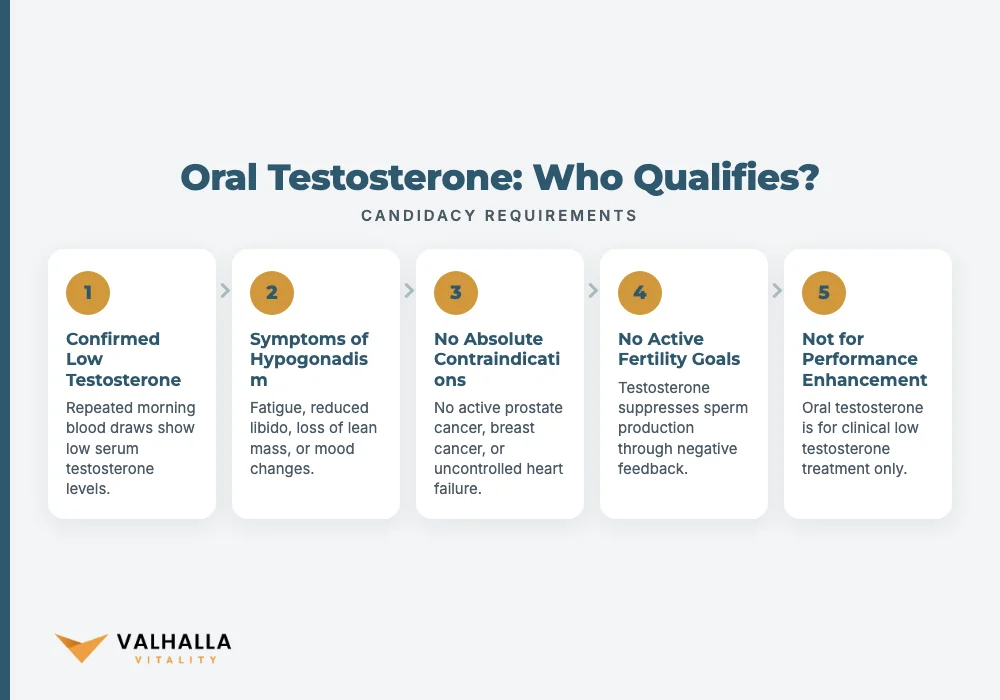
Candidacy requires confirmed deficiency on labs, not symptoms alone. Fatigue, low libido, and reduced muscle mass overlap with many conditions. Providers will not prescribe testosterone pills for men based on symptoms without supporting lab values. Two morning serum testosterone measurements, drawn on separate days, are typically part of the diagnostic workup. Additional hormonal labs help determine whether the cause is primary or secondary, which affects the treatment approach.
Factors that typically support candidacy:
- Confirmed low serum testosterone on repeated morning blood draws
- Symptoms consistent with clinical hypogonadism (fatigue, reduced libido, loss of lean mass, mood changes)
- No absolute contraindications such as active prostate cancer, breast cancer, uncontrolled heart failure, or known hypersensitivity to the formulation
Factors that typically disqualify:
- Active fertility goals (testosterone suppresses sperm production through negative feedback)
- Intent to use oral testosterone steroids for athletic performance rather than clinical low testosterone treatment
- Unmanaged high cardiovascular risk without specialist clearance
Non-medical use of oral testosterone steroids for performance enhancement is prohibited by the World Anti-Doping Agency, most professional sports organizations, and national laws in many countries. This medication has genuine clinical value for men with confirmed deficiency. Using it outside that context creates legal and health risks.
Licensed providers at Valhalla Vitality review intake and lab results to determine whether oral testosterone therapy is appropriate for each patient's situation.
Speak with a licensed provider
Book Your Consultation with a licensed provider to review your labs and explore whether oral testosterone steroids are appropriate for your situation.
FAQ
Are oral testosterone steroids as effective as injections?
Both oral testosterone undecanoate capsules and injectable forms can restore testosterone to therapeutic levels when prescribed and monitored correctly. The practical difference is delivery method and pharmacokinetics, not the hormone itself. A provider will recommend the route that best fits your clinical profile and daily routine.
What are the main testosterone side effects with oral forms?
Common side effects include acne, hair thinning, mood changes, elevated hematocrit, and blood pressure increases. Liver function and cardiovascular markers are monitored throughout hormone treatment. Stopping treatment abruptly without medical guidance may cause a temporary reduction in natural hormone production.
Do I need a prescription for testosterone pills for men?
Yes. Oral testosterone undecanoate capsules are controlled substances in the United States and require a valid prescription from a licensed provider. Self-administering testosterone without a prescription carries significant legal and health risks.
Can oral testosterone therapy be stopped safely?
Testosterone replacement therapy suppresses natural production through negative feedback on the hypothalamic-pituitary axis. Stopping without medical guidance can produce a temporary period of low endogenous testosterone while the axis recovers. A licensed provider will design a tapering or discontinuation plan based on your current labs and goals.
Sources
- Corbari LA et al. (2026). The effects of anabolic-androgenic steroids administration on oral health in humans: a scoping review. The Journal of sports medicine and physical fitness. PubMed
- Mahmoud M et al. (2025). The Effects of Testosterone Replacement Therapy in Adult Men With Metabolic Dysfunction-Associated Steatotic Liver Disease: A Systematic Review and Meta-analysis. Clinical and translational gastroenterology. PubMed
- Corona G et al. (2023). Developments and challenges for new and emergent preparations for male hypogonadism treatment. Expert opinion on investigational drugs. PubMed
You May Also Like
 Oral testosterone
Oral Testosterone Therapy: Energy, Side Effects & Results
Oral testosterone therapy may improve energy and ease fatigue in men with low T. Learn how it works, what side effects to expect from treatment.
October 7, 2026 ETRead more → Oral testosterone
Oral Testosterone Fertility: How TRT Affects Sperm
Oral testosterone fertility: TRT typically reduces sperm production. Learn what the research shows and how to protect your reproductive options.
October 7, 2026 ETRead more → Oral testosterone
Oral Testosterone Therapy: Options, Benefits, and Risks
Oral testosterone therapy delivers TRT in pill form. Learn how testosterone undecanoate capsules work, who qualifies, and key side effects to watch.
October 6, 2026 ETRead more →