Oral Testosterone Therapy: Options, Benefits, and Risks

The following blog post is for entertainment and informational purposes only. It is not intended to provide medical advice or diagnosis. Please consult your doctor before making any health-related decisions.
Oral testosterone therapy is a prescription approach to testosterone replacement that uses capsules instead of injections or gels. Modern formulations rely on testosterone undecanoate, absorbed through the lymphatic system in a way that bypasses the liver pathway that made older oral androgens toxic. For a full picture of testosterone therapy options across delivery methods, understanding what sets the pill form apart is the right starting point. A licensed provider evaluates labs and medical history before determining whether it fits your situation.
What is oral testosterone therapy?
The treatment uses testosterone undecanoate capsules taken with a fat-containing meal. That fat requirement is not optional. Testosterone undecanoate is a fatty acid ester designed to enter intestinal lymphatic vessels when taken with dietary fat, then travel to systemic circulation without first-pass liver metabolism.
This absorption route separates today's TRT pill form from the compounds that damaged oral testosterone's clinical reputation for decades. Earlier oral androgens, particularly 17α-methyltestosterone, relied on hepatic processing and generated toxic metabolites with continued use. A 2023 review by Miller et al. in Sexual Medicine Reviews traced that history and confirmed that testosterone undecanoate avoids the hepatotoxic pathway entirely, establishing a clear clinical distinction between old and modern formulations.
It is available for men with confirmed hypogonadism. Availability varies by state. A licensed provider determines whether treatment is appropriate after reviewing labs and medical intake.
How oral TRT compares to other testosterone replacement options
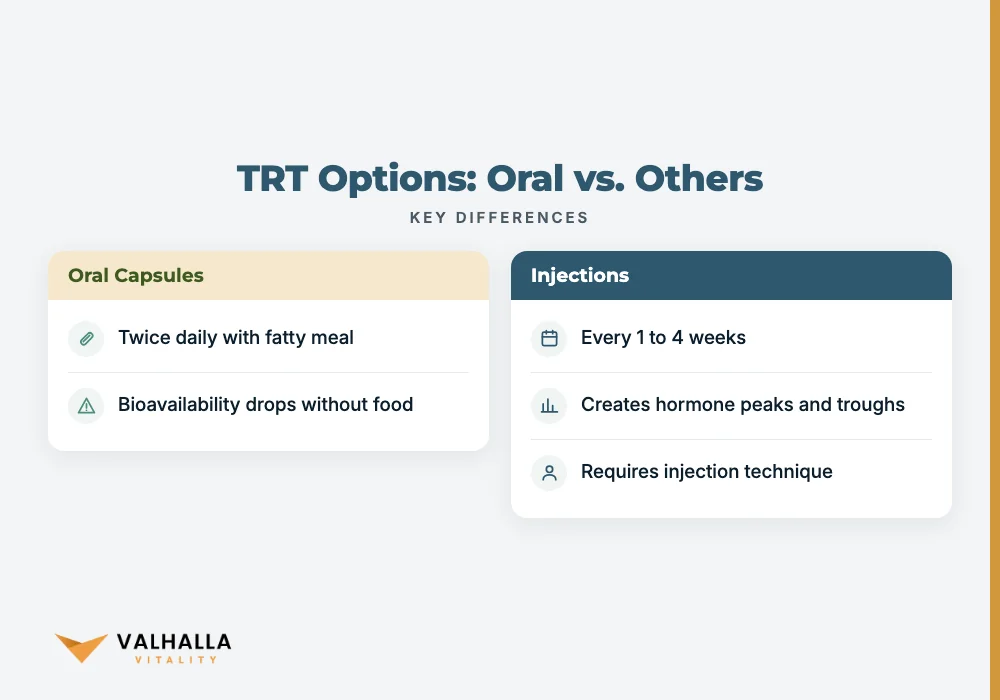
Testosterone replacement options span injectable, transdermal, pellet, and oral routes. Each carries different trade-offs in administration frequency, lifestyle impact, and clinical monitoring requirements.
| Delivery method | Administration schedule | Key practical consideration |
|---|---|---|
| Oral capsules (TRT pill form) | Twice daily with fat-containing meal | Bioavailability drops sharply if taken without food |
| Intramuscular injection | Every 1 to 4 weeks | Creates hormone peaks and troughs; requires injection technique |
| Transdermal gel or patch | Daily | Transfer risk to partners; skin-site preparation required |
| Subcutaneous pellets | Every 3 to 6 months | In-office procedure; dose cannot be adjusted once placed |
For a deeper look at how oral TRT stacks up against injectable testosterone across absorption patterns, symptom management, and monitoring protocols, that clinical comparison covers both routes in detail.
Is oral testosterone as effective as injections?
Oral testosterone undecanoate can restore serum testosterone to the normal physiologic range. The central challenge during development was achieving consistent absorption. A 2022 study by Patel et al. in the International Journal of Impotence Research identified bioavailability as the main obstacle in oral testosterone development; the solution required formulating the capsule to depend on dietary fat for lymphatic uptake.
Comparing testosterone pills vs injections, the delivery pattern differs more than the end result. Injections typically produce a hormone peak in the first day or two after administration, followed by a gradual decline until the next dose. Taken twice daily, this delivery form tends to produce more stable serum levels across each day. Many providers consider steadier daily levels an advantage for managing symptoms like fatigue, mood changes, and reduced libido, because wide hormone swings can affect how patients feel from week to week. Neither approach is categorically superior. A licensed provider determines which method fits each patient's clinical results and lifestyle.
Managing expectations matters too. Some men prefer the weekly injection schedule because its regularity reduces the mental load of daily adherence. Others choose this option precisely because it removes the injection step. Both are factors worth raising during the intake discussion, where the clinical profile can be matched to the right delivery method.
What are the side effects of oral testosterone?
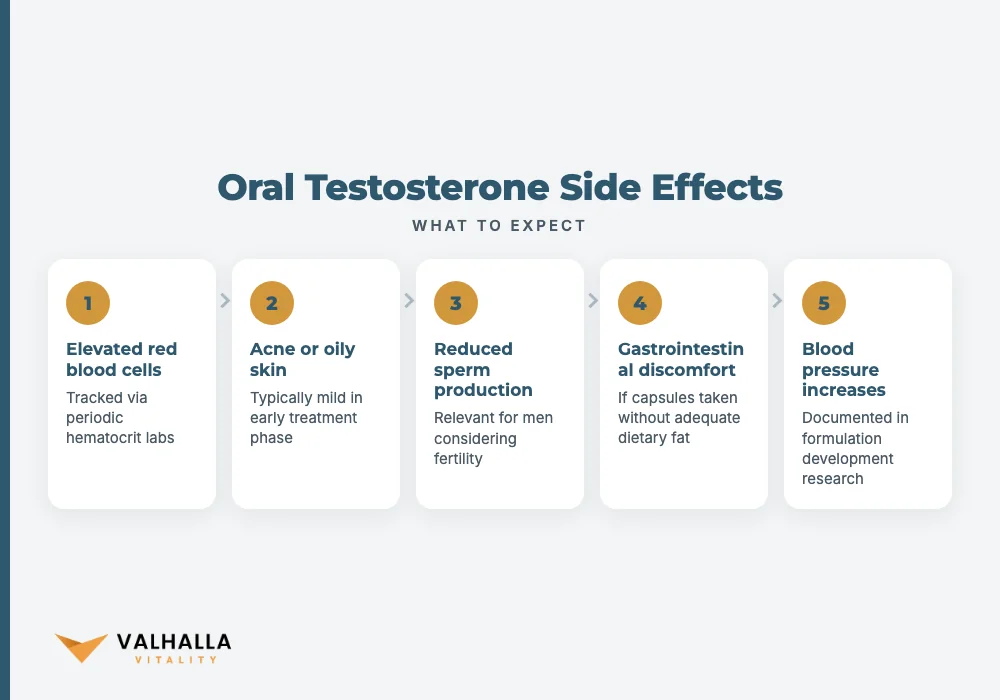
Testosterone undecanoate side effects overlap with those of other TRT delivery methods and include some specific to the oral route. A 2025 review by Goldstein et al. in Sexual Medicine Reviews confirmed that modern oral testosterone undecanoate formulations do not carry the hepatotoxic risk associated with older 17α-alkylated androgens. Routine liver enzyme monitoring remains standard regardless.
Side effects common across TRT delivery routes:
- Erythrocytosis, or elevated red blood cell count, tracked via periodic hematocrit labs
- Acne or increased skin oiliness, typically mild in the early treatment phase
- Mood changes, most commonly in the first several weeks as hormone levels stabilize
- Reduced sperm production, relevant for men considering fertility
Side effects more specific to oral TRT:
- Gastrointestinal discomfort when capsules are taken without adequate dietary fat
- Blood pressure increases, documented in formulation development research
Dosing decisions rest with the prescribing provider after reviewing your labs. For detailed information on the pharmacology of testosterone undecanoate capsules in hormone therapy, including how monitoring protocols are structured, that resource covers both mechanism and clinical management in depth.
How long does oral testosterone take to work?
Initial improvements in energy, mood, and focus typically appear within four to six weeks of starting oral TRT. Libido and sexual function changes often follow a similar timeline. Blood testosterone levels with consistent twice-daily dosing tend to stabilize within the first few weeks.
Full clinical evaluation takes longer. Symptom response comes in stages: energy and sleep quality may improve before libido does, and mood stabilization often follows weeks after initial changes. Most providers assess treatment response at three to six months, using lab results and symptom reports together rather than relying on early impressions alone. Baseline testosterone levels, individual metabolism, and adherence to both the dosing schedule and the fat requirement all influence how quickly meaningful changes develop. A licensed provider determines the dose after labs and revisits it at scheduled follow-ups.
Who is a good candidate for oral TRT?
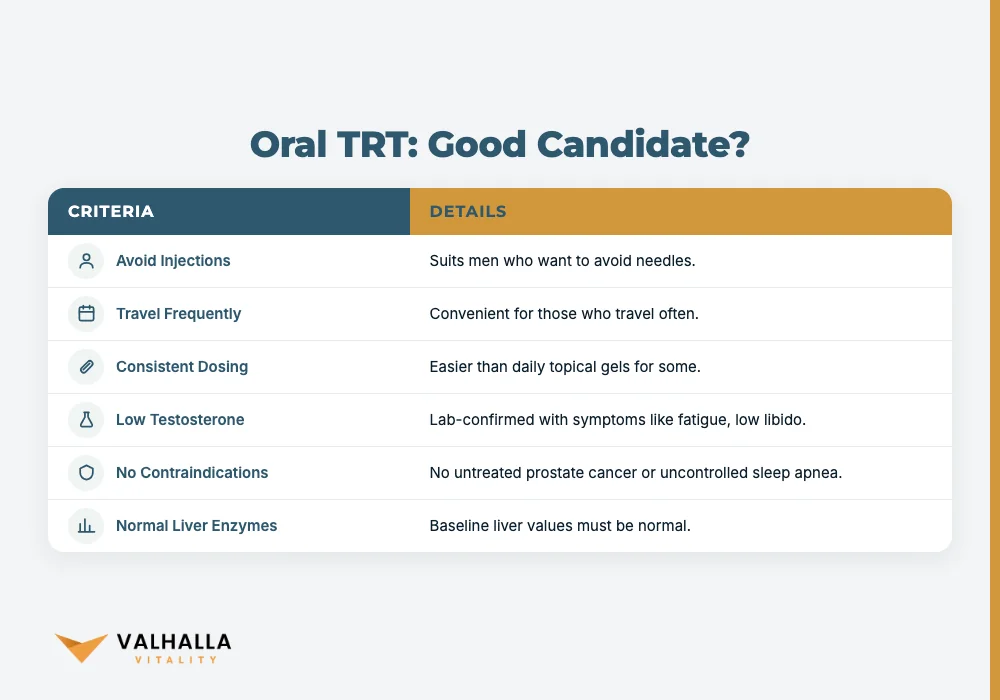
Oral testosterone therapy tends to suit men who want to avoid injections, travel frequently, or have found daily topical gel applications difficult to maintain consistently. Capsules require no refrigeration, no injection supplies, and carry no transfer risk to partners or children.
A licensed provider evaluates several criteria before prescribing this treatment:
- Lab-confirmed low testosterone with symptoms such as persistent fatigue, reduced libido, difficulty concentrating, or loss of muscle mass
- No contraindications including untreated prostate cancer, uncontrolled sleep apnea, or existing polycythemia
- Reliable ability to take capsules with meals twice daily, since the fat requirement is a pharmacological constraint, not a preference
- Normal baseline liver enzyme values, because the oral route still involves intestinal and hepatic processing after lymphatic uptake
Men who prefer longer dosing intervals may find injectable or pellet forms more practical. The intake process at Valhalla Vitality evaluates all of these factors before any treatment recommendation is made. Availability varies by state.
Practical considerations before starting oral testosterone therapy
The fat-with-meal requirement sets oral testosterone therapy apart from every other TRT delivery route. Research by Patel et al. (2022) showed this was intentional: dietary fat activates the lymphatic uptake mechanism. A modest portion of fat at each dose is sufficient. Taking capsules on an empty stomach or with a fat-free meal reduces absorption substantially and makes blood levels unpredictable.
Drug interactions require thorough review at intake. Testosterone interacts with anticoagulants, certain diabetes medications, and other compounds. A complete medication list at the time of medical intake allows the provider to identify potential conflicts before treatment begins. Ongoing monitoring typically covers hematocrit, testosterone levels, liver enzymes, and, for patients meeting specific criteria, PSA measurements.
Twice-daily adherence is also worth discussing before committing to this delivery method. Unlike a weekly injection, the pill form has no built-in buffer for a missed dose. For men who find twice-daily regimens difficult to sustain, that pattern is a practical consideration worth raising with a provider before settling on this form of treatment. Research on how adherence patterns shape clinical outcomes is covered in this analysis of oral testosterone supplement effectiveness.
Ready to explore your TRT options?
If symptoms of low testosterone are affecting your daily life and you want to understand whether oral testosterone therapy may be appropriate, Book Your Consultation to connect with a licensed provider who will review your intake and labs.
FAQ
What is oral testosterone therapy?
Oral testosterone therapy is a prescription treatment using testosterone undecanoate capsules to restore testosterone levels in men with lab-confirmed deficiency. The capsules absorb through the lymphatic system, avoiding the liver toxicity linked to older oral androgen formulations. A licensed provider reviews your medical history and labs before prescribing.
Is oral testosterone as effective as injections?
Both delivery methods can restore testosterone to normal physiologic ranges when prescribed and taken correctly. Oral TRT requires consistent twice-daily dosing with a fat-containing meal for reliable absorption. A licensed provider evaluates which delivery form fits the individual's clinical picture and lifestyle before deciding.
What are the side effects of oral testosterone?
Common side effects include erythrocytosis, acne, mood shifts during early treatment, and reduced sperm production. Oral-specific effects may include gastrointestinal discomfort without adequate dietary fat and potential blood pressure increases. Regular follow-up labs allow the provider to monitor and manage these effects over time.
How long does oral testosterone take to work?
Many men notice early improvements in energy and mood within four to six weeks of starting oral TRT. A full evaluation of treatment response typically happens at three to six months. Consistent adherence to the twice-daily schedule and the fat requirement directly affects how quickly blood testosterone levels stabilize.
Who is a good candidate for oral TRT?
Men with lab-confirmed low testosterone who prefer to avoid injections and can reliably take capsules twice daily with meals tend to be well-suited for oral testosterone therapy. A licensed provider assesses full medical history, reviews contraindications, and determines whether this treatment is appropriate after a complete intake review.
Sources
- Miller JA et al. (2023). Oral testosterone therapy: past, present, and future. Sexual Medicine Reviews. PubMed
- Patel M et al. (2022). JATENZO®: Challenges in the development of oral testosterone. International Journal of Impotence Research. PubMed
- Goldstein I et al. (2025). Newer formulations of oral testosterone undecanoate: development and liver side effects. Sexual Medicine Reviews. PubMed
You May Also Like
 Oral testosterone
Oral Testosterone Therapy: Energy, Side Effects & Results
Oral testosterone therapy may improve energy and ease fatigue in men with low T. Learn how it works, what side effects to expect from treatment.
October 7, 2026 ETRead more → Oral testosterone
Oral Testosterone Fertility: How TRT Affects Sperm
Oral testosterone fertility: TRT typically reduces sperm production. Learn what the research shows and how to protect your reproductive options.
October 7, 2026 ETRead more → Oral testosterone
Oral Testosterone vs Injection: Choosing Your TRT Method
Oral testosterone vs injection explained: compare bioavailability, liver impact, and convenience to find the TRT method that fits your lifestyle.
October 4, 2026 ETRead more →