
The following blog post is for entertainment and informational purposes only. It is not intended to provide medical advice or diagnosis. Please consult your doctor before making any health-related decisions.
Semaglutide is a GLP-1 receptor agonist that reduces appetite, slows gastric emptying, and changes how the brain processes fullness signals. Clinical trials consistently show semaglutide weight loss outcomes surpass placebo, with participants losing an average of approximately 13 kg over 56 weeks, as reported in a 2022 systematic review by Tan et al. A licensed provider reviews your intake and determines whether GLP-1 weight loss treatment is appropriate for your situation. Availability varies by state.
What is semaglutide and how does it work for weight loss?
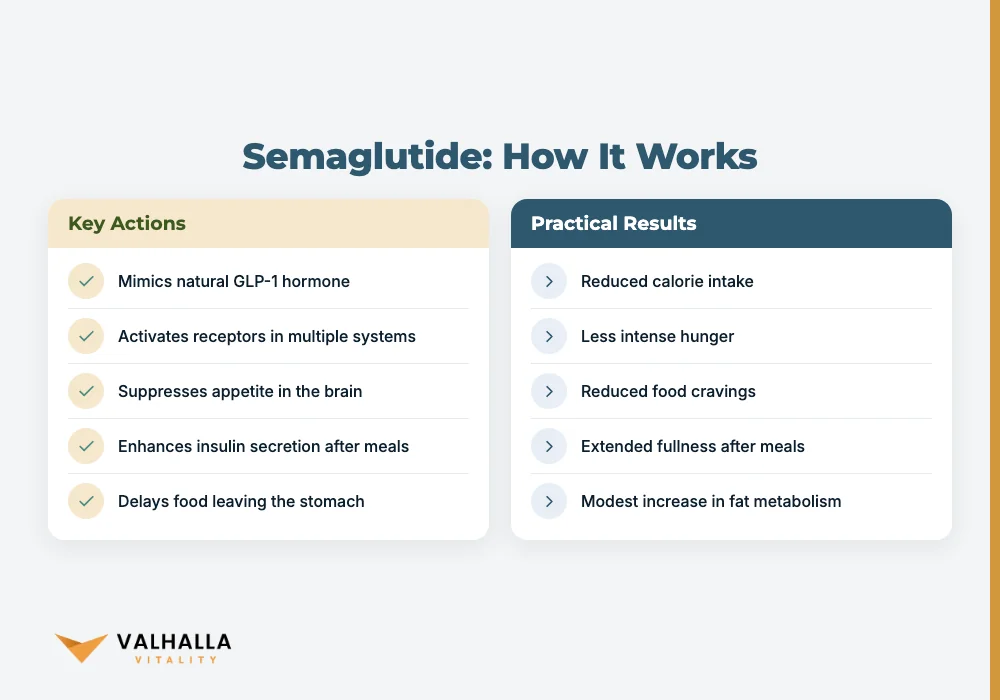
Semaglutide mimics a hormone your gut releases naturally after eating. That hormone, GLP-1, prompts the pancreas to produce insulin, signals the brain that satiety has been reached, and slows how quickly food leaves the stomach. The practical result is reduced calorie intake. Most patients report far less intense hunger than they experience on conventional diets.
As a GLP-1 weight loss drug, semaglutide activates receptors in multiple systems at once. In the brain, it suppresses appetite and reduces food cravings. In the pancreas, it enhances insulin secretion when blood glucose rises. In the gut, it delays gastric emptying, extending fullness after each meal. Research also suggests semaglutide may modestly increase energy expenditure through effects on fat metabolism, though this contributes less to total weight change than appetite suppression does.
A 2024 review in Minerva Endocrinology (Basile et al.) examined how semaglutide's mechanisms extend beyond lifestyle intervention alone, which supports the clinical rationale for pharmacological treatment in patients who have not responded adequately to diet and exercise.
For a deeper look at what changes at the receptor level, including hypothalamic and gut signaling, how semaglutide works biochemically covers the science in full.
Key mechanisms at a glance:
- GLP-1 receptor activation in the brain reduces appetite and slows food transit
- Enhanced insulin secretion in the pancreas after meals supports blood sugar regulation
- Delayed gastric emptying extends satiety and reduces how often hunger returns
- Modest increase in fat oxidation adds a secondary contribution to energy balance
Originally developed for type 2 diabetes management, semaglutide received a separate regulatory clearance for chronic weight management after clinical trials demonstrated efficacy in people with obesity or overweight who did not have diabetes. Patients who research ozempic for weight loss may recognize semaglutide as the same active compound; branded versions differ by indication and formulation rather than by molecule. A 2024 systematic review and meta-analysis in Obesity Reviews (Kommu et al.) confirmed the efficacy and safety of once-weekly subcutaneous semaglutide for weight loss in that population.
How much weight can you lose on semaglutide?
In randomized controlled trials, participants using once-weekly semaglutide lost an average of approximately 13 kg over 56 weeks, compared to significantly less on placebo, according to a 2022 meta-analysis by Tan et al. Individual outcomes vary. Biology, starting weight, diet quality, activity level, and adherence all shape the final result.
What do semaglutide weight loss results look like over time?
Patients who research semaglutide before and after clinical trial data are typically looking at outcomes from the 52-week to 68-week range. Those results reflect gradual dose titration, sustained use, and behavioral change, not a single dramatic shift early in treatment.
Semaglutide weight loss is not linear. Most reduction occurs in the first several months as appetite suppression takes full effect. Progress typically slows after that. A plateau is normal physiology, not evidence the medication has stopped working.
Long-term use matters. A 2026 systematic review and meta-analysis in The BMJ (West et al.) found that patients who stopped GLP-1 weight management medications regained a substantial proportion of lost weight, typically within one to two years of stopping. This finding has changed how clinicians frame the therapy. Most now approach semaglutide as a sustained treatment rather than a time-limited course.
Pairing semaglutide with structured nutritional habits amplifies results. The medication reduces hunger; what you eat still shapes the outcome. A carefully designed diet plan built around semaglutide can increase the likelihood of meaningful, lasting weight reduction.
How long does semaglutide take to work for weight loss?
Most people notice reduced appetite within the first two to four weeks. Meaningful scale movement typically follows within the first month.
Full therapeutic effect builds over time. Semaglutide dosage for obesity management follows a structured titration protocol, beginning at a lower dose and increasing incrementally over several months. A licensed provider determines the pace of escalation based on lab results and individual response. Moving through dose increases too quickly amplifies gastrointestinal side effects without improving weight outcomes.
Clinical trials used 56 weeks as the primary endpoint. That is where cumulative weight reduction peaks, not where it begins. Expecting dramatic change within two weeks creates an unrealistic benchmark. Steady, consistent progress over months is the realistic pattern for most patients.
Plateaus are an expected part of semaglutide weight loss. A plateau after initial progress does not indicate treatment failure. Dose reassessment, dietary review, and activity adjustments can all restart progress. A provider who monitors labs and response over time is better positioned to make those adjustments than any fixed protocol.
What are the most common side effects of semaglutide?
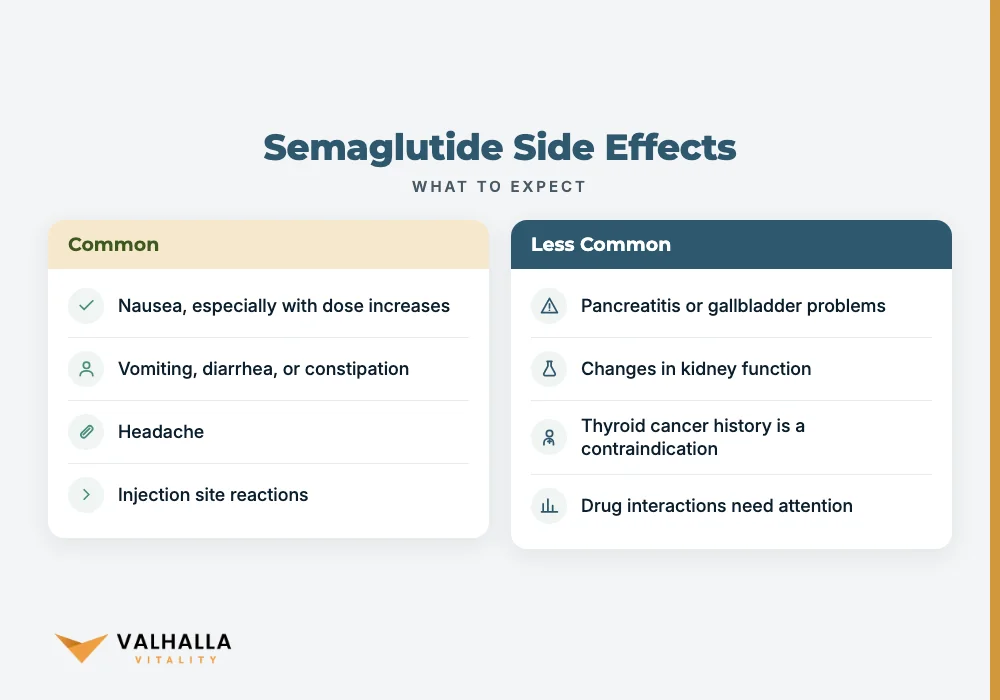
Gastrointestinal effects are the most frequently reported. They are also the most common reason patients reduce their dose or pause treatment.
Common semaglutide side effects include:
- Nausea (most prevalent, especially during dose escalation)
- Vomiting
- Diarrhea
- Constipation
- Headache
- Injection site reactions: redness, mild swelling, or itching at the administration site
Nausea is most intense during dose increases. It often decreases as the body adapts. Eating smaller meals, avoiding high-fat foods near injection time, and staying well-hydrated reduce severity for many patients.
Serious effects are less common but require disclosure. These include pancreatitis, changes in kidney function, and gallbladder problems. Anyone with a personal or family history of medullary thyroid carcinoma or multiple endocrine neoplasia syndrome type 2 should not use GLP-1 receptor agonists. A provider reviews this history during the intake process.
Drug interactions require attention. Patients taking insulin may need their regimen adjusted, since semaglutide independently influences blood glucose. Those on anticoagulants such as warfarin may need more frequent monitoring. Certain herbal supplements, including St. John's wort, should be disclosed to a provider before starting.
A 2025 real-world evidence review by Thomsen et al. in Diabetes, Obesity & Metabolism found that the side effect profile observed in semaglutide clinical trials held closely in real-world populations using GLP-1 receptor agonist therapies. Individual variation still exists. Persistent or worsening symptoms should be reported to a provider promptly.
What is the starting dose of semaglutide for weight loss?
A licensed provider determines the appropriate starting dose after reviewing lab results, medical history, and current medications. No single starting point applies to all patients.
Semaglutide dosage for obesity management follows a structured titration approach. The dose begins lower and increases incrementally over weeks to months. This gradual escalation is designed specifically to reduce gastrointestinal side effects. Moving through increases too quickly typically amplifies nausea without improving weight outcomes.
The goal is not reaching the highest possible dose. It is finding the dose at which appetite suppression is meaningful and side effects are tolerable. That threshold differs for every patient.
Semaglutide is also available in an oral form for weight management, though most of the clinical data discussed in this article relates to the injectable formulation. Both forms require a licensed provider's prescription and ongoing monitoring.
For more on how dose decisions connect to weight loss outcomes over time, navigating dose adjustments with a provider is worth reading before a first clinical conversation.
Is semaglutide covered by insurance for weight loss?
Coverage varies significantly. Some commercial health insurance plans cover semaglutide for weight management; many do not. The coverage landscape for GLP-1 weight loss drugs has been shifting as prescribing volume grows.
Employer-sponsored plans have historically excluded weight management medications, though that is changing as downstream health cost data accumulates. Medicare Part D has covered semaglutide for cardiovascular risk reduction but has had limited coverage for weight loss as a standalone indication. Medicaid coverage varies by state.
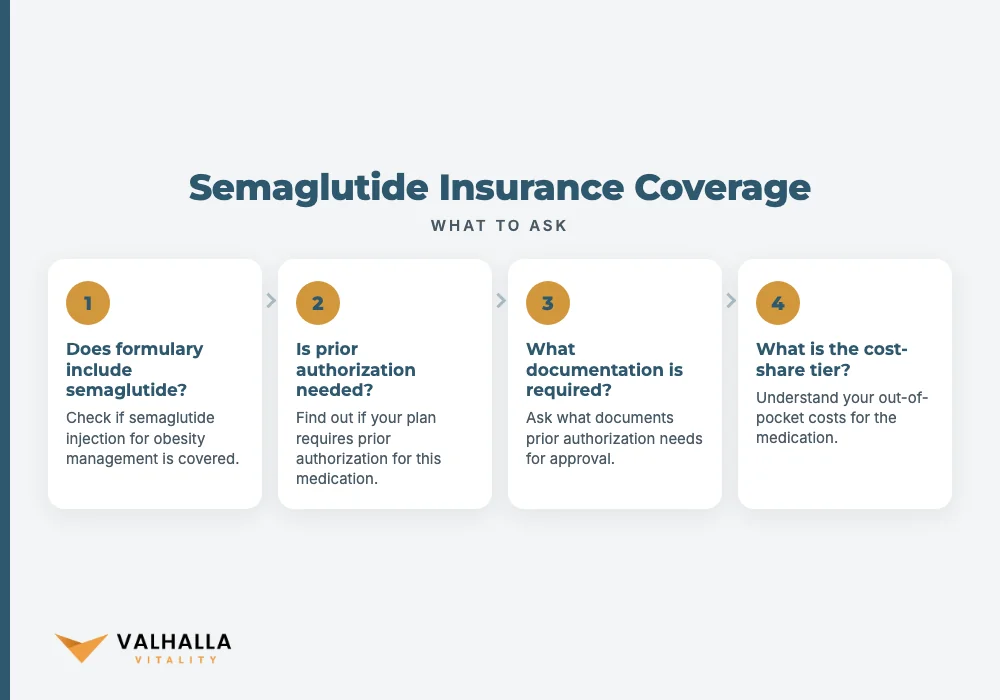
What to ask your insurer before starting treatment:
- Does the formulary include semaglutide injection for obesity management?
- Is prior authorization required?
- What documentation does prior authorization require?
- What cost-share tier applies to this medication?
Prior authorization typically requires documentation of previous weight loss attempts, relevant health conditions, and a provider's letter of medical necessity. A provider experienced in insurance navigation can help build a strong application.
Valhalla Vitality operates as a direct-pay telehealth service. Many patients who reach out have already been denied insurance coverage or have decided not to navigate prior authorization. For those patients, realistic cost information is addressed during the intake process, before any commitment is made.
Compounded semaglutide for weight loss: what you need to know
Compounded semaglutide is prepared by licensed compounding pharmacies under 503A or 503B designations, rather than being commercially manufactured. These pharmacies produce medications to prescription specifications for individual patients, typically during periods when commercial products face supply constraints or when a patient's clinical situation requires a formulation not commercially available.
Compounded products are not evaluated by the FDA for safety, effectiveness, or quality in the same way as commercially manufactured drugs. That distinction matters when comparing options. It does not mean compounded semaglutide is inherently unsafe, but the regulatory framework is different, and patients should understand that before choosing a provider.
The Valhalla Vitality model routes prescriptions to US partner compounding pharmacies that carry 503A or 503B certification. A licensed provider reviews and approves every prescription before it is transmitted. Delivery typically arrives within three to seven business days after the prescription is sent to the pharmacy.
A 2025 Delphi consensus by Nikolis et al. in the Journal of Cosmetic Dermatology noted that rapid GLP-1-driven weight loss raises aesthetic concerns, including skin laxity and facial volume changes, that clinicians are beginning to address systematically. Patients losing significant weight through either branded or compounded formulations benefit from active clinical monitoring throughout the process.
Anyone evaluating compounded semaglutide should ask their provider about the pharmacy's certification, the formulation's concentration, and the monitoring schedule that accompanies the prescription.
What happens when you stop semaglutide weight loss treatment?
Weight regain is the most consistent finding in the literature on stopping GLP-1 medications. A 2026 systematic review in The BMJ (West et al.) found that patients who discontinued GLP-1 weight management medications regained a substantial proportion of lost weight within one to two years of stopping. This is not a design flaw. It reflects the chronic biological nature of obesity, which does not resolve permanently through a finite course of treatment.
Stopping without a plan is where outcomes deteriorate most. Patients who discontinue due to side effects often find that a dose reduction, rather than full cessation, allows them to continue comfortably. Those who stop due to cost or access barriers benefit from restarting promptly when the barrier clears.
A finite course of semaglutide weight loss treatment is not without value. Even a period of significant weight reduction may improve metabolic markers, reduce cardiovascular risk factors, and shift dietary patterns in ways that persist after stopping. Patients who start treatment with accurate expectations about long-term use make better decisions than those who expect a permanent fix from a short course.
Who qualifies for semaglutide weight loss treatment?
Clinical guidelines describe a profile that generally includes adults with overweight or obesity who also have at least one weight-related health condition, such as hypertension, elevated cholesterol, type 2 diabetes or prediabetes, or sleep apnea. A documented prior attempt at managing weight through lifestyle change is part of most published eligibility criteria. A licensed provider determines whether a specific therapy is appropriate after reviewing your complete medical intake, not based on a single criterion.
People who should not use GLP-1 receptor agonists include those with a personal or family history of medullary thyroid carcinoma, multiple endocrine neoplasia syndrome type 2, or known hypersensitivity to the medication. Pregnancy and breastfeeding are contraindications. Certain severe gastrointestinal conditions may also preclude use.
For people evaluating multiple options, a detailed look at how tirzepatide compares to semaglutide covers the differences in mechanism, clinical trial outcomes, and patient profiles before a provider conversation.
The intake process at Valhalla Vitality takes place entirely online. Licensed providers review submissions within 24 business hours. Approved prescriptions are sent to a US partner compounding pharmacy, with delivery arriving in three to seven business days after transmission.
Ready to explore your options?
To find out whether semaglutide weight loss treatment is right for you, Book Your Consultation.
FAQ
How much weight can you lose on semaglutide?
Clinical trials report mean weight losses of approximately 13 kg over 56 weeks for participants using once-weekly semaglutide, compared to significantly less on placebo, based on a 2022 meta-analysis by Tan et al. Individual outcomes vary based on starting weight, lifestyle factors, and dose response. A substantial portion of weight is typically regained after stopping, which is why most providers approach semaglutide as a long-term therapy rather than a short course.
How long does semaglutide take to work for weight loss?
Most people notice reduced appetite within the first few weeks, with measurable weight changes typically beginning within the first month. Full effect builds gradually as the dose is titrated over several months to a therapeutic level. Clinical trials used a 56-week primary endpoint, which reflects where cumulative weight reduction peaks.
What are the most common side effects of semaglutide?
Nausea is the most frequently reported side effect, followed by vomiting, diarrhea, constipation, headache, and injection site reactions. These effects are most pronounced during dose escalation and often decrease as the body adjusts. Persistent or worsening symptoms should be reported to a provider.
What is the starting dose of semaglutide for weight loss?
A licensed provider determines the starting dose based on lab results, medical history, and current medications. Semaglutide dosage for obesity management follows a gradual titration protocol designed to minimize side effects while building toward an effective therapeutic level. No single starting dose applies to all patients.
Is semaglutide covered by insurance for weight loss?
Coverage depends on your specific plan, insurer, and state. Some commercial and employer-sponsored plans cover semaglutide for weight management, often with prior authorization requirements. Checking directly with your insurer and confirming whether prior authorization is needed is the most reliable first step.
Sources
- Tan HC et al. (2022). Efficacy and Safety of Semaglutide for Weight Loss in Obesity Without Diabetes: A Systematic Review and Meta-Analysis. Journal of the ASEAN Federation of Endocrine Societies. PubMed
- Basile L et al. (2024). Semaglutide and obesity: beyond the nutritional and lifestyle intervention? Minerva Endocrinology. PubMed
- Kommu S et al. (2024). Efficacy and safety of once-weekly subcutaneous semaglutide on weight loss in patients with overweight or obesity without diabetes mellitus: A systematic review and meta-analysis of randomized controlled trials. Obesity Reviews. PubMed
- West S et al. (2026). Weight regain after cessation of medication for weight management: systematic review and meta-analysis. BMJ. PubMed
- Nikolis A et al. (2025). Consensus Statements on Managing Aesthetic Needs in Prescription Medication-Driven Weight Loss Patients: An International, Multidisciplinary Delphi Study. Journal of Cosmetic Dermatology. PubMed
- Thomsen RW et al. (2025). Real-world evidence on the utilization, clinical and comparative effectiveness, and adverse effects of newer GLP-1RA-based weight-loss therapies. Diabetes, Obesity & Metabolism. PubMed
You May Also Like
 Semaglutide
 Cost: What Affects the Price and How to Plan
Semaglutide cost depends on insurance, formulation, and your provider. Learn what drives GLP-1 therapy pricing and how to plan for long-term access.
November 6, 2026 ETRead more → Semaglutide
 Sodium vs Semaglutide: Key Differences Explained
Semaglutide sodium vs semaglutide: how these GLP-1 formulations compare in structure, side effects, and what a provider weighs before prescribing.
November 5, 2026 ETRead more → Semaglutide
 Injection Cost: What to Expect in 2026
Semaglutide injection cost ranges widely based on insurance, form, and provider. Get the full cost breakdown and learn what to expect each month.
November 3, 2026 ETRead more →