Semaglutide for Weight Loss: How It Works and Who Qualifies

The following blog post is for entertainment and informational purposes only. It is not intended to provide medical advice or diagnosis. Please consult your doctor before making any health-related decisions.
Semaglutide for weight loss works by mimicking GLP-1, a naturally occurring gut hormone that signals the brain to reduce hunger and slows gastric emptying. Classified as a GLP-1 receptor agonist, it also helps the body regulate blood sugar by stimulating insulin release and reducing glucose output from the liver. The evidence base is substantial. If you are weighing a weight loss injection treatment, a licensed provider reviews your medical history and lab work before any prescription is written.
What is semaglutide and why is it used for weight management?
Semaglutide was first developed to treat type 2 diabetes. The growing visibility of Ozempic for obesity management reflects how quickly clinical evidence expanded beyond that original indication. Its ability to reduce appetite and support weight management became clear in subsequent trials, eventually establishing it as a recognized option for chronic weight management in adults who meet clinical eligibility criteria. A 2022 review in Frontiers of Medicine noted the expanding role of this compound across both diabetes care and obesity treatment, reflecting its well-documented safety and efficacy profile in patients with excess body weight.
The medication belongs to the GLP-1 receptor agonist class, a group of compounds that replicate the action of incretin hormones. These hormones are released naturally after eating. They trigger insulin secretion, reduce glucagon output, and slow the rate at which food moves through the digestive system. Semaglutide amplifies those effects at a therapeutic level. That combination of actions makes it clinically useful not only for blood sugar control but for sustained reductions in caloric intake over time.
This is not a stimulant and does not work by accelerating metabolism. Weight reduction results from consistent, appetite-driven decreases in food intake. That mechanism is what established semaglutide for weight loss as a distinct clinical category, separate from older stimulant-based weight management drugs.
How does semaglutide suppress appetite?
Semaglutide appetite suppression works through several overlapping biological pathways. When the medication binds to GLP-1 receptors in the hypothalamus, the brain region responsible for regulating hunger, it reduces the signals that drive food-seeking behavior and strengthens those that signal fullness. The effect operates at multiple levels simultaneously, which is part of why clinical trials have consistently found it more effective for weight management than single-pathway drugs.
The primary mechanisms include:
- Hypothalamic signaling: GLP-1 receptors in the brain's appetite control center respond to semaglutide by dampening hunger signals and prolonging post-meal fullness after smaller portions.
- Gastric emptying: Semaglutide slows the rate at which food leaves the stomach, which extends satiety and reduces the speed and magnitude of post-meal blood sugar rises.
- Insulin and glucagon regulation: By stimulating insulin release and suppressing glucagon, the medication keeps blood sugar more stable throughout the day, reducing the energy dips that often trigger cravings between meals.
- Reward pathway modulation: Research suggests GLP-1 receptor agonists may reduce the brain's reward response to calorie-dense foods, making lower-calorie choices easier to sustain over time without relying on restriction alone.
Together, these mechanisms mean that most people on GLP-1 receptor agonist therapy eat less because hunger is genuinely lower, not because they are forcing restraint. That distinction supports long-term adherence. Pairing treatment with a structured semaglutide diet plan can extend the appetite-reduction benefit and help preserve lean body mass during weight loss.
How long does semaglutide take to work?
Many people on semaglutide for weight loss notice a reduction in appetite within the first few weeks. Visible changes in body weight typically take longer, often becoming more apparent over the first one to three months as the provider works through the semaglutide dosage schedule to reach a therapeutically effective level.
The process is intentionally gradual. Providers start at a low dose and increase it in defined steps over several weeks. The purpose is to minimize gastrointestinal side effects while giving the body time to adapt. The therapeutic dose is determined by the provider based on your response and lab results, not chosen by the patient. That step-up process also means the full appetite-suppressing effect builds incrementally rather than arriving all at once.
A 2024 systematic review and meta-analysis in Experimental and Clinical Endocrinology and Diabetes examined once-weekly subcutaneous semaglutide across multiple randomized controlled trials. It found consistent patterns of weight reduction in adults with overweight or obesity, with benefits maintained during continued treatment and weight regain common after discontinuation. That finding has shaped how providers frame semaglutide for weight loss: not as a short course but as long-term management of a chronic condition.
Your provider reassesses your progress at regular intervals and adjusts the clinical plan as needed.
Who qualifies for semaglutide treatment?
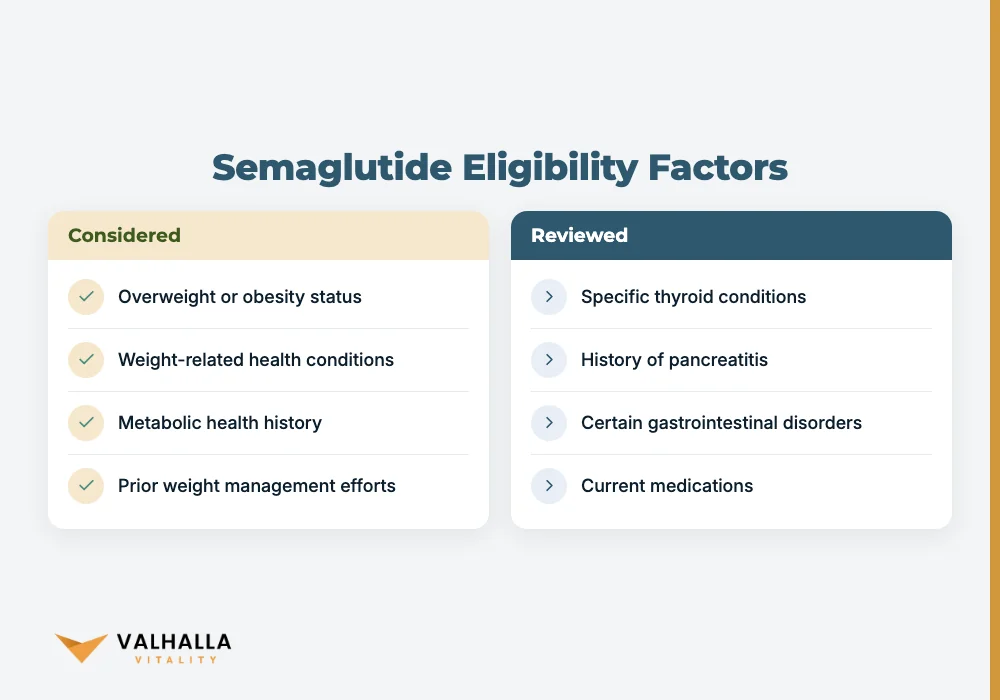
A licensed provider determines whether semaglutide for weight loss is appropriate after reviewing your medical intake. There is no universal checklist a patient can self-apply. Eligibility is generally built from a combination of the following factors, each reviewed in full during intake:
- Body weight category: Overweight or obesity status is typically required, with or without weight-related health conditions. The provider assesses whether your weight profile meets the clinical threshold for this therapy.
- Metabolic health history: Conditions such as elevated blood pressure, elevated cholesterol, or cardiovascular risk factors are commonly considered alongside weight status.
- Contraindications: Personal or family history of specific thyroid conditions, pancreatitis, or certain gastrointestinal disorders may affect eligibility or require additional evaluation before prescribing.
- Current medications: Some drugs interact with GLP-1 receptor agonists. A provider reviews your complete medication list before writing a prescription.
- Prior weight management history: Providers consider what approaches you have tried and whether they produced durable results.
A 2026 network meta-analysis in Diabetes, Obesity and Metabolism confirmed that GLP-1 receptor agonist-based therapies outperformed placebo and several comparators across randomized controlled trials in eligible adults. That clinical evidence base supports its use to address chronic weight management in eligible adults.
No two patients present identically. A licensed provider reviews your intake form, lab values, and health history, then determines which GLP-1 therapy fits your clinical picture and what starting point is appropriate. Availability varies by state.
What are common semaglutide side effects?
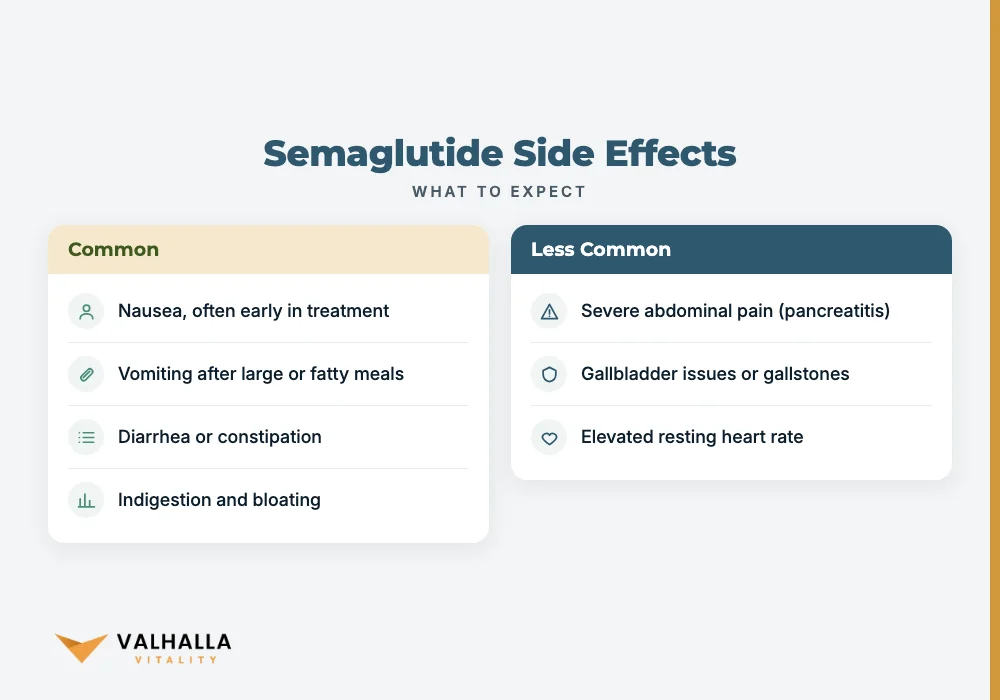
Semaglutide side effects are well-documented across multiple clinical trials and systematic reviews. Most are gastrointestinal and occur primarily in the early weeks of treatment or after a dose increase. Knowing what to expect allows providers and patients to manage symptoms early rather than stopping therapy before it has had a chance to work.
Common GI effects include:
- Nausea, which typically peaks in the first few weeks and decreases as the body adjusts to the medication
- Vomiting may occur, particularly after eating large portions or high-fat meals
- Diarrhea or constipation, which may alternate during the adjustment period
- Indigestion and bloating are common early in treatment and tend to resolve over time
Most of these effects are dose-dependent. The gradual escalation protocol exists specifically to reduce their frequency and severity. A 2024 systematic review of once-weekly subcutaneous semaglutide confirmed that gastrointestinal adverse events were the most frequently reported across clinical trials, but that serious adverse events were uncommon at therapeutic doses.
Less common effects requiring prompt medical attention include:
- Pancreatitis: Severe abdominal pain that does not resolve should be evaluated immediately. This is a rare but serious risk noted in prescribing guidelines.
- Gallbladder issues: Any form of rapid weight loss may increase gallstone risk. Patients with a history of gallbladder disease should discuss this with their provider before starting treatment.
- Heart rate changes: Some patients notice an elevated resting heart rate on GLP-1 therapy, which should be reported to the provider rather than managed without guidance.
A 2026 systematic review in Obesity (Silver Spring) identified a small number of Wernicke's encephalopathy cases following semaglutide treatment for obesity. Wernicke's is a serious neurological condition linked to thiamine (vitamin B1) deficiency. In the documented cases, it appeared connected to severe, persistent vomiting and resulting nutritional depletion. The finding is rare. It reinforces why persistent vomiting should be reported to a provider promptly, and why maintaining adequate nutrition throughout treatment is not optional.
For most patients, the side effect profile is manageable. Provider monitoring catches problems early and allows adjustments before they become reasons to stop.
How is semaglutide administered?
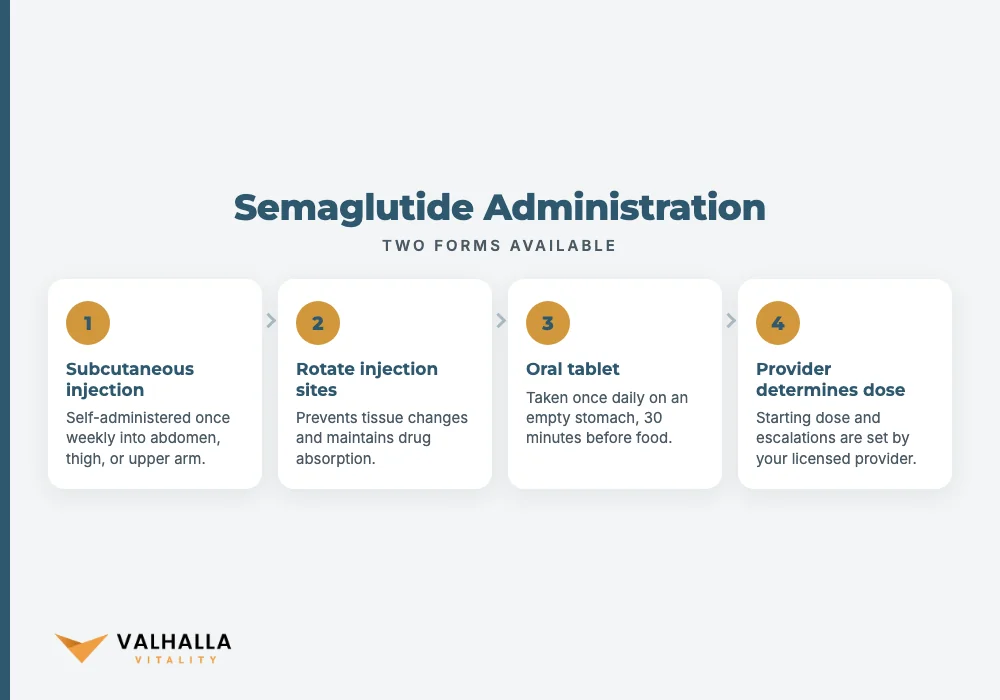
Semaglutide is available in two forms: a once-weekly subcutaneous injection and a daily oral tablet. The semaglutide dosage schedule differs by form, and the appropriate choice depends on clinical context and patient preference, both reviewed with a provider.
| Form | Frequency | Key administration notes |
|---|---|---|
| Subcutaneous injection | Once weekly | Self-administered into the abdomen, thigh, or upper arm; rotate injection sites to prevent tissue changes |
| Oral tablet | Once daily | Taken on an empty stomach, at least 30 minutes before the first food or drink of the day |
The injectable form is the most extensively studied for weight management. For those who prefer oral semaglutide, the daily tablet is an alternative, though bioavailability differs from the injection and the prescribing provider determines whether it is clinically appropriate for your situation.
Rotating injection sites within the approved anatomical areas reduces the risk of tissue changes that can affect drug absorption over time. Your provider demonstrates the technique at the start of treatment. Injectable semaglutide is stored refrigerated until opened. Once in use, it can be kept at room temperature for a defined period. Your pharmacist provides the specific storage duration at dispensing, and you should inspect the solution before each injection.
A licensed provider determines the starting dose and each escalation step. Patients do not self-select doses, and adjusting the schedule without provider guidance can affect both safety and therapeutic outcomes.
From intake to first dose: what the telehealth treatment path looks like
Understanding the actual process is one of the most practical things a prospective patient can do before starting. Online platforms offering GLP-1 therapy follow a structured sequence that mirrors an in-person clinical visit, adapted for the telehealth format.
At a provider-guided service like Valhalla Vitality, the path runs as follows:
- Registration and intake: You complete an online medical intake form covering health history, current medications, weight history, and relevant labs. This replaces the in-office consultation.
- Provider review: A licensed provider reviews the intake. At Valhalla Vitality, this review is completed within 24 business hours of order placement, after which you receive a decision on clinical eligibility.
- Prescription and pharmacy routing: If the provider approves, the prescription is sent to FDA-inspected U.S. pharmacies operating under 503A or 503B compounding standards. Compounding allows for formulations not available under brand-name labeling.
- Delivery: Medication ships directly from the pharmacy to you. Delivery typically takes approximately three to seven business days from the time the prescription is transmitted.
- Ongoing monitoring: Providers schedule follow-ups to review your response, address any side effects, and adjust the plan as needed. Lab work may be requested at set intervals.
This model is direct pay. It requires no in-person clinic visits and operates outside standard insurance billing. Availability varies by state, as provider licensing and compounding pharmacy coverage differ by jurisdiction.
Semaglutide for weight loss and body composition
Total body weight is one measure of progress. Body composition, meaning what proportion of that weight is fat versus lean mass, gives a more complete picture of metabolic health outcomes. A 2026 network meta-analysis in Diabetes, Obesity and Metabolism examined how different GLP-1 receptor agonist-based medications affected body fat percentage, lean body mass, and visceral fat across randomized controlled trials in adults with overweight or obesity. GLP-1 therapies produced measurable reductions in total fat mass, including visceral fat stored around the abdominal organs.
Lean mass preservation is a concern with any weight management approach. Rapid loss without adequate protein intake or physical activity can reduce muscle alongside fat. For this reason, providers who prescribe semaglutide for weight loss typically recommend pairing the medication with a protein-adequate diet and regular exercise. The medication may support appetite control. What you eat and how active you are during treatment determines how much of the weight lost comes from fat versus lean tissue.
For a side-by-side look at how different GLP-1 therapies compare on body composition outcomes, a comparison of semaglutide and tirzepatide covers the clinical trial evidence in detail.
How to stop GLP-1 receptor agonist therapy safely
Patients who reach their weight management goals or who need to stop treatment for any reason should not discontinue semaglutide abruptly. Research consistently shows that weight regain is common after stopping GLP-1 therapy. That is one reason providers frame weight management as an ongoing process rather than a fixed-term treatment course.
When stopping is appropriate, providers typically recommend a gradual tapering approach. Sudden cessation can lead to a rapid return of appetite and, in patients using the medication for blood sugar management, to glucose instability. Your provider outlines a reduction plan suited to your specific situation.
It is also worth noting that changes in how the body responds to alcohol have been reported by patients on GLP-1 therapy. The interactions between semaglutide and alcohol are worth discussing with your provider before making assumptions about what is safe to consume during treatment.
If you are considering stopping because of side effects, a provider conversation may resolve the issue through a dose adjustment rather than full discontinuation.
Ready to explore semaglutide for weight loss?
Speaking with a licensed provider is the most direct way to find out whether semaglutide for weight loss fits your clinical profile. No prescription is written until a provider reviews your intake and determines it is appropriate for you. Book Your Consultation to start the process online.
FAQ
Does semaglutide have regulatory authorization for weight management?
Yes. Semaglutide has received regulatory authorization to support chronic weight management in adults, following clinical trials that showed consistent results in eligible populations. This authorization is distinct from its earlier recognition for type 2 diabetes management and applies specifically to the weight management indication.
How does semaglutide affect blood sugar in people without diabetes?
Semaglutide stimulates insulin release in response to meals and reduces glucagon output, which helps keep blood sugar more stable throughout the day. In people without type 2 diabetes, this effect is present but more modest, and it may support steadier energy levels and reduced cravings between meals.
Does semaglutide work without diet and exercise changes?
The medication reduces appetite, which makes dietary adjustments easier to maintain, but providers treat nutrition and physical activity as essential components of any weight management plan. The quality of what you eat and your activity level affect body composition outcomes and the preservation of lean muscle during treatment.
How long do I need to take semaglutide for weight loss?
Treatment duration depends on your health goals and clinical response, both assessed by a licensed provider. Many patients treat weight management as a long-term condition and remain on GLP-1 therapy for a year or more. Stopping typically leads to weight regain, so discontinuation is a provider-guided decision, not one made unilaterally.
Sources
- Liu Y et al. (2022). New practice in semaglutide on type-2 diabetes and obesity: clinical evidence and expectation. Frontiers of Medicine. PubMed
- Dorneles G et al. (2024). Efficacy and Safety of Once-Weekly Subcutaneous Semaglutide in Overweight or Obese Adults: A Systematic Review with Meta-Analysis. Experimental and Clinical Endocrinology & Diabetes. PubMed
- Vienghirun J et al. (2026). GLP-1 Receptor/Dual Agonists for Weight Loss: A Systematic Review and Network Meta-Analysis of RCTs. Diabetes, Obesity & Metabolism. PubMed
- Wachiraphansakul N et al. (2026). Comparative Effects of Individual GLP-1 Receptor Agonist-Based Medications on Direct Measurement of Body Composition Among Adults With Overweight or Obesity. Diabetes, Obesity & Metabolism. PubMed
- Bidesie J et al. (2026). Wernicke's Encephalopathy Following Semaglutide Treatment for Obesity: A Systematic PRISMA Review. Obesity (Silver Spring). PubMed
You May Also Like
 Semaglutide
 Cost: What Affects the Price and How to Plan
Semaglutide cost depends on insurance, formulation, and your provider. Learn what drives GLP-1 therapy pricing and how to plan for long-term access.
November 6, 2026 ETRead more → Semaglutide
 Sodium vs Semaglutide: Key Differences Explained
Semaglutide sodium vs semaglutide: how these GLP-1 formulations compare in structure, side effects, and what a provider weighs before prescribing.
November 5, 2026 ETRead more → Semaglutide
 Injection Cost: What to Expect in 2026
Semaglutide injection cost ranges widely based on insurance, form, and provider. Get the full cost breakdown and learn what to expect each month.
November 3, 2026 ETRead more →