
The following blog post is for entertainment and informational purposes only. It is not intended to provide medical advice or diagnosis. Please consult your doctor before making any health-related decisions.
Oral semaglutide weight loss therapy puts the GLP-1 active compound in a once-daily tablet, making it a practical option for people who want this drug class without the commitment of weekly injections. The pill and the shot share the same active molecule. The difference is delivery. Rybelsus was the first oral semaglutide to receive regulatory clearance, originally indicated for type 2 diabetes, before a higher-dose oral formulation received authorization specifically for weight management and expanded the GLP-1 oral medication category. A licensed provider reviews your intake and determines whether this therapy fits your situation. Our oral GLP-1 weight loss therapy page walks through the full process, from intake submission to delivery.
What is oral semaglutide?
Semaglutide is a synthetic version of GLP-1, the hormone the gut naturally releases after eating. It binds to GLP-1 receptors in the brain, gut, and pancreas, triggering a coordinated response that suppresses appetite, slows gastric emptying, and moderates blood sugar. That mechanism is the foundation of oral semaglutide weight loss programs.
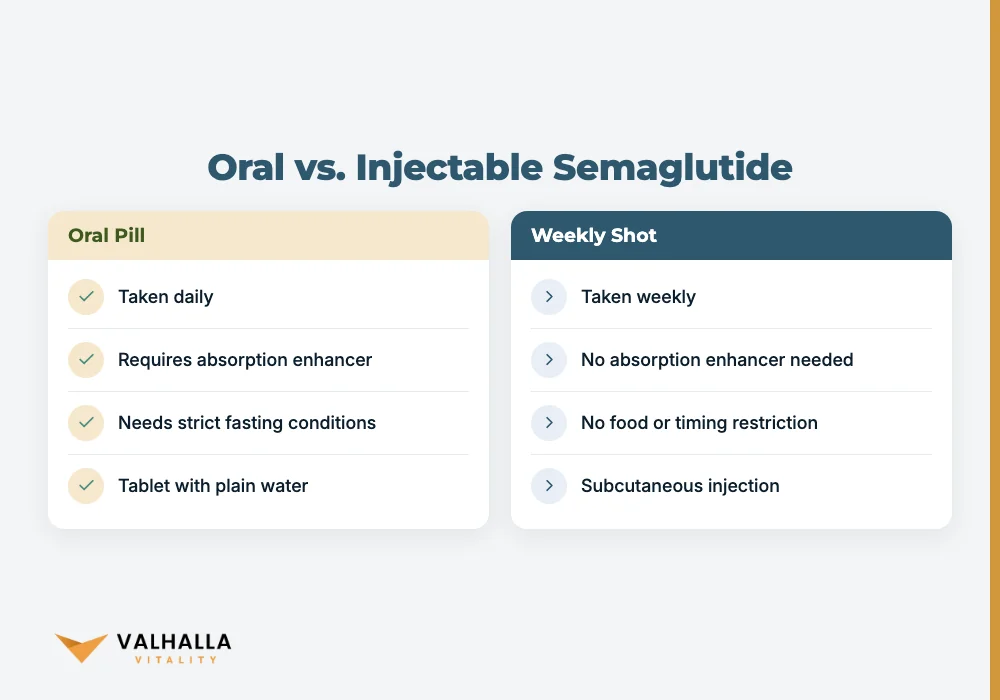
The injectable and oral forms share the same active molecule. Delivery is the difference. The injectable goes directly into subcutaneous tissue with predictable absorption. The oral tablet requires an absorption enhancer because the GI environment would otherwise degrade the compound before it reaches the bloodstream. That enhancer is pH-sensitive, which is why the tablet must be taken under strict fasting conditions. Understanding the mechanism behind semaglutide weight loss in detail can sharpen the questions you bring to your provider consultation.
The table below compares both delivery formats across the practical dimensions people weigh when choosing, the core of what many ask about when evaluating a "semaglutide pill vs injection" approach.
| Feature | Oral semaglutide | Injectable semaglutide |
|---|---|---|
| Dosing frequency | Daily | Weekly |
| Administration | Tablet with plain water | Subcutaneous injection |
| Absorption enhancer | Required | Not needed |
| Food and timing restriction | Yes, 30 min fasted | No |
| Cleared for weight management | Yes (higher-dose formulation) | Yes |
| Provider review required | Yes | Yes |
How oral semaglutide works for weight loss
When the active compound reaches systemic circulation, it activates GLP-1 receptors distributed across the hypothalamus and gastrointestinal tract. Appetite drops. Meals become satisfying at smaller volumes. The urge to snack between meals decreases noticeably over the first weeks. A 2026 systematic review in Diabetes, Obesity & Metabolism found that GLP-1 receptor agonists consistently reduced body weight across randomized controlled trials, with oral formulations included in the network analysis.
Gastric emptying slows too. Food leaving the stomach more gradually produces a gentler blood sugar curve and extends the window of fullness after eating. This dual action on appetite and digestion is why oral semaglutide weight loss programs combine the medication with dietary guidance rather than treating it as a stand-alone intervention.
There is also emerging evidence that GLP-1 signaling affects the brain's food reward pathways, which may explain shifts in food preference and the reduced interest in alcohol some people report. Our article on alcohol and semaglutide therapy covers what those interactions mean in practice.
Is oral semaglutide as effective as injectable semaglutide for weight loss?
Oral semaglutide can support clinically meaningful weight reduction, but injectable semaglutide at full therapeutic doses tends to produce larger total weight loss. The gap is pharmacokinetic, not pharmacological.
Oral bioavailability is inherently lower than subcutaneous delivery, even with the absorption enhancer. Reaching a comparable systemic exposure requires a substantially higher oral dose. The higher-dose oral formulations now approved for weight management partially close that gap. A 2026 evidence review in Postgraduate Medicine concluded the evidence base was sufficient to guide clinical use of oral semaglutide in obesity management, while emphasizing that individualized provider oversight is central to safe use. No single percentage captures real-world outcomes, which depend on starting weight, dietary habits, activity level, and whether someone reaches and sustains the maintenance phase.
One factor that reshapes the comparison is adherence. A 2022 study in Journal of Investigative Medicine, examining semaglutide's role in chronic weight management, highlighted that therapy consistency is a substantial driver of long-term outcomes. For people with needle aversion, a daily tablet that is reliably taken may produce better practical results than an injectable with inconsistent use, even if the injectable has a higher ceiling in trials.
For a broader look at where oral semaglutide sits relative to other GLP-1 options, our GLP-1 treatment comparison guide covers the evidence and practical tradeoffs.
How to take oral semaglutide
Taking oral semaglutide correctly matters more than with most medications. Absorption depends on specific fasting conditions, and even small deviations significantly reduce how much active compound enters the bloodstream.
- Take it on an empty stomach, first thing in the morning. No food, no drinks other than plain water, and no other oral medications should precede it. The absorption enhancer in the tablet is pH-sensitive and needs a fasted gastric environment to function.
- Use plain water only, in a specific volume. Swallow the tablet with plain water exclusively. No juice, no coffee, no sparkling water. The volume matters too, and your prescribing provider will specify the recommended amount.
- Wait before eating or drinking. After taking the tablet, wait at least 30 minutes before consuming food or any non-water beverage. Some clinical guidance suggests a longer interval improves absorption further. Your provider will advise on the timing that fits your program.
- Swallow the tablet whole. Do not crush, split, or chew it. The formulation is designed to be absorbed intact.
- Be consistent. Taking the tablet at the same time each morning, under the same conditions, stabilizes blood levels and supports more predictable outcomes.
How to take oral semaglutide sounds straightforward. In practice, taking it with coffee or alongside breakfast can cut the amount of active drug absorbed substantially. If early results are slower than expected, your provider may review administration technique before adjusting anything else.
What are the side effects of oral semaglutide?
The most common semaglutide tablet side effects are gastrointestinal. Nausea, diarrhea, constipation, and vomiting occur most often in the first weeks as the body adjusts to the medication. Most people find these effects manageable and decreasing over time, particularly when titration starts low and increases gradually.
Additional effects some people experience include:
- Headache and fatigue
- Indigestion, bloating, or stomach discomfort
- Dizziness
- Appetite suppression beyond the intended therapeutic effect
Serious signals that require prompt medical attention. Severe or persistent abdominal pain, particularly pain that radiates to the back, may indicate pancreatitis, which has been associated with GLP-1 medications. Persistent vomiting, changes in urine output, or swelling warrant an immediate provider call.
Oral health is a less-discussed concern. A 2026 paper in the Canadian Journal of Diabetes outlined specific dental management guidelines for people taking semaglutide medications. Reduced food intake and changes in saliva flow during extended treatment can affect oral health over time. Regular dental check-ins and consistent daily oral hygiene are advisable throughout therapy.
Who is a good candidate for oral semaglutide?
A licensed provider determines whether oral semaglutide weight loss therapy is appropriate after reviewing your intake. There is no self-assessment checklist that replaces a clinical evaluation.
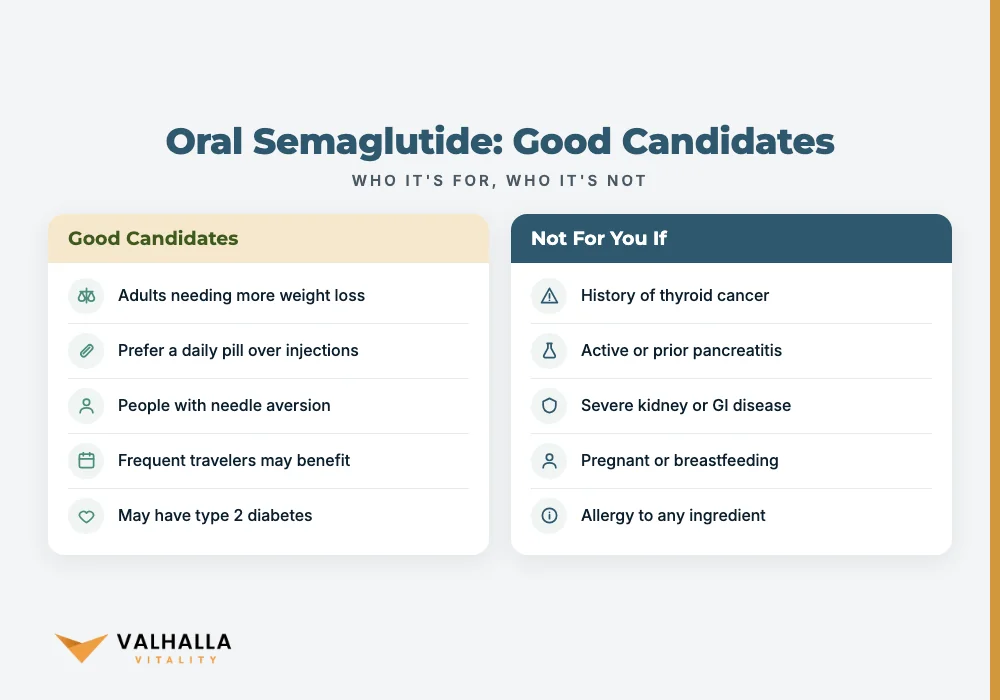
Adults who have not achieved sufficient weight reduction through lifestyle changes alone are generally the population for whom GLP-1 therapy is considered. The oral format particularly suits people with needle aversion, frequent travelers, or those who find a daily pill more sustainable than a weekly injection. People with type 2 diabetes may also be candidates for Rybelsus at doses formulated for glycemic management, though weight management and diabetes care involve different prescribing criteria. A provider evaluates both conditions together when they are present simultaneously.
Conditions that typically preclude oral semaglutide include:
- Personal or family history of medullary thyroid carcinoma or multiple endocrine neoplasia type 2
- Active or prior pancreatitis
- Severe gastrointestinal disease affecting absorption
- Severe kidney disease
- Pregnancy or breastfeeding
- Known allergy to any component of the formulation
Current medications, alcohol use, and other health factors are all part of the provider's assessment. A thorough intake gives the reviewing clinician everything needed to make a safe, individualized decision. Our guide to pairing oral semaglutide with the right nutrition plan outlines the dietary principles that support GLP-1 therapy outcomes.
What is the correct dosage of oral semaglutide for weight loss?
A licensed provider determines the Rybelsus weight loss dosage after reviewing your labs and health history. No universal dose applies to everyone.
Clinical practice uses a gradual titration approach. The starting amount is kept intentionally low, then increased at intervals based on tolerability and response. This process reduces gastrointestinal side effects and allows the body time to adjust to GLP-1 signaling. Reaching the target amount too quickly typically produces more side effects without proportionally improving results.
Do not self-adjust. If the current amount is not producing the expected response, bring that to your provider. If side effects feel unmanageable, the titration schedule can be slowed rather than stopping therapy entirely. A 2026 review in Postgraduate Medicine specifically emphasized individualized dose management as central to safe oral semaglutide use in obesity management.
How long does oral semaglutide take to work?
Most people notice appetite changes within the first two to four weeks of starting oral semaglutide weight loss therapy. Measurable body weight reduction typically becomes apparent over the first one to three months, though the pace varies considerably by individual.
The early weeks involve dose adjustment and the body adapting to GLP-1 signaling. Progress tends to accelerate once the maintenance dose is reached and dietary adjustments are in place. Plateaus are common as total body weight decreases and caloric demands shift. Provider follow-up throughout the program helps address these plateaus by reviewing diet, sleep, stress, and medication adherence together.
Stopping oral semaglutide typically leads to a gradual return of appetite and some degree of weight regain. Any decision to discontinue should be made with clinical guidance rather than independently.
Oral semaglutide weight loss therapy: the provider-guided approach
The quality of a GLP-1 program depends on the structure behind it. At Valhalla Vitality, the process begins with an online medical intake capturing your health history, current medications, and conditions relevant to GLP-1 therapy. A licensed provider reviews the intake and determines whether therapy is appropriate, typically within 24 business hours of submission.
If approved, the prescription goes to a compounding partner pharmacy. Delivery takes approximately three to seven business days from the time the prescription is transmitted. Availability varies by state, as coverage depends on licensed provider reach by state.
Oral semaglutide interacts with nearly 245 other medications, according to the drug's prescribing literature. The slowed gastric emptying it produces can alter how other oral drugs are absorbed, including some thyroid medications, diabetes drugs, and blood pressure treatments. Combining oral semaglutide with other GLP-1 receptor agonists or other semaglutide-containing products is not appropriate. A complete and current medication list is essential at intake.
Ongoing monitoring matters as much as the initial prescription. Dose adjustments, side effect management, and dietary coordination require provider access throughout the program, not just at the start.
See if oral semaglutide is right for you
When you're ready to find out whether oral semaglutide weight loss therapy fits your situation, Book Your Consultation and a licensed provider will review your intake within 24 business hours.
FAQ
Is Rybelsus the same as oral semaglutide for weight loss?
Rybelsus is the brand name for the first oral semaglutide to receive regulatory clearance, originally indicated for type 2 diabetes management. Interest in Rybelsus for weight loss grew alongside a separate higher-dose oral formulation that has since received clearance specifically for weight management. Both contain the same active molecule but carry different indications and dosing parameters.
Does oral semaglutide require a prescription?
Yes. Oral semaglutide is a prescription medication that requires a licensed provider to review your health history, current medications, and labs before writing a prescription. Availability varies by state.
Can oral semaglutide be taken with food?
No. The tablet must be taken on an empty stomach with a small amount of plain water, at least 30 minutes before food, other beverages, or other oral medications. Food significantly reduces the absorption of the active compound.
What happens if I miss a dose?
Skip the missed dose and resume your next scheduled tablet the following morning under the usual fasting conditions. Do not take a double dose to compensate. If you miss several consecutive days, consult your provider before restarting, as the titration schedule may need review.
Are there dental or oral health concerns with oral semaglutide?
Yes. Reduced food intake and changes in saliva flow during extended treatment can affect oral health, and a 2026 paper in the Canadian Journal of Diabetes outlined specific dental management guidelines for semaglutide users. Regular dental check-ins and consistent daily oral hygiene are advisable throughout therapy.
Sources
- Singh G et al. (2022). Wegovy (semaglutide): a new weight loss drug for chronic weight management. Journal of Investigative Medicine. PubMed
- Rubino D et al. (2026). Evidence-informed guidance for the clinical use of oral semaglutide in obesity management. Postgraduate Medicine. PubMed
- Kofman K et al. (2026). Oral Health Considerations and Dental Management Guidelines for Semaglutide Medications. Canadian Journal of Diabetes. PubMed
- Vienghirun J et al. (2026). GLP-1 Receptor/Dual Agonists for Weight Loss: A Systematic Review and Network Meta-Analysis of RCTs. Diabetes, Obesity & Metabolism. PubMed
You May Also Like
 Semaglutide
 Cost: What Affects the Price and How to Plan
Semaglutide cost depends on insurance, formulation, and your provider. Learn what drives GLP-1 therapy pricing and how to plan for long-term access.
November 6, 2026 ETRead more → Semaglutide
 Sodium vs Semaglutide: Key Differences Explained
Semaglutide sodium vs semaglutide: how these GLP-1 formulations compare in structure, side effects, and what a provider weighs before prescribing.
November 5, 2026 ETRead more → Semaglutide
 Injection Cost: What to Expect in 2026
Semaglutide injection cost ranges widely based on insurance, form, and provider. Get the full cost breakdown and learn what to expect each month.
November 3, 2026 ETRead more →