
The following blog post is for entertainment and informational purposes only. It is not intended to provide medical advice or diagnosis. Please consult your doctor before making any health-related decisions.
Semaglutide peptide is a synthetic GLP-1 receptor agonist that mimics the hormone your gut releases after eating. It lowers blood sugar, curbs appetite, and may support meaningful weight loss in people managing obesity or type 2 diabetes. The molecule is well-studied. If you are weighing options before speaking with a provider, this guide to semaglutide weight loss outcomes covers what clinical programs look like in practice.
What is semaglutide peptide?
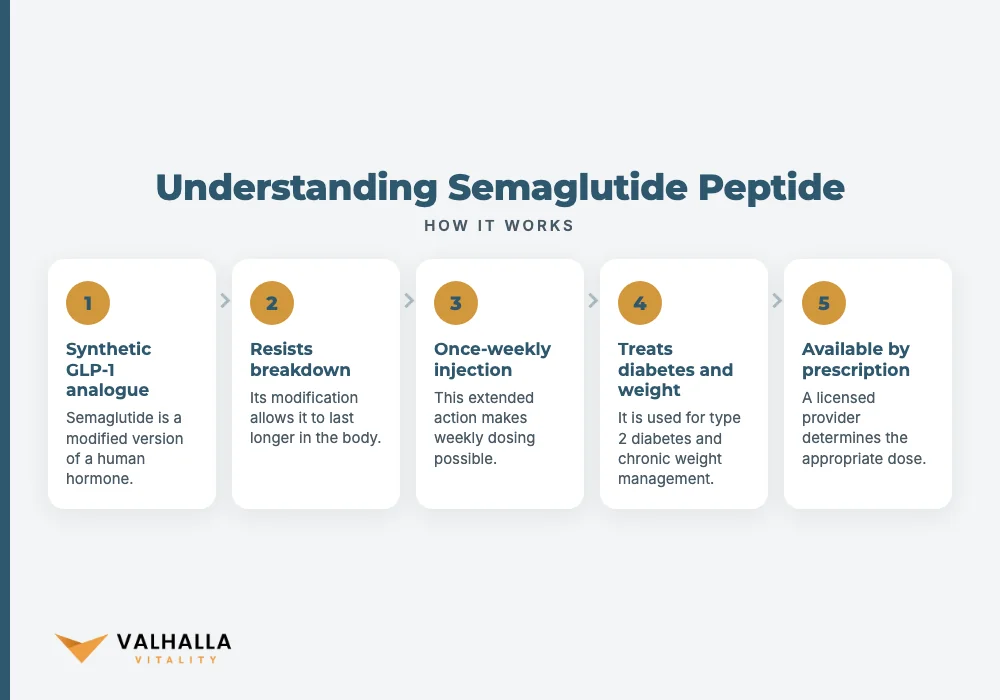
Semaglutide peptide is a synthetic peptide analogue of human GLP-1, modified to resist rapid enzymatic breakdown. That modification extends its half-life considerably, making once-weekly injection viable. Earlier GLP-1 receptor agonists required daily or twice-daily dosing, which created adherence challenges over long treatment courses.
The table below places semaglutide peptide within the GLP-1 drug class:
| Property | Details |
|---|---|
| Drug class | GLP-1 receptor agonist |
| Molecular basis | Synthetic analogue of human GLP-1 hormone |
| Primary indications | Type 2 diabetes; chronic weight management |
| Administration | Subcutaneous injection or oral tablet |
| Dosing | A licensed provider determines the dose after reviewing labs and intake |
A 2022 review in the Journal of Investigative Medicine described semaglutide as producing results more pronounced than most prior weight-loss interventions (Singh et al., 2022). The molecule is used in branded formulations for both diabetes and weight management, and in provider-guided compounding programs. The Valhalla Vitality telehealth platform offers GLP-1 therapy through licensed provider review and prescription, with availability varying by state.
How does semaglutide work in the body?
Semaglutide peptide works through three overlapping mechanisms. First, it stimulates glucose-dependent insulin release from the pancreas. Because insulin secretion only occurs when blood glucose is elevated, the risk of hypoglycemia is reduced compared with older diabetes agents.
Second, it suppresses glucagon. That cuts the liver's output of stored glucose between meals. Third, it slows gastric emptying, keeping food in the stomach longer and extending satiety after a meal.
The semaglutide mechanism of action on appetite goes beyond the gut. The molecule acts on appetite-regulating centers in the brainstem and hypothalamus, dampening the neural drive to seek food between meals. That is what distinguishes semaglutide appetite suppression from simple calorie restriction: the drive to eat is reduced at its source, not just physically limited by stomach capacity.
A 2026 paper in Expert Opinion on Drug Delivery noted ongoing work to refine how semaglutide is delivered and absorbed, reflecting how much clinical attention the molecule currently receives (Nayak et al., 2026). For a closer look at when appetite changes typically become noticeable, see when appetite changes typically appear during GLP-1 therapy.
Semaglutide for diabetes: managing blood sugar
Semaglutide for diabetes targets the two core drivers of elevated blood sugar in type 2 diabetes: insufficient insulin and excess glucagon. The glucose-dependent mechanism matters clinically. It means the drug stimulates insulin only when blood sugar is high, lowering the risk of hypoglycemia.
HbA1c reductions are well documented. HbA1c reflects average blood sugar over approximately three months, so lower values indicate sustained glycemic improvement rather than a brief shift.
Weight loss commonly accompanies blood sugar improvements. Excess adipose tissue worsens insulin resistance and may accelerate disease progression in type 2 diabetes, which makes this secondary benefit clinically significant. A licensed provider determines whether a therapy is appropriate after reviewing your intake, labs, and full medical history. No single marker alone determines eligibility.
Is semaglutide effective for weight loss?
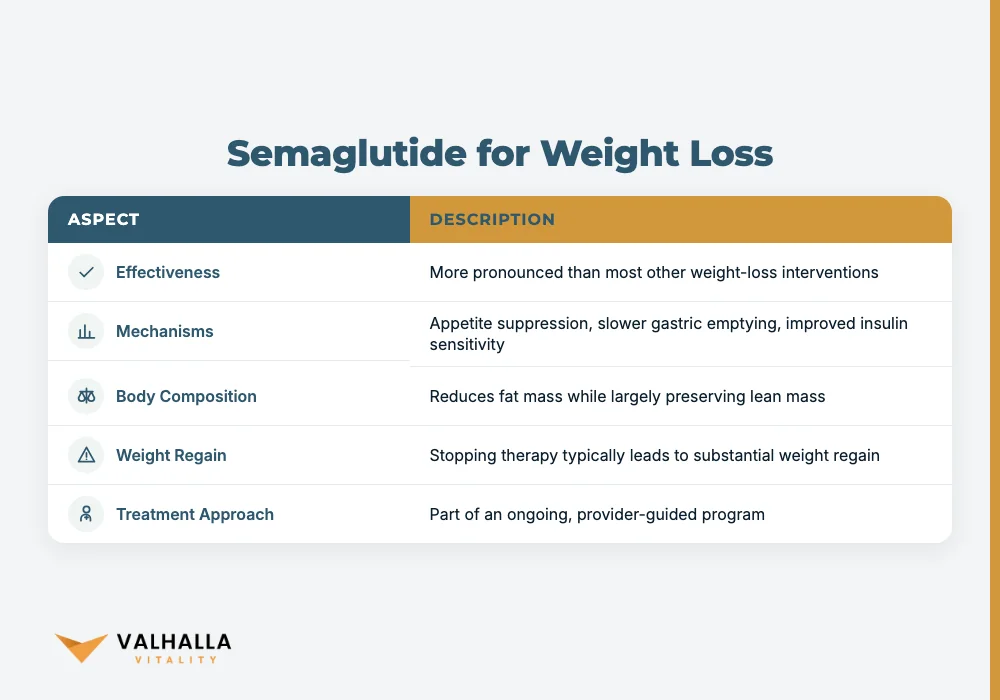
Yes. Semaglutide weight loss results are among the most studied outcomes in the GLP-1 drug class. The 2022 review in the Journal of Investigative Medicine described outcomes as more pronounced than most other weight-loss interventions in the literature at the time (Singh et al., 2022). Real-world data published in Diabetes, Obesity & Metabolism in 2025 confirmed meaningful effectiveness outside controlled trial settings (Thomsen et al., 2025).
Three mechanisms drive semaglutide weight loss. Appetite suppression reduces total caloric intake. Slower gastric emptying limits comfortable meal size. Improved insulin sensitivity shifts how the body stores and uses energy over time.
A 2025 systematic review and network meta-analysis in Metabolism found that GLP-1 receptor agonists including semaglutide reduce fat mass while largely preserving lean mass (Karakasis et al., 2025). That is a meaningful distinction from simple caloric restriction, which typically cuts into muscle alongside fat. For more on what this looks like in body composition data, see how GLP-1 therapy affects fat distribution and lean mass.
One practical consideration: a 2025 meta-analysis in Obesity Reviews found that people who stop GLP-1 receptor agonist therapy typically regain a substantial portion of lost weight over the following months (Berg et al., 2025). That positions semaglutide peptide as part of an ongoing, provider-guided program rather than a finite course of treatment.
What are the side effects of semaglutide?
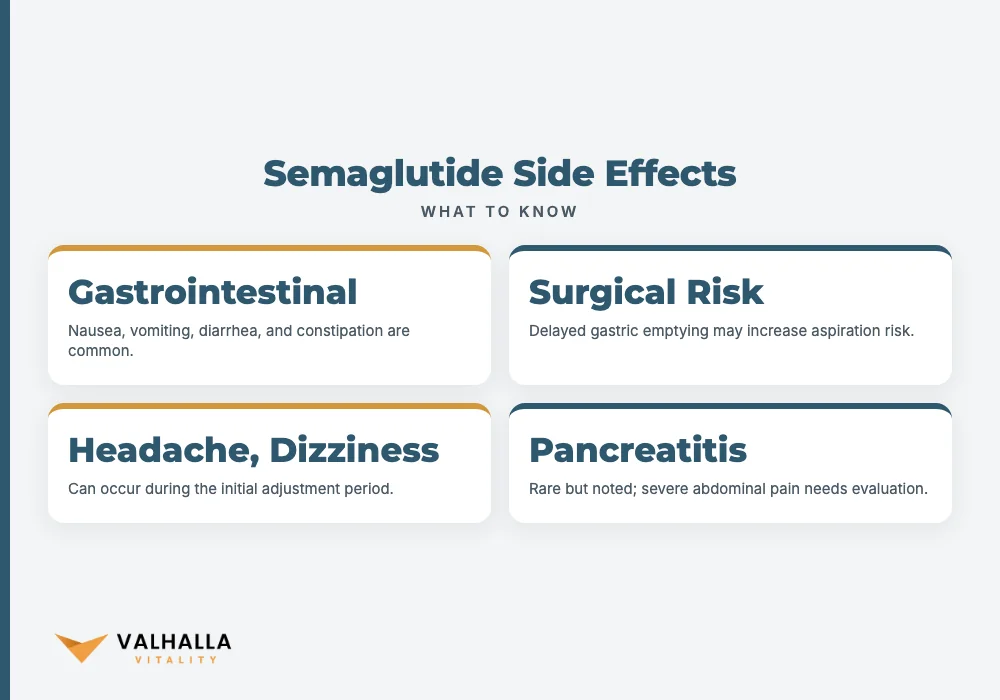
The most commonly reported side effects of semaglutide peptide are gastrointestinal. Nausea comes first. Vomiting, diarrhea, and constipation also occur. These effects tend to peak when therapy starts or when a provider steps up the dose, then ease over several weeks as the body adapts.
Surgical context requires specific attention. A 2025 meta-analysis in Anaesthesia identified an association between GLP-1 receptor agonist use and elevated risk of pulmonary aspiration around surgery, likely because delayed gastric emptying persists into the perioperative period (Elkin et al., 2025). Patients scheduled for any procedure should disclose active GLP-1 therapy to their clinical team in advance.
Additional effects reported in clinical literature and prescribing labels include:
- Headache and mild dizziness during the initial adjustment period
- Fatigue, most common in the early weeks of treatment
- Pancreatitis, rare but noted in labeling; severe abdominal pain warrants prompt evaluation
- Thyroid C-cell changes observed in rodent studies; standard clinical oversight includes monitoring for this
A licensed provider reviews labs and medical history before prescribing and monitors patients over time. That oversight process is how risk-benefit decisions are made individually.
How is semaglutide different from other GLP-1 drugs?
The most significant structural difference is half-life. Earlier GLP-1 receptor agonists required daily injection. Semaglutide's modified molecular structure supports once-weekly dosing. Clinical data consistently link less frequent dosing to better long-term adherence. The brand-name question that often arises in this context, "ozempic vs semaglutide", has a direct answer: Ozempic is a branded formulation of semaglutide, not a separate compound; the active GLP-1 receptor agonist molecule is the same regardless of which label appears on the packaging.
Semaglutide is also one of the few GLP-1 receptor agonists available in oral tablet form. That formulation has specific administration requirements to achieve adequate absorption, as the molecule is otherwise degraded before reaching systemic circulation. For a full breakdown of how the tablet formulation works in practice, see once-daily tablet delivery of GLP-1 therapy.
Tirzepatide is a newer dual agonist that activates both GLP-1 and GIP receptors. Early comparative data suggest it may produce greater average weight reduction in some populations, though direct comparisons involve multiple variables. For a structured look at the clinical data on both agents, see how semaglutide and dual-agonist GLP-1 options compare.
Expanding applications of semaglutide peptide
Research on semaglutide peptide is extending beyond its established indications. Early-phase trials are examining its role in non-alcoholic fatty liver disease, where weight reduction and improved insulin sensitivity may lower hepatic fat accumulation. These results are preliminary, and clinical recommendations have not changed yet.
Neurodegeneration is another active research area. Investigators have pointed to Alzheimer's disease as a target of interest based on how GLP-1 receptor activation may interact with central nervous system inflammation and metabolic signaling. The clinical evidence is early. The basic science is currently ahead of the data.
A 2026 review in Expert Opinion on Drug Delivery noted that the scope of semaglutide research now extends well beyond its original metabolic focus (Nayak et al., 2026). What makes semaglutide peptide a candidate across such varied areas is the breadth of its receptor distribution. GLP-1 receptors appear in the pancreas, gut, cardiac tissue, and several brain regions, which explains why the molecule continues to generate new research questions.
Ready to explore GLP-1 therapy?
A licensed provider can review your intake and determine whether a GLP-1 receptor agonist program is appropriate for your situation. Book Your Consultation to take the next step.
FAQ
Is semaglutide a peptide?
Yes. Semaglutide is a synthetic peptide analogue of the body's naturally occurring GLP-1 hormone. Its peptide structure allows it to bind to and activate GLP-1 receptors throughout the body, producing effects on insulin secretion, glucagon suppression, and appetite.
How does semaglutide suppress appetite?
Semaglutide acts on appetite-regulating centers in the brainstem and hypothalamus, reducing the neural drive to eat. It also slows gastric emptying, extending the sensation of fullness after meals. Together, these two mechanisms reduce total caloric intake without relying on willpower alone.
Is semaglutide the same as Ozempic?
Ozempic is a brand name; semaglutide peptide is the active molecule inside it. The same molecule appears in other branded formulations and in provider-prescribed compounding programs. What differs between branded and compounded products is the manufacturing and regulatory pathway, not the molecule itself.
What happens when someone stops taking semaglutide?
A 2025 meta-analysis in Obesity Reviews found that body weight typically increases after people discontinue GLP-1 receptor agonist therapy (Berg et al., 2025). This reflects that semaglutide addresses appetite and metabolic signals while active, rather than permanently altering them. Provider guidance on how and when to discontinue is part of responsible prescribing.
Who determines whether semaglutide therapy is appropriate?
A licensed provider reviews your medical intake, lab results, and health history before determining whether a GLP-1 receptor agonist program is appropriate for you. No patient selects their own dose or formulation; that determination happens at the clinical review stage. Availability varies by state.
Sources
- Singh G et al. (2022). Wegovy (semaglutide): a new weight loss drug for chronic weight management. Journal of Investigative Medicine. PubMed
- Karakasis P et al. (2025). Effect of glucagon-like peptide-1 receptor agonists and co-agonists on body composition: Systematic review and network meta-analysis. Metabolism: clinical and experimental. PubMed
- Thomsen RW et al. (2025). Real-world evidence on the utilization, clinical and comparative effectiveness, and adverse effects of newer GLP-1RA-based weight-loss therapies. Diabetes, obesity & metabolism. PubMed
- Nayak S et al. (2026). Current trends in semaglutide therapy and strategies to improve its bioavailability. Expert Opinion on Drug Delivery. PubMed
- Berg S et al. (2025). Discontinuing glucagon-like peptide-1 receptor agonists and body habitus: A systematic review and meta-analysis. Obesity reviews. PubMed
- Elkin J et al. (2025). Association between glucagon-like peptide-1 receptor agonist use and peri-operative pulmonary aspiration: a systematic review and meta-analysis. Anaesthesia. PubMed
You May Also Like
 Semaglutide
 Cost: What Affects the Price and How to Plan
Semaglutide cost depends on insurance, formulation, and your provider. Learn what drives GLP-1 therapy pricing and how to plan for long-term access.
November 6, 2026 ETRead more → Semaglutide
 Sodium vs Semaglutide: Key Differences Explained
Semaglutide sodium vs semaglutide: how these GLP-1 formulations compare in structure, side effects, and what a provider weighs before prescribing.
November 5, 2026 ETRead more → Semaglutide
 Injection Cost: What to Expect in 2026
Semaglutide injection cost ranges widely based on insurance, form, and provider. Get the full cost breakdown and learn what to expect each month.
November 3, 2026 ETRead more →