
The following blog post is for entertainment and informational purposes only. It is not intended to provide medical advice or diagnosis. Please consult your doctor before making any health-related decisions.
Enclomiphene blood pressure effects lean toward benefit rather than harm for most men with testosterone deficiency. The therapy raises endogenous testosterone, which may support vasodilation, reduce vascular resistance, and improve endothelial function. Current evidence does not identify enclomiphene as a direct cause of elevated blood pressure, though individual responses vary and monitoring is standard. A licensed provider reviews your cardiovascular baseline before recommending enclomiphene therapy for hormone restoration, ensuring the approach fits your individual health profile.
How enclomiphene works
Enclomiphene blocks estrogen receptors in the pituitary gland. That blockade signals the hypothalamus to release gonadotropin-releasing hormone (GnRH), which prompts the pituitary to increase output of luteinizing hormone (LH) and follicle-stimulating hormone (FSH). Elevated LH and FSH then direct the testes to produce more testosterone. The hypothalamic-pituitary-gonadal (HPG) axis stays fully engaged throughout.
This is the key functional difference from traditional testosterone replacement therapy, which delivers testosterone from outside the body and suppresses the HPG axis through negative feedback. Enclomiphene removes a brake on the system rather than bypassing it. For the enclomiphene blood pressure discussion, that distinction means testosterone rises through a regulated biological process rather than from an external depot, which may affect how hormone concentrations stabilize and how the cardiovascular system adapts over time.
Does enclomiphene raise blood pressure?
The available evidence does not support that conclusion for most patients. Research on testosterone and blood pressure in men with hypogonadism consistently points toward a favorable or neutral outcome when hormone levels are restored, not an adverse one.
Several interconnected mechanisms explain this pattern:
- Nitric oxide production: Testosterone promotes nitric oxide synthesis in endothelial cells, relaxing arterial smooth muscle and reducing vascular resistance.
- Endothelial function: Normal testosterone levels support vessel lining integrity, governing how arteries dilate and contract under varying blood flow demands.
- Sympathetic tone: Adequate testosterone correlates with reduced sympathetic nervous system activity. Lower sympathetic tone directly links to lower resting blood pressure.
- Renal sodium handling: Testosterone influences how the kidneys manage sodium reabsorption, a primary driver of fluid volume and pressure regulation.
- Electrolyte balance: The sodium-potassium ratio regulates membrane potential in vessel walls, and this ratio shifts with androgen levels in ways that can support stable resting pressure.
These pathways explain why the enclomiphene blood pressure relationship tends toward benefit in testosterone-deficient men. The degree of benefit varies by individual, depending on how much testosterone rises and what cardiovascular baseline the therapy is working against.
Can enclomiphene cause high blood pressure?
No direct mechanism exists by which enclomiphene elevates blood pressure. The therapy raises testosterone, and the physiological evidence for testosterone's cardiovascular effects points away from hypertension as a consequence. Direct data on enclomiphene blood pressure changes is limited in the published literature, but the broader research on testosterone restoration in men with hypogonadism supports a neutral or beneficial outcome.
Blood pressure variability deserves attention here. A 2016 meta-analysis in the BMJ found a clear independent association between greater blood pressure variability and worse cardiovascular outcomes, separate from mean pressure levels. A 2025 review in the Journal of Hypertension reinforced that variability, not just a single reading, is a meaningful marker for cardiovascular risk assessment. This matters for anyone starting hormone therapy: even if average pressure stays stable, day-to-day swings may signal a cardiovascular response worth monitoring closely.
The enclomiphene hypertension risk picture also looks different when baseline conditions are factored in. Hypogonadism is associated with higher rates of metabolic syndrome, insulin resistance, and cardiovascular dysfunction. Correcting the hormonal deficit under careful medical supervision may reduce some of that background risk. The trajectory depends on individual response and how consistently monitoring continues throughout therapy.
How does enclomiphene affect cardiovascular health?
Enclomiphene cardiovascular effects operate through testosterone's broad influence on the circulatory system. Testosterone is not a single-action reproductive hormone. It shapes endothelial cell function, modulates lipid metabolism, affects autonomic nervous system tone, and interacts with cardiac muscle physiology at multiple levels.
Clinical research on testosterone restoration in men with secondary hypogonadism has documented improvements in endothelial function and reductions in arterial stiffness following therapy. Since enclomiphene raises testosterone through the same HPG axis, providers anticipate comparable cardiovascular effects. Direct long-term enclomiphene-specific cardiovascular data remains limited, and providers currently work from the broader testosterone-and-cardiovascular-health literature when framing the therapy's implications.
Hematocrit is a specific variable requiring attention. Testosterone stimulates red blood cell production. If hematocrit climbs too high, blood viscosity rises and places additional strain on the circulatory system. This is why hematocrit is a standard lab target during ongoing therapy alongside blood pressure. A fuller picture of enclomiphene's circulatory considerations appears in our overview of cardiovascular risks associated with enclomiphene.
Is enclomiphene safe for men with hypertension?
Pre-existing hypertension does not disqualify someone from enclomiphene therapy. It changes the pre-treatment conversation and monitoring plan significantly, but it does not make the therapy automatically inappropriate. The enclomiphene hypertension risk question requires individual evaluation, not a categorical answer.
Providers typically assess several factors before recommending enclomiphene for men with elevated blood pressure:
- Whether blood pressure is currently controlled or showing instability on existing medications
- Which antihypertensive agents the patient takes, since hormonal shifts can alter how those medications perform
- The degree of testosterone deficiency confirmed through lab values
- Kidney function and lipid results, since both interact with testosterone and pressure regulation
- Prior history of cardiac events, arrhythmias, or structural heart disease
Men with uncontrolled hypertension or a recent cardiac event may need to stabilize those conditions before starting hormone therapy. The clinical reasoning is that hypogonadism and hypertension frequently co-occur, and addressing the hormonal deficit may reduce the overall cardiovascular burden rather than add to it. Applying that reasoning correctly requires a licensed provider who has reviewed the actual labs and full medical history. Availability varies by state.
What should men monitor when starting enclomiphene?
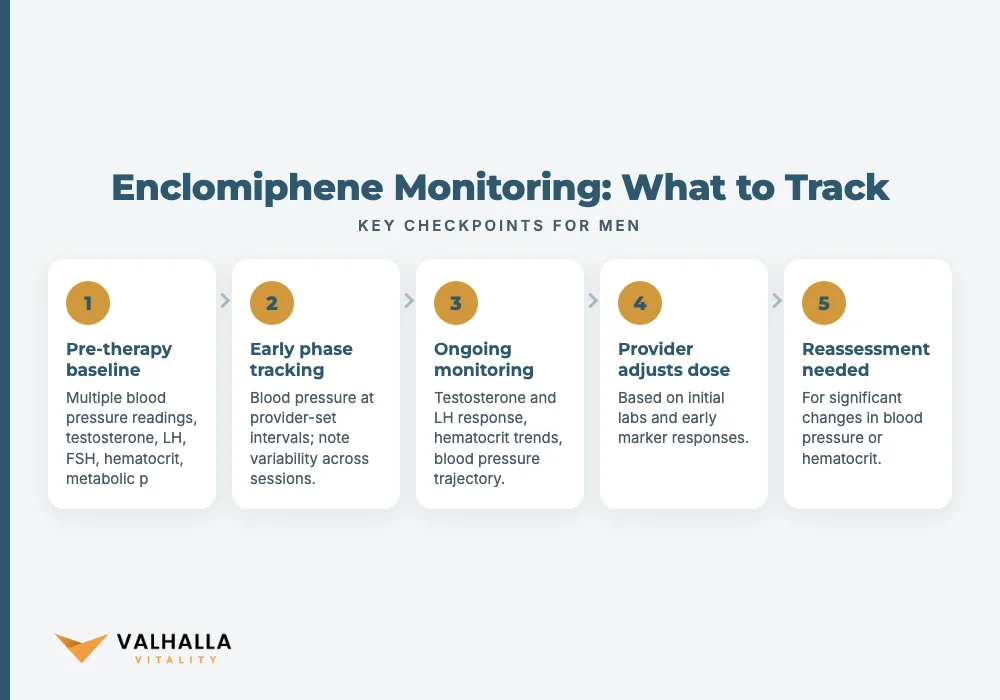
Monitoring strategy defines the difference between safe and poorly managed hormone therapy. Consistent enclomiphene blood pressure tracking matters throughout, with particular emphasis on establishing a true pre-therapy baseline.
A single clinic reading is not an adequate baseline. Blood pressure fluctuates with activity, stress, sleep, and time of day. A meaningful baseline requires multiple readings across different settings over several days, ideally including home measurements before the first dose. Providers often request a home log to anchor all subsequent comparisons.
Standard monitoring checkpoints:
| Timepoint | Key markers |
|---|---|
| Pre-therapy | Blood pressure (multiple readings), testosterone, LH, FSH, hematocrit, metabolic panel |
| Early phase | Blood pressure at provider-set intervals; variability noted across sessions |
| Ongoing | Testosterone and LH response, hematocrit trends, blood pressure trajectory |
A licensed provider determines the dose after reviewing those initial labs and adjusts the follow-up schedule based on how early markers respond. Any clinically significant change in blood pressure or hematocrit during the early phase triggers a reassessment. What that reassessment covers is detailed in the guide to enclomiphene safety profile and side effects.
Lifestyle factors that shape enclomiphene blood pressure outcomes
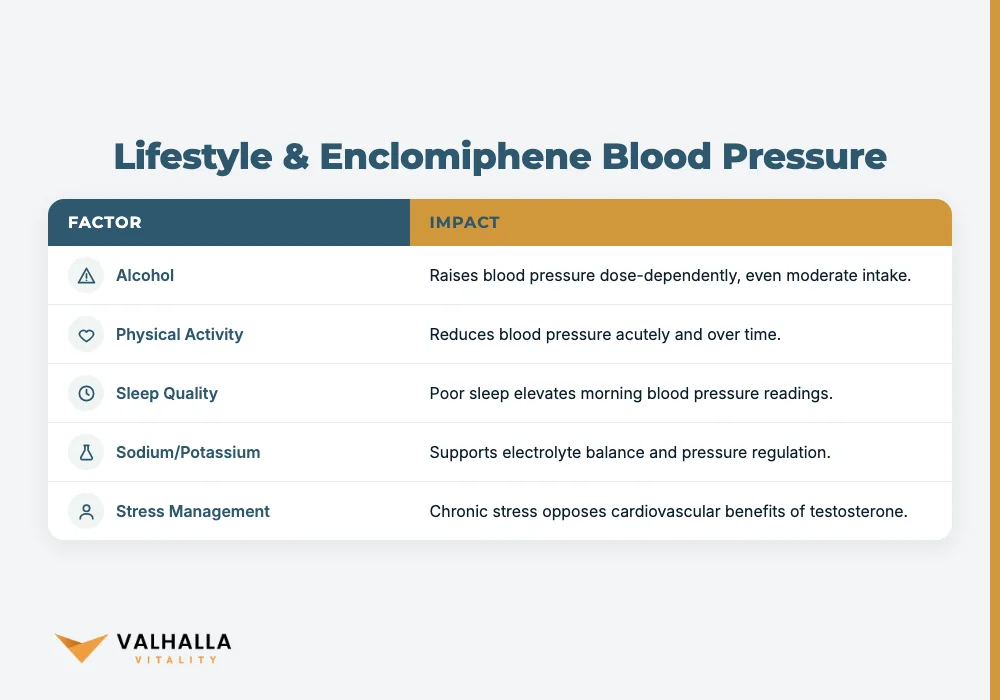
Hormone therapy does not operate in a vacuum. The cardiovascular environment it works within is shaped significantly by daily habits, and those habits interact with enclomiphene blood pressure outcomes in both directions.
Alcohol consumption is one of the most consistent lifestyle drivers of elevated blood pressure. A 2021 review in Current Hypertension Reports confirmed that alcohol raises blood pressure in a dose-dependent manner, meaning even moderate regular intake contributes to sustained pressure elevation. Reducing intake is among the most consistent modifiable interventions available alongside any hormone therapy.
Physical activity produces measurable pressure reductions independently. A meta-analysis in Arquivos Brasileiros de Cardiologia found meaningful acute reductions in systolic pressure following a single aerobic session. Regular activity compounds that effect over time, supporting a lower cardiovascular baseline alongside testosterone restoration.
Sleep quality matters more than many patients expect. Poor sleep activates the sympathetic nervous system overnight, carrying into elevated morning blood pressure readings. Consistent sleep duration and quality is a practical lever for pressure management, separate from any medication.
Sodium and potassium balance directly supports the electrolyte environment that testosterone itself influences. A diet limiting excess sodium and maintaining adequate potassium intake reinforces the hormonal contribution to pressure regulation.
Stress management rounds out the picture. Chronic stress sustains cortisol and sympathetic tone, directly opposing the cardiovascular benefit of corrected testosterone levels. Structured routines, consistent exercise, and adequate sleep address this simultaneously.
Enclomiphene heart health: the full safety picture
Enclomiphene heart health considerations extend beyond blood pressure to the full cardiovascular profile that providers assess during ongoing management.
The therapy's mechanism has one structural advantage over exogenous testosterone: the HPG axis stays active, allowing the body to regulate its own testosterone output. Whether this produces a meaningfully different long-term cardiovascular profile compared to traditional TRT requires more direct comparative data. Providers use the preserved feedback loop as one favorable marker when framing the enclomiphene safety discussion with patients.
Enclomiphene safety side effects that intersect with cardiovascular function include hematocrit elevation, shifts in estrogen balance, and occasional changes in lipid fractions. Providers track all three alongside blood pressure as part of routine follow-up. A change in any of these markers updates the risk picture and may prompt an adjustment in management. The clinical approach at Valhalla Vitality centers on this type of provider-led, lab-informed evaluation at every intake and follow-up.
For context on how other therapeutic approaches in men's health interact with blood pressure, our discussion of tadalafil's effects on blood pressure management covers relevant vascular physiology. The mechanisms differ from enclomiphene, but the monitoring framework shares key reference points.
The consistent finding from both mechanistic evidence and clinical practice is that enclomiphene cardiovascular effects are generally favorable in men with testosterone deficiency, provided that cardiovascular assessment is thorough, monitoring is maintained, and lifestyle factors are actively managed alongside the therapy.
Speak with a licensed provider
Book Your Consultation with a licensed provider to review your cardiovascular history and lab results and determine whether enclomiphene is appropriate for your specific situation.
FAQ
Does enclomiphene raise blood pressure?
Enclomiphene blood pressure effects in men with confirmed testosterone deficiency are more often neutral or favorable than adverse, based on how testosterone supports nitric oxide production, endothelial function, and vascular tone. Direct clinical data specific to enclomiphene and blood pressure changes is limited, so providers draw on the broader testosterone-cardiovascular research. Individual responses vary, making baseline and follow-up monitoring essential.
Can enclomiphene cause high blood pressure?
There is no established mechanism by which enclomiphene directly elevates blood pressure; the therapy raises testosterone, which generally supports vascular health rather than impairing it. Men with pre-existing hypertension should discuss their full cardiovascular history with a provider before starting, since the monitoring plan and risk assessment differ from the standard approach.
Is enclomiphene safe for men with hypertension?
Pre-existing hypertension does not automatically rule out enclomiphene, but it requires more thorough pre-treatment evaluation and closer ongoing monitoring. A licensed provider reviews current blood pressure control, concurrent medications, and lab values before making any recommendation appropriate to the individual's risk profile.
How does enclomiphene affect cardiovascular health?
Enclomiphene cardiovascular effects work indirectly through the testosterone it stimulates: restored levels may improve endothelial function, reduce arterial stiffness, lower sympathetic tone, and support electrolyte balance. These benefits depend on how well testosterone normalizes during therapy and what the individual's baseline cardiovascular health looks like going in.
What should men monitor when starting enclomiphene?
Blood pressure is the primary cardiovascular marker, tracked with multiple home readings before therapy to establish a true baseline. Providers also follow hematocrit, testosterone and LH levels, and a metabolic panel at intervals they determine based on individual lab results and clinical response.
Sources
- Stevens SL et al. (2016). Blood pressure variability and cardiovascular disease: systematic review and meta-analysis. BMJ (Clinical research ed.). PubMed
- Kulkarni S et al. (2025). Blood pressure variability: a review. Journal of hypertension. PubMed
- Fuchs FD et al. (2021). The Effect of Alcohol on Blood Pressure and Hypertension. Current hypertension reports. PubMed
- Carpio-Rivera E et al. (2016). Acute Effects of Exercise on Blood Pressure: A Meta-Analytic Investigation. Arquivos brasileiros de cardiologia. PubMed
You May Also Like
 Enclomiphene
Enclomiphene Hair Loss: DHT, Follicles, and the Evidence
Enclomiphene hair loss is not a listed side effect, but testosterone raises DHT, which can affect follicles. Here is what clinical research shows.
October 12, 2026 ETRead more → Enclomiphene
Enclomiphene for Gyno: Causes, Prevention & Treatment
Enclomiphene for gyno: how this SERM may help reduce gynecomastia by rebalancing estrogen and testosterone levels. Talk to a licensed provider today.
October 11, 2026 ETRead more → Enclomiphene
Enclomiphene vs Tamoxifen for PCT and Testosterone
Enclomiphene vs tamoxifen: compare how each SERM supports testosterone recovery, PCT protocols, and side effect profiles before talking to a provider.
October 11, 2026 ETRead more →