
The following blog post is for entertainment and informational purposes only. It is not intended to provide medical advice or diagnosis. Please consult your doctor before making any health-related decisions.
The main tirzepatide benefits are weight reduction, better blood sugar control, and appetite suppression that builds over the first weeks of use. It works as a GLP-1 GIP dual agonist. This once-weekly injectable activates two separate gut-hormone receptors that work together to regulate insulin release, caloric intake, and energy balance. Learning how tirzepatide works for weight loss can help frame your conversation with a licensed provider, who determines whether this therapy is appropriate after reviewing your intake.
Key tirzepatide benefits at a glance
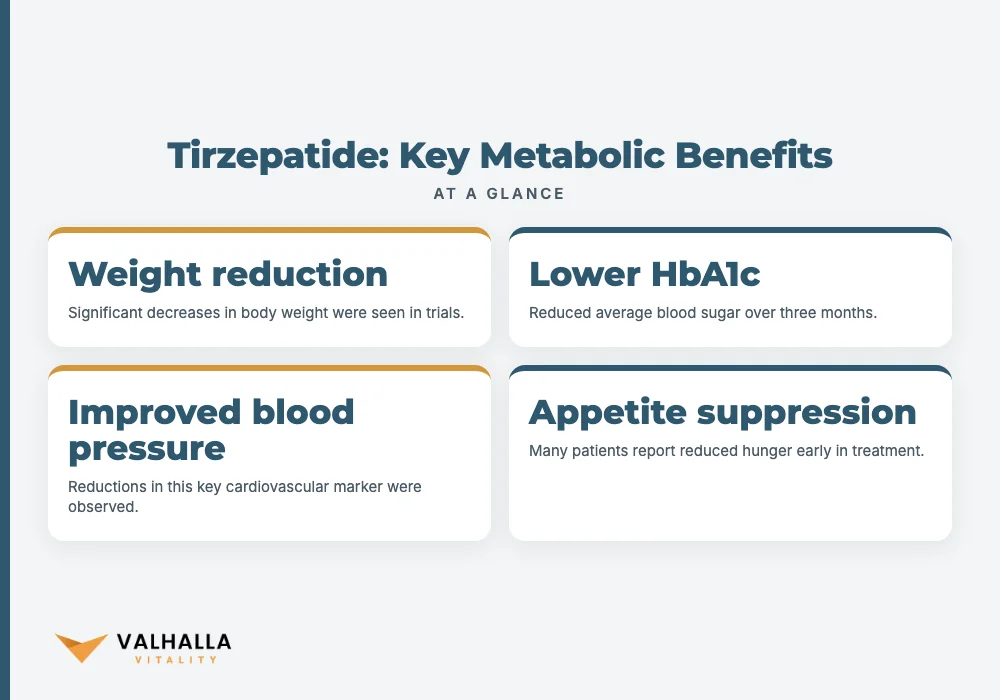
Here is what clinical research and real-world evidence have documented across the main metabolic categories:
- Weight reduction: participants in clinical trials experienced significant decreases in body weight compared to placebo
- Lower HbA1c levels: tirzepatide reduced average blood sugar over three months more effectively than several comparator treatments
- Improved systolic blood pressure: clinical data showed reductions in this key cardiovascular marker
- Better kidney filtration markers: eGFR improvements were observed in trial participants
- Reduced LDL cholesterol and triglycerides: markers linked to cardiovascular risk improved alongside weight loss
- Appetite suppression: many patients report reduced hunger within the first weeks of treatment
How tirzepatide works as a GLP-1 GIP dual agonist
Tirzepatide is a single synthetic molecule. It activates both the glucagon-like peptide-1 (GLP-1) receptor and the glucose-dependent insulinotropic polypeptide (GIP) receptor, two distinct gut-hormone receptors triggered naturally when you eat.
GLP-1 receptor activation slows gastric emptying, which delays carbohydrate absorption and blunts post-meal glucose spikes. It also signals the pancreas to release insulin in response to food, without triggering excess output when blood sugar is already normal. GIP activation amplifies the insulin response and may also influence fat storage and energy expenditure at the tissue level. These two signals reinforce each other.
Together, the dual mechanism produces stronger appetite suppression and better glycemic control than a single-receptor agonist alone. A 2025 systematic review by Singh et al. in Diabetes and Metabolic Syndrome confirmed that this dual-receptor action underlies the larger weight reductions seen with tirzepatide compared to semaglutide in Phase 3 clinical trials.
For a broader look at how this dual-receptor approach compares with earlier options, see how tirzepatide differs from single-receptor GLP-1 therapies.
What are the tirzepatide benefits for weight loss results?
Weight is the outcome most people ask about first. Clinical trials showed clear tirzepatide weight loss results. One trial involving more than 1,000 adults with type 2 diabetes found that participants taking tirzepatide had a greater HbA1c reduction compared to placebo over 16 weeks. They also experienced an average 7% decrease in body weight. Those tirzepatide benefits were maintained up to 56 weeks after the first dose.
The mechanism behind these results matters. By acting on two receptors, the therapy reduces caloric intake through appetite suppression, slows stomach emptying so fullness lasts longer, and supports more efficient energy use. Real-world evidence published in Diabetes, Obesity and Metabolism by Thomsen et al. (2025) supports the clinical effectiveness findings, documenting meaningful average weight reductions in patients using this class of therapy outside controlled trial settings.
Individual results vary. A licensed provider determines whether this therapy is appropriate after reviewing your intake. No specific weight outcome can be predicted in advance.
How long does tirzepatide take to work for weight loss?
Most people notice early changes within the first four weeks. Clinical trials reported improvements in glycemic control beginning within two weeks of the first dose, and many participants experienced reduced hunger by week four. That is earlier than many people expect. Measurable HbA1c improvements appeared by week 12.
The full response unfolds over months. How quickly someone responds depends on starting metabolic health, adherence to dietary guidance, and other factors a provider evaluates during the intake review. In clinical data, benefits were maintained through 24 weeks and in some studies up to 56 weeks.
Tirzepatide benefits beyond blood sugar and weight
The tirzepatide benefits documented in research extend to several metabolic markers beyond body weight. In the same trials that tracked HbA1c, researchers observed reductions in systolic blood pressure and improvements in estimated glomerular filtration rate (eGFR), a measure of kidney function. These findings are particularly meaningful for people with type 2 diabetes, where cardiovascular and kidney complications represent serious long-term risks.
Tirzepatide also reduced LDL cholesterol and triglycerides in trial participants. Both markers are associated with cardiovascular risk. Their improvement alongside weight loss points to a broader metabolic effect. A 2021 pharmacological research study by Lazzaroni et al. documented weight-related metabolic improvements across the class of anti-diabetic drugs that act on these pathways.
Emerging research is also examining potential roles outside metabolic disease. A 2026 comprehensive review by El-Amawy in Anais Brasileiros de Dermatologia identified both cutaneous adverse events and emerging therapeutic roles in dermatology, suggesting that tirzepatide affects multiple organ systems in ways still being studied.
What are the most common side effects of tirzepatide?
Nausea, vomiting, diarrhea, and abdominal pain are the most frequently reported tirzepatide injection side effects, and they tend to be most common during the first several weeks as the body adapts. These effects often ease considerably once the initial adjustment period passes. Headaches also occur in some patients. Serious side effects are rare.
Any new or worsening symptoms should be reported to the prescribing provider right away. A licensed provider determines whether this therapy fits your health profile before prescribing. For a thorough review of what to watch for, see the detailed tirzepatide side effect guide.
The 2026 dermatology review by El-Amawy also documented cutaneous adverse events including injection site reactions and other skin effects as part of the established safety picture for this therapy.
What foods should you avoid while taking tirzepatide?
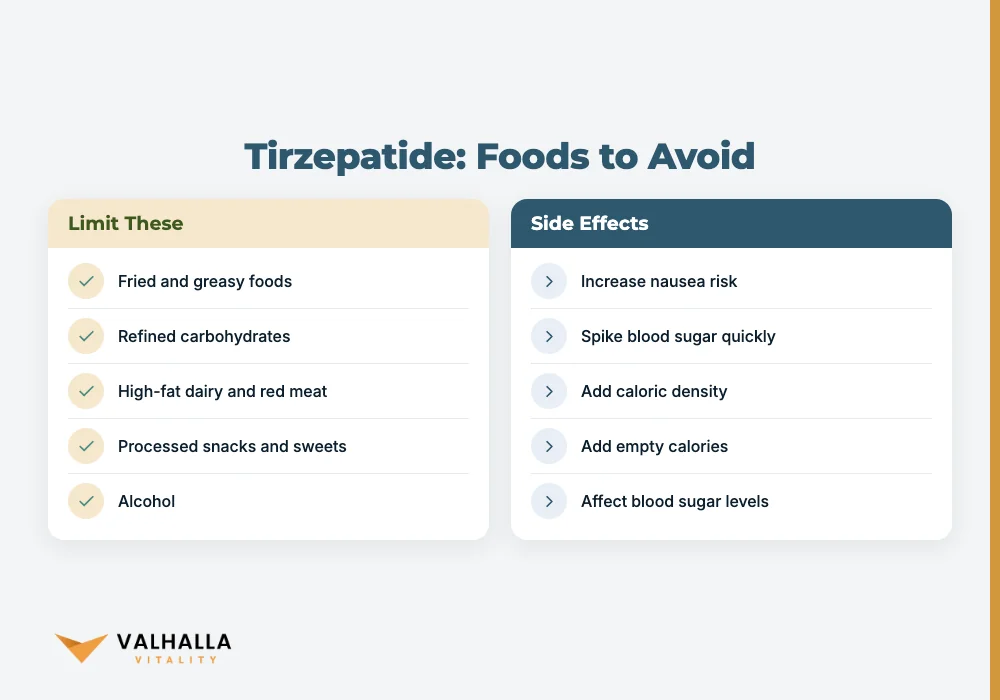
Foods high in fat, heavily processed items, and anything high in added sugar are most likely to worsen gastrointestinal side effects and slow the metabolic progress the therapy supports. These categories are worth limiting:
- Fried and greasy foods: high fat content slows gastric emptying further, increasing nausea risk
- Refined carbohydrates: white bread, white rice, and heavily processed pasta spike blood sugar quickly
- High-fat dairy and red meat: these contribute significant caloric density without sustained satiety benefits
- Processed snacks and sweets: cookies, chips, and sugary drinks add empty calories and can blunt appetite regulation
- Alcohol: it affects blood sugar levels and may interact with how the medication regulates appetite and energy
A licensed provider gives specific dietary guidance based on your health profile during the intake review. These food choices also affect the overall tirzepatide benefits you experience over time, so they are worth taking seriously from the start.
How much weight can you lose on tirzepatide?
Clinical trial data showed that participants taking tirzepatide experienced an average 7% decrease in body weight compared to placebo over 16 weeks, with improvements maintained up to 56 weeks. A 2025 systematic review by Singh et al. in Diabetes and Metabolic Syndrome found tirzepatide produced larger average weight reductions than semaglutide in Phase 3 trials across populations with and without type 2 diabetes.
Individual weight loss varies. Starting weight, metabolic health, dietary patterns, and adherence all influence outcomes. A licensed provider discusses realistic expectations based on your specific situation before you begin.
Is tirzepatide better than semaglutide for weight loss?
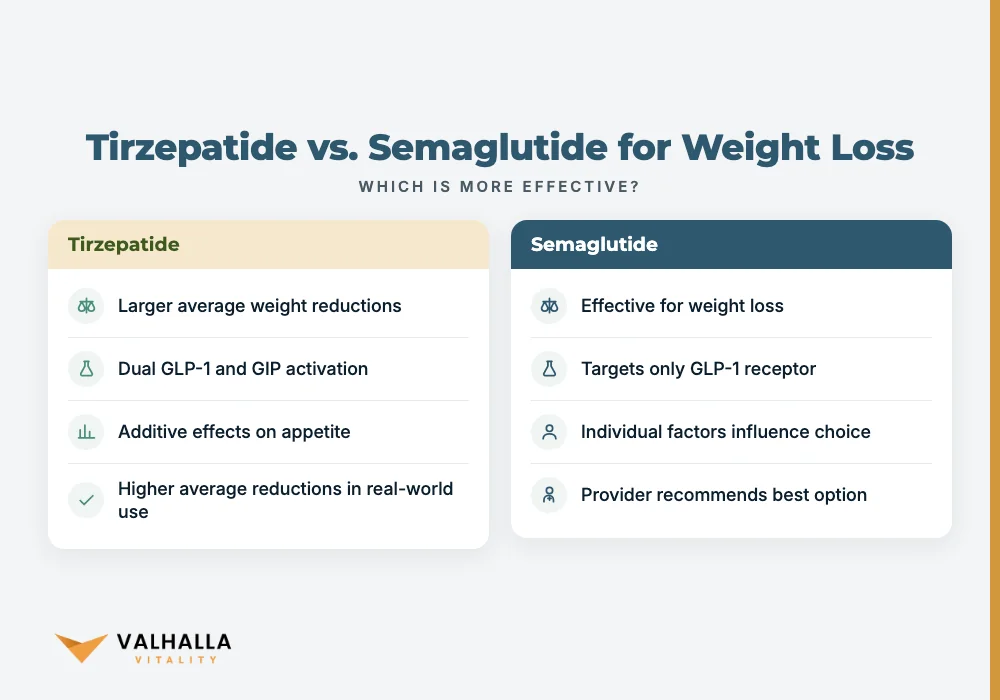
Head-to-head comparisons suggest tirzepatide may produce larger average weight reductions, and understanding the full tirzepatide benefits from both receptor pathways helps explain why. The 2025 systematic review by Singh et al. found tirzepatide was associated with greater average weight loss than semaglutide in Phase 3 clinical trials. Real-world evidence from Thomsen et al. (2025) in Diabetes, Obesity and Metabolism documented higher average weight reductions for tirzepatide in effectiveness comparisons conducted outside controlled trial settings.
The difference comes down to mechanism. Semaglutide targets only the GLP-1 receptor, while tirzepatide's dual GLP-1 and GIP activation appears to produce additive effects on appetite and energy regulation. Mounjaro weight loss outcomes in head-to-head data consistently reflect this mechanistic advantage. That said, "better" depends on individual factors. Tolerability, contraindications, and each person's metabolic profile all influence which option a provider recommends. For a detailed breakdown of the clinical data, see the tirzepatide versus semaglutide weight loss results.
A licensed provider determines which therapy is appropriate after reviewing your full intake.
How the consultation process works at Valhalla Vitality
If you are curious about tirzepatide benefits and whether this therapy fits your situation, the first step is a medical intake. At Valhalla Vitality, a licensed provider reviews your submission within 24 business hours and determines whether the therapy is appropriate. If prescribed, the medication ships from a US partner compounding pharmacy, typically reaching you in 3 to 7 business days. Availability varies by state.
The tirzepatide dosage schedule is set by your provider based on labs and medical history. The standard clinical approach starts at a lower level and adjusts over time based on tolerability and response. No dosing decision is made without that evaluation.
Ready to take the first step
Book Your Consultation with a licensed provider at Valhalla Vitality to review whether tirzepatide is right for you.
FAQ
What does tirzepatide treat?
Tirzepatide is used for the management of type 2 diabetes and, in many patients, for weight management. It works by activating both the GLP-1 and GIP gut-hormone receptors, which regulate insulin release and appetite. A licensed provider determines whether it is appropriate after reviewing your medical intake.
What are the most common side effects of tirzepatide injection?
Nausea, vomiting, diarrhea, and abdominal pain are the most frequently reported effects. They tend to be most common early in treatment and often ease as the body adjusts. Headaches are also reported in some patients.
How is the tirzepatide dosage schedule determined?
A licensed provider determines the dose after reviewing your labs and medical history. The standard clinical approach starts at a lower level and adjusts over time based on tolerability and response. No dosing decision can be made without a provider evaluation.
Can tirzepatide be used alongside other diabetes medications?
Tirzepatide has been studied in combination with other type 2 diabetes treatments, including metformin and sulfonylureas. Whether it is combined with other medications in your case is a decision made by a licensed provider based on your full health profile.
Sources
- Lazzaroni E et al. (2021). Anti-diabetic drugs and weight loss in patients with type 2 diabetes. Pharmacological Research. PubMed
- El-Amawy HS (2026). Tirzepatide in dermatology: cutaneous adverse events, emerging therapeutic roles, and cosmetic implications. Anais Brasileiros de Dermatologia. PubMed
- Thomsen RW et al. (2025). Real-world evidence on the utilization, clinical and comparative effectiveness, and adverse effects of newer GLP-1RA-based weight-loss therapies. Diabetes, Obesity and Metabolism. PubMed
- Singh A et al. (2025). Comparative efficacy and safety of semaglutide 2.4 mg and tirzepatide 5-15 mg in obesity with or without type 2 diabetes: A systematic review of Phase 3 clinical trials. Diabetes and Metabolic Syndrome. PubMed
You May Also Like
 Tirzepatide
 cost monthly: factors that affect your bill
Tirzepatide cost monthly depends on brand vs. compounded, insurance coverage, and dose tier. Find out what to budget and how to access coverage.
November 6, 2026 ETRead more → Tirzepatide
 Weight Loss: How It Works and What to Expect
Tirzepatide weight loss treatment targets GLP-1 and GIP receptors to curb appetite. Learn side effects, cost, and how a provider prescribes this therapy.
November 4, 2026 ETRead more → Tadalafil
Buy Tadalafil Online: A Safe Guide to ED Treatment
Buy tadalafil online safely with a valid prescription. Learn how it works, what side effects to expect, and how provider-guided ordering works.
November 7, 2026 ETRead more →