
The following blog post is for entertainment and informational purposes only. It is not intended to provide medical advice or diagnosis. Please consult your doctor before making any health-related decisions.
Tirzepatide weight loss treatment works by activating GLP-1 and GIP receptors, reducing appetite and slowing gastric emptying. This dual-receptor mechanism separates it from earlier GLP-1 receptor agonist options. A licensed provider determines whether this approach suits your health profile after reviewing your medical intake. The benefits of tirzepatide injection therapy outline what clinical use looks like in practice.
Tirzepatide at a glance
| Factor | Detail |
|---|---|
| Drug class | Dual GLP-1 and GIP receptor agonist |
| Approved use | Chronic weight management in adults with obesity or overweight with a weight-related condition |
| Dosage | Determined by a licensed provider after reviewing labs |
| Administration | Weekly subcutaneous injection |
| Common side effects | Nausea, diarrhea, dizziness, fatigue |
| Availability | Varies by state |
How does tirzepatide work for weight loss?
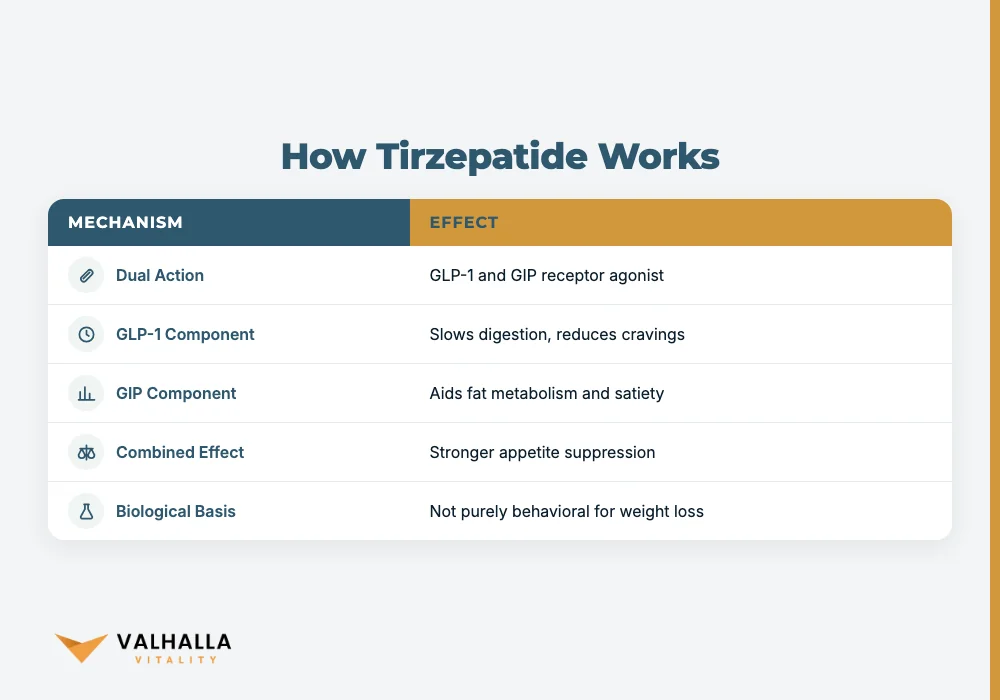
Understanding how tirzepatide works starts with its dual-receptor mechanism: it acts as a GLP-1 receptor agonist that also engages GIP receptors. The GLP-1 component slows digestion, reduces food cravings, and helps regulate blood glucose. The GIP receptor component adds a parallel signal for fat metabolism and satiety. Together, they produce a stronger appetite-suppressing effect than either pathway alone.
Moiz et al. (2025), writing in The American Journal of Medicine, identified the central and peripheral neural pathways through which GLP-1 receptor agonists regulate appetite and energy balance. Wang et al. (2025), in a systematic review and meta-analysis published in Clinical Obesity, confirmed tirzepatide showed superior weight reduction compared with placebo across multiple randomized controlled trials.
The mechanism is biological rather than purely behavioral, which matters for patients who have attempted lifestyle changes without durable results.
How long does it take for tirzepatide to show results?
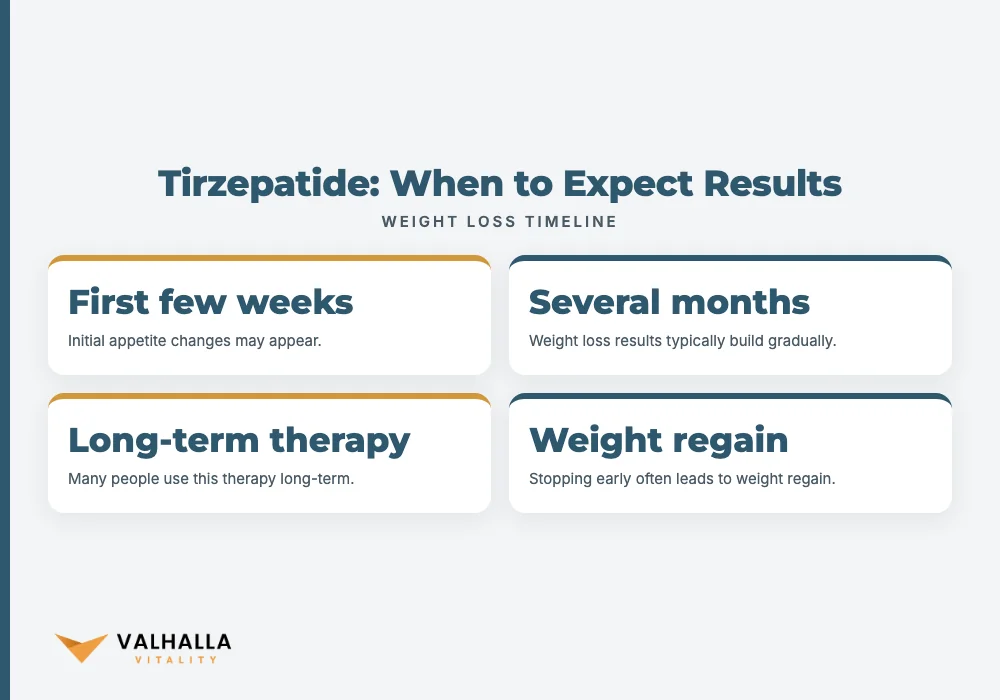
Initial appetite changes may appear within the first few weeks of treatment. Tirzepatide weight loss results develop more gradually, typically building over several months as a provider adjusts the dose. The pace varies individually.
Thomsen et al. (2025), in a real-world evidence study published in Diabetes, Obesity & Metabolism, found consistent weight outcomes in patients maintained on GLP-1 receptor agonist-based therapies long term.
Stopping early often leads to weight regain. Ceriello et al. (2026), reviewing discontinuation patterns in Nature Reviews Endocrinology, found that most patients who stopped these therapies regained a substantial portion of lost weight. For many people, this is a long-term therapy, not a brief course.
What are the side effects of tirzepatide?
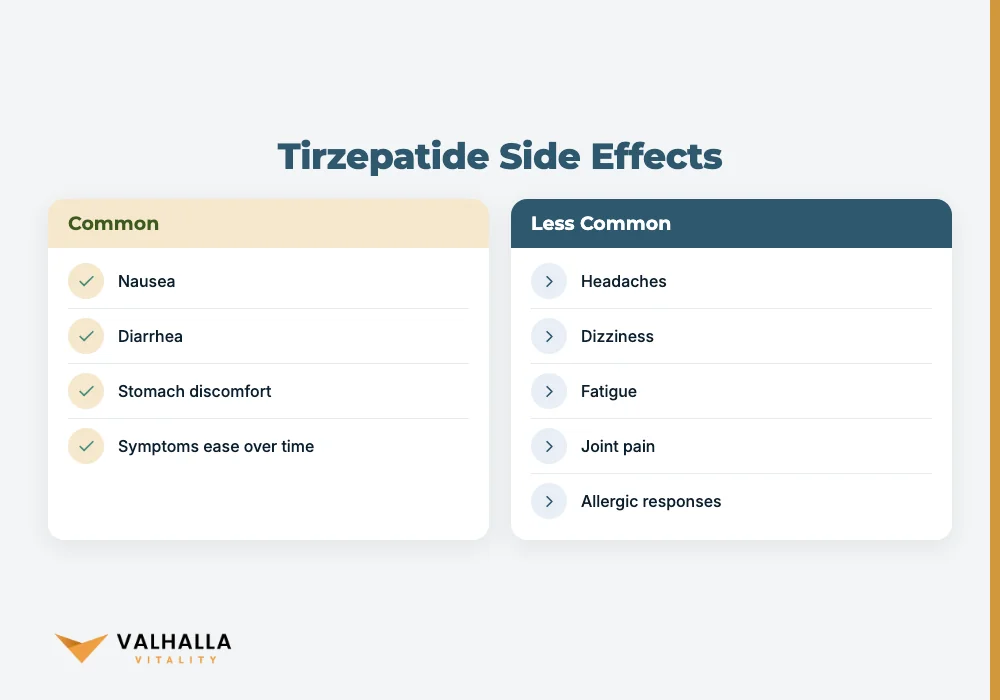
The most frequently reported tirzepatide side effects are gastrointestinal: nausea, diarrhea, and stomach discomfort are common early in treatment, particularly as the dose is adjusted. These tend to ease over time. Less common effects include headaches, dizziness, fatigue, joint pain, dry mouth, and dehydration. Rare reactions include allergic responses with swelling or itching.
A 2025 comparative safety review by Fahim et al. in Biomedicine & Pharmacotherapy noted that tirzepatide's side effect profile is broadly consistent with other GLP-1 receptor agonists, though individual tolerance varies. Contact your provider promptly if symptoms are severe or persistent. For a detailed breakdown, see the full tirzepatide side effect overview.
Compounded tirzepatide: what patients should know
Compounded tirzepatide is prepared by licensed US compounding pharmacies, classified as 503A or 503B facilities, under a provider's prescription. It becomes a viable option primarily during periods when brand-name availability is limited, subject to specific FDA regulatory conditions.
Compounded and commercial versions may differ in concentration and presentation, which is why your provider needs to specify exactly which formulation is being prescribed. Any telehealth platform dispensing this medication should disclose the source pharmacy and formulation details before you fill the prescription.
How much does tirzepatide cost without insurance?
Tirzepatide cost depends on the formulation, dose level, and dispensing pharmacy. Brand-name options typically carry a higher out-of-pocket cost than compounded versions. Because tirzepatide dosage is adjusted over the course of treatment, the monthly cost at the start may differ from what you pay later.
Valhalla Vitality operates on a direct-pay model with no insurance billing, and pricing is confirmed before checkout so you have full visibility before committing. For a broader perspective on cost and mechanism differences, see how tirzepatide stacks up against semaglutide for weight management.
Is tirzepatide authorized for weight loss management?
Tirzepatide holds regulatory clearance to support chronic weight management in adults with obesity or overweight accompanied by at least one weight-related condition. That clearance built on an earlier authorization for type 2 diabetes management. See the tirzepatide efficacy in FDA clinical trials for the trial data behind that determination.
Availability varies by state. A licensed provider must review your intake before any prescription is issued.
What a provider checks before starting tirzepatide weight loss treatment
A licensed provider reviews your full medical history, current medications, and health goals before determining whether tirzepatide weight loss treatment is appropriate. The evaluation covers contraindications, including personal or family history of certain thyroid conditions, and assessment of any gastrointestinal conditions that may affect tolerability.
Lab results often inform the starting tirzepatide dosage and how it is adjusted over time. At Valhalla Vitality, provider approval is issued within 24 business hours of order placement, and once approved, the prescription goes to a partner US compounding pharmacy with delivery in approximately 3 to 7 business days.
Ready to explore your options?
Book Your Consultation with a licensed provider to find out whether tirzepatide weight loss therapy is an appropriate path for your health goals.
FAQ
Is tirzepatide the same as a GLP-1 receptor agonist?
Tirzepatide is a GLP-1 receptor agonist but also activates GIP receptors, making it a dual-receptor therapy. This separates it from earlier agents that targeted only GLP-1. Both pathways contribute to appetite reduction and energy regulation.
How is tirzepatide dosage determined?
A licensed provider determines the appropriate tirzepatide dosage after reviewing your labs, health history, and response to treatment. Dosage is typically adjusted over several weeks based on tolerability and progress. Patients do not select their own dose.
What is the tirzepatide results timeline?
Appetite changes often begin within the first few weeks, while meaningful weight changes typically accumulate over months of consistent treatment. Individual response depends on health history, adherence, and lifestyle factors. No specific timeline can be confirmed before a provider reviews your intake.
Can tirzepatide treatment be stopped?
Stopping should always be discussed with your provider. Research by Ceriello et al. (2026) in Nature Reviews Endocrinology found that discontinuing GLP-1 receptor agonist therapies, including tirzepatide, often leads to weight regain. For most patients, this is a long-term therapy rather than a short course.
Sources
- Wang JY et al. (2025). Exploring the Efficacy and Safety of Tirzepatide in Obesity Management and Cardiometabolic Risk Factors: A Comprehensive Systematic Review and Meta-Analysis. Clinical obesity. PubMed
- Thomsen RW et al. (2025). Real-world evidence on the utilization, clinical and comparative effectiveness, and adverse effects of newer GLP-1RA-based weight-loss therapies. Diabetes, obesity & metabolism. PubMed
- Ceriello A et al. (2026). Causes and consequences of discontinuation of GLP1RAs or tirzepatide. Nature reviews. Endocrinology. PubMed
- Fahim SA et al. (2025). Comparative safety and side effects of semaglutide and tirzepatide: Implications for clinical decision-making in obesity management. Biomedicine & pharmacotherapy. PubMed
- Moiz A et al. (2025). Mechanisms of GLP-1 Receptor Agonist-Induced Weight Loss: A Review of Central and Peripheral Pathways in Appetite and Energy Regulation. The American journal of medicine. PubMed
You May Also Like
 Tirzepatide
 side effects: what to expect and manage
Tirzepatide side effects range from common nausea to rare pancreatitis. Learn how long they last, what to watch for, and how to manage each one.
November 17, 2026 ETRead more → Tirzepatide
 Near Me: How to Get a GLP-1 Prescription Online
Find tirzepatide near me through a telehealth provider. Get your prescription reviewed and shipped within days. Availability varies by state.
November 17, 2026 ETRead more → Tirzepatide
 Peptide: Mechanism, Benefits and Side Effects
Tirzepatide peptide targets two receptors to support weight loss and blood sugar control. Learn how it works, its benefits, and what to expect.
November 14, 2026 ETRead more →