Liraglutide for Weight Loss: What the Evidence Shows

The following blog post is for entertainment and informational purposes only. It is not intended to provide medical advice or diagnosis. Please consult your doctor before making any health-related decisions.
Liraglutide for weight loss is among the GLP-1 weight loss injections that mimic a natural gut hormone to reduce appetite, slow digestion, and help the body process glucose more efficiently. A 2025 systematic review in Annals of Internal Medicine found GLP-1 receptor agonists produce clinically significant weight reduction in adults without diabetes. Access requires a licensed provider who reviews a complete medical intake before issuing any prescription. Those exploring options can review what's included in a GLP-1 weight loss program before moving forward.
How does liraglutide work for weight loss?
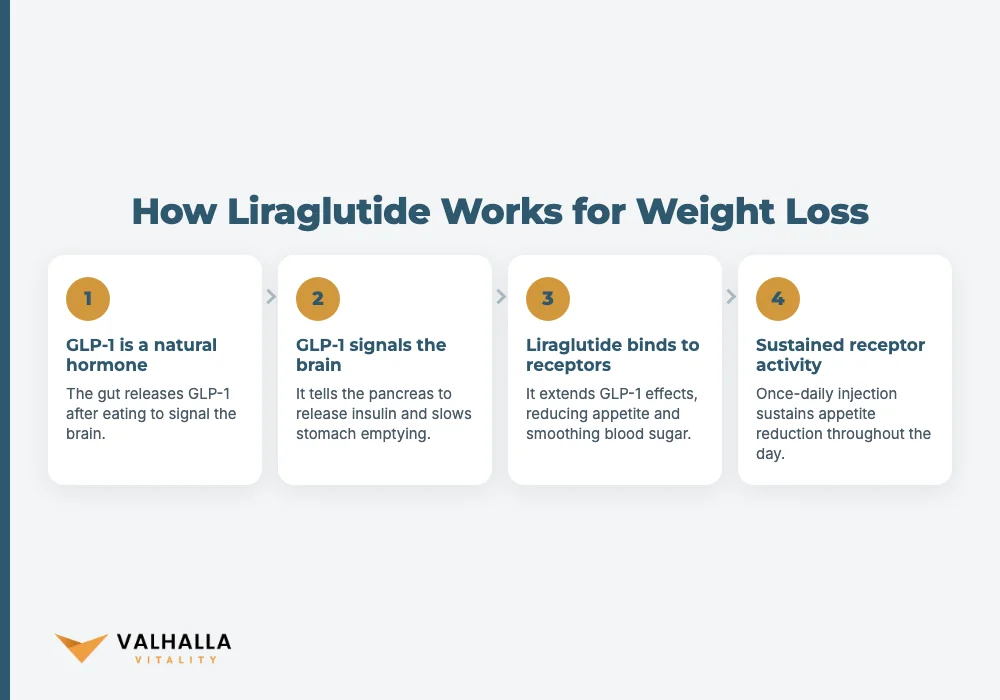
GLP-1 is a hormone the gut releases naturally after eating. It signals the brain that the body has taken in food, tells the pancreas to release insulin in proportion to blood glucose, and slows the movement of food from the stomach into the small intestine. These effects together reduce appetite and smooth out post-meal blood sugar rises.
Liraglutide binds to GLP-1 receptors and extends those effects far beyond the few minutes natural GLP-1 lasts. Its half-life of roughly 13 hours allows once-daily injection to sustain steady receptor activity throughout the day. That sustained signal drives the appetite reduction most patients experience during treatment.
The mechanism also explains why liraglutide affects multiple metabolic markers alongside body weight. For a closer look at what happens at the cellular level, see how liraglutide signals the brain and gut.
Liraglutide for weight loss: quick reference
| Feature | Details |
|---|---|
| Drug class | GLP-1 receptor agonist |
| Administration | Subcutaneous injection, once daily |
| Common injection sites | Abdomen, thigh, upper arm, buttock (rotate each use) |
| FDA weight-loss indication | Adults with obesity or overweight with a weight-related condition |
| Common side effects | Nausea, vomiting, diarrhea, constipation |
| Dosing | A licensed provider determines the dose after reviewing labs |
| After stopping | Weight often returns; ongoing management is usually needed |
How much weight can you lose with liraglutide?
Results vary between individuals, and no clinical evidence supports a predictable outcome. A 2016 review in American Family Physician covering liraglutide studied as Saxenda weight loss therapy found that patients in large randomized trials lost meaningfully more weight than those on placebo when they also followed a reduced-calorie diet and exercise program. A 2024 network meta-analysis in BMC Endocrine Disorders confirmed statistically significant weight reduction with liraglutide compared to placebo, though newer agents in the same class showed larger absolute effects in some population comparisons.
Individual variation is substantial. Starting weight, diet quality, activity level, sleep, adherence to injections, and metabolic differences all shape the outcome. Group averages from clinical trials describe what worked in a studied population. They do not predict what any individual will experience.
Liraglutide for weight loss amplifies the effect of sustained dietary and lifestyle changes. It does not replace those changes. People who see the greatest outcomes in clinical follow-up tend to be those who maintain consistent eating habits and activity levels alongside the medication, treating liraglutide as support rather than a substitute.
How long does liraglutide take to work for weight loss?
Most patients notice a reduction in appetite within the first few weeks. Measurable changes in body weight take longer. They depend on consistent use alongside real dietary adjustments, not the injection alone.
Clinical trials standardize outcomes at 56 weeks, roughly one year. That benchmark reflects the combined time needed for dose titration, body adaptation, and the gradual accumulation of caloric deficit from sustained appetite reduction. The titration process alone spans several weeks and is managed entirely by the prescribing provider.
Some patients report shifts in food cravings and portion preferences within the first month. Others find changes emerge more gradually. Metabolism, baseline weight, stress, sleep quality, and consistency with injections all influence pace. No provider can confirm a specific timeline for any individual patient.
One pattern across clinical data is consistent: the most significant weight loss accumulates between months three and twelve of continuous therapy. A 2026 systematic review in BMJ confirmed that most weight returns after stopping GLP-1 therapy, which is why providers frame liraglutide as a long-term management strategy rather than a finite course of treatment.
What is the correct liraglutide dosage for weight loss?
A licensed provider determines the appropriate liraglutide dosage after reviewing lab results, health history, current medications, and how the patient responds at each stage. No universal starting point works identically across individuals.
The titration period exists for two reasons: to let the body adapt to the medication's effects on digestion and appetite, and to identify the level that reduces hunger without producing unmanageable side effects. Adjusting the dose independently based on how a person feels is both unsafe and counterproductive. The provider needs accurate reports of tolerance and response to make clinically informed changes.
Programs that pair liraglutide prescriptions with regular provider oversight are structured this way because dose management is clinical work. It is not a decision the patient makes alone.
What are the side effects of liraglutide injections?
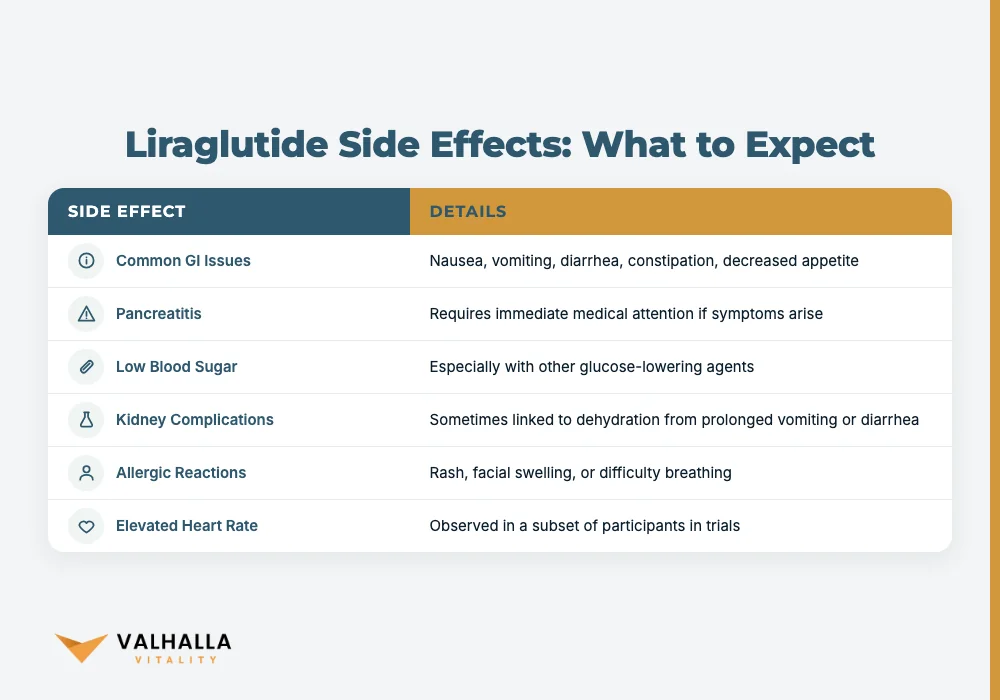
Liraglutide side effects most often affect the gastrointestinal system. Nausea is the most commonly reported, followed by vomiting, diarrhea, constipation, and decreased appetite. These effects are typically most intense during early dose titration and tend to diminish as the body adapts to the medication.
Less common but clinically significant side effects include:
- Pancreatitis, which requires immediate medical attention if symptoms arise
- Low blood sugar, especially when combined with other glucose-lowering agents
- Kidney complications, sometimes linked to dehydration from prolonged vomiting or diarrhea
- Allergic reactions, which may include rash, facial swelling, or difficulty breathing
- Elevated resting heart rate, observed in a subset of participants across clinical trials
Injection site reactions are also possible. Rotating between the abdomen, thigh, upper arm, and buttock with each use reduces local irritation and the risk of lipodystrophy, an abnormal buildup of fat tissue at a single injection site used repeatedly.
A 2026 literature review in Aesthetic Plastic Surgery found that GLP-1 receptor agonists may affect skin composition and quality during weight loss. Patients monitoring body composition changes should raise this with their provider.
For a patient-focused breakdown of what to expect and how to respond, see what side effects to discuss with your provider.
Managing liraglutide side effects
Open communication with the prescribing provider is the most effective approach. Nausea can often be eased by eating smaller portions and limiting high-fat foods during the early weeks of treatment. Staying well-hydrated supports GI tolerance and reduces the risk of secondary kidney stress from dehydration.
Self-adjusting the dose to avoid side effects is not recommended. Doing so without clinical guidance typically produces worse outcomes and removes the provider's ability to assess true tolerability at each level.
Is liraglutide better than semaglutide for weight loss?
Both liraglutide and semaglutide are GLP-1 receptor agonists. Both reduce appetite, slow gastric emptying, and require subcutaneous injection. The structural difference is that semaglutide has a longer half-life, which supports a once-weekly schedule compared to liraglutide's once-daily injection.
A 2024 network meta-analysis in BMC Endocrine Disorders found that both agents produced significant weight and glycemic outcomes, with variations in effect size across different patient populations and study designs. Real-world data from a 2025 study in Diabetes, Obesity & Metabolism showed that tolerability and effectiveness with GLP-1 weight loss injections differ across individuals in ways clinical trial averages do not fully capture.
Neither drug is universally preferable. The liraglutide vs semaglutide question is not answered by published averages alone. A provider evaluates health history, existing conditions, tolerability profile, and treatment goals to determine which agent and protocol fits a specific patient. That determination happens in an individual clinical review, not from comparing headline efficacy numbers.
For more context on how protocol decisions are made with GLP-1 agents, see how semaglutide compares in clinical practice.
What the liraglutide treatment timeline looks like
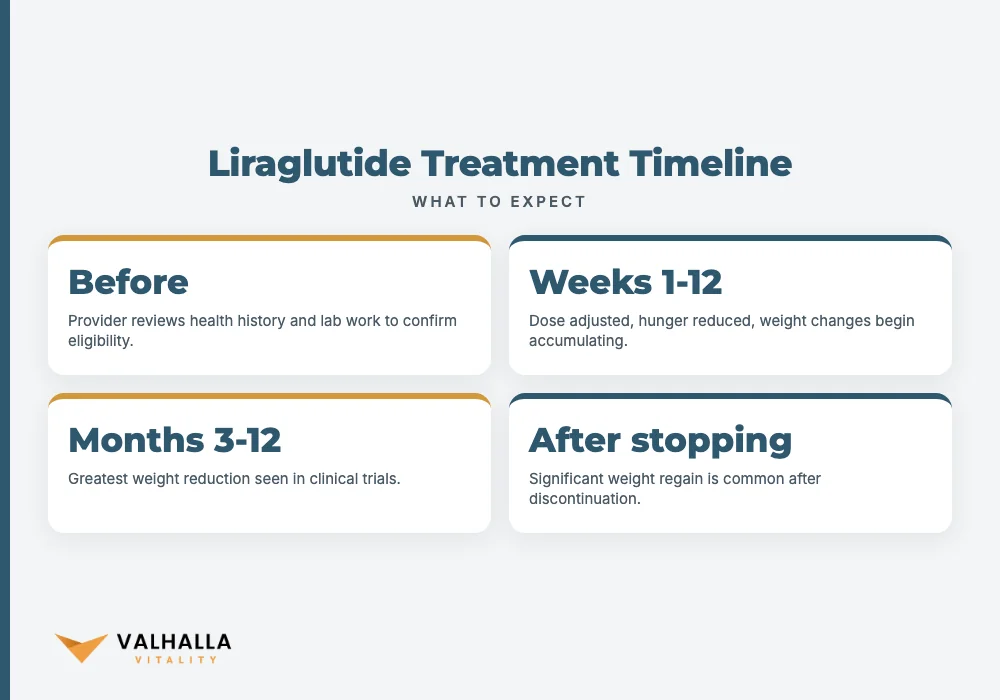
Patients researching liraglutide before and after starting often want a concrete sense of what the full arc involves. Clinically, it follows a structured sequence.
Before the first injection, a provider reviews lab work, full health history, and current medications to confirm eligibility and establish a baseline. That baseline is compared at every follow-up visit to track metabolic changes and refine the approach.
During the first weeks, the provider adjusts the dose while the patient manages any early GI side effects. By weeks four through twelve, most people report noticeable reductions in hunger and in the volume of food needed to feel satisfied. Weight changes begin accumulating during this window.
The greatest separation between treated and untreated groups in trial data appears between months three and twelve of continuous therapy. A 2025 systematic review in Annals of Internal Medicine confirmed that GLP-1 receptor agonists produce statistically and clinically meaningful weight reduction in randomized controlled trials involving adults without diabetes.
After stopping, the picture changes considerably. A 2026 meta-analysis in BMJ found significant weight regain following discontinuation of GLP-1 therapy across multiple studies. This is why providers discuss liraglutide for weight loss as a long-term commitment, not a temporary intervention with a defined end date. That conversation belongs at the start of treatment, not after the medication is stopped.
Health effects beyond weight loss
Weight reduction is not the only metabolic effect of liraglutide. Among people with or at risk of type 2 diabetes, the therapy may support improved insulin sensitivity and more stable blood glucose levels. Some patients also see improvement in blood pressure and lipid markers over time, effects linked both to weight reduction and to the drug's direct metabolic activity.
The GLP-1 class has been studied for cardiovascular outcomes in large trials. Results vary by specific agent and patient population, and no broad cardiovascular benefit should be assumed for any particular individual or formulation without clinical review.
These secondary effects matter because they are part of what a provider considers when evaluating whether liraglutide is appropriate. Someone managing several weight-related conditions simultaneously may have a different benefit profile than someone whose primary concern is body weight alone. A thorough intake process captures this complexity. For an evidence-based look at how liraglutide applies to longer-term obesity management outcomes, see long-term outcomes with liraglutide therapy.
How liraglutide is administered
Liraglutide is delivered subcutaneously once daily using a pre-filled pen device. Injection sites include the abdomen, thigh, upper arm, and buttock. Rotating sites with each use reduces local irritation and the risk of lipodystrophy at any single location.
The injection does not need to coincide with a meal. Consistency of timing matters more than the relationship to eating. Using the pen at approximately the same time each day helps maintain stable drug levels and reduces the chance of missed doses disrupting the therapeutic effect.
Pens should be stored refrigerated until first use and must not be frozen. A provider or pharmacist supplies specific handling and storage instructions when the prescription is issued, since requirements may vary slightly between formulations. Questions about technique and rotation schedules are part of what the intake process typically covers.
Who may qualify for liraglutide therapy?
Liraglutide for weight management is indicated for adults. A licensed provider assesses medical history, existing conditions, current medications, and relevant lab results during the intake process. Certain histories, including specific thyroid conditions, prior pancreatitis, or particular drug interactions, require careful clinical screening before any prescription is considered appropriate.
The intake process at telehealth programs includes an online medical questionnaire, lab review, and provider evaluation. This structure exists to protect patients. The conditions that affect eligibility are well-established in clinical guidelines, and identifying them before starting therapy is part of responsible prescribing practice, not an administrative barrier.
At Valhalla Vitality, provider approval typically takes place within 24 business hours of order placement. Once approved, the prescription moves to a partner US compounding pharmacy, with delivery arriving approximately three to seven business days after that. Availability varies by state.
Find out if liraglutide is right for you
Book Your Consultation to have a licensed provider review your medical history and determine whether liraglutide for weight loss is an appropriate option for you.
FAQ
Is liraglutide the same as Saxenda?
Saxenda is the brand name for liraglutide at the dose studied and approved for weight management in adults with obesity or overweight with a weight-related condition. Liraglutide is also available in other formulations for different clinical uses, so the two names describe the same molecule applied to different indications.
How long do you need to take liraglutide to maintain weight loss?
A 2026 systematic review in BMJ found that most people regain a significant portion of lost weight after stopping GLP-1 therapy. Clinical evidence consistently supports treating liraglutide for weight loss as a long-term intervention rather than a short course with a defined stop date.
Can liraglutide affect skin or hair?
A 2026 literature review in Aesthetic Plastic Surgery found that GLP-1 receptor agonists may affect skin composition and quality during weight loss treatment. Some patients report hair thinning, which is often attributed to the physiological effects of significant weight change rather than the medication itself. Discuss any concerns with your provider before or during treatment.
What makes liraglutide different from other weight loss injections?
Liraglutide targets GLP-1 receptors specifically, which sets it apart from agents that work through stimulant, fat-blocking, or other mechanisms. Its once-daily injection schedule also differs from some newer GLP-1 agents that are administered once weekly. A provider evaluates which option fits a patient's history, tolerability, and treatment goals.
Does liraglutide require diet and exercise changes to work?
Clinical trials consistently show that liraglutide produces greater weight loss when combined with a reduced-calorie diet and increased physical activity. The medication may support adherence to those changes by reducing hunger, but the evidence is clear that it does not substitute for them.
Sources
- Moiz A et al. (2025). Efficacy and Safety of Glucagon-Like Peptide-1 Receptor Agonists for Weight Loss Among Adults Without Diabetes: A Systematic Review of Randomized Controlled Trials. Annals of Internal Medicine. PubMed
- Teng Y et al. (2024). Evaluation and comparison of efficacy and safety of tirzepatide, liraglutide and SGLT2i in patients with type 2 diabetes mellitus: a network meta-analysis. BMC Endocrine Disorders. PubMed
- Barone M et al. (2026). Effects of GLP-1 Receptor Agonists on Skin Quality: A Comprehensive Literature Review. Aesthetic Plastic Surgery. PubMed
- Whitten JS (2016). Liraglutide (Saxenda) for Weight Loss. American Family Physician. PubMed
- West S et al. (2026). Weight regain after cessation of medication for weight management: systematic review and meta-analysis. BMJ. PubMed
- Thomsen RW et al. (2025). Real-world evidence on the utilization, clinical and comparative effectiveness, and adverse effects of newer GLP-1RA-based weight-loss therapies. Diabetes, Obesity & Metabolism. PubMed
You May Also Like
 Liraglutide, Semaglutide
Saxenda and Metformin for Weight Loss: What to Know
Saxenda and metformin can be used together for weight loss and blood sugar control. Learn how the combination works, who it suits, and what to expect.
November 2, 2026 ETRead more → Liraglutide, Semaglutide
Liraglutide Mechanism of Action: How GLP-1 Therapy Works
Liraglutide mechanism of action explained: how this GLP-1 receptor agonist regulates appetite, stimulates insulin secretion, and supports weight loss.
November 2, 2026 ETRead more → Liraglutide, Semaglutide
Liraglutide Side Effects: What Patients Need to Know
Liraglutide side effects range from nausea to rare but serious risks. Learn what to expect, how long they last, and when to call your provider.
November 1, 2026 ETRead more →