Liraglutide Side Effects: What Patients Need to Know

The following blog post is for entertainment and informational purposes only. It is not intended to provide medical advice or diagnosis. Please consult your doctor before making any health-related decisions.
Liraglutide side effects affect the majority of people who use this medication, but most reactions are manageable and temporary. Nausea, diarrhea, and constipation are the most commonly reported. Rare but serious complications, such as pancreatitis and thyroid abnormalities, require prompt medical attention. Before starting treatment, a licensed provider reviews your health history to determine whether the benefits outweigh the risks for you; you can begin that process through a GLP-1 therapy evaluation.
What are the most common side effects of liraglutide?
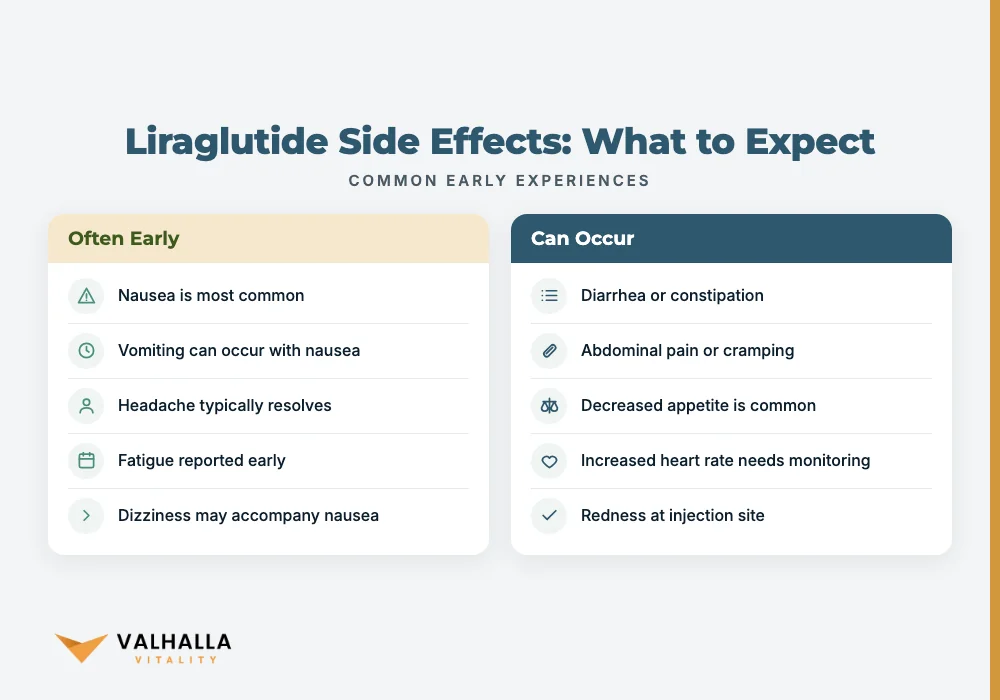
The most common liraglutide side effects are gastrointestinal. Nausea leads the list. It typically appears early and is the reason many people find the first weeks of treatment the most demanding.
Beyond nausea, commonly reported liraglutide adverse effects include:
- Nausea: This is the most frequently reported effect, particularly in the first weeks of treatment.
- Vomiting: It typically connects to nausea and ranges from mild to moderate for most people.
- Diarrhea: It links to the medication's effect on digestive motility and gut signaling.
- Constipation: This can alternate with diarrhea in some users.
- Abdominal pain or cramping: It may appear at any point during treatment.
- Headache: This is common in early weeks and typically resolves as the body adjusts.
- Dizziness: It can accompany nausea or occur independently.
- Fatigue: A portion of users report this, especially early in treatment.
- Decreased appetite: This is often an intended effect but warrants monitoring if extreme.
- Increased heart rate: This is reported in clinical use and requires monitoring in people with existing heart conditions.
- Redness or pain at the injection site: This is a normal local reaction that typically clears within hours.
Not everyone experiences all of these. The pattern and intensity vary considerably between people. Liraglutide injection nausea specifically is the most predictable early challenge. Most people find it manageable with the practical dietary adjustments covered later in this guide.
Dehydration is an underappreciated risk in people with significant nausea or vomiting. When fluid intake drops, other symptoms compound. Staying hydrated is one of the most direct ways to keep GLP-1 agonist side effects from escalating.
What side effects should I watch for with liraglutide injections?
The injection process introduces a specific category of liraglutide side effects worth tracking. Local reactions at the injection site are the most common, including redness, itching, bruising, and minor swelling. These typically resolve within a day.
Rotating the injection site with each dose prevents repeated irritation in the same location. Most providers recommend cycling through approved injection areas. The abdomen, thigh, and upper arm are the standard choices. Using the same spot repeatedly increases tissue sensitivity and can make local reactions worse over time.
More concerning injection site reactions include:
- Hard lumps under the skin that persist may signal lipodystrophy from repeated use of the same area.
- Spreading redness beyond the injection area may indicate infection and should be evaluated promptly.
- Warmth, pus, or significant pain at the site always warrants a call to a provider.
Allowing the medication to sit at room temperature for a short period before use, following the specific instructions for your formulation, reduces discomfort and may lower the likelihood of local irritation.
Can liraglutide cause serious side effects?
Yes. Liraglutide side effects include several serious conditions that require prompt recognition. They are uncommon, but each carries real clinical weight.
Pancreatitis. Liraglutide pancreatitis risk is among the most closely monitored concerns in clinical practice. Pancreatitis involves inflammation of the pancreas and can become life-threatening without treatment. Symptoms include severe abdominal pain radiating toward the back, persistent nausea and vomiting, and fever. Anyone experiencing this combination should stop the medication immediately and seek emergency care.
Thyroid abnormalities. Animal studies showed that liraglutide caused thyroid C-cell tumors. The applicability to humans is still under study, but the FDA-required labeling for this drug class carries a boxed warning. People with a personal or family history of medullary thyroid carcinoma or multiple endocrine neoplasia syndrome type 2 should not use liraglutide. During treatment, any new or growing lump in the neck warrants immediate provider evaluation.
Kidney effects. Liraglutide does not typically damage the kidneys directly, but severe dehydration from vomiting and diarrhea can impair kidney function. People with pre-existing kidney disease face a meaningfully higher risk. Monitoring kidney function is standard during provider follow-up for anyone on this medication.
Gallbladder disease. Gallstones and related gallbladder conditions have been reported among GLP-1 agonist side effects. Symptoms include right-sided abdominal pain, nausea after fatty meals, and fever. Clinical evaluation is needed when these arise.
Severe allergic reactions. Anaphylaxis is rare but documented. Signs include throat tightening, difficulty breathing, widespread rash, and swelling of the face or tongue. This is a medical emergency.
Understanding how this medication targets GLP-1 receptors throughout the body explains why the side effect profile reaches across the digestive system, the endocrine system, and the kidneys.
How long do liraglutide side effects last?
Most liraglutide side effects that appear early in treatment are temporary. The gastrointestinal effects are the most predictable: they tend to peak in the first few weeks and gradually ease as the body adjusts to the medication.
For many people, the general pattern looks like this:
- Nausea and vomiting are most noticeable in the first weeks and often diminish as treatment continues.
- Diarrhea and constipation tend to stabilize after the initial adjustment period.
- Headache and dizziness typically fade once the body adapts.
- Injection site reactions clear within hours to a day in most cases.
Some people experience a lower level of ongoing nausea for a longer period. This does not mean the medication is failing. It does warrant a provider conversation if it prevents normal eating or daily function.
Side effects that worsen over time, or that appear suddenly after a period of stable treatment, need medical evaluation. The pattern matters. Early discomfort that fades is expected. New or escalating symptoms at any stage are not.
A simple symptom log noting when effects occur, how long they last, and what preceded them gives providers the information they need to make useful adjustments. A licensed provider determines whether any change to the treatment plan is appropriate after reviewing that information.
Is liraglutide safe for long-term use?
Liraglutide long-term risks are less fully understood than its short-term profile. Clinical studies have generally followed patients for up to two years. What happens with continued use beyond that window remains an open question. This is a legitimate factor in any treatment decision, and providers weigh it accordingly.
Within the documented period, the concerns that require ongoing monitoring include:
- Thyroid function: Given the animal study findings, periodic evaluation is standard practice.
- Gallbladder function: Longer treatment duration appears linked to higher rates of reported gallstone formation.
- Kidney function: Routine monitoring is appropriate, especially for people with baseline kidney vulnerabilities.
- Cardiovascular markers: Heart rate, blood pressure, and rhythm should be reviewed periodically; palpitations and slowed heart rate have been reported with extended use.
- Blood glucose balance: Hypoglycemia risk increases when liraglutide is used alongside insulin, and close monitoring guides any dose management decisions.
The right question for long-term use is not simply whether it is safe. It is whether the ongoing benefit justifies the ongoing risk for a specific person at a specific point in their treatment. That requires regular provider review, not a one-time decision made at the start.
For more on how GLP-1 therapy fits into a sustained weight management plan, the guide on GLP-1 weight management outcomes covers the broader clinical picture.
Who is at higher risk for liraglutide side effects?
Not everyone carries the same risk when starting liraglutide. Certain health factors increase the likelihood or severity of specific effects. Provider intake screening is designed to surface exactly these factors before treatment begins.
Prior pancreatitis. Anyone with a previous episode of pancreatitis faces a meaningfully elevated liraglutide pancreatitis risk. This is one of the key factors providers evaluate before recommending treatment, and a history of pancreatitis may make the medication inappropriate.
Thyroid history. A personal or family history of medullary thyroid carcinoma or multiple endocrine neoplasia syndrome type 2 disqualifies liraglutide use entirely, per the FDA boxed warning. Intake forms and provider screening exist to catch this before prescribing.
Pre-existing kidney disease. Dehydration-related kidney stress is more dangerous when baseline kidney function is already compromised. Closer hydration monitoring and more frequent kidney function checks are standard for this group.
Concurrent insulin use. Adding liraglutide to an insulin regimen substantially raises hypoglycemia risk. Blood glucose monitoring becomes more intensive. A licensed provider determines whether a therapy is appropriate after reviewing labs, and manages any combination carefully.
Gallbladder history. Prior gallbladder conditions may increase the chance that GLP-1 agonist side effects will include gallbladder-related symptoms during treatment.
The overall picture is clear: liraglutide side effects are not distributed equally. The same medication creates a different risk-benefit picture depending on who is using it and what else is in their health history. Provider review is not a formality. It is the mechanism that matches treatment decisions to individual circumstances.
Managing liraglutide adverse effects day to day
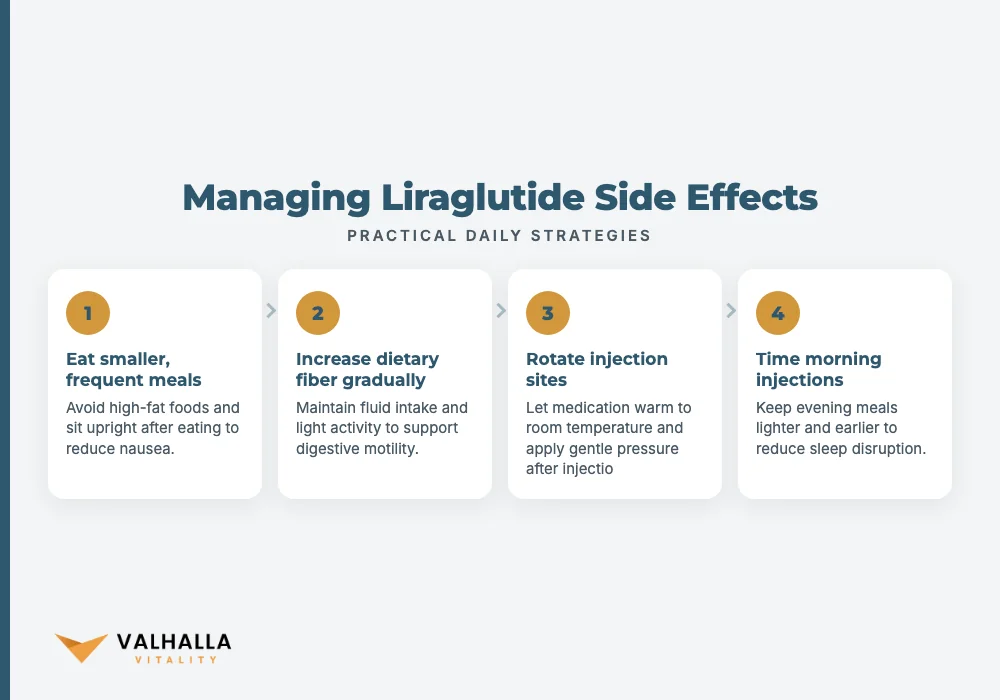
Practical strategies reduce the impact of liraglutide adverse effects for most people. The first few weeks are typically the most demanding. Having a concrete plan before starting treatment makes a real difference.
For nausea and vomiting:
- Eat smaller, more frequent meals rather than large portions at once.
- Avoid high-fat and heavily spiced food around injection time.
- Sit upright for at least 30 minutes after eating.
- Drink fluids consistently throughout the day, since dehydration worsens nausea.
For constipation:
- Increase dietary fiber gradually through vegetables, legumes, and whole grains.
- Maintain fluid intake, as hydration directly affects stool consistency.
- Light physical activity supports digestive motility.
For injection site reactions:
- Rotate the injection site systematically with each dose.
- Let the medication reach room temperature before injecting.
- Apply gentle, clean pressure to the site after the injection.
For sleep disruption:
Liraglutide injection nausea can interfere with sleep, particularly when the dose is timed in the evening. Some people also notice increased daytime energy that shifts their nighttime tiredness later. Timing the injection in the morning is one practical adjustment. Keeping the last meal of the day lighter and earlier reduces evening GI discomfort that would otherwise disrupt sleep onset.
When liraglutide is used alongside other medications, particularly insulin or other glucose-lowering drugs, the combined effect on energy, appetite, and sleep can be harder to predict. Reporting these patterns to a provider rather than managing them independently is the safer approach.
An injectable GLP-1 weight loss therapy program includes built-in provider oversight precisely for this reason: managing side effects over time is part of the treatment, not separate from it.
Liraglutide side effects vs. warning signs
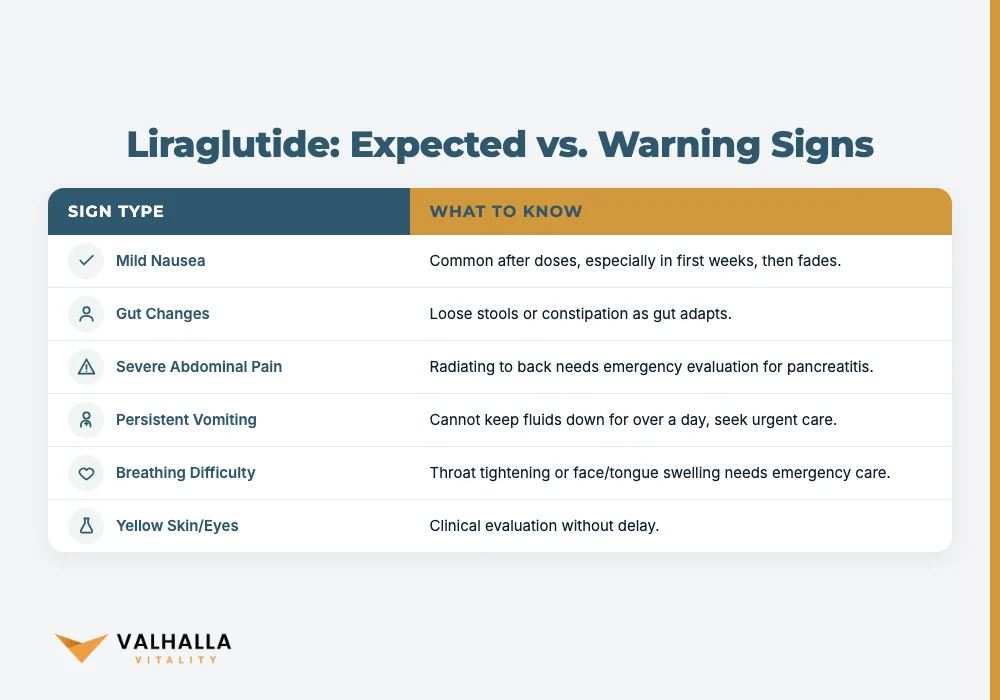
Distinguishing expected adjustment effects from warning signs is one of the most practical things anyone can know before starting this medication.
Expected during the adjustment period:
- Mild to moderate nausea after doses is common, particularly in the first weeks.
- Loose stools or constipation arise as the gut adapts to the medication.
- Significantly reduced hunger often appears and can be dramatic at first.
- Occasional headache or light-headedness is reported by many users.
- Minor redness or tenderness at the injection site clears within hours for most people.
Seek prompt medical care if you notice:
- Severe abdominal pain that radiates to the back needs emergency evaluation, as it may indicate pancreatitis.
- Persistent vomiting that prevents keeping fluids down for more than a day warrants urgent care.
- Difficulty breathing, throat tightening, or swelling of the face or tongue requires emergency care immediately.
- A new or growing lump in the neck should prompt an immediate provider appointment.
- Yellowing of the skin or eyes calls for clinical evaluation without delay.
- Notable heart palpitations or an unusually slow heart rate need to be reported to a provider.
- A significant drop in urination may signal kidney involvement and requires medical review.
Nausea that peaks after a dose and fades is expected. Nausea that is unrelenting or accompanied by severe pain is not. The distinction comes down to severity, pattern, and duration.
Ready to discuss GLP-1 therapy with a licensed provider?
If you have questions about liraglutide side effects in the context of your own health history, Book Your Consultation with a licensed provider who can review your intake and help you understand what to expect.
FAQ
What are the most common side effects of liraglutide?
Nausea is the most frequently reported liraglutide side effect, followed by vomiting, diarrhea, constipation, and abdominal discomfort. Headache, dizziness, fatigue, and injection site reactions are also common. Most effects are gastrointestinal and tend to ease as the body adjusts over the first weeks of treatment.
How long do liraglutide side effects last?
Most early liraglutide side effects, particularly gastrointestinal ones, are most intense in the first few weeks and gradually ease as the body adapts. Injection site reactions typically resolve within hours. Side effects that worsen over time or appear suddenly after a stable period should be evaluated by a provider.
Can liraglutide cause pancreatitis?
Yes, liraglutide carries an FDA boxed warning about pancreatitis risk. Symptoms include severe abdominal pain radiating to the back, persistent nausea and vomiting, and fever. Anyone experiencing these symptoms while using liraglutide should stop the medication and seek emergency medical care immediately.
Is liraglutide safe for long-term use?
Clinical studies of liraglutide have generally followed patients for up to two years, and long-term safety beyond that window is not fully established. Ongoing provider monitoring covers thyroid function, kidney health, gallbladder function, and cardiovascular markers throughout extended treatment.
Does liraglutide affect sleep?
Some people using liraglutide report sleep disruption, most commonly due to evening gastrointestinal discomfort or increased daytime energy. Timing the injection in the morning and keeping late meals light can reduce nighttime GI symptoms. Persistent sleep problems should be discussed with a provider, particularly when other medications are involved.
You May Also Like
 Liraglutide, Semaglutide
Saxenda and Metformin for Weight Loss: What to Know
Saxenda and metformin can be used together for weight loss and blood sugar control. Learn how the combination works, who it suits, and what to expect.
November 2, 2026 ETRead more → Liraglutide, Semaglutide
Liraglutide for Weight Loss: What the Evidence Shows
Liraglutide for weight loss: how GLP-1 injections work, what the clinical evidence shows, side effects to know, and how it compares to semaglutide.
November 2, 2026 ETRead more → Liraglutide, Semaglutide
Liraglutide Mechanism of Action: How GLP-1 Therapy Works
Liraglutide mechanism of action explained: how this GLP-1 receptor agonist regulates appetite, stimulates insulin secretion, and supports weight loss.
November 2, 2026 ETRead more →