
The following blog post is for entertainment and informational purposes only. It is not intended to provide medical advice or diagnosis. Please consult your doctor before making any health-related decisions.
Enclomiphene appetite changes are real for some men, but the mechanism is indirect. The medication raises the body's own testosterone production, and higher testosterone can shift metabolic rate, muscle growth, and energy balance, all of which may affect how much a person wants to eat. Men considering enclomiphene for low testosterone symptoms often ask whether they should expect to feel hungrier. The answer depends on individual hormone response, not a direct drug effect.
Does enclomiphene increase appetite?
Enclomiphene may increase appetite indirectly, but it carries no direct hunger-stimulating mechanism. Its action is upstream: it blocks estrogen receptors in the hypothalamus, prompting the pituitary to release more LH and FSH, which signals the testes to produce testosterone. That testosterone rise then creates downstream metabolic effects that may shift how hungry a person feels. The degree of any enclomiphene appetite change depends on how much testosterone rises and how the body responds.
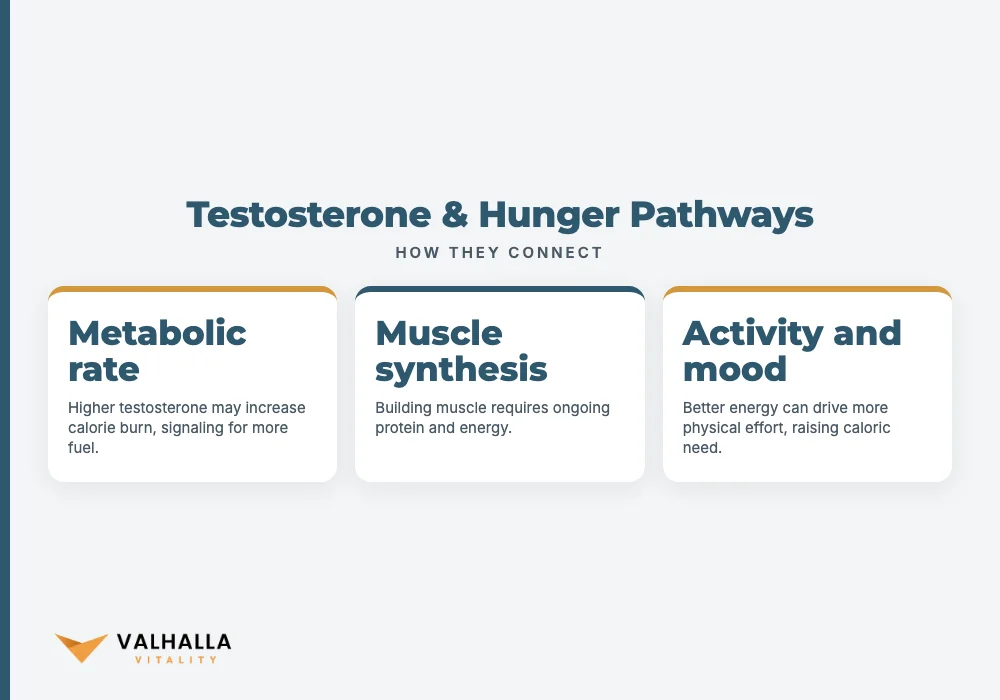
Three main pathways connect testosterone to hunger:
| Pathway | How it may affect appetite |
|---|---|
| Metabolic rate | Higher testosterone may increase calorie burn, signaling the body for more fuel |
| Muscle synthesis | Building and maintaining muscle requires ongoing protein and energy |
| Activity and mood | Better energy can drive more physical effort, raising caloric need |
How testosterone drives hunger signals
Research in Pediatric Endocrinology Reviews confirms that the endocrine system plays a significant role in appetite regulation. When hormone levels shift, whether downward or upward, eating behavior often follows (Baskaran et al., 2017).
Enclomiphene raises testosterone naturally through the body's own hormonal axis. Testosterone interacts with leptin and ghrelin, the hormones that govern satiety and hunger. A meaningful rise in testosterone may tilt that balance toward greater appetite in some users. Researchers describe this pattern as testosterone appetite effects: a metabolic adjustment, not a pharmacological craving response.
Low testosterone hunger: what happens before treatment
Low testosterone hunger is a recognized pattern. Men with suppressed testosterone often show slower metabolism, reduced physical output, and reduced drive for physical activity. When enclomiphene corrects that underlying hormonal deficit, the system accelerates. Caloric demand may increase. For men whose metabolism was previously suppressed, this recalibration can feel like a noticeable hunger surge in the early weeks of therapy.
Can enclomiphene make you hungrier?
Yes, it can. The question is how much, and for whom. Men starting from a significant testosterone deficit are more likely to notice the effect. Those with already-normal hormone levels may feel no change at all. The degree tracks with how much testosterone rises and how metabolically active a person becomes in response. A licensed provider determines whether a therapy is appropriate after reviewing labs, and those same labs establish the baseline for measuring metabolic change.
Does enclomiphene affect hunger in all users?
No. Individual variability is the defining factor. Several elements shape how a person responds:
- Baseline testosterone level. A larger deficit means a larger hormonal correction and a more noticeable downstream appetite shift.
- Resting metabolic rate. Faster metabolisms amplify the caloric demands triggered by rising testosterone.
- Physical activity. Active men, especially those doing resistance training, often see hunger increase because muscle synthesis demands ongoing energy.
- Starting diet. Someone already eating at high caloric intake may not perceive additional hunger. Someone in a caloric deficit may feel the effect more sharply.
- Psychological factors. Testosterone also affects mood and energy. A man who feels more motivated may simply eat more because he is doing more.
The range of enclomiphene appetite responses is wide. Some users report no meaningful change at all. Others see a significant increase within the first few weeks. Monitoring appetite, energy, and body composition together gives the clearest picture of how a body is adjusting.
Does enclomiphene cause weight gain?
Enclomiphene weight gain is possible but not inevitable. If appetite rises and caloric intake increases without a matching rise in physical output, body weight may go up. However, higher testosterone supports lean muscle development, meaning added weight may reflect muscle rather than fat. The outcome depends on diet and activity habits during therapy.
Men who maintain consistent training and eat with attention to food quality tend to see favorable body composition changes. Men who respond to increased hunger by eating more calorie-dense processed food may gain fat mass. For a complete view of how enclomiphene citrate affects the body, including what clinical research documents about systemic effects, the distinction between muscle and fat outcomes is worth understanding before starting.
How does enclomiphene affect metabolism?
Enclomiphene affects metabolism by raising LH and FSH levels, which drive testosterone production. Testosterone then acts on skeletal muscle, adipose tissue, and hepatic metabolism. It increases resting metabolic rate by supporting lean muscle mass, which requires more energy to maintain than fat tissue. Testosterone may also influence insulin sensitivity in some men, changing how efficiently carbohydrates are processed.
Enclomiphene metabolic changes and appetite shifts are connected at this hormonal level. This is why searches for "does enclomiphene make you hungry" and "enclomiphene side effects hunger" are common: what feels like a side effect is a downstream metabolic response to the hormonal correction the drug is designed to make, and it is a pattern that providers at Valhalla Vitality watch for when reviewing follow-up labs.
Managing enclomiphene appetite changes
Increased hunger is manageable. A few consistent habits help.
Prioritize protein and fiber. Both extend satiety. High-protein meals providing 25-35g of protein per serving from lean meat, fish, legumes, or eggs reduce the urge to eat again quickly. Fiber-rich vegetables add volume without significant calorie density.
Track intake during the adjustment period. A food diary or nutrition app during the first several weeks helps clarify whether calorie intake is rising in line with activity or outpacing it.
Stay hydrated. Research published in Nutrients found that even mild dehydration alters appetite signals, making thirst easy to misread as hunger (Zaplatosch et al., 2020). Consistent water intake throughout the day reduces that confusion.
Match food to activity. If training volume increases on therapy, caloric needs legitimately rise. Eating more to fuel genuine physical output is different from eating more out of habit.
Talk to your provider. If appetite changes feel significant or difficult to manage, raise it at your follow-up. Understanding what providers track during enclomiphene therapy helps set realistic expectations for how these changes get evaluated and managed over time.
Take the next step with a licensed provider
If questions about enclomiphene appetite effects or metabolic changes are part of your decision, Book Your Consultation to speak with a licensed provider who can review your individual situation.
FAQ
Does enclomiphene increase appetite?
Enclomiphene appetite changes are driven indirectly by rising testosterone, which can boost metabolic rate and support muscle growth demands. Not every user experiences this; the effect depends on how much testosterone rises and how active a person is.
Can enclomiphene make you hungrier?
Yes, some men report increased hunger during enclomiphene therapy. The cause is a downstream metabolic shift from higher testosterone, not a direct pharmacological hunger trigger.
Does enclomiphene cause weight gain?
Enclomiphene may contribute to weight changes depending on diet and activity level. Since testosterone supports lean muscle, any weight added may reflect muscle gain rather than fat in physically active users.
How does enclomiphene affect metabolism?
Enclomiphene raises LH and FSH, which drive testosterone production. Higher testosterone increases resting metabolic rate, supports muscle synthesis, and may influence insulin sensitivity, all of which change how the body processes energy.
Does enclomiphene affect hunger in all users?
No. Baseline testosterone level, metabolic rate, activity habits, and diet all shape whether a person notices meaningful appetite changes. Some users report no change; others see a significant increase.
Sources
- Baskaran C et al. (2017). Effects of Anorexia Nervosa on the Endocrine System. Pediatric Endocrinology Reviews. PubMed
- Zaplatosch ME et al. (2020). The Effect of Acute Hypohydration on Indicators of Glycemic Regulation, Appetite, Metabolism and Stress: A Systematic Review and Meta-Analysis. Nutrients. PubMed
You May Also Like
 Enclomiphene
 Before and After: Physical Changes Explained
Enclomiphene before and after: what physical changes to expect, how the results timeline unfolds, and why provider monitoring matters for outcomes.
October 21, 2026 ETRead more → Enclomiphene
 Vision Side Effects: Eye Floaters & More
Enclomiphene vision side effects include eye floaters, blurry vision, and light sensitivity. Know the warning signs and when to contact your provider.
October 21, 2026 ETRead more → Enclomiphene
 Drug Test: Detection, WADA, and Disclosure
Enclomiphene drug test detection depends on the test type. Learn how workplace panels, military screening, and WADA rules treat this SERM.
October 21, 2026 ETRead more →