
The following blog post is for entertainment and informational purposes only. It is not intended to provide medical advice or diagnosis. Please consult your doctor before making any health-related decisions.
Enclomiphene hair loss is a real but conditional risk. The drug raises testosterone by stimulating LH and FSH, and higher testosterone increases the substrate available for conversion to dihydrotestosterone (DHT) via the 5-alpha reductase enzyme. Men genetically predisposed to androgenic alopecia are most vulnerable; those without that predisposition face a much lower risk. Before starting any hormone therapy, reviewing enclomiphene's broader safety profile gives useful context.
Men asking about enclomiphene hair loss are weighing a real benefit against a manageable risk. That calculation is possible at Valhalla Vitality because every protocol starts with a provider-led review of hormone levels and medical history. The risk equation depends on three variables: genetic background, baseline DHT, and what monitoring looks like once therapy begins.
Who faces the greatest risk of enclomiphene hair loss:
- Men with a family history of male pattern baldness face the highest baseline risk.
- Men already showing early thinning before therapy can expect faster progression.
- Men with high scalp androgen receptor sensitivity are more susceptible to DHT-driven follicle changes.
- Men whose DHT is already elevated before starting face a narrower margin.
Does enclomiphene cause hair loss?
Enclomiphene does not damage hair follicles directly. The mechanism is indirect. Enclomiphene stimulates LH and FSH, which signals the testes to produce more testosterone. Higher testosterone then provides more substrate for 5-alpha reductase to act on, and that enzyme converts testosterone into DHT.
DHT is the androgen most strongly linked to male pattern baldness. It binds to androgen receptors in scalp follicles and, in genetically susceptible men, triggers a gradual miniaturization process. Each cycle produces hair that is thinner, shorter, and less pigmented than the last. Eventually, growth stops entirely.
Susceptibility is the key variable. Without a genetic predisposition, elevated DHT rarely causes visible scalp changes. With it, even a modest DHT increase can accelerate loss.
Can enclomiphene increase DHT levels?
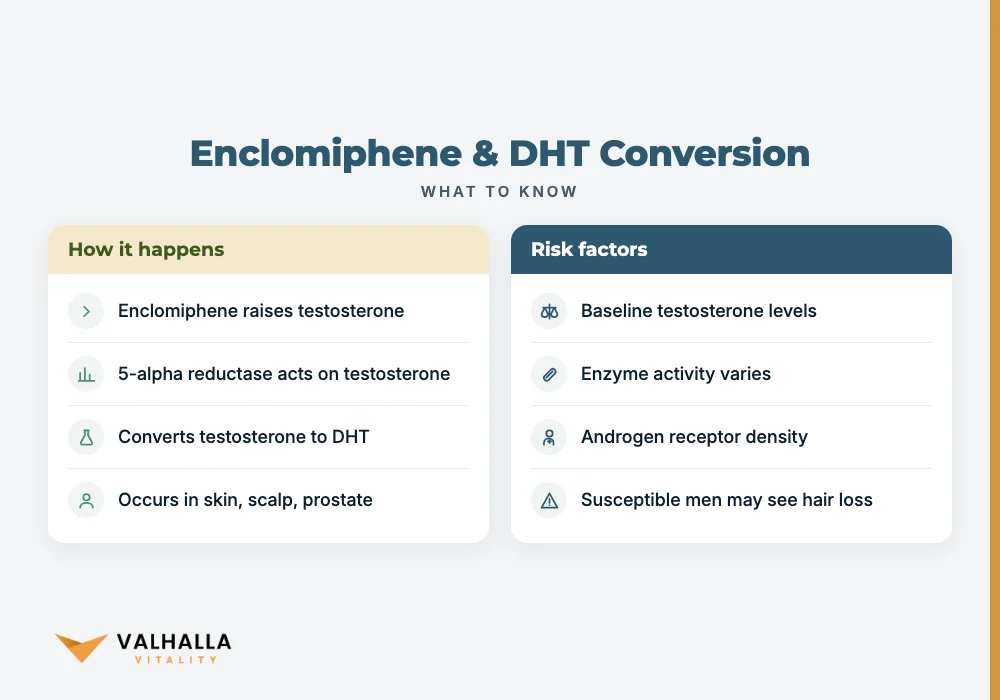
Yes. Men who search "does enclomiphene increase DHT" are asking the right question. Enclomiphene DHT conversion follows the same metabolic pathway as any other testosterone-raising intervention. The testosterone conversion to DHT occurs because the 5-alpha reductase enzyme acts on circulating testosterone in peripheral tissues, including the skin, scalp, and prostate. When testosterone rises, more of it gets converted.
This is one of the enclomiphene side effects men and their providers should discuss before starting. The extent of conversion varies: baseline testosterone, enzyme activity, and androgen receptor density all shape the final DHT level. A provider assessment before therapy establishes those baselines and identifies men at higher risk.
For a closer look at how testosterone conversion to DHT affects follicle biology, the dedicated analysis of enclomiphene and hair follicles covers the relevant evidence.
How 5-alpha reductase drives follicle miniaturization
The enzyme exists in two main isoforms. Type I acts primarily in sebaceous glands and skin. Type II is concentrated in the scalp and prostate, and it is the primary driver of androgenic alopecia.
When enclomiphene raises testosterone, both isoforms have more substrate to process. In the scalp, more DHT means more androgen receptor binding. In susceptible men, each binding cycle shortens the anagen phase of hair growth. The follicle shrinks over time. The process is gradual at first, then accelerates as miniaturization compounds.
Does enclomiphene cause hair growth or hair loss?
Both, depending on location. Testosterone and DHT both stimulate hair growth across most of the body. Beard and chest hair typically respond positively to rising androgens, and enclomiphene's effect on beard growth is a benefit many men on therapy report.
Scalp hair responds differently. DHT suppresses frontal and crown follicles in genetically susceptible men. The result can be simultaneous facial hair improvement and scalp thinning in the same individual, because the two effects operate through different follicle populations with different androgen sensitivities.
Risk is individual. A man with no family history and no signs of thinning at baseline is unlikely to see scalp changes. A man already showing early androgenic alopecia before therapy is at meaningful risk of acceleration.
How can you prevent hair loss while taking enclomiphene?
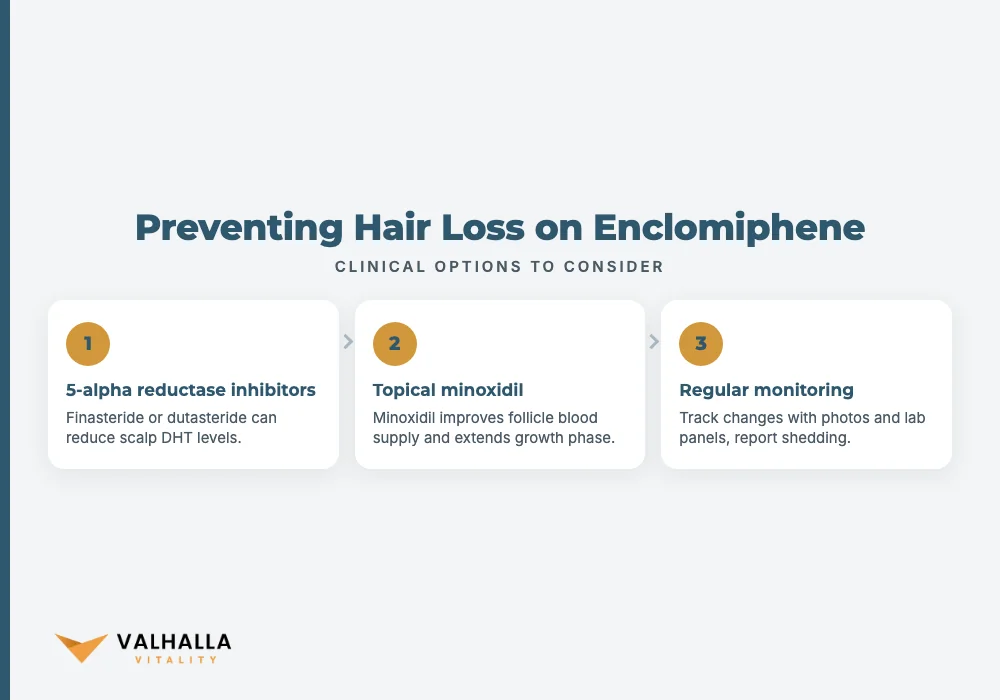
Androgenic alopecia prevention while on enclomiphene focuses on managing DHT, protecting follicles, or both. Three clinical options are used in practice. None should be started without a provider review, since each carries its own risk considerations.
5-alpha reductase inhibitors
A 5-alpha reductase inhibitor such as finasteride targets the type II isoform. Dutasteride inhibits both isoforms and produces a greater overall reduction in scalp DHT, making it the stronger tool for male pattern baldness treatment. Both have well-established clinical histories when used in appropriate patients.
A licensed provider determines the dose after labs and discusses the known side effects of this drug class with you, including mood and libido effects documented in clinical literature.
Topical minoxidil
Minoxidil extends the active growth phase and improves follicle blood supply. It does not lower DHT. For men noticing early shedding on enclomiphene, minoxidil can be started quickly while the hormone picture is clarified.
Used without addressing a meaningful DHT elevation, it may slow progression rather than stop it. It works best as part of a broader management plan.
Regular monitoring
Baseline photographs of the hairline and crown before therapy begins make changes measurable rather than subjective. Lab panels during enclomiphene use track testosterone and can include DHT when a provider determines it is clinically indicated. Men who notice increased shedding should raise it at their next check-in. Catching changes early opens significantly better intervention options.
Can enclomiphene hair loss be managed?
Recovery depends on timing. Follicle miniaturization is a gradual process, not an on/off event. If DHT is controlled while follicles are still capable of producing a viable hair shaft, regrowth is possible.
Once a follicle has atrophied and remained dormant for a prolonged period, recovery becomes unpredictable. Most men who address shedding within the first several months fare better than those who wait.
Early action is what matters most. Raising the concern with a provider when shedding begins, rather than at a follow-up many months later, gives the best recovery window. Prompt protocol adjustment is significantly more effective than late correction.
Prostate health and DHT: a connected concern
The same enclomiphene DHT conversion that affects scalp follicles also applies to the prostate. DHT drives prostate cell growth. During adolescence this contributes to normal prostate development. In adult men, sustained DHT elevation can contribute to benign prostatic hyperplasia (BPH), producing symptoms such as weak urine stream, frequent urination, and incomplete bladder emptying.
Men over 50 on enclomiphene therapy typically include PSA testing and digital rectal exams in their monitoring schedule. Men with an existing prostate history should discuss DHT management before starting any testosterone-raising protocol. A licensed provider determines whether a therapy is appropriate after reviewing intake and current lab results.
This consideration does not disqualify most men from enclomiphene. It makes ongoing monitoring a standard part of responsible use.
Talk to a licensed provider
To evaluate your personal enclomiphene hair loss risk before starting therapy, a provider can review your hormone baseline, scalp health, and family history: Book Your Consultation.
FAQ
Does enclomiphene cause hair loss?
Enclomiphene does not damage follicles directly but raises testosterone, which increases DHT through 5-alpha reductase activity. In men genetically predisposed to androgenic alopecia, that DHT rise can accelerate follicle miniaturization and visible hair loss.
Can enclomiphene increase DHT levels?
Yes. Higher testosterone from enclomiphene gives 5-alpha reductase more substrate to convert to DHT in peripheral tissues including the scalp. The degree of increase varies by individual based on enzyme activity and androgen receptor sensitivity.
How can you prevent hair loss while taking enclomiphene?
A licensed provider may recommend a 5-alpha reductase inhibitor, topical minoxidil, or both for men at elevated risk. Regular lab monitoring and early response to increased shedding are also standard components of a responsible protocol.
Can enclomiphene hair loss be managed?
Hair loss caught early, while follicles are still active, is more likely to improve once DHT is managed. Follicles that have been dormant for a prolonged period are harder to recover. Early detection and prompt protocol adjustment offer the best outcome.
Does enclomiphene affect prostate health?
DHT elevation from any testosterone-raising therapy can contribute to prostate cell growth and worsen benign prostatic hyperplasia in susceptible men. Regular PSA testing and provider monitoring are standard components of enclomiphene use for men with prostate risk factors.
Sources
- Valhalla Vitality. Enclomiphene Citrate Tablets: Use, Doses, and Side Effects.
- Valhalla Vitality. Enclomiphene: A Novel Solution in the Battle Against Hair Loss.
- Valhalla Vitality. Enclomiphene and Its Impact on Beard Growth.
- Valhalla Vitality. Enclomiphene Citrate for Low Testosterone.
You May Also Like
 Enclomiphene
 Before and After: Physical Changes Explained
Enclomiphene before and after: what physical changes to expect, how the results timeline unfolds, and why provider monitoring matters for outcomes.
October 21, 2026 ETRead more → Enclomiphene
 Vision Side Effects: Eye Floaters & More
Enclomiphene vision side effects include eye floaters, blurry vision, and light sensitivity. Know the warning signs and when to contact your provider.
October 21, 2026 ETRead more → Enclomiphene
 Drug Test: Detection, WADA, and Disclosure
Enclomiphene drug test detection depends on the test type. Learn how workplace panels, military screening, and WADA rules treat this SERM.
October 21, 2026 ETRead more →