Oral Testosterone Therapy: Energy, Side Effects & Results

The following blog post is for entertainment and informational purposes only. It is not intended to provide medical advice or diagnosis. Please consult your doctor before making any health-related decisions.
Oral testosterone therapy gives men with clinically confirmed low testosterone a needle-free alternative to injections and patches. Modern testosterone undecanoate capsules absorb through the lymphatic system, bypassing the first-pass liver metabolism that made earlier oral androgen products impractical. Because testosterone levels and energy are closely linked, men with low T commonly report persistent fatigue, reduced stamina, and gradual muscle loss before anyone checks their hormones. A licensed provider reviews lab results and full medical history to determine whether treatment is appropriate.
Low testosterone symptoms and why energy suffers first
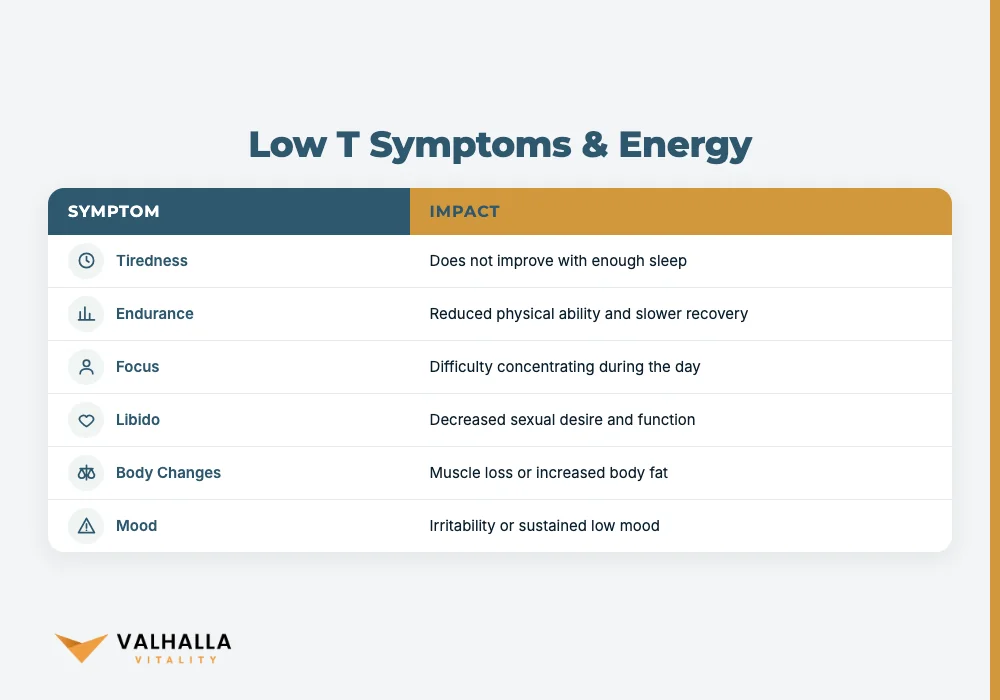
Low testosterone symptoms develop gradually. Many men attribute them to aging or work stress long before a blood panel reveals a hormonal cause.
Common signs that prompt evaluation include:
- Persistent tiredness that does not resolve with adequate sleep
- Reduced physical endurance and slower post-exercise recovery
- Difficulty concentrating or maintaining focus during the day
- Decreased libido and changes in sexual function
- Gradual loss of muscle tone or an increase in body fat
- Mood changes such as irritability or sustained low mood
A 2019 study published in Clinical Endocrinology (Wong et al.) demonstrated that energy deficit alone can suppress the male hormonal axis, showing how directly testosterone levels and energy are intertwined. Symptoms alone are not enough to confirm a diagnosis. A licensed provider reviews lab results and a full medical history before recommending any male hormone replacement options.
What is oral testosterone therapy and how does it work?
It is a method of testosterone replacement delivered through capsules taken by mouth. For decades, oral administration was impractical. The liver metabolized most of the hormone before it entered general circulation, leaving men with little therapeutic benefit.
Modern formulations changed that. A 2023 review by Miller et al. in Sexual Medicine Reviews confirmed that newer oral testosterone products use a lymphatic absorption route rather than portal circulation.
Taken with a meal containing fat, the capsule is absorbed through the gut's lymphatic vessels before reaching the bloodstream. This design allows it to produce therapeutically relevant hormone levels consistently.
A licensed provider determines the dose after reviewing baseline lab results. Testosterone is not the only marker evaluated; hematocrit, lipid panels, and other values factor into the initial assessment and all subsequent monitoring.
Can oral testosterone improve energy and reduce fatigue?
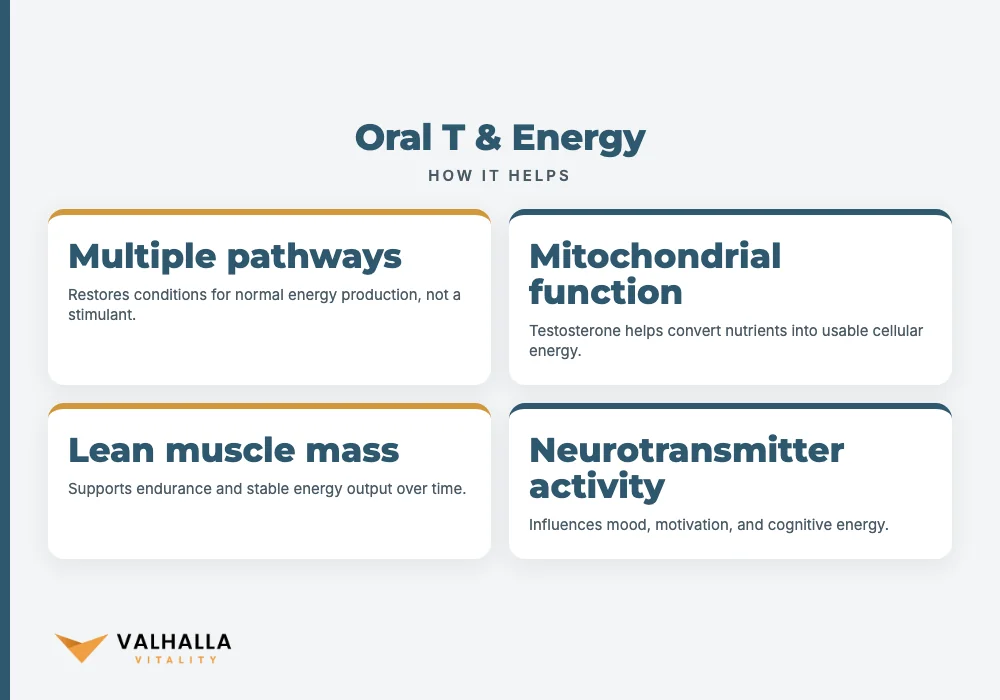
This treatment may improve energy and reduce fatigue in men whose low T is confirmed through blood testing. The mechanism is not a direct stimulant effect. It involves multiple biological pathways that restore the conditions needed for normal energy production.
How testosterone supports metabolism and cellular energy
Testosterone influences protein synthesis, fat distribution, and mitochondrial function. Mitochondria convert nutrients into usable energy at the cellular level. When testosterone levels fall, that conversion becomes less efficient, contributing to fatigue and sluggishness. TRT fatigue relief works by restoring the hormonal environment that keeps cellular energy metabolism functioning normally, rather than by adding any stimulant effect.
Lean muscle mass is part of this picture. Muscle tissue is metabolically active. When testosterone deficiency accelerates muscle loss, physical activity costs more energy and recovery takes longer. Low T energy treatment through this approach may help preserve existing muscle tissue, supporting better endurance and more stable energy output over time.
Mood, motivation, and cognitive energy
Testosterone influences neurotransmitter activity in the brain. Low levels are associated with reduced motivation, difficulty concentrating, and depressed mood. These factors directly amplify the experience of fatigue, making it harder to initiate activity even when the body is physically capable.
Men beginning TRT fatigue relief sometimes report mood and motivation changes before visible physical differences appear. This aligns with the neurochemical effects of testosterone rather than any structural change in body composition.
How long does oral testosterone therapy take to work?
Timelines vary. Individual baseline testosterone levels, overall health, and consistency with treatment all shape the pace of response.
Energy and mood changes are typically among the earlier improvements, sometimes noticed within several weeks of starting treatment. Body composition changes are slower. Increased muscle tone and reduced fat accumulation may take several months of consistent treatment combined with appropriate exercise and nutrition. A licensed provider tracks progress through periodic lab work and adjusts the approach based on what the results show.
Sleep quality is another factor worth noting. Some men with low T report disrupted sleep or worsening sleep apnea, which compounds daytime fatigue. As testosterone levels normalize with treatment, sleep architecture may improve, contributing to better daytime energy through a separate pathway.
Men who pair treatment with adequate sleep and a diet that supports hormone health tend to report more noticeable improvements. Lifestyle and treatment work together; neither substitutes for the other.
What are the side effects of oral testosterone?
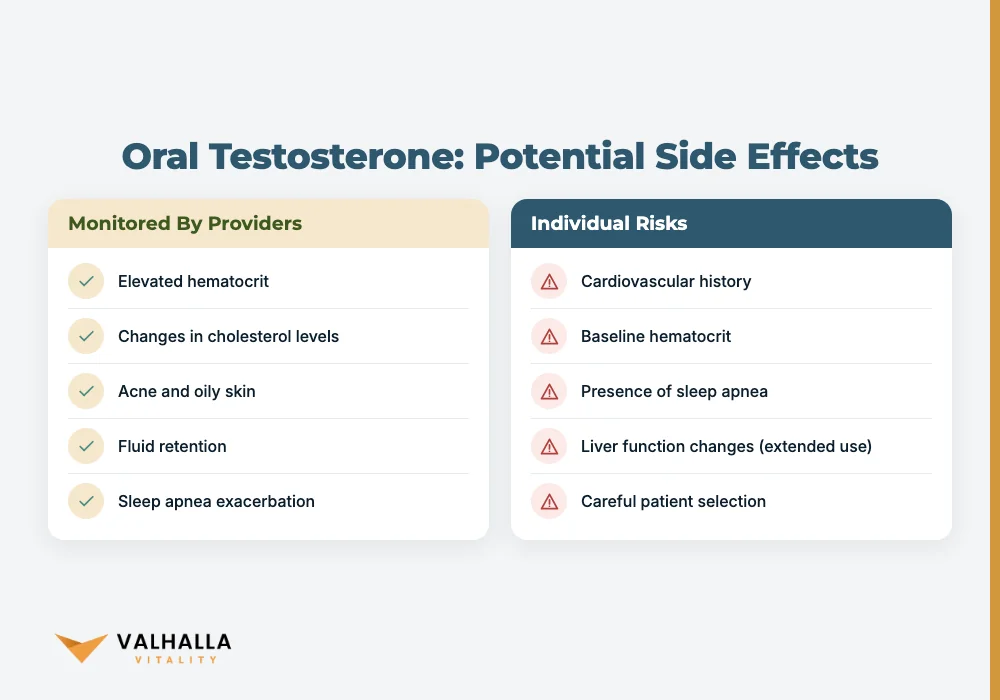
All testosterone replacement approaches carry real risks. A 2016 review by Kloner et al. in the Journal of the American College of Cardiology examined cardiovascular considerations associated with testosterone replacement, concluding that careful patient selection and ongoing monitoring are both essential. Providers weigh these factors before and throughout treatment.
Side effects that providers monitor for include:
- Elevated hematocrit, which increases blood viscosity and cardiac strain
- Changes in LDL and HDL cholesterol levels
- Acne and increased skin oiliness
- Fluid retention
- Exacerbation of sleep apnea
- Liver function changes with extended use
A 2025 review by Goldstein et al. in Sexual Medicine Reviews noted that modern oral testosterone undecanoate formulations carry a substantially improved liver-safety profile compared to older oral androgens. Standard practice still includes liver function monitoring.
Risk varies by individual, particularly based on cardiovascular history, baseline hematocrit, and the presence of sleep apnea. A thorough intake before prescribing shapes whether therapy is considered appropriate at all.
Is oral testosterone safer than injections or patches?
No single method is categorically safer. Each delivery route has a different risk and convenience profile.
Injections produce sharp peaks and troughs in blood testosterone between doses. Some men find this variability affects mood and energy consistency. Gels and patches avoid injection discomfort but carry a small risk of hormone transfer to partners or children through skin contact. This oral vs. injection comparison covers the clinical differences in detail.
Oral testosterone undecanoate produces a more gradual absorption curve and carries no skin-transfer risk. It does require consistent timing with fatty meals for reliable absorption. Testosterone pills for men who prefer to avoid injections represent a practical option in the right clinical situation. The 2025 Goldstein et al. review confirmed that liver safety with modern oral formulations is significantly better than with older oral androgens, though monitoring remains standard.
The right choice depends on individual health profile, lifestyle, and what a licensed provider determines after reviewing labs. Availability varies by state.
Monitoring and what ongoing care looks like
Starting TRT is not a one-time prescription event. It requires ongoing supervision. Monitoring is not optional.
Routine follow-up typically includes testosterone levels, hematocrit, lipid profile, and liver enzymes. How often these are checked depends on individual response and any values that shift outside normal ranges.
Providers adjust therapy based on lab results rather than a preset calendar. Men with cardiovascular conditions, a history of sleep apnea, or elevated baseline hematocrit require especially close tracking. For a broader look at what a full treatment period involves, this complete guide to an oral testosterone cycle walks through the monitoring and management process in practical terms.
Valhalla Vitality builds provider oversight into every step. Intake review happens within 24 business hours, and at-home lab testing makes follow-up practical without clinic visits.
Who is a candidate for oral testosterone therapy?
Not every man reporting fatigue qualifies. This treatment is appropriate only when a licensed provider confirms testosterone deficiency through lab testing and determines it fits the individual's health profile.
Men who may benefit from evaluation include those with persistent low testosterone symptoms, such as fatigue, reduced libido, and muscle loss, supported by blood work showing low levels. Pursuing therapy for performance or physique goals is outside the scope of this treatment; a symptom-evaluation framework, reviewed by a provider, is the appropriate lens.
Bone health, cardiovascular risk, and any existing prostate concerns are also part of the clinical picture. None of these factors automatically disqualifies someone from evaluation, but they determine whether and how treatment should proceed.
Some men presenting with fatigue have other underlying causes entirely, such as thyroid dysfunction, sleep disorders, or iron deficiency, that require different treatment. Lab work resolves that ambiguity.
Ready to find out if oral testosterone therapy is right for you?
A licensed provider reviews your intake and lab results to determine whether it is an appropriate next step for your situation. Book Your Consultation.
FAQ
What is oral testosterone therapy used for?
Oral testosterone therapy is prescribed to treat clinically confirmed testosterone deficiency in men. A licensed provider reviews lab results and full medical history before determining whether it is appropriate for an individual.
Can testosterone pills for men restore energy levels?
Testosterone pills may support improvements in energy and stamina in men with documented low T. Results vary; a licensed provider monitors progress through lab testing and adjusts treatment based on ongoing results.
How does oral testosterone compare to testosterone injections?
Oral testosterone undecanoate absorbs through the lymphatic system and avoids the sharp hormone-level peaks associated with injections. Neither method is universally superior; the right choice depends on individual health profile and provider assessment.
How long before oral testosterone therapy improves energy?
Most men notice mood and energy changes within several weeks, though meaningful body composition changes typically take several months. Timelines depend on baseline hormone levels, overall health, and consistency with treatment.
What are the main side effects of oral testosterone?
Oral testosterone therapy may affect hematocrit, cholesterol levels, liver function, and sleep apnea status. A 2016 review in JACC (Kloner et al.) established that cardiovascular monitoring is essential during any form of testosterone replacement therapy.
Sources
- Miller JA et al. (2023). Oral testosterone therapy: past, present, and future. Sexual medicine reviews. PubMed
- Goldstein I et al. (2025). Newer formulations of oral testosterone undecanoate: development and liver side effects. Sexual medicine reviews. PubMed
- Wong HK et al. (2019). Reversible male hypogonadotropic hypogonadism due to energy deficit. Clinical endocrinology. PubMed
- Kloner RA et al. (2016). Testosterone and Cardiovascular Disease. Journal of the American College of Cardiology. PubMed
You May Also Like
 Oral testosterone
Oral Testosterone Fertility: How TRT Affects Sperm
Oral testosterone fertility: TRT typically reduces sperm production. Learn what the research shows and how to protect your reproductive options.
October 7, 2026 ETRead more → Oral testosterone
Oral Testosterone Therapy: Options, Benefits, and Risks
Oral testosterone therapy delivers TRT in pill form. Learn how testosterone undecanoate capsules work, who qualifies, and key side effects to watch.
October 6, 2026 ETRead more → Oral testosterone
Oral Testosterone vs Injection: Choosing Your TRT Method
Oral testosterone vs injection explained: compare bioavailability, liver impact, and convenience to find the TRT method that fits your lifestyle.
October 4, 2026 ETRead more →