
The following blog post is for entertainment and informational purposes only. It is not intended to provide medical advice or diagnosis. Please consult your doctor before making any health-related decisions.
MIC methyl B12 benefits come from combining methylcobalamin, the active form of vitamin B12, with three lipotropic compounds: methionine, inositol, and choline. The blend may support fat metabolism in the liver, sustained energy production, and healthy neurological function. The injection format matters: nutrients reach circulation directly, without depending on digestion. Delivery makes the difference. A licensed provider reviews your intake to determine whether this therapy is appropriate, and that process begins with a provider consultation.
What does MIC stand for in MIC B12 injections?
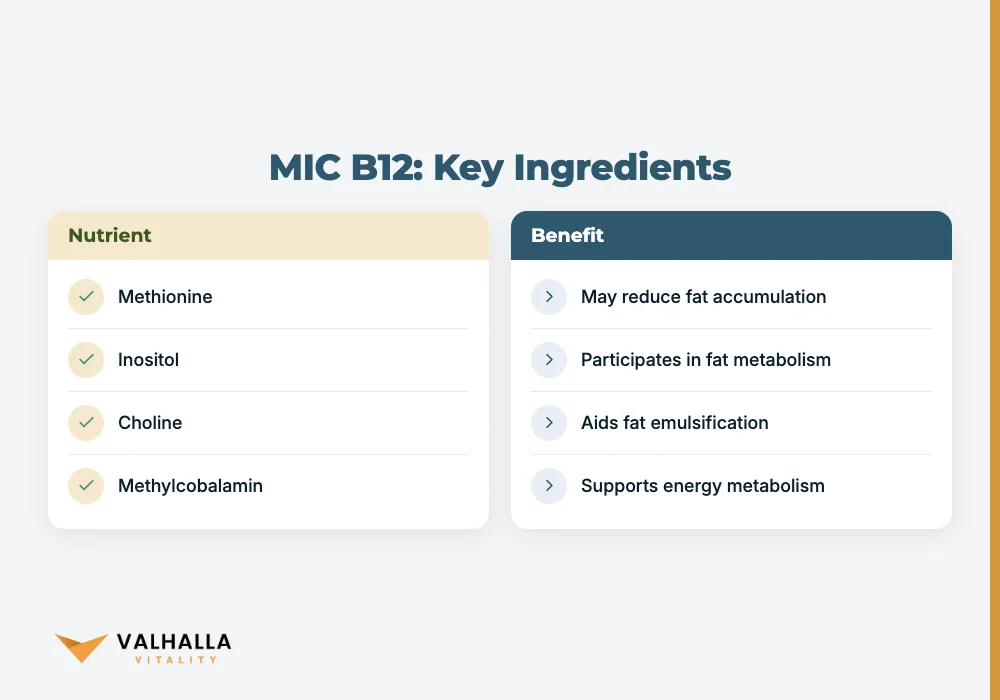
MIC stands for methionine, inositol, and choline. These three nutrients are classified as lipotropic because they may help the liver process and transport fat rather than store it. Combined with methylcobalamin, the full blend forms what practitioners call methionine inositol choline injections with integrated B12 support. Each component earns its place.
| Compound | Type | Primary function |
|---|---|---|
| Methionine | Essential amino acid | May reduce fat accumulation; supports cholesterol regulation |
| Inositol | Carbohydrate molecule | Participates in fat metabolism; may influence insulin and serotonin signaling |
| Choline | Essential nutrient | Aids fat emulsification; supports lipid transport from the liver |
| Methylcobalamin | Active form of B12 | Supports red blood cell production, neurological function, and energy metabolism |
Understanding the MIC blend ingredients makes it easier to follow how each compound contributes to the overall formula.
What are the benefits of MIC methyl B12?
The lipotropic injection benefits from this blend fall into four main areas: lipotropic nutrients metabolism, energy, mood stability, and immune function. Each compound targets a different biological pathway. The combined effect is broader than any single nutrient provides on its own.
Fat metabolism and lipotropic nutrients
Methionine is an essential amino acid that may help reduce fat deposits in the liver and support healthy cholesterol levels. Inositol participates in fat metabolism and may regulate insulin and serotonin signaling, which can influence appetite and food choices. Choline aids fat emulsification. It also supports the transport of lipids out of liver cells. The liver responds directly. These lipotropic nutrients work on metabolism by keeping the liver from accumulating excess fat during caloric restriction or increased physical activity.
For more context on how this formula supports a weight management plan, see lipotropic support for weight management.
Energy production
Methylcobalamin supports the conversion of carbohydrates into glucose, supplying cells with a direct fuel source. It also supports red blood cell production. That process determines how efficiently oxygen reaches working muscles and tissues. The B12 shots energy boost that many people report is most noticeable when existing low B12 levels are corrected, since returning to adequate levels restores normal metabolic function. The lipotropic compounds contribute further by reducing liver workload, which may free up metabolic resources for energy use rather than fat storage. That shift matters enormously.
Mood and stress response
Methylcobalamin may support the synthesis of serotonin and dopamine, the neurotransmitters that regulate mood, alertness, and the stress response. Inositol has also been associated with serotonin signaling. A nervous system with adequate B12 handles daily stress more effectively. These effects vary by individual, and a provider assessment helps determine whether current B12 levels suggest a likely benefit.
Immune function
Vitamin B12 supports the production of white blood cells, the body's primary cellular defense against pathogens. Adequate methylcobalamin levels may contribute to a more responsive immune system, particularly in people whose B12 absorption is impaired. This is one reason methylcobalamin for weight loss programs is often paired with routine health monitoring.
What is the difference between MIC B12 and regular B12?
The main distinction lies in the form of B12 and the addition of lipotropic compounds. Standard B12 supplements typically contain cyanocobalamin, a synthetic form the body must first convert to an active state. Methylcobalamin is already in its active form and may be absorbed more readily. No conversion step needed. The three lipotropic components, methionine, inositol, and choline, expand the formula beyond a simple vitamin supplement into a broader metabolic blend. For a detailed walkthrough of how the injection is formulated and administered, that resource covers each step of the process.
How does MIC B12 help with weight loss?
MIC B12 may assist weight management by supporting the metabolic pathways the liver uses to process and export fat. Inositol may regulate insulin and serotonin levels, which can curb appetite and reduce mood-driven eating. Choline supports the transport of fat out of liver cells. Methylcobalamin for weight loss protocols contributes by supporting the conversion of dietary fats into usable energy, which may improve endurance during physical activity.
Weight outcomes vary by individual. Diet, activity level, and overall metabolic health all shape results. This blend is a support tool and works best alongside consistent lifestyle habits.
How often should you get MIC methyl B12 injections?
Injection frequency depends on individual health status, treatment goals, and provider assessment. A licensed provider determines the dose after reviewing your intake and lab results. No standard schedule applies to everyone. Factors such as current B12 levels, metabolic goals, and overall health all shape the protocol. For a thorough breakdown of injection timing and what providers assess, that guide walks through the key considerations in full.
MIC methyl B12 benefits and a whole-body approach
MIC methyl B12 benefits are most reliable when the blend supports a broader health strategy rather than acting as a standalone fix. Fat metabolism, red blood cell production, neurological health, and DNA synthesis interact with each other. These systems don't work alone. MIC B12 therapy addresses several of these pathways at once, which is why providers typically recommend pairing it with a balanced diet and regular physical activity.
Valhalla Vitality connects patients with licensed providers who can review your intake and confirm whether this therapy is available in your state. Availability varies by state.
Before starting any injection protocol, reviewing injection safety and what to monitor provides helpful context on what to expect.
Ready to explore MIC methyl B12 benefits?
A licensed provider can review your health intake and determine whether this blend is appropriate for your goals. Book Your Consultation to get started.
FAQ
What are the main ingredients in a MIC B12 injection?
The main ingredients are methionine, inositol, choline, and methylcobalamin. Methionine is an amino acid, inositol is a carbohydrate molecule, choline is an essential nutrient, and methylcobalamin is the active form of vitamin B12. Each targets a different aspect of fat metabolism or energy production.
How does MIC B12 differ from a regular B12 injection?
A standard B12 injection typically contains cyanocobalamin, which the body must convert before use. MIC B12 uses methylcobalamin, already in active form, and adds three lipotropic compounds that target fat metabolism in the liver. The result is a broader metabolic formula rather than a simple vitamin supplement.
Can MIC B12 injections replace a structured diet and exercise plan?
No. MIC B12 may support fat metabolism and energy production, but it does not replace dietary and lifestyle changes. Weight outcomes depend on caloric intake, activity level, and overall metabolic health. Providers typically recommend using this blend alongside a structured plan.
How is MIC injection frequency determined?
A licensed provider sets injection frequency after reviewing your health intake and relevant lab results. There is no fixed schedule that applies to everyone; the protocol is tailored to your current B12 status, metabolic goals, and overall health profile.
You May Also Like
 MIC B12
 injection benefits: energy, fat & metabolism
MIC B12 injection benefits include energy support, fat metabolism, liver health, and mood. Find out how lipotropic shots work and who may benefit.
November 22, 2026 ETRead more → MIC B12
 Injections: Benefits, Weight Loss & How They Work
MIC B12 injections use methionine, inositol, choline, and B12 to support fat metabolism and energy. Learn what the evidence shows and who may benefit.
November 22, 2026 ETRead more → MIC B12
 Injection Benefits: Energy, Fat Loss & Mood
MIC B12 injection benefits include faster fat metabolism, higher energy, and improved mood. Learn how methionine, inositol, and choline work together.
November 21, 2026 ETRead more →