Enclomiphene and Alcohol: What Men on Therapy Need to Know

The following blog post is for entertainment and informational purposes only. It is not intended to provide medical advice or diagnosis. Please consult your doctor before making any health-related decisions.
Enclomiphene and alcohol can coexist with careful choices, but regular or heavy drinking actively works against the therapy. Enclomiphene raises testosterone by stimulating the body's own hormonal signaling pathway, and alcohol disrupts that pathway at several points. Light, occasional drinking is unlikely to cause measurable problems for most men. If you are currently managing low testosterone with enclomiphene therapy, understanding these interactions can help you make informed choices with your provider.
How enclomiphene works
Enclomiphene is a selective estrogen receptor modulator, or SERM. It blocks estrogen receptors in the hypothalamus and pituitary gland, prompting the brain to increase output of luteinizing hormone (LH) and follicle-stimulating hormone (FSH). Those hormones then direct the testes to produce more testosterone. A 2016 review in Expert Opinion on Pharmacotherapy confirmed that enclomiphene citrate raises LH, FSH, and total testosterone in men with secondary hypogonadism while preserving testicular function. A licensed provider determines the dose after labs.
Can you drink alcohol while taking enclomiphene?
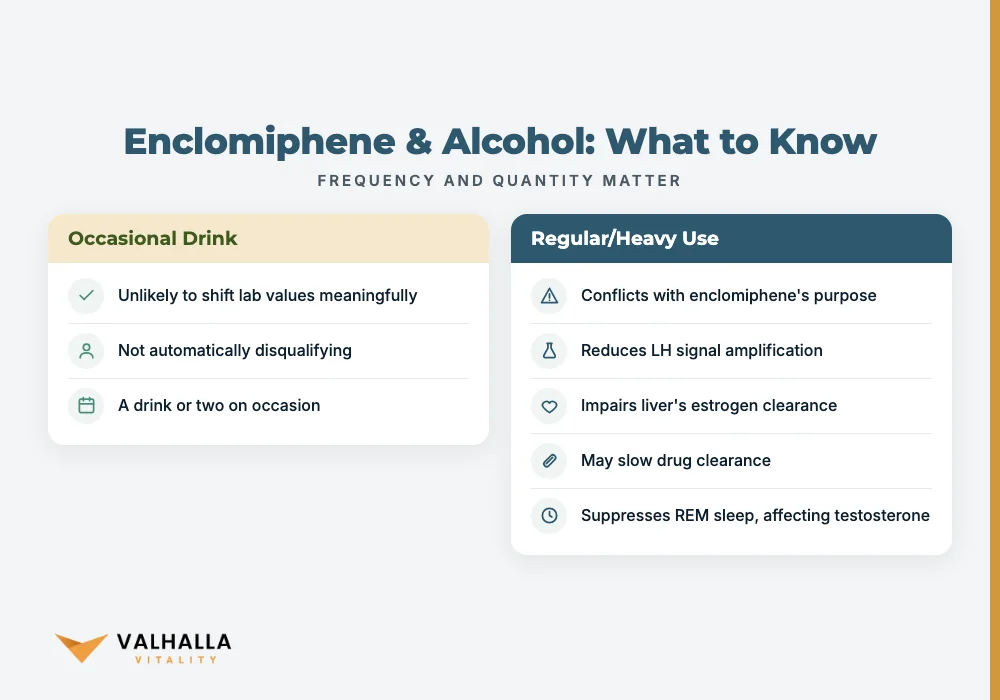
Yes, but frequency and quantity matter. A drink or two on occasion is unlikely to shift your lab values in any meaningful way. Regular or heavy use, though, directly conflicts with what enclomiphene is working to accomplish.
The main pathways through which enclomiphene and alcohol interact:
- Alcohol reduces LH pulsatility from the pituitary, blunting the same signal enclomiphene is designed to amplify.
- Heavy drinking impairs the liver's ability to clear estrogen, allowing it to accumulate.
- Both substances are metabolized by hepatic enzymes; heavy use may slow drug clearance.
- Alcohol suppresses REM sleep, and testosterone synthesis depends on sleep quality.
- Chronic use compounds hormonal imbalance over time, potentially requiring more frequent monitoring.
Drinking while on hormone therapy is not automatically disqualifying. The concern is sustained, heavy patterns, not the occasional glass.
How does alcohol affect enclomiphene effectiveness?
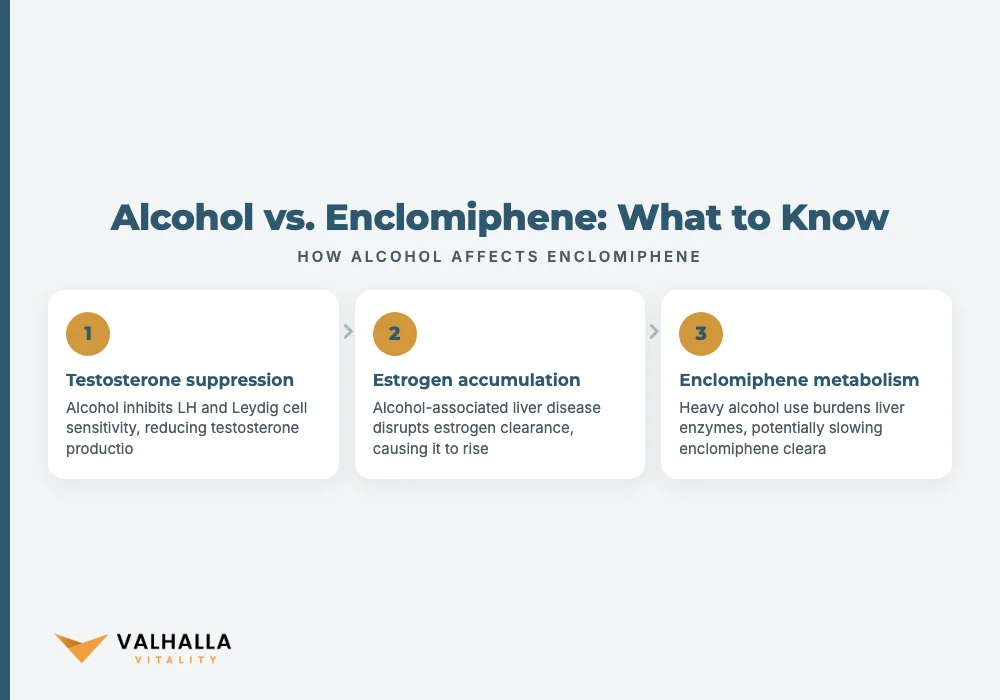
Alcohol works against enclomiphene through three distinct mechanisms, each operating at a different point in the hormonal axis.
Testosterone suppression and LH signaling
Enclomiphene raises LH, which then drives testicular testosterone production. Alcohol inhibits this cascade at multiple levels. Chronic use reduces LH pulsatility from the pituitary and impairs Leydig cell sensitivity in the testes. The alcohol testosterone interaction runs in direct opposition to the therapy's mechanism. Research on how alcohol affects testosterone levels consistently shows this suppression scales with the frequency and volume of consumption.
Estrogen clearance
The liver is the primary site for estrogen metabolism in men. A 2024 study in the Journal of Clinical Investigation found that alcohol-associated liver disease disrupts hepatic processing of multiple compounds, including hormones. When the liver is under persistent stress from alcohol, estrogen accumulates rather than clearing normally. Alcohol estrogen levels in men rise as a result, partially offsetting enclomiphene's goal of correcting the testosterone-to-estrogen ratio. For more on how the therapy manages estrogen balance, see how enclomiphene influences estrogen regulation in men.
Enclomiphene liver metabolism
Both substances are processed through the hepatic cytochrome P450 system. Heavy alcohol use burdens those enzymes, potentially slowing the clearance of other compounds processed through the same pathway. The enclomiphene liver metabolism concern is most relevant for men who drink heavily or have pre-existing liver stress. Providers ask about alcohol use during intake for exactly this reason.
Does drinking lower testosterone while on enclomiphene?
Yes, chronic drinking can. Alcohol suppresses testosterone at the pituitary level by reducing LH release, and at the testicular level by impairing Leydig cell function. A 2025 systematic review and meta-analysis in Archives of Endocrinology and Metabolism showed that enclomiphene consistently raises testosterone in men with secondary hypogonadism under controlled conditions. Those conditions do not include regular alcohol use. The more consistent your drinking pattern, the more you may be working against what the therapy builds.
How much alcohol is safe on enclomiphene?
The enclomiphene and alcohol combination has no formally established safe threshold. Based on what the broader evidence on alcohol testosterone interaction shows, lighter patterns, generally one standard drink or fewer per day, are less disruptive than heavier use. A licensed provider determines what is appropriate for your situation after reviewing your labs. If testosterone levels are not responding as expected, alcohol habits are among the first lifestyle factors your provider is likely to raise.
Can occasional drinking affect enclomiphene results?
Probably not in a clinically measurable way. For most men, the concern with enclomiphene and alcohol is not any single drink but a sustained pattern over time. The mechanisms that undermine treatment, chronic LH suppression and persistent liver stress, require consistent heavy use to develop. One event does not define a pattern.
That said, individual responses vary. If you notice changes in energy, mood, or libido after a heavier-than-usual occasion, flag it at your next provider check-in.
Enclomiphene and alcohol: effects on mood and sleep
Hormonal shifts affect mood at any point in testosterone-related treatment. Add alcohol, and the picture becomes less predictable. A 2021 paper in Nutrients documented how regular drinking disrupts dopamine, serotonin, and GABA signaling in ways that destabilize mood, raise anxiety, and fragment sleep architecture. These effects overlap directly with the emotional changes that low testosterone already produces.
Sleep quality deserves specific attention. Testosterone synthesis follows a circadian rhythm tied closely to sleep. Alcohol suppresses REM sleep, and poor sleep further depresses natural testosterone output. This creates a compounding effect that can undermine the progress enclomiphene makes. Men who notice mood instability, anxiety, or disrupted sleep while drinking on therapy should discuss it with their provider. The safety monitoring overview for enclomiphene therapy outlines what to watch for during treatment.
Talk to your provider about your treatment plan
If your drinking habits or lab results raise questions, a licensed provider can review both and give you specific guidance. Book Your Consultation.
FAQ
Can you drink on enclomiphene?
Light, occasional drinking is unlikely to significantly affect your results. Regular or heavy alcohol use may suppress testosterone and impair estrogen clearance, working against what enclomiphene is designed to do. A licensed provider can assess whether your drinking patterns are affecting your lab results.
How does alcohol affect enclomiphene effectiveness?
Alcohol reduces LH production, impairs estrogen clearance in the liver, and burdens the hepatic enzymes used to metabolize enclomiphene. Each effect can reduce how well the therapy raises and maintains testosterone. The impact scales with how frequently and heavily you drink.
Does drinking while on hormone therapy affect testosterone results?
Chronic heavy drinking suppresses testosterone at both the pituitary and testicular levels, directly opposing what enclomiphene works to achieve. Occasional light drinking is far less likely to produce measurable lab changes. Regular monitoring with your provider is the most reliable way to catch any impact early.
Can occasional drinking affect enclomiphene results?
A single drink or occasional social use is unlikely to shift your testosterone or estrogen readings in a clinically significant way. The effects that compromise treatment come from sustained patterns of heavy drinking. Consistency across weeks and months shapes your hormone environment, not a single event.
Sources
- Rodriguez KM et al. (2016). Enclomiphene citrate for the treatment of secondary male hypogonadism. Expert Opinion on Pharmacotherapy. PubMed
- Hohl A et al. (2025). Clomiphene or enclomiphene citrate for the treatment of male hypogonadism: a systematic review and meta-analysis of randomized controlled trials. Archives of Endocrinology and Metabolism. PubMed
- Mackowiak B et al. (2024). Alcohol-associated liver disease. The Journal of Clinical Investigation. PubMed
- Nutt D et al. (2021). Alcohol and the Brain. Nutrients. PubMed
You May Also Like
 Enclomiphene
 Before and After: Physical Changes Explained
Enclomiphene before and after: what physical changes to expect, how the results timeline unfolds, and why provider monitoring matters for outcomes.
October 21, 2026 ETRead more → Enclomiphene
 Vision Side Effects: Eye Floaters & More
Enclomiphene vision side effects include eye floaters, blurry vision, and light sensitivity. Know the warning signs and when to contact your provider.
October 21, 2026 ETRead more → Enclomiphene
 Drug Test: Detection, WADA, and Disclosure
Enclomiphene drug test detection depends on the test type. Learn how workplace panels, military screening, and WADA rules treat this SERM.
October 21, 2026 ETRead more →