Testosterone Undecanoate Benefits: What Research Shows

The following blog post is for entertainment and informational purposes only. It is not intended to provide medical advice or diagnosis. Please consult your doctor before making any health-related decisions.
Testosterone undecanoate benefits men with clinically confirmed low testosterone across several domains, from lean muscle support and bone density to mood stabilization and metabolic function. Available in the form of oral testosterone undecanoate capsules including andriol capsules and newer US-approved formulations, this compound absorbs through the lymphatic system, which limits first-pass liver metabolism. A licensed provider determines whether oral TRT therapy is appropriate after reviewing lab results and your intake history.
How oral testosterone undecanoate works
Testosterone undecanoate is a fatty-acid ester of testosterone. When taken with a fat-containing meal, it enters the lymphatic system via intestinal chylomicrons instead of passing directly through the portal vein to the liver. This route matters. Earlier oral testosterone formulations caused meaningful liver stress because they depended on hepatic first-pass metabolism. Testosterone undecanoate sidesteps that pathway.
A 2025 review in Sexual Medicine Reviews by Goldstein et al. examined newer capsule-based TRT formulations and found liver adverse events were uncommon when used as directed, though the authors noted monitoring remains appropriate. Once the ester is cleaved post-absorption, circulating testosterone rises and blood levels stabilize. Consistent dosing with a fat-containing meal drives that stability. Skipping fat or taking the capsule on an empty stomach lowers bioavailability substantially.
Core testosterone undecanoate benefits: a practical overview
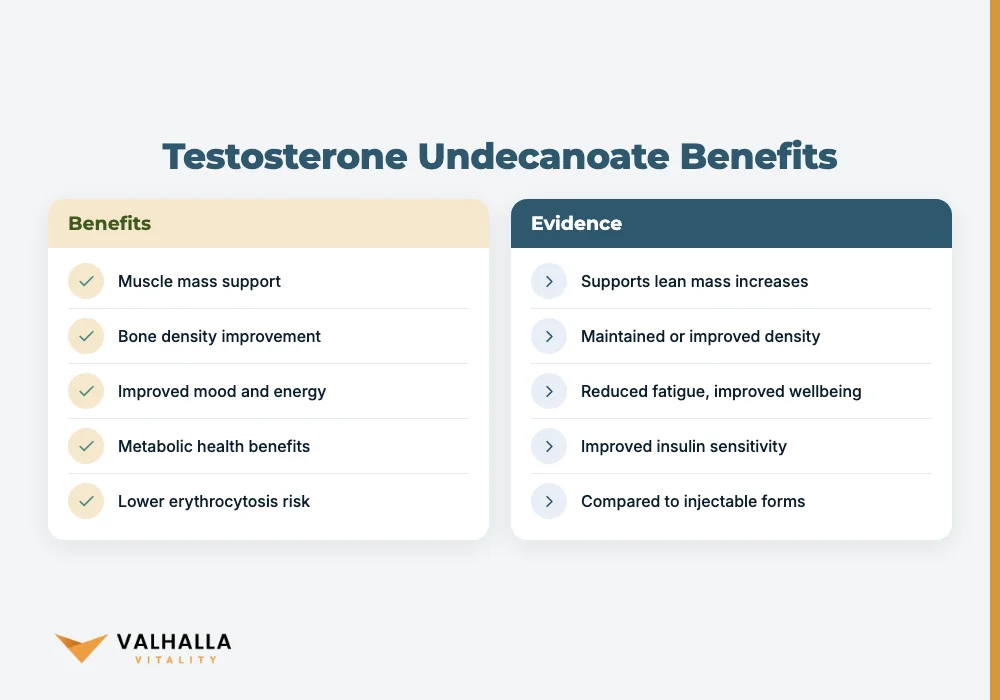
The table below summarizes the main areas where oral TRT therapy has demonstrated clinical relevance in hypogonadal men.
| Benefit area | What the evidence supports |
|---|---|
| Muscle mass | May support lean mass increases when testosterone is restored to the normal range |
| Bone mineral density | Associated with maintained or improved density over 12 or more months in hypogonadal men |
| Mood and energy | Patients commonly report reduced fatigue and improved emotional wellbeing |
| Metabolic health | May improve insulin sensitivity and support favorable fat redistribution |
| Cardiovascular markers | Emerging data in certain populations; individualized provider assessment is required |
| Hematocrit elevation | Lower erythrocytosis risk compared to injectable forms, per 2022 meta-analysis data |
Each of these areas is examined with supporting sources below.
Does testosterone undecanoate build muscle?
Yes, this oral testosterone therapy may support lean muscle development in men with confirmed testosterone deficiency. The effect differs from anabolic steroid use. It restores a physiological deficit rather than elevating testosterone above the normal range.
Testosterone governs protein synthesis, myofibril repair, and satellite cell activation in muscle tissue. When levels drop below the clinical threshold, muscle breaks down faster than it rebuilds. Restoring testosterone through low testosterone treatment helps address that imbalance. Studies in hypogonadal men consistently document increases in lean body mass and reductions in fat mass over months of treatment.
TRT muscle gains from this oral testosterone regimen accumulate gradually. A 2025 commentary in Sexual Medicine Reviews by Khera et al. noted that testosterone therapy is frequently misunderstood as a rapid muscle-building tool. In men with confirmed deficiency, the response is real but unfolds over three to six months of therapy combined with resistance training. In men with normal testosterone, adding exogenous hormone shows no meaningful anabolic benefit and introduces unnecessary risk.
The testosterone undecanoate benefits for muscle mass are most apparent in men who begin therapy with the largest hormonal deficit and who support treatment with structured physical activity. For more context on how oral testosterone and physical performance interact, see our guide on muscle and physical performance with this oral testosterone therapy.
Bone density and long-term skeletal health
Testosterone directly activates androgen receptors in osteoblasts and reduces osteoclast-mediated bone resorption, keeping formation and breakdown in balance. When testosterone levels decline chronically, resorption gains ground. Fracture risk rises, particularly at the lumbar spine and femoral neck.
Low testosterone treatment with this oral testosterone option may support or improve bone mineral density in hypogonadal men. Clinical improvements are most consistently reported at these two skeletal sites. The effect accumulates over 12 to 24 months of consistent therapy. Shorter treatment courses show smaller and less consistent changes.
Bone health is rarely the presenting concern when men seek TRT. Most arrive reporting fatigue or low libido. The skeletal testosterone undecanoate benefits matter considerably over a longer time horizon, especially for men in their 40s and 50s whose bone mass is already declining with age.
Mood, energy, and cognitive function
Fatigue, low motivation, irritability, and difficulty concentrating rank among the most common symptoms driving men to evaluation for testosterone deficiency. Testosterone influences dopamine and serotonin pathways, which partly explains its impact on mood and mental drive.
Oral TRT therapy may support improvements in energy, mood stability, and self-reported quality of life. These effects often appear earlier than muscle or bone changes, sometimes within four to six weeks of stable testosterone levels. Cognitive response is more variable. Some men report sharper concentration; others notice little change.
Mood improvements are not assured by testosterone replacement therapy alone. Sleep disorders, thyroid dysfunction, and clinical depression can produce similar symptoms and may not respond to testosterone treatment. A licensed provider evaluates the full clinical picture before concluding that testosterone deficiency is the primary driver.
Metabolic effects and fat distribution
Testosterone plays a direct role in insulin signaling, fat oxidation, and adipose tissue distribution. Men with chronically low testosterone tend to accumulate more visceral fat, which itself further suppresses testosterone production through aromatization, creating a self-reinforcing hormonal cycle.
The visceral fat and testosterone relationship is bidirectional. Adipose tissue converts testosterone to estradiol, which accelerates hormonal decline. Addressing the deficit with this oral testosterone approach may help slow this cycle, though dietary changes and regular exercise remain essential components of a comprehensive metabolic approach.
This oral testosterone therapy may interrupt this pattern. Studies in hypogonadal men document improvements in insulin sensitivity, reductions in waist circumference, and shifts toward less visceral fat distribution over extended treatment periods. These metabolic testosterone undecanoate benefits are more pronounced when combined with consistent exercise and a diet rich in lean proteins, healthy fats, and zinc. Foods like lean meats, eggs, legumes, and fatty fish provide the nutritional substrate that supports hormone metabolism and amplifies the response to treatment.
Potential cardiovascular benefits
Maintaining testosterone within the normal physiological range appears to support healthy blood pressure, favorable lipid fractionation, and reduced arterial stiffness. Testosterone also influences endothelial function and markers of chronic inflammation in hypogonadal men. The evidence base continues to grow.
A 2025 systematic review of randomized controlled trials by Theodorakis et al., published in Hormones, examined TRT in men with heart failure and concurrent low testosterone. The review found potential benefit in that population, but the authors called for larger trials before broad recommendations can be made. The testosterone undecanoate benefits for cardiovascular health remain an area of active investigation rather than settled science. Valhalla Vitality provides provider-led evaluation to determine whether a given patient's cardiovascular profile and lab results support oral TRT therapy.
What are the side effects of testosterone undecanoate pills?
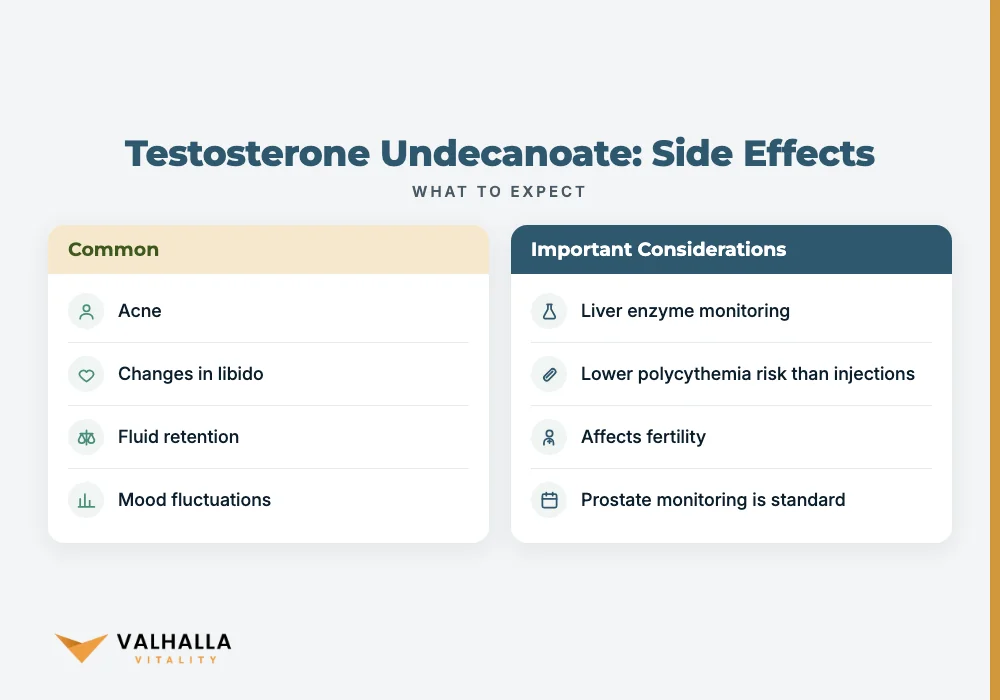
Oral testosterone undecanoate is generally well tolerated, but side effects occur. Common ones include acne, changes in libido, fluid retention, and mood fluctuations. These are consistent with testosterone replacement therapy via any delivery route.
Liver safety is a specific question for oral testosterone products. Earlier alkylated formulations carried genuine hepatotoxic risk. Testosterone undecanoate uses a different molecular structure and absorbs via the lymphatic route, which substantially limits hepatic load. The 2025 Goldstein et al. review found liver adverse events were uncommon with current formulations used appropriately, though regular monitoring of liver enzymes remains standard practice.
Polycythemia is a concern across all testosterone therapies. A 2022 systematic review and Bayesian network meta-analysis in the Journal of Urology by Nackeeran et al. found that oral testosterone produced smaller hematocrit increases than injectable testosterone forms. That distinction is clinically relevant for men with elevated baseline cardiovascular risk. Regular blood panels detect rising hematocrit before it becomes a clinical problem.
Fertility is affected by all testosterone replacement therapy protocols. A 2025 review in Nature Reviews Urology by Naelitz et al. confirmed that exogenous testosterone suppresses the hypothalamic-pituitary-gonadal axis and reduces sperm production. Men who want to preserve fertility should raise this with a provider before starting any TRT protocol.
Prostate monitoring is standard practice. Testosterone therapy does not appear to cause prostate cancer, but it may stimulate subclinical disease that already exists. Baseline prostate-specific antigen testing and periodic follow-up are part of responsible clinical management.
Is oral testosterone undecanoate safe for long-term use?
Under medical supervision with regular lab monitoring, this oral TRT formulation has an acceptable long-term safety profile for appropriate candidates. The qualification matters. Unsupervised use, irregular monitoring, or use without confirmed hypogonadism introduces risk without established clinical benefit.
Long-term management typically includes periodic assessment of hematocrit, liver enzymes, prostate-specific antigen, lipid panels, and testosterone levels. A standard protocol covers baseline labs, a check at four to eight weeks after initiation, and every three to six months during stable maintenance therapy. A licensed provider determines the schedule and adjusts it based on individual lab trends and symptom changes.
Cardiovascular outcomes remain under active investigation. The Theodorakis et al. (2025) systematic review found potential benefit in specific populations, but the authors noted that larger randomized trials are needed before recommendations can be broadly applied. This is precisely why testosterone undecanoate benefits and risks must be evaluated on a case-by-case basis by a qualified clinician rather than applied uniformly.
Spermatogenesis recovery is a relevant consideration for men on longer treatment courses. Stopping TRT allows natural testosterone production to resume in most men. Naelitz et al. (2025) noted that fertility recovery depends on duration of therapy, baseline fertility status, and age at the time of cessation.
How long does testosterone undecanoate take to work?
The answer depends on which outcome you are measuring. Energy and mood typically shift within four to six weeks of stable testosterone levels. Libido changes follow a similar timeline.
Muscle composition changes require more time. Meaningful gains in lean body mass typically emerge over three to six months of consistent therapy combined with regular resistance training. Bone density improvements take longer, often 12 months or more to show on imaging.
Absorption from this oral testosterone compound is directly meal-dependent. A fat-containing meal substantially improves peak concentration and total bioavailability. Inconsistent meal habits produce variable blood levels, which generate inconsistent clinical responses. Individual variation is wide. Two men with similar deficits may respond differently based on receptor sensitivity, lifestyle factors, and co-existing conditions. This variability reinforces the value of follow-up lab testing rather than relying on subjective symptom assessment alone.
For a detailed look at how this compound clears the body and what drives timing differences between individuals, see our pharmacokinetics overview of absorption and clearance for this oral testosterone compound.
What is the correct dosage of testosterone undecanoate?
A licensed provider determines the dose after reviewing labs. Testosterone undecanoate dosage depends on baseline serum testosterone, symptom profile, the specific formulation prescribed, body composition, and individual metabolism. There is no universal correct dose.
What the clinical evidence supports is individualized titration based on lab response, taken consistently with a fat-containing meal for predictable absorption. Two oral testosterone capsule formulations are currently available in the US market, each with different bioavailability profiles despite sharing the same active compound. For an overview of how current US-approved oral formulations are designed and how they differ in practice, see our review of how these US-approved oral testosterone capsule formulations compare.
Testosterone undecanoate dosage decisions should not be driven by what another patient takes. Lab-guided individualization is the standard for safe, effective treatment.
Oral versus injectable testosterone: key differences
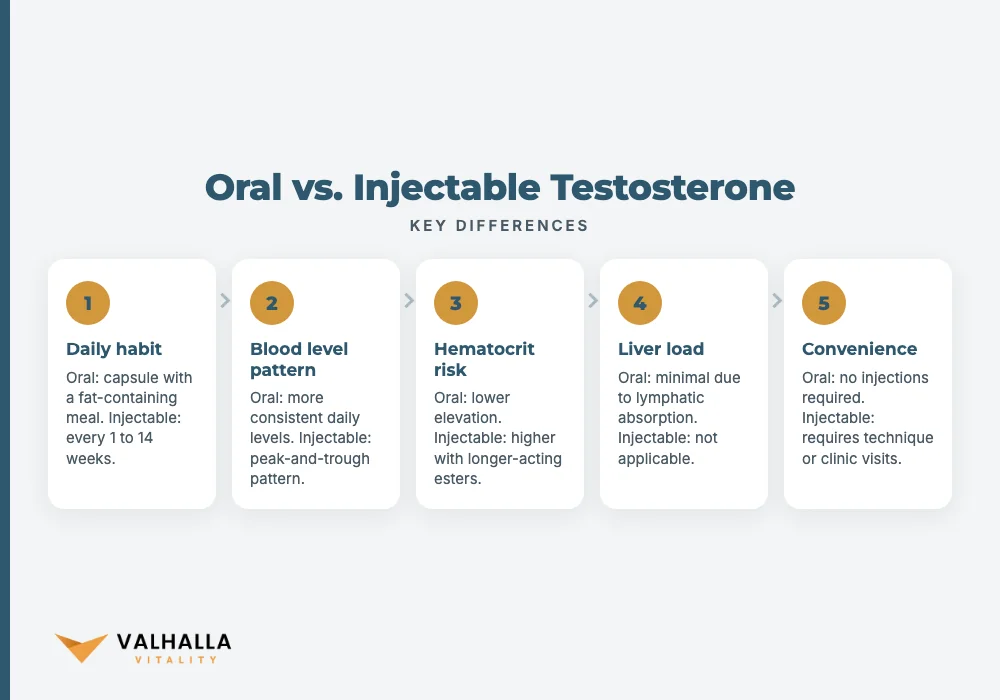
Oral testosterone undecanoate and injectable forms treat the same condition but are not clinically equivalent. The practical differences affect candidate selection and daily management.
| Factor | This oral testosterone formulation | Injectable forms |
|---|---|---|
| Daily habit | Capsule with a fat-containing meal | Injection every 1 to 14 weeks depending on ester |
| Blood level pattern | More consistent daily levels | Peak-and-trough pattern between injections |
| Hematocrit risk | Lower elevation per Nackeeran et al. (2022) | Higher with longer-acting esters |
| Liver load | Minimal due to lymphatic absorption | Not applicable |
| Convenience | No injections required | Requires injection technique or clinic visits |
| Monitoring | Regular labs: PSA, hematocrit, testosterone | Same schedule |
One of the distinctive testosterone undecanoate benefits in the oral form is its favorable hematocrit profile compared to injectable alternatives. Injectable forms remain appropriate for many patients. The oral route suits men who prefer to avoid injections or whose cardiovascular risk profile favors lower hematocrit elevation. For a direct head-to-head analysis of these two approaches, see how oral TRT compares to injectable testosterone forms.
Lifestyle factors that support oral TRT therapy
Testosterone replacement therapy works best when supported by consistent lifestyle habits. This is a practical observation backed by clinical outcomes data.
Resistance training amplifies the anabolic signal testosterone provides. Men who combine oral TRT therapy with structured strength work consistently show greater lean mass gains than sedentary patients on the same therapy. Cardiovascular exercise supports metabolic improvements and helps manage lipid changes that can accompany treatment.
Sleep quality shapes hormonal response. Chronic sleep deprivation suppresses the hypothalamic-pituitary-gonadal axis independently of therapy. Seven to nine hours of consistent sleep supports optimal treatment response.
Stress management matters. Elevated cortisol competes with testosterone at the receptor level and suppresses gonadotropin release. Reliable stress-reduction practices, including consistent physical activity, limiting alcohol consumption, and managing sleep routines, all complement the testosterone undecanoate benefits patients seek from treatment.
A diet rich in lean proteins, healthy fats, and micronutrients like zinc supports hormone synthesis and muscle repair. Severe caloric restriction or a diet heavy in ultra-processed food blunts the metabolic response to oral TRT therapy. The lifestyle choices compound over months of treatment.
Talk with a licensed provider
When you are ready to find out whether oral TRT therapy is appropriate for you, Book Your Consultation to connect with a licensed provider who can review your labs and guide your next step.
FAQ
Does oral testosterone undecanoate damage the liver?
Unlike older 17-alpha-alkylated oral testosterone compounds, testosterone undecanoate absorbs via the lymphatic system and imposes minimal load on the liver. A 2025 review by Goldstein et al. found liver adverse events were uncommon with current oral formulations used as directed. Monitoring liver enzymes remains part of standard follow-up care.
Can testosterone undecanoate affect fertility?
Yes, all forms of testosterone replacement therapy suppress sperm production. Exogenous testosterone reduces gonadotropin secretion and disrupts spermatogenesis. A 2025 review by Naelitz et al. in Nature Reviews Urology confirmed this effect consistently across TRT protocols. Men concerned about fertility should discuss preservation options with a provider before starting any form of testosterone therapy.
How does oral testosterone undecanoate compare to injectable TRT?
This oral formulation produces more consistent daily testosterone levels compared to the peak-and-trough pattern of injectable forms. A 2022 Bayesian network meta-analysis by Nackeeran et al. found it also carries a lower risk of hematocrit elevation. Both routes require the same schedule of ongoing lab monitoring.
Who is a candidate for oral testosterone undecanoate?
Candidates are men with confirmed hypogonadism established through lab testing and clinical evaluation. Availability varies by state, and a licensed provider determines whether this specific formulation is appropriate given an individual's medical history, labs, and risk factors.
Do testosterone undecanoate benefits persist after stopping therapy?
No. The therapeutic effects of testosterone replacement therapy generally diminish when treatment ends and endogenous testosterone returns to its previous low levels. Spermatogenesis may partially recover after stopping, but the timeline varies by individual and duration of prior therapy.
Sources
- Goldstein I et al. (2025). Newer formulations of oral testosterone undecanoate: development and liver side effects. Sexual Medicine Reviews. PubMed
- Nackeeran S et al. (2022). The Effect of Route of Testosterone on Changes in Hematocrit: A Systematic Review and Bayesian Network Meta-Analysis of Randomized Trials. The Journal of Urology. PubMed
- Theodorakis N et al. (2025). Testosterone replacement therapy in heart failure: A systematic review of randomized controlled trials. Hormones (Athens, Greece). PubMed
- Khera M et al. (2025). Testosterone deficiency and treatments: common misconceptions and practical guidance for patient care. Sexual Medicine Reviews. PubMed
- Naelitz BD et al. (2025). Testosterone replacement therapy and spermatogenesis in reproductive age men. Nature Reviews Urology. PubMed
You May Also Like
 Oral Testosterone Undecanoate
Testosterone Decanoate vs Undecanoate: Key Differences
Testosterone decanoate vs undecanoate: compare half-life, injection frequency, and oral absorption to choose the right TRT ester for your needs.
October 7, 2026 ETRead more → Oral Testosterone Undecanoate
Testosterone Undecanoate Oral Dosage: Complete TRT Guide
Testosterone undecanoate oral dosage is set by a licensed provider after lab review. Understand oral TRT protocol, Kyzatrex dosage, and key dosing factors.
October 7, 2026 ETRead more → Oral Testosterone Undecanoate
Testosterone Undecanoate vs Cypionate: Full TRT Guide
Testosterone undecanoate vs cypionate: compare esters, injection frequency, side effects, and oral TRT options to discuss with your provider.
October 6, 2026 ETRead more →