
The following blog post is for entertainment and informational purposes only. It is not intended to provide medical advice or diagnosis. Please consult your doctor before making any health-related decisions.
Semaglutide weight loss is driven by biology, not willpower. This weekly GLP-1 injection mimics a naturally occurring gut hormone, reducing appetite and slowing gastric emptying so you feel satisfied on less food. A licensed provider determines whether this therapy fits your health profile after reviewing your intake and labs. When paired with consistent dietary habits and regular physical activity, clinical research has shown meaningful reductions in body weight over 56-week study periods.
How does semaglutide help with weight loss?
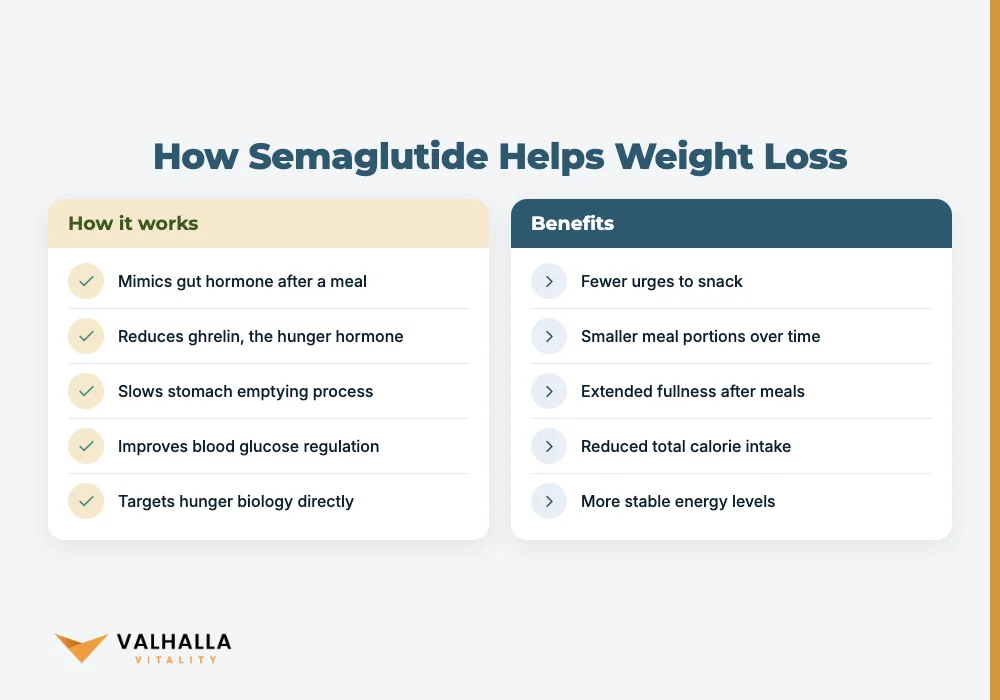
Semaglutide belongs to a class of drugs called GLP-1 receptor agonists. GLP-1 for obesity works by mimicking a hormone your gut releases naturally after a meal, the signal that tells the brain you are full and prompts the stomach to slow down its emptying process. The mechanism targets hunger biology directly.
Three overlapping effects explain how this works:
- Ghrelin suppression: Semaglutide reduces the release of ghrelin, the hunger hormone that triggers between-meal cravings and appetite spikes. Lower ghrelin levels lead to fewer urges to snack and naturally smaller meal portions over time.
- Slowed gastric emptying: Food stays in the stomach longer after each meal. That extended fullness reduces total calorie intake across the day without requiring conscious restriction at every sitting.
- Improved glucose regulation: Semaglutide lowers blood glucose and increases insulin sensitivity. This metabolic effect may support broader health improvements alongside weight reduction, including more stable energy levels throughout the day.
These three pathways work simultaneously. That is what sets semaglutide apart as an appetite suppression medication from older approaches that targeted only one mechanism. It addresses the biology of excess intake, not simply a behavioral problem.
One practical outcome of slowed gastric emptying: smaller meals become more satisfying than they were before treatment. This tends to reduce both meal frequency and portion size at once, producing a cumulative caloric reduction that feels less forced than conventional calorie restriction alone.
The incretin system is central to this. Incretins are gut hormones that regulate glucose metabolism and signal fullness after meals. Semaglutide mimics that system at higher concentrations than the body produces naturally, amplifying the satiety signal and creating a more sustained reduction in appetite between meals.
| Feature | What to know |
|---|---|
| Drug class | GLP-1 receptor agonist |
| Administration | Once-weekly subcutaneous injection |
| Primary mechanism | Reduces appetite, slows gastric emptying, improves glucose regulation |
| Common side effects | Nausea, constipation, vomiting, diarrhea |
| Who sets the dose | A licensed provider, after reviewing intake and labs |
| Geographic availability | Varies by state |
How much weight can you lose on semaglutide?
Results vary. Clinical trials following adults for 56 weeks found statistically significant reductions in body weight, BMI, waist circumference, and waist-to-hip ratio compared with placebo. Participants also reported improved quality of life, including higher energy levels and better sleep, in those same trials. These are population-level findings from trial data, not individual outcome promises.
How much weight any person loses on this weight loss injection in adults depends on starting body composition, metabolic health, dietary choices, activity level, and how consistently the weekly semaglutide injection schedule is followed. No two metabolic profiles are identical. Individual variation is real and is reflected across the clinical data.
Semaglutide weight loss consistently performs better when used alongside a reduced-calorie diet and regular physical activity. Research shows the medication without lifestyle support produces less durable results. The injection shifts the appetite equation. Lifestyle choices determine how effectively that shift is applied.
An oral formulation of this GLP-1 therapy also exists, for those who prefer not to inject. For a comparison of how the two forms differ in mechanism, schedule, and side effect profile, see the oral option for GLP-1 weight management.
How long does it take for semaglutide to work?
Appetite changes are often noticeable within the first few weeks. Meaningful reductions in body weight develop over a longer period, typically several months, as the provider gradually adjusts the dose based on tolerance and response. The 56-week clinical trial timeframe reflects a realistic horizon for sustained weight reduction.
Early weeks often bring the most pronounced gastrointestinal side effects, particularly nausea. These tend to ease as the body adjusts. Some people notice the appetite-suppressing effect becoming more consistent as the dose increases incrementally over time.
Expect gradual change. This is by design. Rapid dose escalation carries a higher risk of side effects and reduces the likelihood of long-term adherence.
Semaglutide dosing schedule: what to expect from your provider
A licensed provider determines the appropriate starting level and any subsequent increases based on your labs, health history, and how your body tolerates the medication. This is not patient-selected dosing. The semaglutide dosing schedule is structured so each level is held for a set period before any increase, allowing the body to adapt progressively rather than adjusting too quickly.
Your care team monitors both progress and emerging side effects throughout the program. If a dose level becomes difficult to tolerate, communicate that to your provider rather than stopping on your own. Adjustments, including temporary holds or reductions, are standard parts of the process.
Some people move through the schedule without significant issues. Others need more time at earlier levels. The structured approach exists because individual tolerance varies widely, and a provider who monitors regularly is better positioned to manage those differences than any self-directed protocol.
For a detailed look at how providers approach these decisions, how providers navigate dose decisions for weight loss covers the clinical factors that shape each step.
What happens if you miss a semaglutide dose?
A single missed semaglutide dose does not derail the program. The right response depends on timing.
If your next scheduled injection is still several days away, take the missed dose as soon as you remember. If your next dose is due within a day, skip the missed one and continue on your regular schedule. Never take two doses at once to compensate. Doubling up raises the risk of gastrointestinal side effects and may cause blood glucose to drop more sharply than expected.
Contact your provider if you miss several doses in a row. Consistent gaps in the weekly semaglutide injection schedule can reduce the medication's effectiveness and interrupt the appetite regulation pattern that builds over time. Your provider may recommend stepping back to an earlier level before moving forward again.
A practical fix: treat the weekly injection as a fixed calendar appointment. Set a recurring reminder on the same day each week, tied to an existing routine, so the injection stays consistent.
Semaglutide side effects: what to watch for
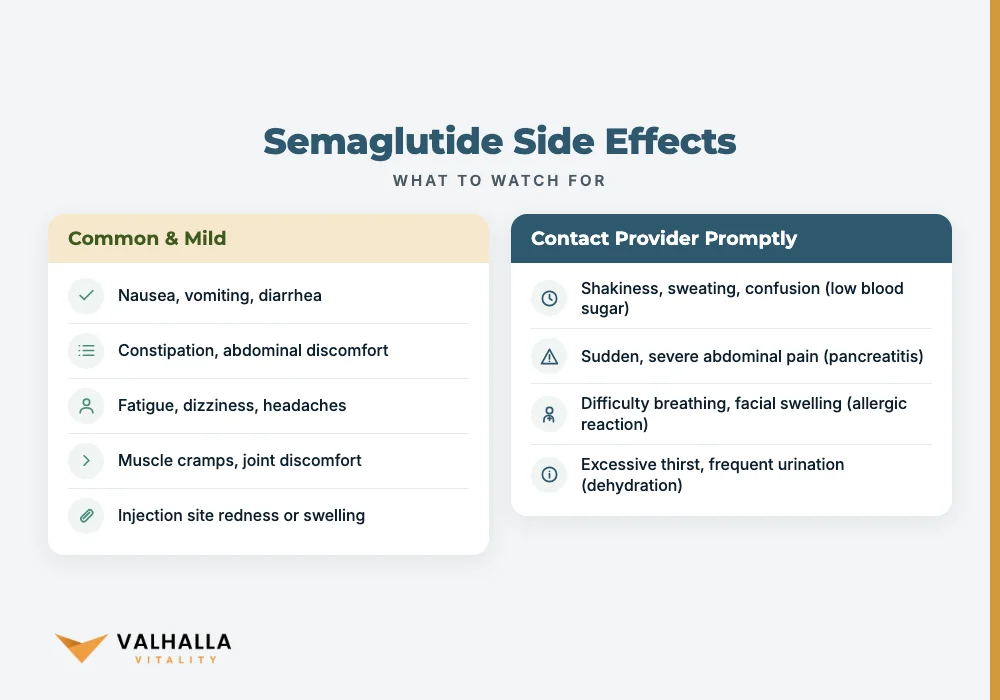
Every medication has a risk profile. Knowing the common semaglutide side effects before starting makes it easier to tell a normal adjustment period from a symptom that warrants medical attention.
Common side effects:
- Nausea (the most frequently reported, especially in the first few weeks)
- Vomiting
- Diarrhea
- Constipation
- Abdominal discomfort or pain
- Fatigue or dizziness
- Headaches
- Muscle cramps and joint discomfort
- Injection site reactions: localized redness or swelling at the injection point
These effects are most common in the first weeks of treatment. They tend to ease as the body adjusts and the dose stabilizes. Starting at a lower level and increasing gradually is the standard approach to reducing their severity.
Side effects that require prompt contact with your provider:
Hypoglycemia, or low blood sugar, can occur, particularly if you are taking other medications that also affect glucose levels. Symptoms include shakiness, sweating, and confusion. Call your provider immediately if these develop.
Sudden, severe abdominal pain may signal pancreatitis, a serious inflammation of the pancreas. Do not wait to report this symptom.
Signs of a serious allergic reaction, including difficulty breathing or facial swelling, require emergency medical attention.
Excessive thirst or frequent urination can indicate dehydration. Contact your care team promptly if these develop.
Blood sugar awareness: taking this medication without eating beforehand may cause blood glucose to drop more quickly than expected. Having a small amount of food available at injection time, and monitoring blood sugar regularly if your provider advises it, reduces this risk.
Medications and substances that interact with semaglutide
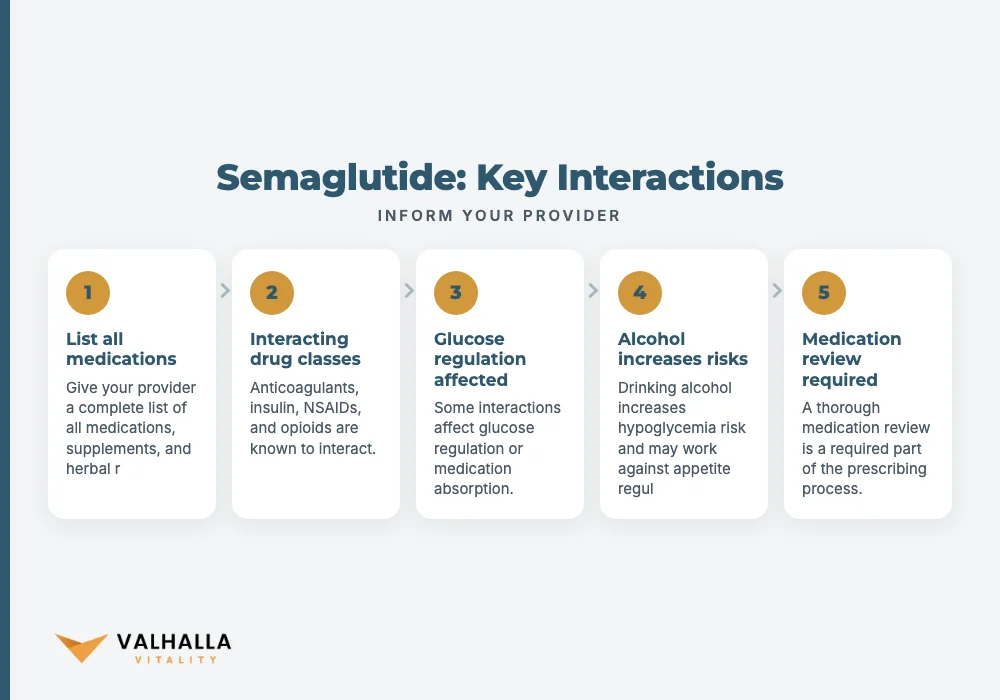
Before beginning semaglutide weight loss therapy, give your provider a complete list of every medication, supplement, and herbal remedy you currently take. Several drug classes are known to interact with this GLP-1 therapy:
- Anticoagulants (blood thinners)
- Sulfonylureas and insulin formulations
- Thiazolidinediones (TZDs)
- Beta-blockers
- Glucosidase inhibitors, including acarbose
- Monoamine oxidase inhibitors (MAOIs)
- Nonsteroidal anti-inflammatory drugs (NSAIDs)
- Opioid narcotics, including codeine and oxycodone
Some interactions affect glucose regulation directly. Others alter how quickly the medication is absorbed or metabolized. A thorough medication review at intake is a required part of the prescribing process.
Alcohol warrants particular attention. Drinking while on this therapy increases the risk of hypoglycemia and may work against the appetite regulation effects the medication is intended to establish. For a full explanation of the mechanisms involved, how alcohol affects this GLP-1 medication covers the interaction and practical guidance in detail.
Is semaglutide safe for long-term use?
The major clinical trials on this weight loss injection in adults tracked participants for up to 56 weeks. Ongoing research continues to build the safety record. No medication is entirely without risk, and safety for any individual depends on health history, concurrent medications, and how their body responds over time.
Provider oversight is the core safeguard. A licensed prescriber reviews labs before issuing the prescription and monitors response throughout the program. If new health factors emerge, the treatment plan adjusts. Monitoring during a structured program typically includes periodic review of labs, changes in medications, and how the body is responding at the current dose. This is a continuous feedback loop between patient and provider, not a one-time approval.
Participants in structured programs reported sustained improvements in metabolic markers and quality of life over the study periods. Whether semaglutide weight loss therapy is appropriate for extended use is a clinical determination, made with your provider based on ongoing health data.
If you are also weighing other GLP-1 receptor agonists, how tirzepatide and semaglutide compare for weight loss walks through the differences in mechanism and clinical outcomes.
Lifestyle habits that support semaglutide weight loss
GLP-1 therapy changes the appetite side of weight management. It does not replace dietary choices, movement, or sleep. These factors determine how durable the results are.
Diet: Appetite suppression medication reduces how much you want to eat, but not what you choose to eat. A diet higher in protein and fiber and lower in ultra-processed foods supports the medication's effect and reduces nausea, particularly in the first weeks of treatment. Smaller, more frequent meals are generally better tolerated than large ones early on.
Physical activity: Regular movement supports the metabolic effect of semaglutide and helps preserve lean muscle mass as body weight decreases. Whether that means structured exercise or consistent daily walking depends on your health baseline. Your provider can advise on appropriate activity levels.
Sleep and stress: Poor sleep and chronic stress raise cortisol, a hormone that promotes fat storage and can reduce the appetite-suppressing effect of GLP-1 therapy. Studies on participants in clinical weight management programs show that addressing sleep and stress alongside a medication-based approach tends to produce better metabolic outcomes than medication alone. These are not optional lifestyle upgrades. They are functional components of the program.
Clinical trial participants using semaglutide as part of a structured program reported improved energy levels and sleep quality alongside weight reduction. These benefits tend to compound when lifestyle factors are actively managed.
For practical guidance on eating during treatment, a structured semaglutide diet plan covers meal choices and timing that align with how this medication works.
Who qualifies for semaglutide weight loss therapy?
The criteria are clinical. A licensed provider at Valhalla Vitality reviews your intake, relevant labs, and health history before determining whether this GLP-1 therapy is appropriate for your situation. Provider approval typically happens within 24 business hours of completing the medical intake. If a prescription is issued, the medication ships through a partner compounding pharmacy, typically arriving within 3 to 7 business days.
General qualifying factors include adult age, the presence of weight-related metabolic concerns, and no contraindicated conditions or medications. Geographic eligibility matters too, since availability varies by state. The intake review is the determining step, not a checklist you complete on your own.
Several health conditions, current medications, or family history factors may rule out semaglutide entirely or require closer monitoring throughout the program. Your provider identifies these at intake. Any prescription comes with an ongoing monitoring plan as standard. The telehealth model means the entire process, from submitting your medical history to receiving provider feedback, happens online, with no in-person clinic visit required.
Storing your semaglutide medication
Keep your injection supplies in a cool, dry place, away from direct sunlight and heat sources. Store them out of reach of children and pets. Keep containers sealed between uses. Your pharmacy will provide specific storage instructions at dispensing, including whether refrigeration is required for your particular formulation.
Ready to take the next step?
If semaglutide weight loss is something you want to explore, a licensed provider can review your intake and determine whether this therapy fits your situation. Book Your Consultation to get started.
FAQ
How does semaglutide help with weight loss?
Semaglutide activates GLP-1 receptors in the brain and gut, suppressing the hunger hormone ghrelin and slowing gastric emptying so you feel full on less food. The combined effect reduces appetite and calorie intake, which may support meaningful weight reduction when paired with dietary and activity changes. A licensed provider determines whether the therapy fits your health profile before prescribing.
How much weight can you lose on semaglutide?
Clinical trials lasting 56 weeks found significant reductions in body weight, BMI, and waist measurements compared with placebo. How much any individual loses depends on their diet, activity level, starting weight, and consistency with the program. No specific semaglutide weight loss outcome can be promised.
What happens if you miss a semaglutide dose?
If your next scheduled dose is more than a day away, take the missed injection as soon as you remember. If the next dose is due soon, skip the missed one and continue on your regular schedule. Never take two doses at once, as this raises the risk of side effects and blood glucose drops.
How long does it take for semaglutide to work?
Appetite changes are often felt within the first few weeks of treatment. Significant reductions in body weight typically take several months to develop, as the provider gradually adjusts the dose based on tolerance and response. Clinical studies tracked outcomes over a 56-week period.
Is semaglutide safe for long-term use?
Major clinical trials have studied this GLP-1 therapy for up to 56 weeks, and ongoing research continues to expand the safety evidence base. Long-term safety depends on individual health history and concurrent medications. A prescribing provider monitors labs and response throughout the program to manage any emerging concerns.
You May Also Like
 Semaglutide
 Sodium vs Semaglutide: Key Differences Explained
Semaglutide sodium vs semaglutide: how these GLP-1 formulations compare in structure, side effects, and what a provider weighs before prescribing.
November 5, 2026 ETRead more → Semaglutide
 Injection Cost: What to Expect in 2026
Semaglutide injection cost ranges widely based on insurance, form, and provider. Get the full cost breakdown and learn what to expect each month.
November 3, 2026 ETRead more → Semaglutide
 Dose Weight Loss: A GLP-1 Dosing Guide
Semaglutide dose weight loss guide: learn how the GLP-1 titration schedule works, what side effects to expect, and how providers set your plan.
November 3, 2026 ETRead more →