
The following blog post is for entertainment and informational purposes only. It is not intended to provide medical advice or diagnosis. Please consult your doctor before making any health-related decisions.
An anxiety treatment center offers structured, evidence-based care for people whose anxiety symptoms are disrupting daily life, typically combining psychotherapy, CBT, and medical review into a coordinated plan built around your specific presentation. Relief is achievable. The right support starts when you book your consultation with a licensed provider who can review your symptoms and outline the best path forward.
Signs of anxiety disorder
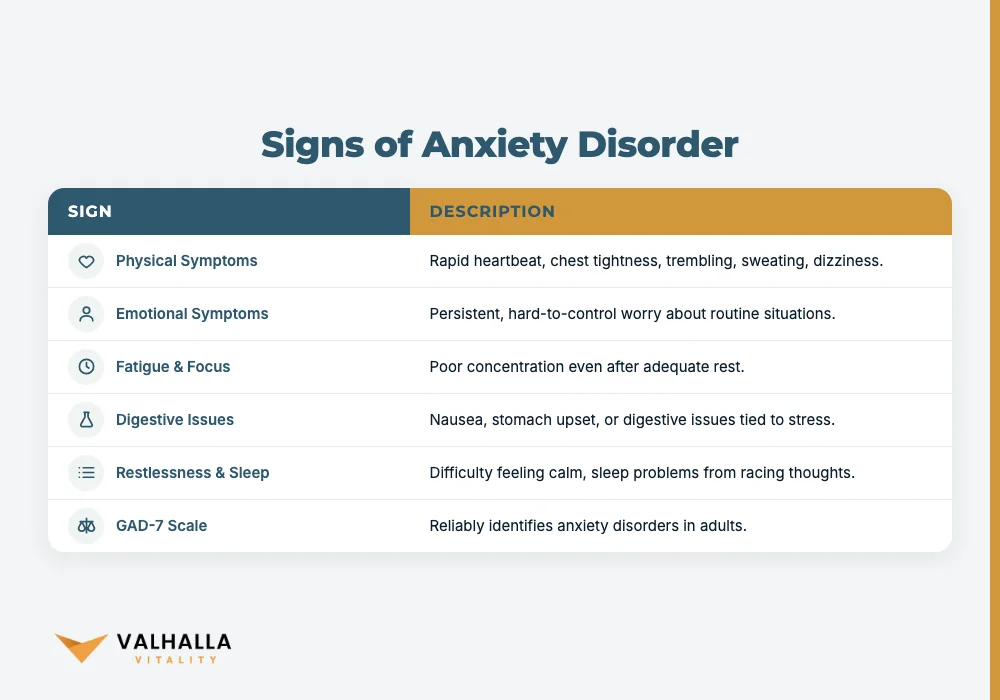
Recognizing signs of anxiety disorder early makes a real difference in how quickly someone gets effective help. Symptoms are often both physical and emotional, and their overlap with other conditions means professional screening matters. A 2025 Cochrane review confirmed that the GAD-7 scale reliably identifies anxiety disorders in adults [S2], supporting its use as a standard first-line tool.
Common signs include:
- Rapid heartbeat or chest tightness with no clear physical cause
- Persistent, hard-to-control worry about routine situations
- Trembling, sweating, or dizziness during stress
- Fatigue and poor concentration even after adequate rest
- Nausea, stomach upset, or digestive issues tied to stress
- Restlessness or difficulty feeling calm or settled
- Sleep problems driven by racing or intrusive thoughts
- Headaches or muscle tension without a clear medical explanation
Experiencing several of these regularly is a strong signal to seek a professional evaluation.
What does an anxiety treatment center offer?
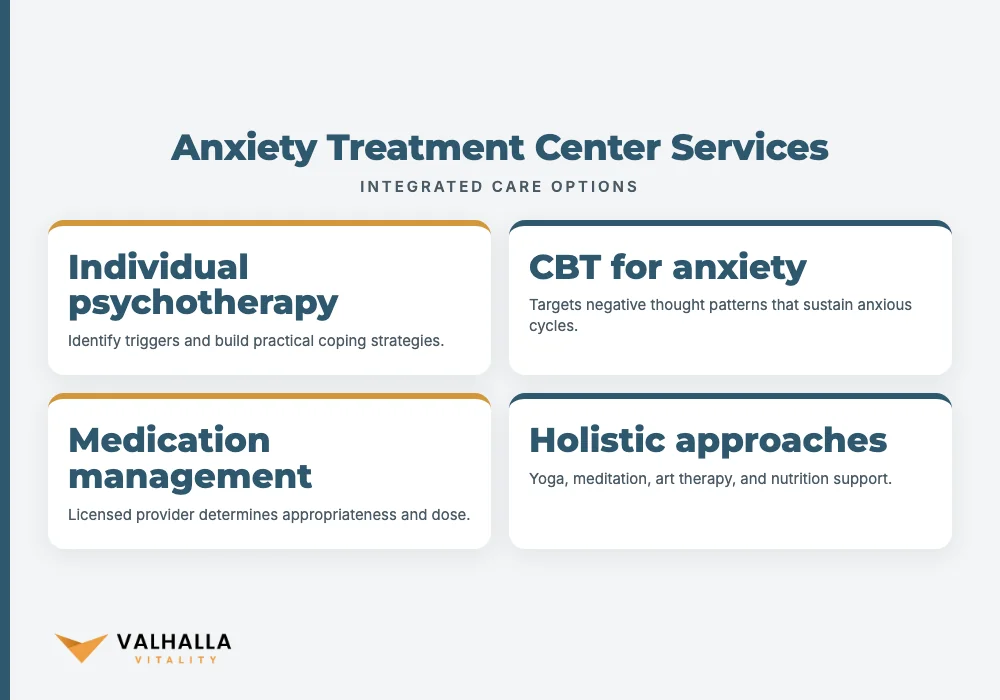
An anxiety treatment center brings multiple anxiety therapy options under one coordinated care plan. Programs like our restorative health and wellness care address mind, body, and overall wellbeing together, rather than isolating psychological symptoms from physical ones.
Core services typically include:
- Individual psychotherapy, helping you identify triggers and build practical coping strategies
- CBT for anxiety, which targets the negative thought patterns that sustain anxious cycles
- Medication management, where a licensed provider determines appropriateness and dose after a thorough intake review and labs
- Holistic anxiety relief approaches such as yoga, meditation, art therapy, and nutrition support
A 2018 meta-analysis in Depression and Anxiety found that CBT for anxiety produced significant symptom reductions versus placebo controls across multiple disorder types [S4]. A 2017 review in Dialogues in Clinical Neuroscience confirmed that combined approaches, pairing psychotherapy with medication management, tend to produce better outcomes than either treatment alone [S3]. Multidisciplinary teams including physicians, therapists, and nutritionists can address physical contributors alongside psychological ones.
Can anxiety be treated without medication?
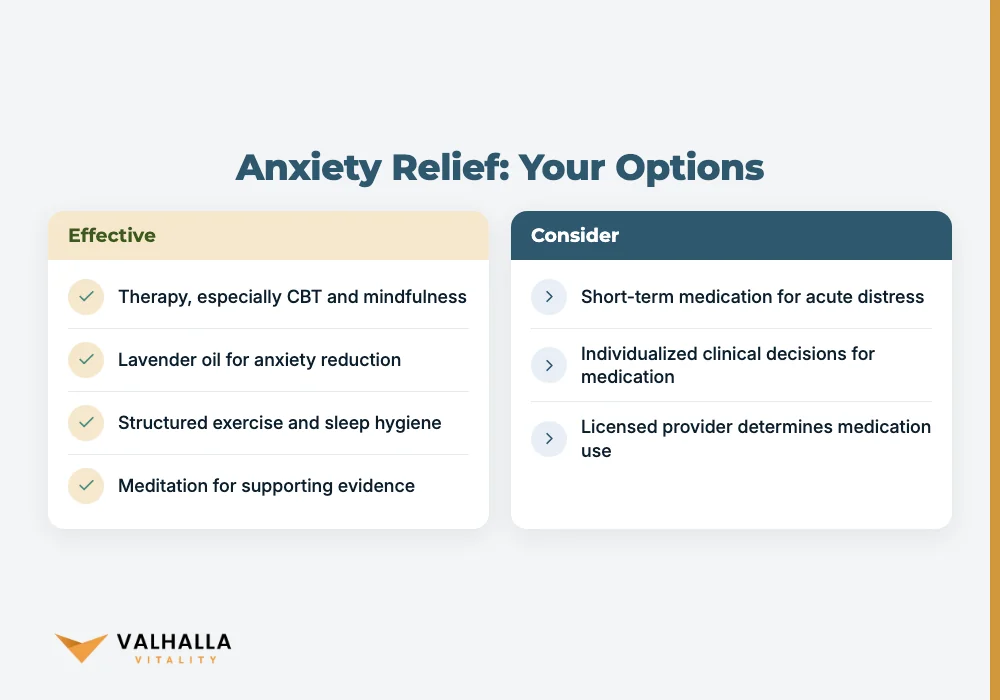
Yes. Many people find substantial generalized anxiety disorder help through therapy alone, particularly CBT and mindfulness-based approaches. These methods teach you to recognize distorted thinking, challenge anxious patterns, and reduce avoidance over time.
Holistic anxiety relief methods add further support. A 2024 systematic review and meta-analysis found that lavender oil significantly reduced anxiety in clinical settings compared to controls [S1], adding to the body of evidence for how to treat anxiety naturally. Structured exercise, sleep hygiene, and meditation all carry well-established supporting evidence.
Anxiety medication vs therapy is not a binary decision. For moderate-to-severe symptoms, short-term medication may stabilize acute distress while therapy builds lasting skills. A 2025 network meta-analysis found variable outcomes across benzodiazepine options for generalized anxiety disorder, reinforcing the value of individualized clinical decisions [S6]. A licensed provider determines whether medication is appropriate, and at what dose, only after a thorough intake review.
How long does anxiety therapy take?
Duration depends on disorder severity, treatment type, and individual engagement. A focused CBT program often spans eight to sixteen sessions. Complex or long-standing anxiety disorders, particularly those with co-occurring conditions, may require several months of care.
Progress is not linear. Some people notice real gains within a few weeks; others build change more gradually. At any anxiety treatment center, the goal is durable coping skills, not a compressed or arbitrary timeline.
What happens if anxiety goes untreated?
Untreated anxiety tends to compound. Depression, social isolation, and reduced academic or work performance are well-documented consequences. Physically, chronic anxiety has been associated with high blood pressure, heart disease, persistent fatigue, and digestive problems. Many people without generalized anxiety disorder help eventually turn to substance use as a coping mechanism, adding further health risk.
Physical health and mental health are closely linked, and hormonal changes, nutritional deficits, and disrupted sleep can all amplify anxiety symptoms. Understanding broader physical health factors, including how testosterone affects physical wellbeing, is part of the comprehensive picture a good clinical team considers. The longer anxiety persists without treatment, the more entrenched the patterns become.
Is anxiety a curable mental illness?
Anxiety is a recognized mental health condition. "Curable" is a complicated term in mental health, but long-term remission is achievable for many people with the right combination of anxiety therapy options and consistent engagement with care.
Some people complete a structured program and maintain lasting relief with minimal ongoing support. Others benefit from periodic check-ins or maintenance sessions. Both paths are valid. What consistently improves prognosis is early access to an anxiety treatment center and open communication with a therapist throughout the process.
A holistic anxiety relief approach at Valhalla Vitality
At Valhalla Vitality, anxiety care begins with a full health assessment. The team of physicians, therapists, and nutritionists examines both psychological and physical contributors, because poor sleep, nutritional deficits, and hormonal changes can all amplify anxiety. Holistic services include mindfulness-based sessions, yoga, nutrition guidance, and group support, each structured to reduce anxiety while improving overall wellbeing.
Availability varies by state. A licensed provider reviews your intake before any care plan is finalized. If you want guidance on finding the right specialized clinic near you for comprehensive care across health needs, that resource covers what to evaluate when choosing a provider.
Take the next step
When anxiety is affecting your quality of life, Book Your Consultation to get a personalized assessment of your care options from a licensed provider.
FAQ
What does an anxiety treatment center offer?
An anxiety treatment center provides individual therapy, CBT, medication management where clinically appropriate, and holistic services including mindfulness and nutrition support. Treatment is tailored to your specific symptoms and goals, not a one-size protocol.
How long does anxiety therapy take?
A focused CBT program typically runs eight to sixteen sessions. More complex cases with co-occurring conditions may require several months of care. Progress depends on symptom severity, treatment type, and individual engagement.
Can anxiety be treated without medication?
Yes. CBT, mindfulness, and lifestyle adjustments help many people achieve significant relief without medication. Medication may be added for moderate-to-severe symptoms when a licensed provider determines it is clinically appropriate after a full intake review.
What happens if anxiety goes untreated?
Untreated anxiety can lead to depression, social isolation, substance use, and physical health problems including cardiovascular issues. Intervening early, before patterns become entrenched, is associated with better outcomes.
Sources
- Aktürk Z et al. (2025). Generalized Anxiety Disorder 7-item (GAD-7) and 2-item (GAD-2) scales for detecting anxiety disorders in adults. The Cochrane database of systematic reviews. PubMed
- Carpenter JK et al. (2018). Cognitive behavioral therapy for anxiety and related disorders: A meta-analysis of randomized placebo-controlled trials. Depression and anxiety. PubMed
- Bandelow B et al. (2017). Treatment of anxiety disorders. Dialogues in clinical neuroscience. PubMed
- Kulakaç N et al. (2024). Effect of Lavender Oil on Preoperative Anxiety: Systematic Review and Meta-analysis. Journal of perianesthesia nursing. PubMed
- Fernandes H et al. (2025). Comparative Efficacy and Safety of Benzodiazepines in the Treatment of Patients with Generalized Anxiety Disorder: A Systematic Review and Network Meta-Analysis. Psychotherapy and psychosomatics. PubMed
You May Also Like
 Semaglutide
 Sodium vs Semaglutide: Key Differences Explained
Semaglutide sodium vs semaglutide: how these GLP-1 formulations compare in structure, side effects, and what a provider weighs before prescribing.
November 5, 2026 ETRead more →
Wegovy Insurance Coverage: What Plans Actually Cover
Wegovy insurance coverage requires prior authorization and medical criteria. Learn how to qualify, appeal a denial, and what Medicare covers in 2025.
November 5, 2026 ETRead more → Featured
At Home STI Test: How It Works, Accuracy & Privacy
At home STI test kits let you screen for chlamydia, HIV, and more with private, rapid STI results. Learn how to use them and what to do next.
November 5, 2026 ETRead more →