
The following blog post is for entertainment and informational purposes only. It is not intended to provide medical advice or diagnosis. Please consult your doctor before making any health-related decisions.
Enclomiphene acne develops when rising testosterone overstimulates sebaceous glands, increasing oil output and raising the risk of blocked pores and breakouts. Not every man on therapy experiences this side effect. Whether enclomiphene can cause acne in a given individual depends on skin type, genetics, and prior acne history. For the full mechanism background, see how enclomiphene works in the body.
How enclomiphene raises testosterone
Enclomiphene blocks estrogen receptors in the hypothalamus, prompting the brain to release more gonadotropin-releasing hormone (GnRH). That drives higher LH and FSH levels, which signal the testes to produce more testosterone. This is the body's own stimulation pathway, not direct hormone replacement. The resulting testosterone increase delivers the therapy's clinical benefits and can also trigger skin side effects.
Can enclomiphene cause acne?
Yes, enclomiphene acne can occur. The mechanism runs through testosterone. When circulating testosterone rises, androgen receptors inside sebaceous glands activate and signal those glands to produce more oil. Excess sebum combines with dead skin cells, blocking hair follicles. Propionibacterium acnes bacteria colonize those pores, and the immune response produces the papules, pustules, or cysts characteristic of hormonal acne.
This is not an isolated observation. The 2018 Endocrine Society guideline identifies acne as a recognized side effect of testosterone therapy in men (Bhasin et al., 2018), and a 2024 review in American Family Physician confirms it among the adverse effects of male hormone therapy (Heidelbaugh et al., 2024). Enclomiphene triggers the same dermatological pathway because the endpoint, elevated testosterone, is the same.
Why does increased testosterone lead to acne?
Testosterone binds to androgen receptors inside sebaceous glands. Higher androgen levels push those glands to produce more oil. More oil creates more opportunity for follicle blockage, and blocked follicles become sites for bacterial colonization and inflammation.
| Step | Mechanism | Skin result |
|---|---|---|
| Androgen receptor activation | Testosterone binds sebaceous gland receptors | Sebum output increases |
| Follicle blockage | Excess sebum mixes with dead skin cells | Blackheads and whiteheads form |
| Bacterial inflammation | P. acnes colonizes blocked follicles | Papules, pustules, and cysts develop |
This is also why how testosterone affects your skin matters for anyone beginning a hormone protocol, not only those already experiencing breakouts.
Is acne a common side effect of enclomiphene?
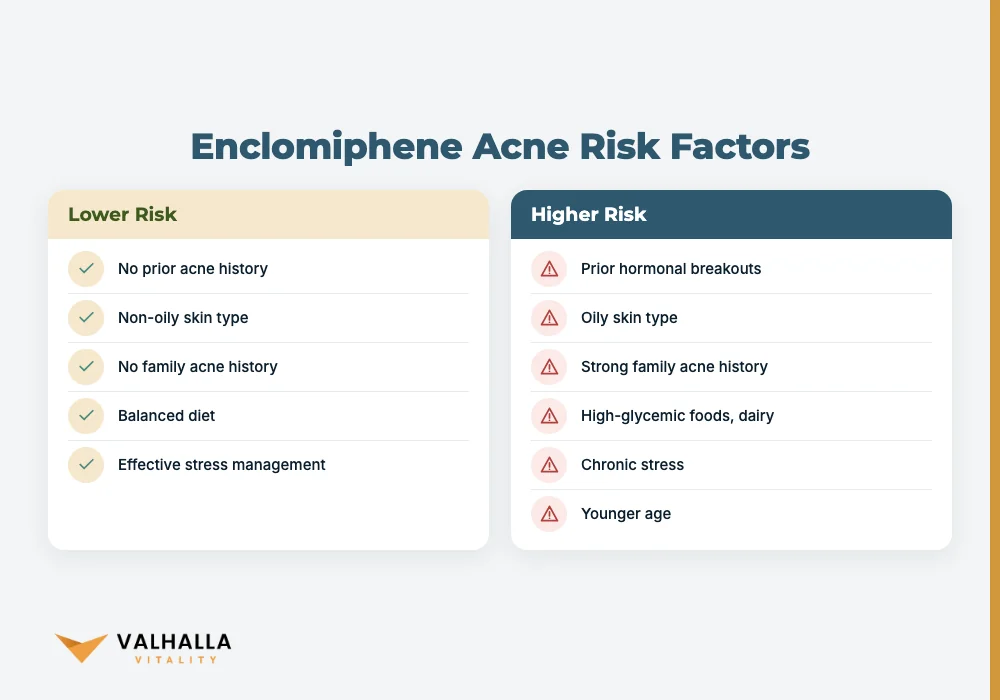
Acne is not universal during enclomiphene therapy. Many men complete a full treatment course without noticeable skin changes. Whether enclomiphene acne develops depends on several individual factors.
Several factors raise the risk:
- Prior acne history. Men who had hormonal breakouts during adolescence carry a higher baseline susceptibility to testosterone-driven acne.
- Oily skin type. Sebaceous glands already producing elevated oil amplify that output when testosterone rises, making follicle blockage more likely.
- Genetics. Androgen sensitivity in the skin is partly inherited. A strong family history of acne predicts higher personal risk.
- Diet. High-glycemic foods and dairy products have been associated with greater acne severity. These dietary factors compound the hormonal load from therapy.
- Stress. Elevated cortisol from chronic stress amplifies the androgen-driven sebum response, making stress management directly relevant to skin outcomes.
- Age. Younger men already in a higher-androgen phase of life face a greater chance of skin response to the testosterone increase from enclomiphene.
- Other medications or supplements. Some compounds carry hormonal or skin-related side effects that may interact with enclomiphene's testosterone-raising action.
Clomid acne side effects follow a closely related pattern. Clomiphene and enclomiphene share structural origins: enclomiphene is the trans-isomer of clomiphene, and both compounds raise testosterone through the same hypothalamic pathway. For a detailed clinical comparison, see comparing clomid and enclomiphene for hormone therapy.
How do you treat acne caused by enclomiphene?
Treating enclomiphene-related breakouts follows the same core logic as any hormonal acne treatment: reduce excess sebum, clear blocked follicles, and control bacterial inflammation.
Managing enclomiphene acne at home
Topical salicylic acid works inside the follicle, dissolving the cellular debris that causes blockage before it turns into an inflamed lesion. Benzoyl peroxide addresses bacterial colonization directly. It also reduces the inflammatory response. Starting with a lower concentration minimizes irritation while the skin adjusts to treatment.
Routine consistency matters more than any single ingredient. Twice-daily gentle cleansing removes excess oil without disrupting the skin barrier, and harsh scrubs or aggressive exfoliation can trigger a sebum rebound that worsens breakouts. All skincare and grooming products used during therapy should be non-comedogenic.
When to involve a provider for enclomiphene acne
Provider guidance is appropriate when breakouts are moderate to severe or when topical care has not produced improvement within a few weeks. At Valhalla Vitality, a licensed provider reviews your complete clinical picture, including any acne or skin history, before deciding whether therapy should continue, be adjusted, or whether additional dermatological treatment is needed.
Can you prevent acne while on enclomiphene therapy?
Preventing enclomiphene acne is more effective than managing it after the fact. These practical steps reduce the likelihood of breakouts from the start.
- Start a basic skincare routine before therapy begins. A gentle non-comedogenic cleanser and moisturizer create a stable baseline before testosterone levels shift.
- Reduce high-glycemic foods and dairy. These dietary changes lower the inflammatory and hormonal load on sebaceous glands, independent of the testosterone increase from therapy.
- Manage stress consistently. Regular exercise, adequate sleep, and structured relaxation lower cortisol, and lower cortisol reduces the amplification of the androgen-driven sebum response.
- Disclose acne history during intake. A licensed provider factors pre-existing skin conditions into the decision about whether therapy is appropriate and what monitoring is needed.
- Act at the first sign of breakouts. Mild blemishes caught early respond well to salicylic acid or low-concentration benzoyl peroxide. Waiting until lesions become inflamed or cystic makes management significantly harder.
Book your consultation
If you have questions about enclomiphene acne or want a licensed provider to review whether this therapy is right for you, Book Your Consultation to get started.
FAQ
Does enclomiphene always cause acne?
No. Many men on enclomiphene therapy report no skin changes at all. Acne is more likely in men with a history of hormonal breakouts, oily skin, or a strong family history of acne, but it is not an inevitable outcome.
Can you continue enclomiphene if you develop acne?
Often yes. Mild to moderate enclomiphene acne can frequently be controlled with topical treatments and lifestyle adjustments. A licensed provider decides whether therapy should continue, be modified, or be paused based on severity and your overall clinical picture.
How is enclomiphene acne different from ordinary hormonal acne?
The mechanism is the same: elevated androgens drive sebaceous glands to overproduce oil. What makes enclomiphene acne specific is the trigger, a therapeutic testosterone increase, and the timing: breakouts appear after therapy begins, not during a natural hormonal shift.
Are clomid acne side effects treated the same as enclomiphene acne?
Yes. Both compounds raise testosterone through the same hypothalamic pathway, so the skin response follows the same sebum-driven mechanism. The same topical treatments and provider-guided hormonal acne treatment approaches apply to both.
When should testosterone acne in men prompt a provider visit?
See a provider if breakouts are severe, involve deep cysts or nodules, or have not improved after two to three weeks of consistent topical care. Persistent cases may require prescription-strength hormonal acne treatment options that go beyond over-the-counter products.
Sources
- Bhasin S et al. (2018). Testosterone Therapy in Men With Hypogonadism: An Endocrine Society Clinical Practice Guideline. The Journal of Clinical Endocrinology and Metabolism. PubMed
- Heidelbaugh JJ et al. (2024). Testosterone Replacement Therapy for Male Hypogonadism. American Family Physician. PubMed
You May Also Like
 Enclomiphene
Enclomiphene vs Nolvadex: PCT and Low Testosterone Guide
Enclomiphene vs nolvadex: compare how each SERM restores testosterone after a cycle, which is safer for PCT, and how a provider decides between them.
October 16, 2026 ETRead more → Enclomiphene
Enclomiphene and Alcohol: What Men on Therapy Need to Know
Enclomiphene and alcohol may reduce therapy effectiveness. Learn how drinking affects testosterone, estrogen, and liver metabolism on therapy.
October 16, 2026 ETRead more → Enclomiphene
Buy Enclomiphene Citrate: Safe & Legal Access Guide
Buy enclomiphene citrate through a licensed provider. Learn how it treats low testosterone, what labs you need, and how to get a prescription online.
October 16, 2026 ETRead more →