
The following blog post is for entertainment and informational purposes only. It is not intended to provide medical advice or diagnosis. Please consult your doctor before making any health-related decisions.
An at home STI test lets you collect your own sample, ship it to a certified lab, and receive results without visiting a clinic. Standard kits screen for chlamydia, gonorrhea, HIV, and hepatitis B and C. The Valhalla Vitality at-home lab test pairs these STI markers with broader sexual health indicators and includes telemedicine follow-up access if your results need review.
What STDs can you test for at home?
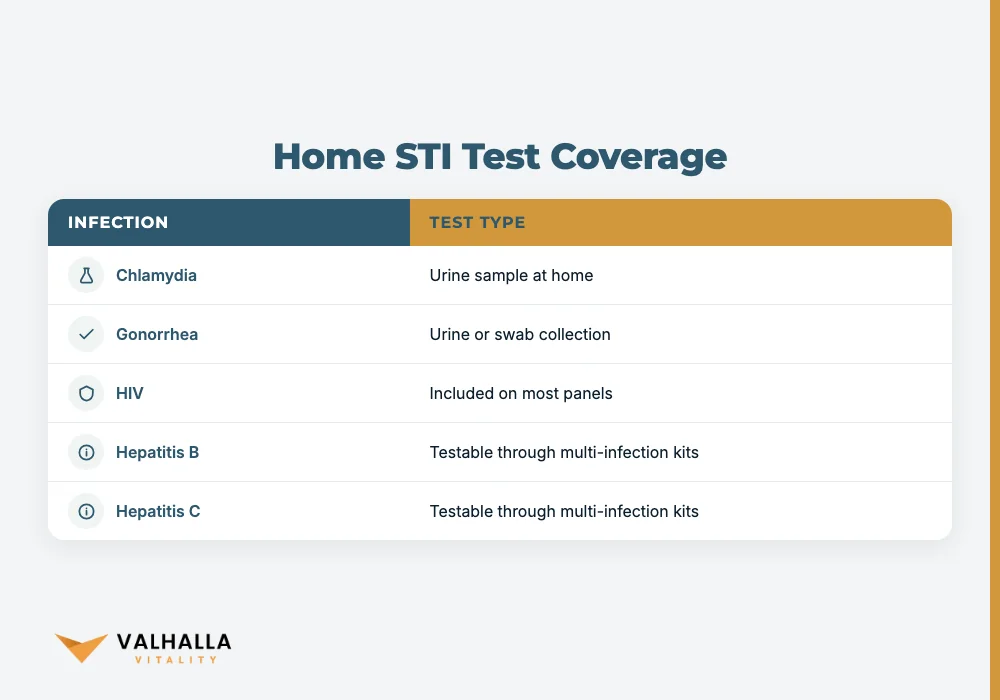
Most home STD test kits cover a consistent core of infections. Standard panels include:
- Chlamydia can be screened from a self-collected urine sample at home.
- Gonorrhea is also testable via urine or swab collection.
- HIV is included on most comprehensive sexual health screening panels.
- Hepatitis B and C are testable through most multi-infection home kits.
A chlamydia test at home ranks among the most requested on any panel. Kit coverage varies, so check what your chosen test includes before ordering.
How do at-home STI test kits work?
The process is straightforward. Order a home STD test kit, collect your sample using the included materials, and mail it back in the prepaid packaging. For urine-based rapid antigen tests, one drop of the self-collected sample goes onto each test strip. No clinic visit required.
Results come back through a secure digital portal. If anything requires follow-up, most platforms connect you with a licensed provider for a telemedicine visit. You can go from sample collection to a treatment plan without leaving home.
How accurate are at-home STI tests?
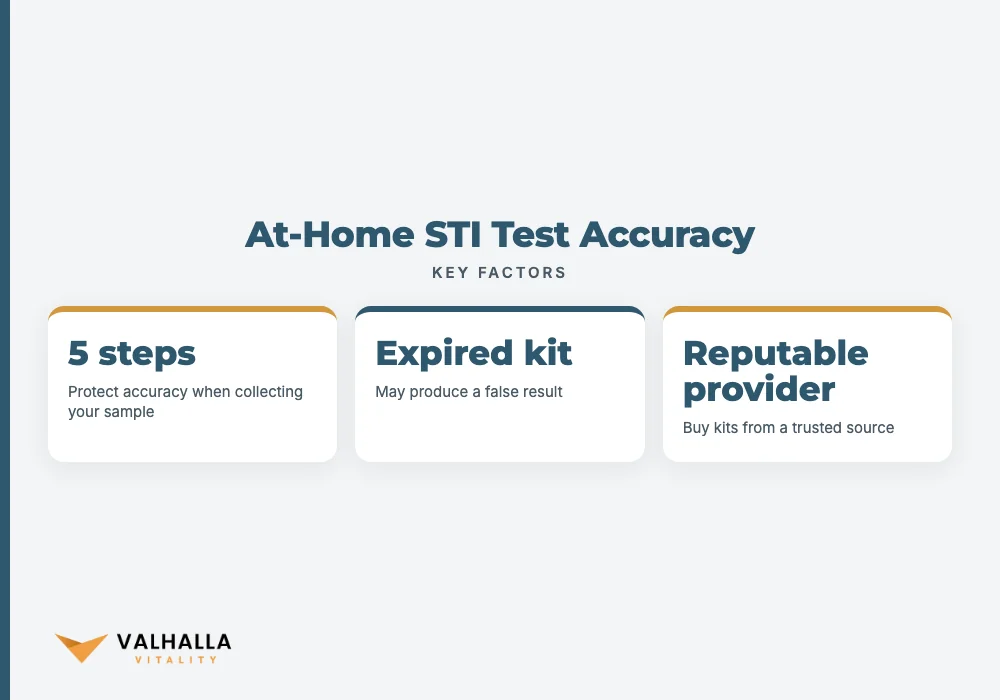
Accuracy depends on two things: kit quality and correct sample collection. Rapid antigen kits are reliable for routine sexual health screening. How you collect the sample, though, determines whether the result reflects reality. A few steps protect accuracy:
- Read the instructions completely before opening any sample materials.
- Collect the sample at the time the kit guidelines specify.
- Avoid touching the test strip or collection area directly.
- Check the expiry date before use. An expired kit may produce a false result.
- Buy from a reputable provider, not an uncertified off-brand product.
Even the most reliable kits return misleading results when samples are mishandled. The instructions exist for a reason.
Are at-home STD tests confidential?
Yes. Discreet STD testing is a core design feature. Your sample goes to a certified lab under your account credentials, and results arrive through a secure portal only you can access. No third party, employer, or insurer sees your results.
Packaging is also handled with privacy in mind. Most providers ship kits in plain, unmarked boxes. For anyone who associates testing with stigma or in-person awkwardness, that matters. Regular screening is a core part of sexual health, and the benefits of a regular sex life depend on staying informed about your status.
How long do at-home STI test results take?
Rapid antigen home test kits deliver rapid STI results in about 15 minutes after sample processing. That is a substantial improvement over traditional lab testing, where patients routinely wait five or more days. Full panel tests sent to a certified lab take longer but typically return results within a few business days via a secure portal.
Speed matters. Fast results mean less uncertainty, and when treatment is needed, it can begin sooner.
Overcoming the stigma around STI testing
Fear or embarrassment keeps many people from getting tested at all. That is worth addressing directly. Regular screening is a standard part of healthcare, not a judgment on behavior. When caught early, most STIs respond to treatment quickly. Avoiding testing allows infections to progress silently and increases the risk of transmission to partners.
A private STD test at home changes the dynamic. There is no waiting room, no awkward conversation, and no one else involved. Home testing exists specifically to remove those barriers.
Tips for getting the most accurate results
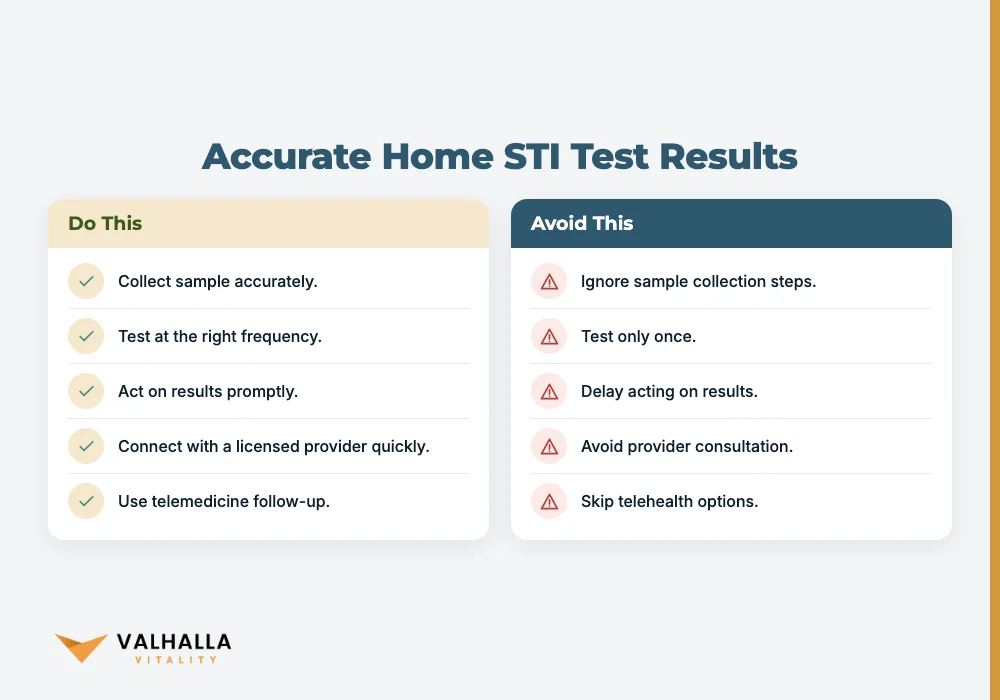
Accurate sample collection is the main variable under your control. Beyond the five-step checklist above, a few practical points help.
Test at the right frequency. Testing once is a snapshot. How often you test depends on your activity level and personal risk factors. A licensed provider can recommend the right screening schedule during a consultation.
Act on results promptly. A negative result gives you clarity. A positive result is not a verdict; treat it as information that points directly to effective care. All infections covered by standard home test panels have effective treatments available.
The critical step is connecting with a licensed provider quickly once you know. For people who want to explore sexual health therapies beyond testing, that conversation is also the right starting point.
Use the telemedicine option. Many providers offer telehealth follow-up access alongside their kits. If your results raise questions, a provider can walk you through next steps without an in-person appointment.
What to do after your results come in
A negative result means no infection was detected at the time of testing. Continue screening at an interval that fits your situation.
A positive result means treatment is available and effective. You should not delay acting on it. All infections included in these panels respond to treatment.
At Valhalla Vitality, at-home lab testing includes telemedicine consultations for guidance on next steps. Availability varies by state. A licensed provider determines the appropriate course of care after reviewing your labs.
Take the next step in your sexual health screening
If you have questions about at-home testing options or want guidance after receiving your results, Book Your Consultation with a licensed Valhalla Vitality provider.
FAQ
How accurate are at-home STI tests?
Rapid antigen kits are reliable for routine sexual health screening when samples are collected correctly. Following the kit instructions, checking the expiry date, and avoiding contamination are the main accuracy factors. Positive results are typically confirmed through a clinical follow-up.
What STDs can you test for at home?
Standard home STD test kits typically screen for chlamydia, gonorrhea, HIV, and hepatitis B and C. A chlamydia test at home ranks among the most requested on any panel. Kit coverage varies, so review what your chosen kit includes before ordering.
How long do at-home STI test results take?
Rapid antigen kits return results in about 15 minutes after sample processing. Traditional lab-based testing typically takes five or more days. Full panels sent to a certified lab return results within a few business days through a secure digital portal.
Are at-home STD tests really private?
Discreet STD testing is built into the design: samples go to a certified lab under your credentials, results arrive through a secure portal, and kits ship in unmarked packaging. Your results are not routed through an employer, insurer, or any third party.
What should I do if my results come back positive?
Connect with a licensed provider as soon as possible. All infections covered by these panels have effective treatments available. A provider will review your results and determine the appropriate course of care.
You May Also Like
 Featured
What Are Endorphins? Benefits, Signs, and How to Boost Them
What are endorphins? Learn how these brain chemicals affect pain relief, mood, and energy, plus signs of low endorphins and how to boost them.
October 25, 2026 ETRead more → Featured
Tirzepatide vs Semaglutide: The Complete Comparison
Tirzepatide vs semaglutide: compare mechanisms, effectiveness, side effects, and what to discuss with a licensed provider before starting either.
October 24, 2026 ETRead more → Featured
Microglia Function: How Your Brain's Immune Cells Work
Microglia function as the brain's primary immune defense. Learn how these cells clear debris, regulate inflammation, and what happens when they malfunction.
October 24, 2026 ETRead more →