
The following blog post is for entertainment and informational purposes only. It is not intended to provide medical advice or diagnosis. Please consult your doctor before making any health-related decisions.
Zinc and quercetin work together in a way that addresses one of the core limitations of zinc supplementation: absorption into cells. Zinc drives dozens of immune-related biological processes, but it cannot cross the cell membrane efficiently without a transport molecule. Quercetin may act as that transporter, functioning as a zinc ionophore that carries zinc ions into the intracellular environment where they have the most impact. For anyone exploring targeted nutritional add-ons for immune resilience, understanding both compounds and the forms that actually absorb is the practical starting point.
What zinc does in the body and why form matters
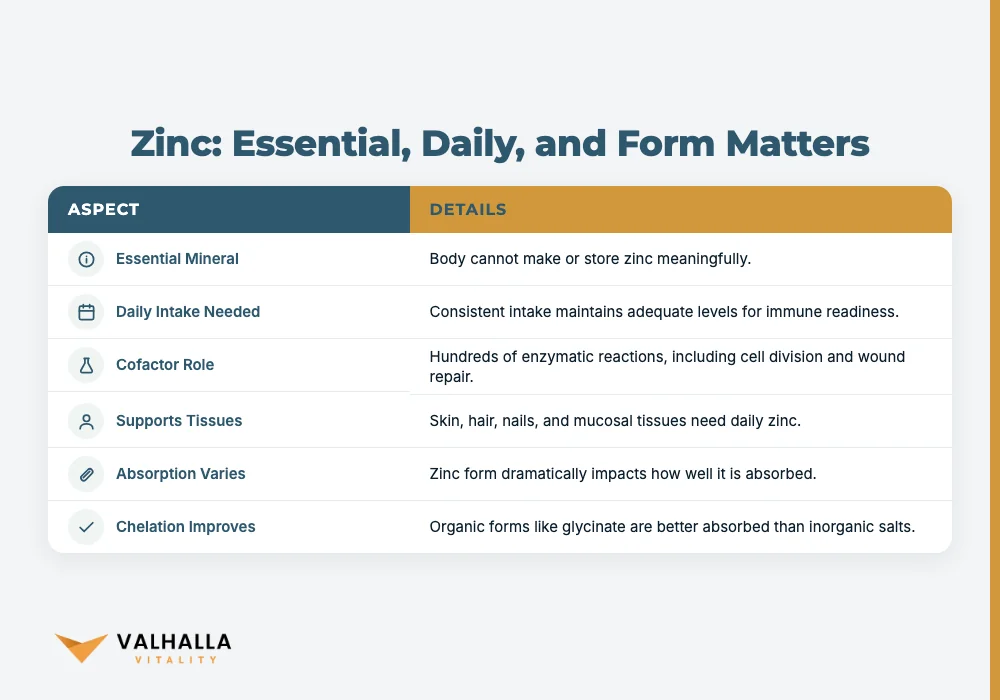
Zinc is an essential trace mineral. The body cannot make it and cannot store it in meaningful reserves, which means consistent daily intake is the only way to maintain adequate levels. It functions as a cofactor in hundreds of enzymatic reactions, including those regulating protein synthesis, cell division, wound repair, and inflammatory signaling.
Skin, hair, nails, and mucosal tissues all draw on a daily zinc supply. Because the body holds no zinc reserves, even brief periods of inadequate intake can affect immune readiness before obvious deficiency symptoms appear.
The practical issue is that zinc absorption varies dramatically by form. Zinc as a free ion competes with calcium, iron, and magnesium for shared intestinal uptake transporters. A 2024 narrative review in Nutrients comparing multiple zinc forms in humans found that chelated amino acid forms consistently outperformed inorganic salts on bioavailability measures (Devarshi et al., 2024).
Zinc forms compared by bioavailability
| Zinc form | Relative bioavailability | Notes |
|---|---|---|
| Zinc oxide | Low | Inexpensive; large particle size limits intestinal uptake |
| Zinc sulfate | Moderate | Common in clinical research; GI side effects at higher intakes |
| Zinc citrate | Good | Chelated; well tolerated; strong absorption data |
| Zinc glycinate | High | Amino acid chelate; among the best absorbed in comparative studies |
| Zinc picolinate | Good | Chelated; limited head-to-head data against glycinate |
Chelation changes the outcome. Attaching zinc to an organic molecule such as the amino acid glycine allows the mineral to enter intestinal cells via amino acid transport pathways rather than competing directly with calcium and iron for the same uptake channels.
Which form of zinc is best absorbed?
Zinc glycinate and zinc citrate are the two forms with the strongest human absorption data. Of the two, zinc glycinate has an edge: glycine, the amino acid it is chelated to, is transported across the intestinal wall via its own pathway, carrying zinc along and sidestepping much of the mineral competition that limits inorganic forms.
Zinc glycinate benefits extend beyond absorption rates. It is consistently better tolerated at higher intakes than inorganic zinc forms, which frequently cause nausea and GI discomfort. The amino acid transport route also makes it less sensitive to dietary phytates, which bind and block free zinc ions in the gut.
Zinc bioavailability differences between forms have direct clinical consequences. A 2024 Cochrane review of zinc for the common cold found that outcomes varied significantly by zinc form and delivery method, confirming that form selection changes what actually reaches target tissues rather than just what a label states (Nault et al., 2024). A supplement containing a nominal zinc amount in oxide form delivers far less active mineral to the bloodstream than the same dose in a glycinate chelate.
Zinc citrate is a strong alternative with broad clinical data and typically lower cost than glycinate formulations. Both outperform inorganic zinc on zinc absorption measures in comparative research. Neither zinc oxide nor zinc sulfate belongs in a protocol designed around maximizing the ionophore benefit from the zinc and quercetin pairing.
What does quercetin do with zinc?
Quercetin acts as a zinc ionophore. An ionophore is a molecule that binds to an ion and escorts it across the cell membrane's lipid bilayer. Cell membranes are hydrophobic. Water-soluble charged particles like zinc ions cannot pass through them without a carrier, and quercetin provides exactly that, binding zinc and transporting it into the intracellular space where zinc exerts its immune-relevant effects.
The zinc ionophore mechanism is why taking zinc alone may not produce the same outcomes as the full zinc and quercetin combination. Once inside the cell, elevated zinc concentrations may inhibit the RNA-dependent RNA polymerases that RNA viruses use for replication. That mechanism requires zinc to reach the intracellular environment. Without an ionophore, zinc circulates in the bloodstream but does not concentrate at the sites where the antiviral effect operates.
Quercetin also has independent biological activity. It is a flavonoid found in onions, capers, kale, apples, and certain teas, and has been studied for antioxidant and anti-inflammatory properties beyond its ionophore role. The quercetin ionophore function is the specific mechanism that makes quercetin relevant to zinc immune support.
Does quercetin help zinc get into cells?
Yes, that is the proposed mechanism. Quercetin forms a complex with zinc ions and transports them across the cell membrane's lipid bilayer, raising intracellular zinc concentrations above what zinc supplementation alone typically achieves. Without this transporter function, zinc circulates but does not concentrate at the intracellular sites where it inhibits viral replication enzymes. This mechanistic link is why both the zinc form and the quercetin delivery method determine the outcome of a zinc and quercetin protocol.
The intracellular role of zinc connects to how immune cells coordinate responses across different tissue types. The brain's resident immune cells regulate neuroinflammatory signaling through zinc-dependent enzymatic pathways, one illustration of how broadly zinc's intracellular effects extend beyond peripheral immune defenses.
Why quercetin bioavailability makes or breaks the pairing
Standard quercetin capsules have a fundamental absorption problem. The compound is metabolized in the intestinal wall, then cleared again by the liver. Two consecutive clearance steps reduce plasma concentrations substantially. What circulates after a standard quercetin dose is often a fraction of the nominal amount, partially in inactive metabolite forms.
A 2025 systematic review and meta-analysis in Food Chemistry confirmed that delivery method is the primary determinant of plasma quercetin levels across human intervention studies (Liu et al., 2025). Standard powder capsules produced low and inconsistent plasma concentrations.
Microparticle and nanoparticle encapsulation, lipid-based delivery systems, and absorption cofactors all produced substantially higher plasma levels. Same compound, same nominal dose, very different results depending on formulation.
The review also found that quercetin taken with fat-containing food consistently improved plasma levels compared to fasted-state intake, a practical finding for supplement timing (Liu et al., 2025).
For the zinc and quercetin pairing, this matters most. Quercetin cannot function as an ionophore if it does not reach adequate concentrations at the cell membrane. A product that fails the bioavailability hurdle cannot reliably facilitate zinc transport regardless of the milligram count on the label.
Delivery methods that make or break a zinc and quercetin protocol
Understanding quercetin delivery approaches clarifies what to look for in a supplement:
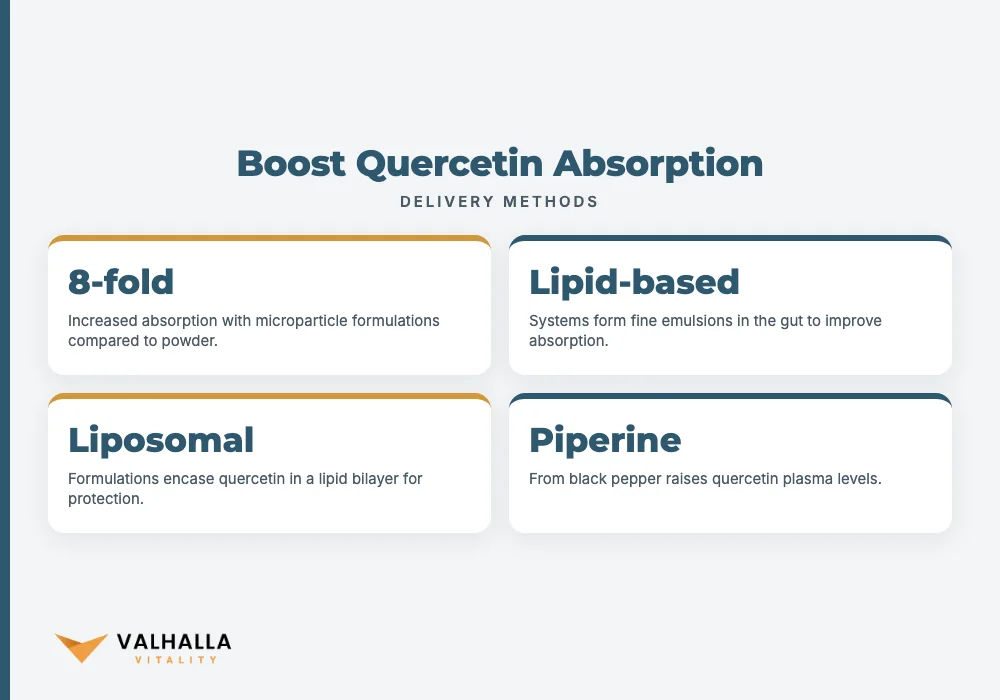
Microparticle encapsulation reduces quercetin particle size to increase the surface area available for intestinal absorption. Published data indicate approximately an eightfold increase in absorption with microparticle formulations compared to standard quercetin powder. This technology has documented human bioavailability improvements and is the most practically accessible option above raw powder.
Lipid-based delivery systems, including self-emulsifying drug delivery systems (SEDDS), form fine emulsions in the gut that improve the absorption of lipophilic compounds like quercetin. This approach has pharmaceutical precedents and is technically more reproducible than liposomal manufacturing.
Liposomal formulations encase quercetin in a lipid bilayer that protects it from gut degradation. True pharmaceutical-grade liposomes require specialized equipment and rigorous quality control. Many supplement products labeled "liposomal" are actually simpler oil-water suspensions, which improve mixing but do not provide structural encapsulation. The variability in outcomes across similarly marketed products likely reflects this formulation gap (Liu et al., 2025).
Absorption cofactors slow quercetin's metabolic clearance in the intestine and liver. Piperine from black pepper has consistent evidence for raising quercetin plasma levels. Some formulations also include bromelain and specific grapefruit-derived compounds that extend the active form's circulation time by slowing hepatic clearance.
Nanoparticle technology produces the finest particle sizes with potentially the greatest absorption benefit. The equipment required for verified pharmaceutical-grade nanoparticles is expensive enough that the claim is difficult to substantiate at most supplement production scales. Products making nanoparticle claims without documented particle size data are worth evaluating carefully.
The 2025 meta-analysis confirmed that any well-designed delivery system, whether microparticle, lipid-based, or cofactor-supported, consistently outperforms standard quercetin powder in human bioavailability studies (Liu et al., 2025).
Zinc absorption and the factors that shape it
Zinc absorption does not occur in isolation. Diet, health status, and gut function all determine how much supplemental zinc reaches the bloodstream.
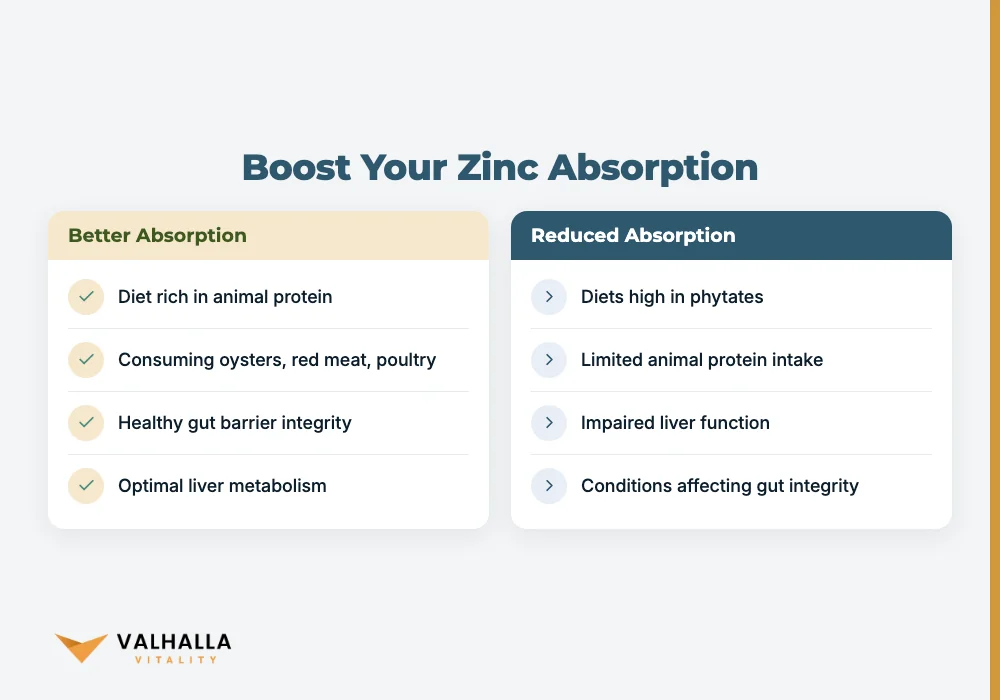
Phytates, found in whole grains, legumes, and seeds, bind zinc and form insoluble complexes that pass through the gut unabsorbed. People whose diets rely heavily on plant-based foods and include limited animal protein consistently show higher rates of zinc insufficiency.
Dietary protein supports zinc absorption because amino acids released during digestion help chelate zinc during transit, mimicking what chelated supplement forms achieve structurally. Oysters contain the highest zinc concentration of any food. Red meat, poultry, and dairy are substantial sources. Plant-based zinc from beans and nuts is meaningful in quantity, but phytate content reduces the fraction absorbed.
Certain health conditions disrupt zinc homeostasis at a systemic level. A 2026 review in Molecular Aspects of Medicine examined zinc bioavailability in alcohol-associated liver disease and identified multiple mechanisms by which impaired liver function reduces zinc status, including lower zinc-binding protein synthesis and impaired intestinal zinc uptake (Feng et al., 2026).
The broader implication extends beyond liver disease: any condition affecting gut barrier integrity or liver metabolism can reduce how well supplemental zinc reaches target tissues.
This connects directly to quercetin. Both compounds undergo substantial liver metabolism. When hepatic function is reduced, both face faster clearance, limiting the effectiveness of a zinc and quercetin protocol regardless of dose. Addressing upstream organ function adds practical value before optimizing supplement selection.
Those considering comprehensive organ support as part of a broader supplement regimen may find detox and organ support options relevant to this context.
Age is another variable. Research consistently shows that older adults absorb zinc less efficiently than younger populations, partly due to lower gastric acid output and age-related changes in intestinal transport function. Gastric acid helps release zinc from food matrices; reduced acid output, common in adults over 50 and among long-term proton pump inhibitor users, can meaningfully affect dietary zinc absorption. Baseline testing provides useful context because the same supplement form may produce different serum outcomes at different life stages.
How much zinc should you take with quercetin?
A licensed provider determines the appropriate intake after reviewing lab results. Individual zinc needs vary too much for a reliable universal number to exist.
Baseline serum zinc levels, dietary patterns, age, and health status all affect how much supplemental zinc is needed to shift zinc status meaningfully. Taking more than is required does not add benefit.
Excess zinc sustained over time interferes with copper absorption, since both minerals share intestinal uptake pathways. Secondary copper deficiency has its own consequences for immune function and cardiovascular health. Monitoring both zinc and copper status is a reason to work with a provider rather than estimate from population averages.
Zinc's effect on copper status deserves particular attention in any longer-term zinc and quercetin protocol. Sustained high zinc intake can reduce serum copper levels significantly over months. A provider who tracks both can identify this imbalance early.
A 2024 Cochrane review on zinc for the common cold confirmed that optimal intake levels remain an area of active research, with significant variability across studies in form, dose, and clinical context (Nault et al., 2024). The evidence supports using zinc for immune purposes, but not at any arbitrarily selected amount.
The same complexity applies to quercetin. Two products at identical label quantities may produce very different plasma concentrations depending on delivery form. "How much" is partly a formulation question. A provider reviewing specific products alongside individual lab data can give more targeted guidance than general recommendations.
What is the best zinc supplement for immune support?
Zinc glycinate or zinc citrate, paired with a quercetin product that specifies a genuine delivery mechanism, is what the evidence points toward for zinc immune support.
For the zinc component, chelated amino acid forms have the clearest absorption advantage in comparative human studies (Devarshi et al., 2024). Zinc glycinate benefits from the amino acid transport pathway that sidesteps gut mineral competition and is well-tolerated across a range of intakes.
Zinc citrate is a strong alternative with broad clinical data and typically lower cost. Both outperform inorganic zinc forms on zinc bioavailability measures. Neither zinc oxide nor zinc sulfate is well-suited to a zinc and quercetin protocol designed around the ionophore benefit.
For quercetin, formulation is the differentiator. A product listing only "quercetin" without specifying delivery form is most likely raw powder. Microparticle, SEDDS-based, or lipid-assisted formulations with documented human bioavailability data are the options to consider when the goal is reliable plasma concentrations for ionophore activity.
Quality markers to evaluate: third-party testing for potency and purity, explicit identification of the zinc form, and a transparent description of the quercetin delivery technology. Their presence makes efficacy claims verifiable.
Zinc's biological relevance extends well beyond immune function. A 2020 systematic review found correlations between low serum zinc levels and acne severity and examined zinc's role in sebum regulation and skin barrier function (Yee et al., 2020). This reflects how widely zinc demand is distributed across body systems, from keratinocytes to immune cells to metabolic enzymes, reinforcing the value of lab-based assessment before starting supplementation.
The approach at Valhalla Vitality connects supplement guidance with licensed provider oversight, ensuring that form and dose decisions are grounded in individual lab results rather than population averages.
Ready to discuss zinc and quercetin with a provider?
A licensed provider can review your bloodwork and intake to determine whether zinc and quercetin supplementation may be appropriate for you and which forms fit your needs. Book Your Consultation to get started.
FAQ
What does quercetin do with zinc?
Quercetin acts as a zinc ionophore, binding zinc ions and transporting them across the cell membrane into the intracellular environment. This matters because zinc's antiviral effects depend on reaching intracellular targets that free zinc ions cannot easily access on their own. The pairing increases intracellular zinc concentrations where they have the most functional impact.
Which form of zinc is best absorbed?
For those researching the best form of zinc, chelated forms, particularly zinc glycinate and zinc citrate, absorb more efficiently than inorganic salts like zinc oxide or zinc sulfate. Zinc glycinate uses an amino acid transport pathway that largely bypasses the mineral competition limiting inorganic forms. A 2024 comparative review confirmed chelated amino acid forms consistently outperform inorganic zinc in human bioavailability studies.
Does quercetin help zinc get into cells?
Yes. Quercetin forms a complex with zinc ions and facilitates their passage across the cell membrane's lipid bilayer. Without this transporter function, zinc circulates in the bloodstream but does not concentrate sufficiently at intracellular sites to meaningfully inhibit viral replication enzymes. This mechanism is the core reason for pairing the two compounds.
How much zinc should you take with quercetin?
A licensed provider determines the appropriate intake after reviewing lab results, since optimal zinc levels vary by individual baseline, diet, and health status. Taking more zinc than needed can interfere with copper absorption over time. Quercetin dose also depends on delivery form, since bioavailability differs substantially between formulation types.
What is the best zinc supplement for immune support?
Look for a chelated zinc form, zinc glycinate or zinc citrate, paired with a quercetin product that specifies a delivery mechanism such as microparticle encapsulation or a lipid-based system. Standard quercetin powder capsules have low oral bioavailability and may not reliably achieve the ionophore effect. Third-party testing and transparent ingredient sourcing are additional quality markers.
Sources
- Nault D et al. (2024). Zinc for prevention and treatment of the common cold. The Cochrane Database of Systematic Reviews. PubMed
- Liu L et al. (2025). Improving quercetin bioavailability: A systematic review and meta-analysis of human intervention studies. Food Chemistry. PubMed
- Devarshi PP et al. (2024). Comparative Absorption and Bioavailability of Various Chemical Forms of Zinc in Humans: A Narrative Review. Nutrients. PubMed
- Feng Y et al. (2026). Zinc bioavailability in alcohol-associated liver disease: Mechanisms and therapeutic implications. Molecular Aspects of Medicine. PubMed
- Yee BE et al. (2020). Serum zinc levels and efficacy of zinc treatment in acne vulgaris: A systematic review and meta-analysis. Dermatologic Therapy. PubMed
You May Also Like
 Semaglutide
 Sodium vs Semaglutide: Key Differences Explained
Semaglutide sodium vs semaglutide: how these GLP-1 formulations compare in structure, side effects, and what a provider weighs before prescribing.
November 5, 2026 ETRead more →
Wegovy Insurance Coverage: What Plans Actually Cover
Wegovy insurance coverage requires prior authorization and medical criteria. Learn how to qualify, appeal a denial, and what Medicare covers in 2025.
November 5, 2026 ETRead more → Featured
At Home STI Test: How It Works, Accuracy & Privacy
At home STI test kits let you screen for chlamydia, HIV, and more with private, rapid STI results. Learn how to use them and what to do next.
November 5, 2026 ETRead more →