
The following blog post is for entertainment and informational purposes only. It is not intended to provide medical advice or diagnosis. Please consult your doctor before making any health-related decisions.
Wegovy insurance coverage is available through most major commercial plans, but approval is not automatic. Meeting documented medical criteria and clearing prior authorization are both required before the insurer pays. The gap between "covered" and "approved" is where most patients lose weeks. If you're weighing your options for GLP-1 therapy alongside the insurance path, knowing both before your first provider visit will save you significant time.
This guide explains what insurers actually check, how prior authorization works in practice, what to do when Wegovy or Mounjaro is denied, and where Medicare stands for weight loss drugs in 2025.
Does insurance cover Wegovy for weight loss?
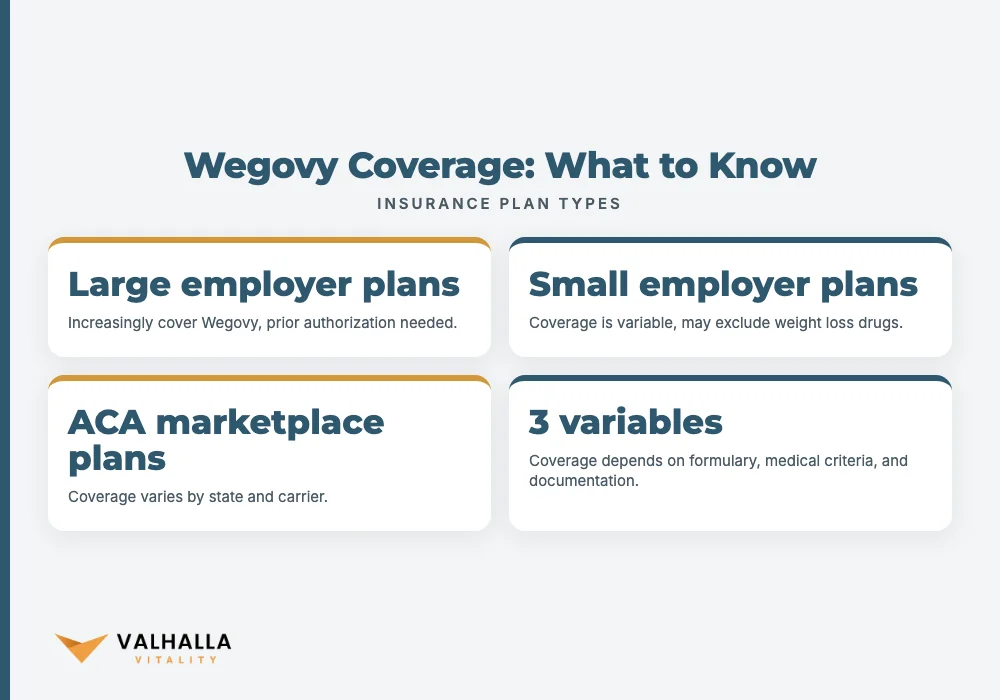
Yes, most major commercial plans can cover Wegovy for weight loss, but the word "can" carries real weight. Coverage depends on three variables: your specific plan's formulary, the medical criteria your insurer has set, and whether your provider can document that you meet them. That last variable is where applications succeed or fail.
Large employers have added GLP-1 medications to their benefits packages at a steady rate in recent years. The clinical evidence shifted the conversation. As GLP-1 drugs demonstrated benefits for cardiovascular risk reduction alongside weight management, insurers began treating them less like lifestyle medications and more like chronic disease management tools. That shift is driving the coverage expansion in employer plans today.
The reluctance of insurers to cover weight loss medications is not new. For many years, obesity was treated as a behavioral condition rather than a medical one, and that framing gave insurers cover to exclude the drug class entirely. That framing has shifted as research on the metabolic roots of obesity has grown and as GLP-1 medications have shown benefits well beyond weight management alone.
Some plans still exclude weight loss drugs entirely. This is a plan design decision, not a universal rule. The first step is a direct call to member services. Ask two specific questions: Is Wegovy on my formulary? What are the prior authorization requirements?
Here is how wegovy insurance coverage breaks down across common plan types:
| Plan type | Typical coverage status | Key condition |
|---|---|---|
| Large employer commercial plan | Increasingly covered | Prior authorization required |
| Small employer commercial plan | Variable | May exclude weight loss drugs |
| ACA marketplace plan | Variable by state and carrier | Prior authorization common |
| Medicaid | State-dependent | Varies widely by state |
| Medicare Part D | Limited, expanding | See Medicare section below |
Ozempic follows a similar pattern, but its dual indication for type 2 diabetes and weight management creates a complication. For patients without a diabetes diagnosis, the documentation path to coverage tends to be more demanding. Mounjaro covered by insurance is increasingly achievable, but like Wegovy, it requires the same prior authorization framework.
One important point: seeing "GLP-1 medication not covered" on a denial letter differs from your plan having a hard formulary exclusion. Many denials stem from missing documentation, not a categorical rejection of the drug class. That distinction matters when you're deciding whether to appeal.
What medical requirements do I need for Wegovy coverage?
Understanding what insurers require for Wegovy insurance coverage approval comes down to documentation. The exact criteria vary by plan, but the core requirements overlap significantly across major insurers.
Most plans require all of the following:
- A formal obesity diagnosis or qualifying weight-related condition documented in your medical record. Conditions that commonly qualify include type 2 diabetes, hypertension, cardiovascular disease, sleep apnea, and dyslipidemia.
- A BMI that meets the insurer's threshold, along with documentation of that BMI from a recent clinical visit. Each insurer sets its own threshold, and many set a lower threshold when the patient also carries at least one weight-related diagnosis.
- Evidence of prior weight loss attempts. Most plans require at least three to six months of documented lifestyle intervention. Dietary counseling records, enrollment in a formal weight management program, and clinical notes from follow-up visits all count. Undocumented attempts do not.
- A letter of medical necessity from your prescribing provider, explaining why Wegovy is the appropriate clinical choice for your specific situation.
A significant number of people who struggle with excess weight already have metabolic syndrome, dyslipidemia, or insulin resistance documented somewhere in their chart. These diagnoses often satisfy coverage criteria without requiring a new workup. Before concluding you don't qualify, ask your provider to review your existing chart documentation against your plan's criteria.
Another overlooked issue: many patients have been told at routine visits that their weight is not a clinical problem. That can mean a chart showing years of weight measurements without a formal diagnosis code for obesity. Getting that diagnosis formally documented is a one-time fix that opens multiple coverage pathways at once.
Working with your primary care provider before submitting anything is the right starting point. They hold the clinical records that determine whether your Wegovy insurance coverage application succeeds or stalls. If you haven't had a preventive care visit recently, scheduling one to establish current baseline documentation is worth doing before initiating the prior authorization process.
What BMI qualifies for GLP-1 medication coverage?
No single BMI threshold determines Wegovy insurance coverage eligibility universally. Each insurer sets its own criteria, and those requirements change with each plan year. This is one of the most common sources of confusion around the BMI requirement weight loss medication process.
The general framework works like this: a minimum BMI threshold applies for standalone coverage consideration, and a lower threshold often applies when the patient also carries a documented weight-related diagnosis. A patient with a relatively lower BMI who has documented hypertension or type 2 diabetes may qualify under different terms than someone with a higher BMI and no documented comorbidities.
The relationship between BMI and weight-related conditions is not always linear. Two patients with the same BMI can have very different metabolic profiles, and insurers increasingly recognize this by allowing providers to build a clinical case that goes beyond a single number. Your provider's full picture of your health, not any one metric, is what determines the strength of your coverage application.
The clinical threshold matters less than the documentation. If your most recent recorded BMI in your chart does not reflect your current status, that discrepancy can derail an application before it starts. Update your clinical records before submitting a prior authorization request, not after a denial.
A licensed provider determines whether a therapy is appropriate after reviewing your intake. That determination, not your own estimate, is what gets submitted to the insurer.
GLP-1 drug prior authorization: how the process actually works
Before Wegovy insurance coverage kicks in, nearly every insurer requires a prior authorization review. The process exists because these medications carry significant cost, and insurers want clinical confirmation before agreeing to pay.
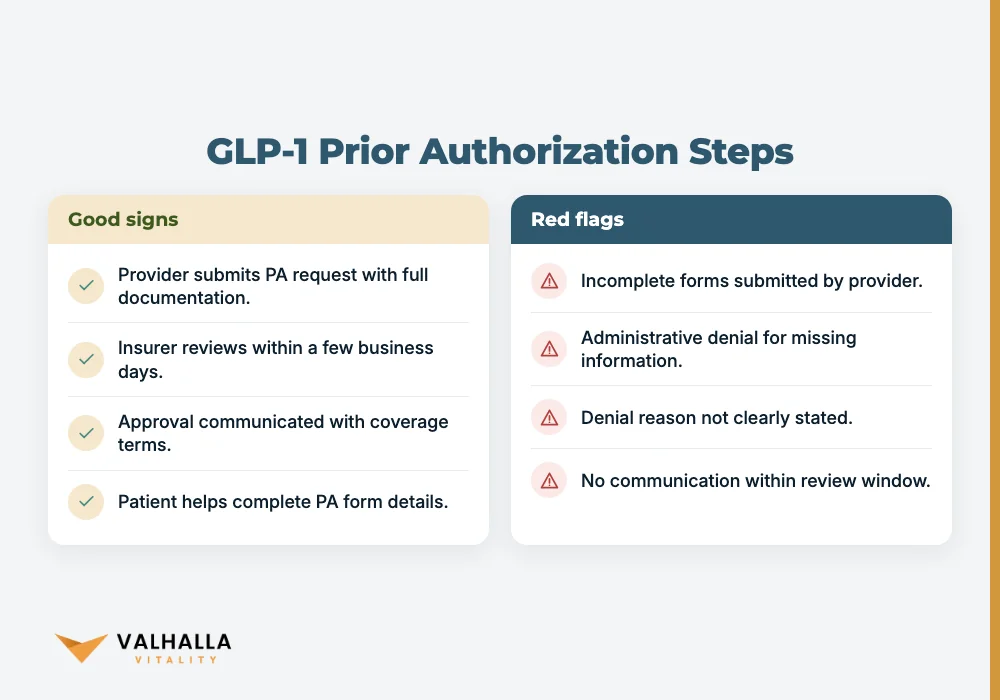
GLP-1 drug prior authorization typically unfolds in four steps:
- Your provider submits the PA request to your insurer through an online portal or fax. The submission includes diagnosis codes, recent lab results, clinical notes, and documentation of prior weight loss attempts.
- The insurer reviews the submission. Standard review timelines are typically a few business days. Urgent reviews, appropriate when treatment delay creates clinical risk, usually move faster.
- Approval or denial is communicated to both your provider and you. Approved requests come with coverage terms and effective dates. Denials come with a specific reason code.
- If denied, the appeal window opens. The denial letter must state why coverage was refused, and that reason determines your next move.
The paperwork is where this process most often breaks down. Prior authorization forms are genuinely detailed, and many providers do not have the bandwidth to complete them promptly without patient involvement. A practical approach: ask your provider's office to initiate the PA and hand you a copy of the form. Fill in your demographic information, insurance details, and your documented weight loss history. Then schedule a follow-up appointment to complete the clinical sections together.
This shared approach speeds submission and reduces the risk of an administrative denial for missing information. Incomplete forms are a leading cause of denial. They are entirely avoidable.
If you don't hear back within the standard review window, follow up with both your provider's office and your insurer directly. PA requests occasionally get stuck in the queue. A short phone call can move a stalled request days faster than waiting.
One more reality: prior authorization can feel deliberately cumbersome. The burden on providers is real. If your primary care provider is not prepared to work through the GLP-1 drug prior authorization process, a provider who handles these requests regularly may be a better fit for this step.
How do I appeal an insurance denial for Mounjaro?
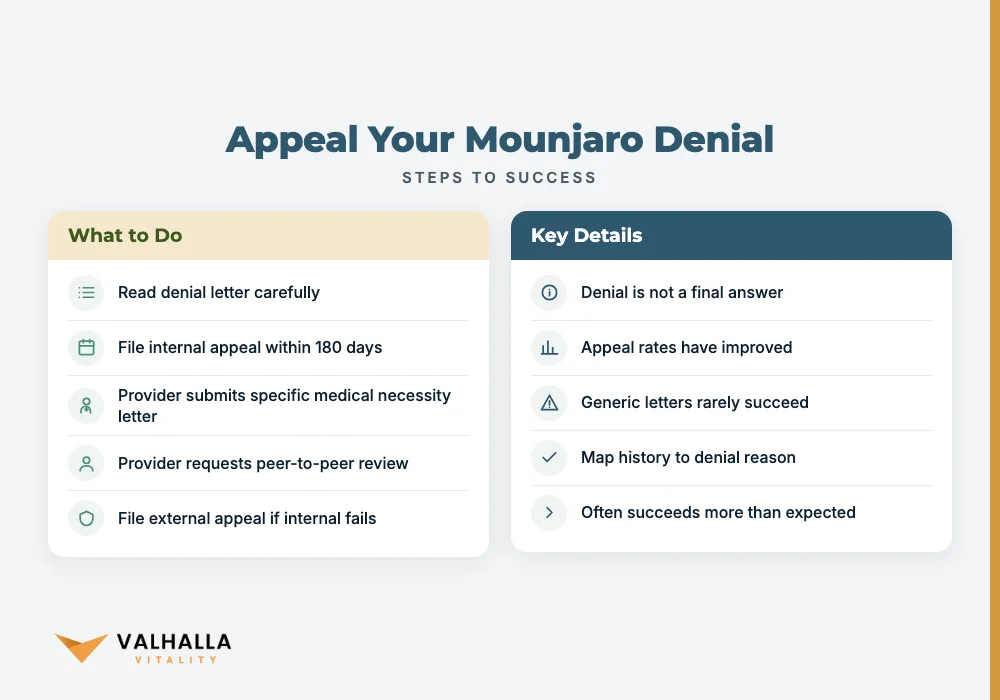
A denial for Wegovy insurance coverage is not a final answer. It is frequently the beginning of a longer negotiation. Semaglutide insurance appeal rates have improved as clinical evidence for GLP-1 medications has accumulated. The same applies to appeals for Mounjaro. The process requires documentation and follow-through, but it succeeds more often than patients expect.
Step 1: Read the denial letter carefully. Every denial must include a specific reason. Common reasons include missing documentation of a qualifying diagnosis, the absence of documented lifestyle interventions, the medication not meeting first-line criteria under the plan, or a step therapy requirement that wasn't cleared first.
Step 2: File a formal internal appeal. Most plans allow at least one internal appeal. You typically have up to 180 days from the denial date to file. Your provider needs to submit a letter of medical necessity alongside updated clinical documentation.
Step 3: Make the letter specific. A generic letter of medical necessity rarely succeeds at appeal. The letter needs to map your clinical history directly to the insurer's stated denial reason. If the insurer cited missing documentation of lifestyle interventions, the appeal needs that documentation explicitly, with dates and provider signatures.
Step 4: Request a peer-to-peer review. Your provider can request a direct conversation with the insurer's medical director. This clinical review often leads to approval when the original denial was based on a documentation gap rather than a true clinical exclusion.
Step 5: File an external appeal if the internal fails. The Affordable Care Act gives you the right to request an independent external review when an internal appeal is denied. An independent reviewer with no ties to your insurer makes the final determination. This option is underused, but it carries real weight.
Most patients who receive a denial never appeal. That is a costly mistake. Insurers expect appeals. The first denial is often an administrative checkpoint, not a clinical judgment. Many initial denials flip to approvals at the first internal appeal when the supporting paperwork is complete and addresses the specific denial reason.
One more option: patient advocacy organizations and some larger healthcare practices have staff dedicated to insurance appeals for high-cost medications. If the appeals process feels overwhelming, ask your provider's office whether they have a dedicated insurance navigator.
Ozempic insurance denied for administrative reasons almost always deserves a formal appeal. The denial reason tells you exactly what to fix. For a comparison of GLP-1 options and how coverage pathways differ between them, see how GLP-1 (S) and GLP-1 (T) differ as treatment options.
Does Medicare cover weight loss drugs in 2025?
Medicare's coverage of weight loss medications has long been limited. Traditional Medicare Part D excluded medications prescribed solely for weight loss for many years. That exclusion is a known gap affecting many Medicare beneficiaries managing obesity.
The clinical picture shifted as GLP-1 medications accumulated evidence for cardiovascular risk reduction beyond weight management. When a GLP-1 drug is prescribed primarily for a cardiovascular indication, the Part D coverage pathway changes. The specific indication documented in your clinical record plays a direct role in whether Medicare will pay.
Medicare Advantage plans work differently from traditional Medicare. These are private plans approved by Medicare, and some include weight management benefits as part of their supplemental offerings. What's available varies by plan and changes annually. The difference in coverage between traditional Medicare and Medicare Advantage options in the same area can be significant.
For Medicare patients, the practical advice mirrors commercial insurance: contact your plan directly, check the current year's formulary, and discuss prescribing documentation options with your provider. CMS rules around GLP-1 coverage have been changing, and what applied to your plan last year may not apply to the current benefit year.
Medicaid is a separate system. Some state Medicaid programs cover GLP-1 medications for qualifying patients. Availability varies by state.
When Wegovy insurance coverage isn't available: other options
Insurance gaps and coverage denials don't have to mean paying full price indefinitely. Several options exist for managing weight loss prescription cost when insurance falls short.
Manufacturer patient assistance programs. Novo Nordisk, which makes Wegovy, operates NovoCare. The program provides access at reduced or no cost for qualifying patients based on income and insurance status. This is worth checking before concluding that branded coverage is out of reach.
Manufacturer savings cards. For commercially insured patients who don't qualify for the full assistance program, manufacturer savings cards can reduce out-of-pocket costs. These are especially useful during the prior authorization window or when the plan places Wegovy on a high-cost formulary tier.
Clinical trials. New GLP-1 agonists are in active development. Retatrutide, a next-generation candidate, falls within the same drug class as existing GLP-1 medications. Participation in a qualifying trial may provide access at no cost during the trial period. Your provider or a clinical trial registry can identify options in your area.
Compounded GLP-1 options. Valhalla Vitality operates as a direct-pay telehealth weight management service using US-based compounding pharmacies, offering a path to GLP-1 access that bypasses the branded insurance process entirely. A licensed provider determines whether a therapy is appropriate after reviewing your intake. Availability varies by state. For a fuller look at what GLP-1 medication costs without insurance coverage, including how compounded options compare, that resource addresses the cost questions directly.
Ready to understand your options
Knowing whether Wegovy insurance coverage applies to your situation starts with a provider review of your clinical history. Book Your Consultation to connect with a licensed provider who can walk through your coverage options and help you decide on next steps.
FAQ
Does insurance cover Wegovy for weight loss?
Most major commercial plans can cover Wegovy for weight loss with prior authorization and documented medical criteria. Plans typically require a qualifying diagnosis such as obesity with a comorbidity, evidence of prior weight loss attempts, and a letter of medical necessity from your provider. Coverage availability varies by employer and continues to expand each plan year.
What BMI qualifies for GLP-1 medication coverage?
Insurers each set their own BMI thresholds for GLP-1 medication coverage, and the specific requirements vary by plan and change annually. Many plans set a lower threshold when the patient also has a documented weight-related health condition like hypertension or type 2 diabetes. A licensed provider determines whether your clinical metrics align with your plan's specific requirements after reviewing your intake.
How do I appeal an insurance denial for Mounjaro?
Read the denial letter to identify the specific reason coverage was refused, then file a formal internal appeal within your plan's deadline, typically 180 days from the denial date. Have your provider submit a letter of medical necessity that directly addresses the stated denial reason with supporting clinical documentation. If the internal appeal fails, federal law entitles you to request an independent external review.
Does Medicare cover weight loss drugs in 2025?
Traditional Medicare Part D has historically excluded medications prescribed solely for weight loss. Coverage may apply when a GLP-1 medication is prescribed for a cardiovascular indication. Medicare Advantage plans vary, and some include weight management benefits. Check your specific plan's current formulary, as CMS rules have been changing.
What is Ozempic insurance denied most often for?
Ozempic insurance denials most often cite missing documentation of a qualifying diagnosis, absence of documented prior weight loss attempts, or a step therapy requirement that wasn't completed first. Submitting a detailed letter of medical necessity that directly addresses the stated denial reason significantly improves approval rates on appeal.
You May Also Like
 Semaglutide
 Sodium vs Semaglutide: Key Differences Explained
Semaglutide sodium vs semaglutide: how these GLP-1 formulations compare in structure, side effects, and what a provider weighs before prescribing.
November 5, 2026 ETRead more → Featured
At Home STI Test: How It Works, Accuracy & Privacy
At home STI test kits let you screen for chlamydia, HIV, and more with private, rapid STI results. Learn how to use them and what to do next.
November 5, 2026 ETRead more → Rapamycin
 Longevity: Benefits, Side Effects, and Risks
Rapamycin longevity science: mTOR inhibition, healthspan benefits, side effects, and how a licensed provider evaluates whether the therapy fits your biology.
November 5, 2026 ETRead more →