
The following blog post is for entertainment and informational purposes only. It is not intended to provide medical advice or diagnosis. Please consult your doctor before making any health-related decisions.
Endorphins are neuropeptides released by the pituitary gland and hypothalamus that bind to opioid receptors, reducing pain and generating feelings of pleasure and well-being. They are the body's natural painkillers. Understanding what are endorphins and what they do encompasses pain relief, mood regulation, immune function, and potentially long-term brain health. Licensed providers at Valhalla Vitality evaluate this system alongside hormonal markers as part of a comprehensive health intake.
Are endorphins hormones or neurotransmitters?
Endorphins are neuropeptides, a chemical category that overlaps with both hormones and classical neurotransmitters without belonging cleanly to either. Classic hormones travel through the bloodstream to act on distant target tissues. Classic neurotransmitters pass electrical signals across synaptic gaps within the nervous system. Endorphins do both: the pituitary releases them into systemic circulation during stress or exertion, and the brain uses them locally at synaptic junctions to modify pain and mood signals.
The endorphins vs hormones question comes up often because both classifications apply in different contexts. All three subtypes, alpha, beta, and gamma endorphin, originate from a precursor protein called proopiomelanocortin (POMC). The pituitary cleaves POMC into several active molecules. Beta-endorphin carries the strongest analgesic effect and is the subtype most associated with exercise-induced mood changes and pain management research.
All three subtypes bind to mu-opioid receptors, the same receptors targeted by opioid drugs. That shared receptor explains their potency. Unlike synthetic opioids, the body releases endorphins in controlled, self-limiting pulses, which is why natural endorphin release does not produce the dependency cycle associated with exogenous opioids.
What triggers endorphin release in the body?
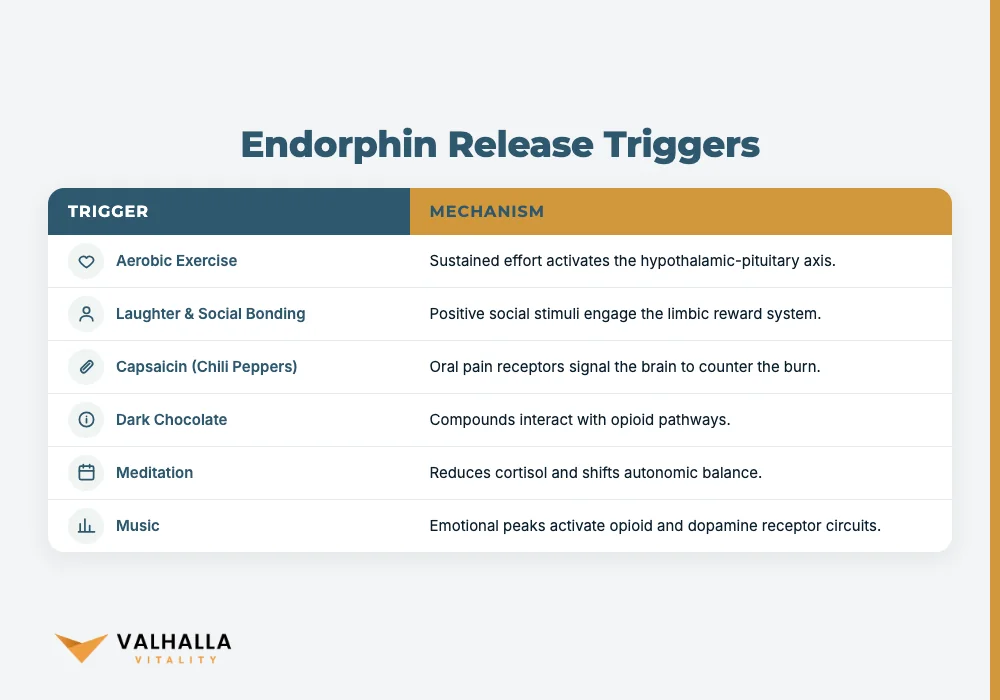
Physical activity, laughter, and certain sensory experiences all reliably prompt natural endorphin release. The table below outlines the main documented triggers and their primary mechanisms:
| Trigger | Mechanism |
|---|---|
| Aerobic exercise | Sustained effort activates the hypothalamic-pituitary axis |
| Laughter and social bonding | Positive social stimuli engage the limbic reward system |
| Capsaicin (chili peppers) | Oral pain receptors signal the brain to counter the burn |
| Dark chocolate | Phenylethylamine and related compounds interact with opioid pathways |
| Meditation and controlled breathing | Reduces cortisol and shifts autonomic balance |
| Music | Emotional peaks activate opioid and dopamine receptor circuits |
| Therapeutic massage | Skin and muscle receptors stimulate endorphin activity |
Asking "what are endorphins doing" during each of these activities points to the same answer: suppressing pain signals and activating the brain's reward circuitry. Exercise is the most studied trigger. Research consistently links sustained aerobic activity to elevated beta-endorphin levels in both blood and cerebrospinal fluid. The runner's high is the most familiar example, but the same response occurs with cycling, swimming, and high-volume resistance training at sufficient intensity.
Are endorphins good for you?
Yes, and endorphin benefits extend well beyond the runner's high. Healthy endorphin function connects to measurable outcomes in pain management, mood, cognitive performance, immune regulation, and brain structure. Each of these outcomes traces back to the same opioid-receptor system that makes endorphins so broadly influential.
Endorphins and pain relief
The best-established endorphin benefit is analgesia. Endorphins bind to opioid receptors in the brain and spinal cord and inhibit the release of substance P, a key neurotransmitter that transmits pain signals.
A 2016 paper in the Hawai'i Journal of Medicine and Public Health noted that supporting the body's endorphin system may reduce reliance on exogenous opioids during postoperative recovery, underscoring the clinical significance of endorphins pain relief strategies (Stephan et al., 2016). This mechanism explains why trained athletes can push through discomfort that stops sedentary people, and why acute stress temporarily dulls pain perception in most people.
Endorphins and mood
Endorphins and mood are directly connected through the brain's reward circuitry. Endorphin activity in the limbic system shapes baseline emotional tone, sensitivity to pleasure, and resilience under stress.
Endorphin activity may also support cognitive performance and reduce emotional stress, likely through its modulating effect on cortisol and stress-hormone pathways. When endorphin levels run persistently low, the common result is emotional flatness, heightened reactivity, and reduced motivation. Regular physical activity remains the most reliable way to interrupt that pattern without a prescription.
Immune function and tissue repair
Endorphins influence more than the nervous system. White blood cells carry opioid receptors, and several lines of research suggest that circulating endorphins may modulate inflammatory signaling and immune response.
Research also points to a role in tissue support and repair, which may partly explain the value of endorphin-promoting activities in exercise recovery and postoperative contexts. Chronic stress and prolonged social isolation, by suppressing endorphin activity, correlate with elevated inflammatory markers and increased susceptibility to illness.
Endorphins and neurogenesis
A 2021 review in Biomolecules explored whether endorphin signaling during exercise may support adult hippocampal neurogenesis, the formation of new neurons in memory-related brain regions (Schoenfeld et al., 2021). The authors identified a biologically plausible mechanism without establishing direct causation.
The question "what are endorphins doing in the exercising brain" takes on more significance here. The hippocampus is central to memory and is one of the few brain regions where adult neurogenesis has been confirmed. If endorphin activity during exercise does support neuron formation there, it could help explain why consistent physical activity produces mood benefits that persist well beyond any individual session.
What are the signs of low endorphins?
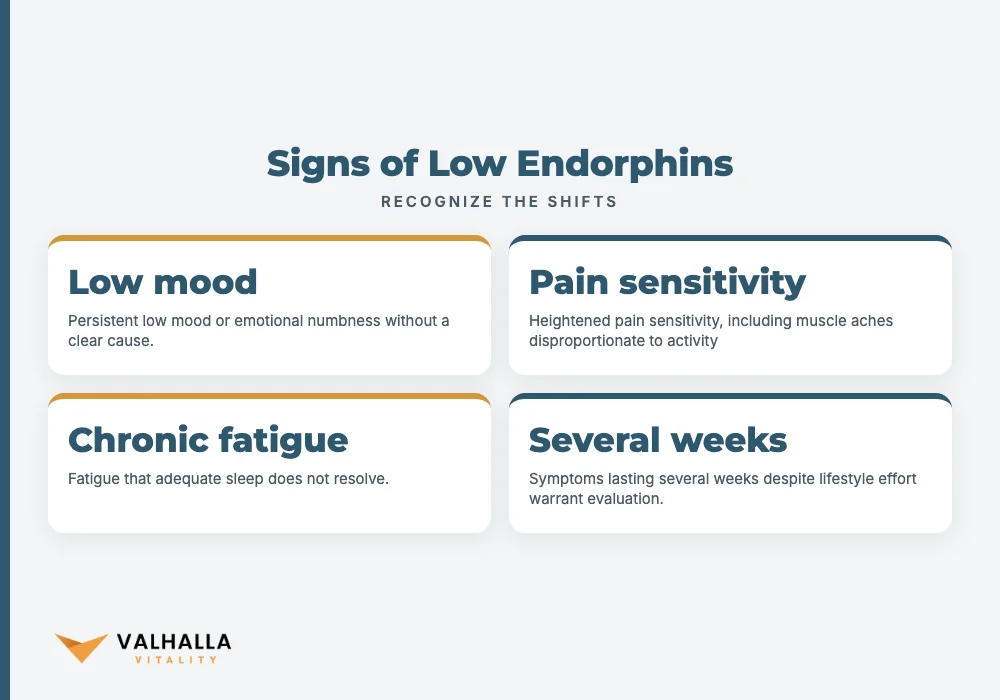
Signs of low endorphins often include persistent low mood, heightened pain sensitivity, chronic fatigue, and disrupted sleep. To recognize them, it helps to ask "what are endorphins responsible for" in a healthy system, pain modulation, mood stability, and sleep quality, and then note what shifts when levels drop. The pattern is diffuse and overlaps with several other conditions.
Common signs include:
- Persistent low mood or emotional numbness without a clear cause
- Heightened pain sensitivity, including muscle aches disproportionate to activity
- Chronic fatigue that adequate sleep doesn't resolve
- Difficulty concentrating and mental fog throughout the day
- Disrupted sleep, especially trouble falling asleep at night
- Increased cravings for sugar, alcohol, or processed foods
- Elevated anxiety or irritability with no identifiable trigger
- Reduced interest in activities that previously brought pleasure
The key distinction is between temporary dips in endorphin activity, which often respond to exercise and lifestyle adjustments within days, and chronic deficiency, which persists despite consistent routine changes. Symptoms lasting several weeks despite lifestyle effort are what warrant a provider evaluation.
These symptoms also occur with thyroid dysfunction, nutritional deficiencies, and hormonal imbalances. The signs and symptoms of low testosterone in men show substantial overlap, since low testosterone and low endorphin function often develop together and reinforce each other.
A licensed provider runs labs and a full intake evaluation to determine which factor is driving the pattern. Attributing these symptoms to endorphin deficiency alone, without clinical evaluation, risks missing the actual cause.
Where endorphin deficiency is confirmed as a contributor, the approach may include structured lifestyle changes, targeted nutritional support, and, in some cases, pharmacological options such as LDN.
How do you increase endorphin levels naturally?
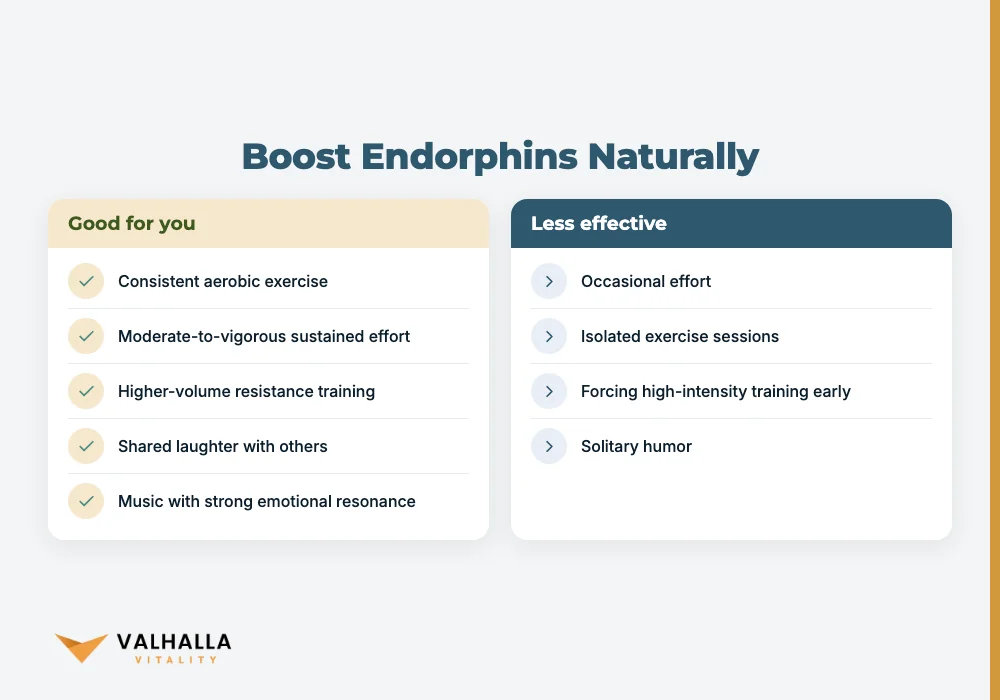
Lifestyle changes are the most accessible and best-supported starting point for boosting endorphins naturally. No prescription is needed for most of the approaches below.
What are endorphins, and what prompts the body to release them?
Each strategy below targets the same underlying biology: prompting the hypothalamic-pituitary axis or the brain's reward circuitry to produce more endorphins. That context shapes how to boost endorphins naturally, since it clarifies why intensity and consistency matter more than occasional effort.
Exercise and movement
Consistent aerobic exercise is the most reliable natural endorphin trigger. Intensity matters more than duration at the low end: 20 to 30 minutes of moderate-to-vigorous sustained effort produces the endorphin response most people notice as mood elevation.
Resistance training also triggers endorphin release, particularly in higher-volume sessions. Both forms produce stronger mood effects when performed consistently across weeks rather than in isolated sessions. For people restarting activity after a long gap, gradual progression works better than forcing high-intensity training from the start. Knowing your healthy body fat range for your age and sex helps set realistic exercise targets and track progress beyond scale weight.
Laughter, music, and social connection
Laughter triggers endorphin release through a well-replicated mechanism. Shared laughter with others produces stronger effects than solitary humor, consistent with the finding that social bonding is itself an endorphin stimulus. Music with strong emotional resonance activates opioid receptor circuits during moments of peak emotional response.
Therapeutic massage is also documented as an endorphin trigger. Physical touch prompts endorphin activity via skin and muscle receptors, which explains its role in pain management and postoperative recovery settings.
Food that may support endorphin release
Dark chocolate contains phenylethylamine and related compounds that interact with opioid pathways and produce brief mood shifts. Capsaicin in chili peppers activates oral pain receptors, prompting an endorphin counter-response. These effects are real but short-lived. They work as modest complements to exercise and sleep, not as substitutes.
Low Dose Naltrexone as a clinical option
When lifestyle changes alone don't shift the baseline, Low Dose Naltrexone (LDN) offers a clinically studied approach to supporting endorphin production.
LDN works by briefly blocking opioid receptors and the TLR-4 receptor, creating a short-term signal that endorphin levels are insufficient. The body responds by upregulating its own production, often generating lasting effects on pain sensitivity, mood, and immune regulation.
This mechanism operates through neurons, glial immune cells in the brain and central nervous system, and circulating white blood cells, all of which influence inflammation and immunity. A licensed provider determines whether LDN is appropriate and sets the protocol after reviewing your labs; availability varies by state. For a detailed breakdown of how LDN works and the conditions it addresses, see the full overview of Low Dose Naltrexone's homeostatic effects.
Ready to talk with a provider?
If the signs of low endorphins sound familiar and you want a licensed clinical review of what's actually driving your symptoms, Book Your Consultation with the Valhalla Vitality team.
FAQ
What are endorphins made of?
Endorphins are peptide chains produced from a precursor protein called proopiomelanocortin (POMC). The pituitary gland cleaves POMC into several active molecules, and beta-endorphin carries the strongest analgesic effect of the group. Their structure allows direct binding to opioid receptors throughout the brain and spinal cord.
Can exercise alone fix low endorphins?
Exercise is the most reliable natural trigger for endorphin release, but it may not resolve every case of chronically low levels. Adequate sleep and stress reduction also contribute, since both sleep deprivation and chronic stress suppress endorphin activity over time. A clinical evaluation helps identify what's limiting endorphin function before settling on a strategy.
Are endorphins the same as serotonin or dopamine?
No. Endorphins, serotonin, and dopamine are distinct neurochemicals with different structures, receptors, and primary functions. Endorphins bind to opioid receptors and are most directly involved in pain relief and physical reward. Serotonin regulates mood, appetite, and sleep; dopamine drives motivation and anticipatory reward. All three interact within the brain's broader mood network, but they are not interchangeable.
How long does an endorphin boost last?
The acute response to exercise or laughter typically lasts between 30 minutes and a few hours. With consistent habits over weeks, some people notice sustained improvements in baseline mood and pain tolerance, which may reflect recalibrated receptor sensitivity rather than a prolonged single-session effect. Individual variation is significant.
What happens when endorphin levels stay chronically low?
Chronic low endorphin levels are associated with persistent pain sensitivity, low mood, fatigue, and disrupted sleep, a cluster sometimes grouped under the term endorphin deficiency syndrome. These symptoms overlap substantially with thyroid and hormonal disorders, which is why a clinical intake and lab review are necessary before attributing them to endorphin deficiency alone.
Sources
- Schoenfeld TJ et al. (2021). A Runner's High for New Neurons? Potential Role for Endorphins in Exercise Effects on Adult Neurogenesis. Biomolecules. PubMed
- Stephan BC et al. (2016). Avoiding Opioids and Their Harmful Side Effects in the Postoperative Patient: Exogenous Opioids, Endogenous Endorphins, Wellness, Mood, and Their Relation to Postoperative Pain. Hawai'i journal of medicine & public health. PubMed
You May Also Like
 Featured
At Home STI Test: How It Works, Accuracy & Privacy
At home STI test kits let you screen for chlamydia, HIV, and more with private, rapid STI results. Learn how to use them and what to do next.
November 5, 2026 ETRead more → Featured
Tirzepatide vs Semaglutide: The Complete Comparison
Tirzepatide vs semaglutide: compare mechanisms, effectiveness, side effects, and what to discuss with a licensed provider before starting either.
October 24, 2026 ETRead more → Featured
Microglia Function: How Your Brain's Immune Cells Work
Microglia function as the brain's primary immune defense. Learn how these cells clear debris, regulate inflammation, and what happens when they malfunction.
October 24, 2026 ETRead more →