
The following blog post is for entertainment and informational purposes only. It is not intended to provide medical advice or diagnosis. Please consult your doctor before making any health-related decisions.
Sermorelin weight loss therapy works by signaling the pituitary gland to release more growth hormone, which then activates fat mobilization, supports lean muscle preservation, and raises resting metabolic rate. It is a synthetic peptide that acts through your own endocrine system rather than introducing growth hormone directly, and its effects on body composition build through natural hormonal pathways. For people whose labs suggest declining growth hormone production, Book Your Consultation to have a licensed provider review your intake and assess whether sermorelin therapy is appropriate.
What is sermorelin?
Sermorelin is a synthetic analog of growth hormone-releasing hormone (GHRH), the signal the hypothalamus sends to the pituitary when it wants more growth hormone produced. Administering sermorelin mimics that signal. The pituitary responds by releasing growth hormone in its normal pulsatile pattern, with the body's own regulatory feedback mechanisms still active.
That is the key difference from synthetic HGH injections. Direct HGH bypasses the pituitary's natural controls. Sermorelin preserves them, which limits the risk of elevating growth hormone far beyond physiological ranges. At Valhalla Vitality, every prescription goes through a licensed provider review and lab evaluation before therapy begins. Availability varies by state.
Does sermorelin help with weight loss?
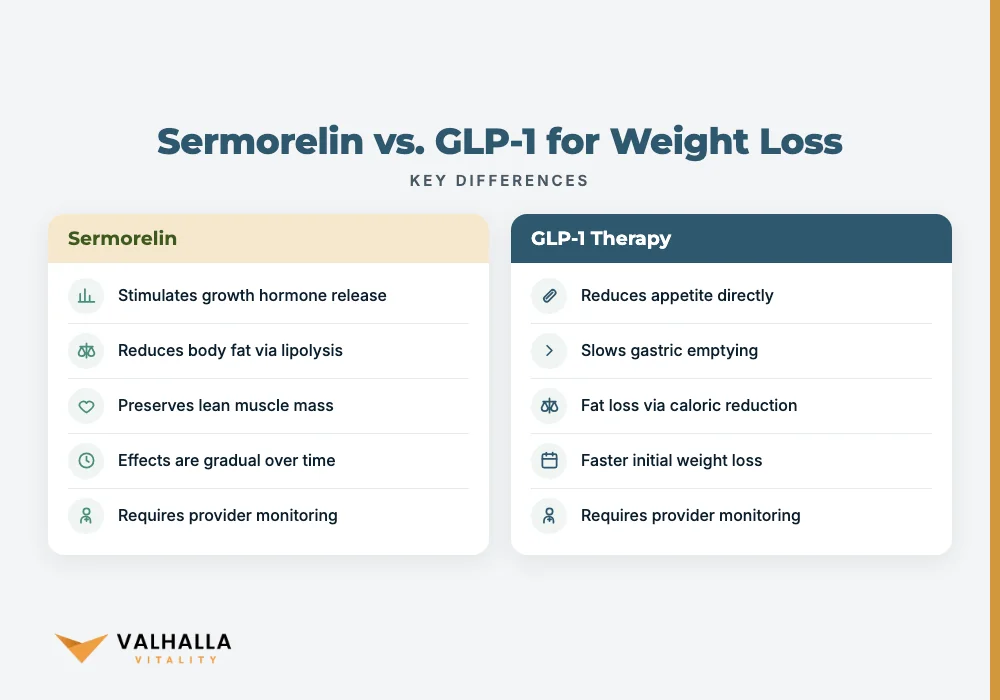
Yes, sermorelin may support weight loss, primarily through body fat reduction and lean muscle preservation rather than through appetite suppression or caloric restriction. When growth hormone levels rise in response to sermorelin, the body activates lipolysis and shifts its fuel preference toward stored fat rather than glucose at rest.
Understanding sermorelin weight loss means understanding how the GH axis affects fat metabolism. The effect is gradual. It is most meaningful for people whose hormone labs show GH levels that have declined below optimal ranges. For those patients, addressing the hormonal deficit can remove a metabolic obstacle that diet and exercise alone cannot fully overcome.
The table below compares sermorelin with GLP-1 therapy, which addresses weight management through a different pathway:
| Feature | Sermorelin | GLP-1 therapy |
|---|---|---|
| Primary mechanism | Stimulates pituitary GH release | Reduces appetite, slows gastric emptying |
| Fat loss pathway | Lipolysis via elevated growth hormone | Caloric reduction via appetite suppression |
| Effect on lean muscle | Preserves and may increase | Variable; depends on protein intake |
| Speed of effect | Gradual over weeks to months | Faster initial weight reduction |
| Appetite suppression | No direct effect | Yes, primary mechanism |
| Provider monitoring required | Yes | Yes |
How sermorelin weight loss works: the growth hormone pathway
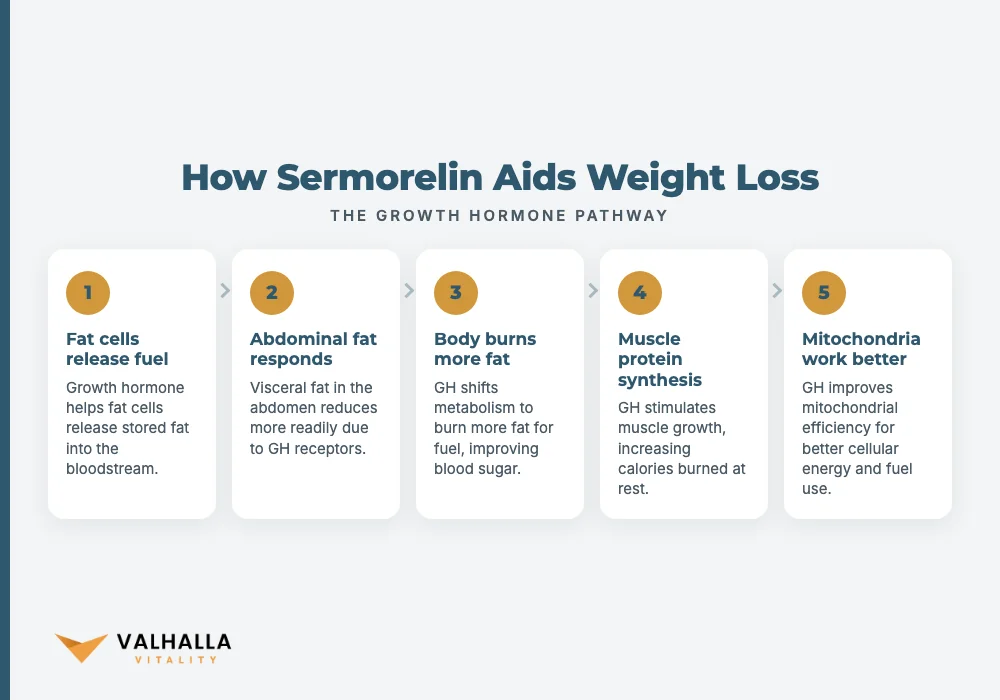
Growth hormone activates hormone-sensitive lipase inside fat cells. That enzyme cleaves stored triglycerides into free fatty acids and glycerol, releasing them into the bloodstream as available fuel. This lipolytic cascade is the core mechanism behind sermorelin weight loss and what makes growth hormone fat loss a physiologically grounded concept rather than a marketing premise.
The abdominal region responds with particular force. Visceral adipose tissue, the fat surrounding internal organs and closely associated with cardiometabolic risk, has a high density of growth hormone receptors. When GH levels rise, those cells release stored fatty acids more readily than subcutaneous fat does. This receptor distribution explains why sermorelin weight loss outcomes tend to reflect noticeable changes in abdominal fat before changes appear elsewhere on the body.
Growth hormone also shifts metabolic fuel preference at rest. Elevated GH promotes fat oxidation over glucose oxidation, improving blood sugar regulation and reducing the likelihood that excess dietary carbohydrates become new fat deposits. Protein metabolism improves alongside this shift: GH stimulates protein synthesis in muscle tissue, raising the metabolic cost of maintaining that muscle. More lean tissue means a higher basal metabolic rate, and that compounds the fat reduction as the body burns more calories at rest over time.
The sermorelin metabolism boost also includes growth hormone's effect on mitochondrial efficiency. The mitochondria produce ATP more effectively under elevated GH, supporting better cellular energy and improved fuel utilization throughout the day.
Does sermorelin burn belly fat?
Yes, sermorelin may support belly fat reduction specifically. Growth hormone receptors are concentrated in visceral adipose tissue, the fat around the abdomen and internal organs, and when GH levels rise following sermorelin administration, those fat cells mobilize stored fatty acids at a higher rate than subcutaneous fat does. This receptor distribution is the physiological basis for sermorelin belly fat reduction.
The degree of change depends on the depth of the original GH deficit, baseline body composition, caloric balance, and lifestyle habits during treatment. Sermorelin does not spot-reduce belly fat in isolation. No prescription does.
What it may do, for the right patient, is remove the hormonal headwind that makes abdominal fat so resistant despite adequate diet and exercise. Waist circumference sometimes changes before total body weight does during sermorelin therapy, since fat tissue is being mobilized while lean tissue is preserved or increased. That shift signals the sermorelin weight loss process is working even when the scale looks flat.
Sermorelin body composition: preserving lean muscle during fat loss
Aggressive fat loss protocols often sacrifice lean tissue alongside fat. Caloric restriction signals the body to catabolize available protein, including muscle, for fuel. That muscle loss reduces basal metabolic rate and makes maintaining a lower weight harder long-term.
Growth hormone's anti-catabolic properties address this directly. Elevated GH promotes protein synthesis throughout the body and suppresses muscle protein breakdown. During a caloric deficit, the body under GH stimulation tends to draw from fat reserves and spare lean tissue rather than catabolize muscle. That anti-catabolic effect means sermorelin weight loss outcomes differ from outcomes produced by simply cutting calories harder.
Sermorelin body composition improvements are therefore often characterized as recomposition rather than pure weight reduction. Total scale weight may not shift as dramatically as it would with an appetite-suppressing medication. The change in body fat percentage and lean-to-fat ratio can be significant over the course of treatment. That distinction matters clinically: two people at the same body weight can have very different metabolic health depending on how much of that weight is lean tissue.
Patients who had already lost lean mass through previous aggressive dieting cycles or through aging-related GH decline may see particular benefit from restoring the anabolic GH signal alongside a structured fat reduction plan.
Sermorelin metabolism boost: energy, exercise, and recovery
Growth hormone improves oxygen utilization during physical activity. That improvement in aerobic efficiency translates to better endurance, more sustained energy during high-intensity intervals, and reduced fatigue. When a person trains more consistently and at higher intensity, weekly caloric expenditure increases. That is a secondary benefit for weight management that compounds over months.
Recovery speed amplifies this further. Sermorelin's support for tissue repair reduces the time between effective workouts. Shorter recovery gaps mean more consistent training, more consistent calorie expenditure, and better long-term outcomes. This practical benefit is an underappreciated part of the sermorelin metabolism boost.
Exercise also amplifies the GH response naturally. Physical activity is one of the strongest natural triggers for growth hormone secretion. Sermorelin therapy supports that existing signal, meaning the metabolic benefits of exercise and sermorelin reinforce each other rather than competing. Sermorelin's effects layer on top of a good exercise program rather than substituting for one.
How long does sermorelin take to work for weight loss?
Most providers set realistic expectations at several months before meaningful changes in body fat percentage become measurable, though improvements in energy and sleep quality often appear within the first weeks. Individual timelines vary, and no provider can responsibly predict the exact pace of body composition change for a given patient.
Growth hormone levels respond to sermorelin relatively quickly. Pituitary output increases within the first weeks of therapy. Changes in body composition are downstream of that hormonal shift: lipolysis, protein synthesis, and mitochondrial adaptation take longer to produce results measurable in waist circumference or lean mass.
Early markers, including improved sleep quality, better daytime energy, and reduced exercise fatigue, often appear sooner and signal that the hormonal response is working as intended. These functional improvements indicate the sermorelin weight loss process is underway, with downstream changes in fat and lean tissue following as the metabolic environment shifts. Consistency determines results more than any single measurement.
Does sermorelin suppress appetite?
No. Sermorelin does not act on appetite-regulating receptors in the hypothalamus or the gut-brain axis. It does not delay gastric emptying, raise satiety hormones, or suppress hunger the way GLP-1 medications do. That is a mechanistic reality.
Some people report eating less naturally while on sermorelin therapy. The likely explanation is indirect: improved sleep reduces appetite dysregulation caused by poor rest, better energy decreases fatigue-driven overeating, and improved metabolic function may reduce the glucose fluctuations that often drive cravings. These secondary effects are plausible but not established by controlled research as primary sermorelin mechanisms.
If appetite suppression is a clinical priority, GLP-1 therapy addresses that pathway directly and has an extensive body of clinical evidence supporting its effects on appetite and weight. The two approaches differ mechanistically and are not interchangeable. A provider can assess which fits the specific obstacles a patient faces.
What is the best sermorelin dosage for fat loss?
There is no universal best dosage. A licensed provider determines the appropriate amount after reviewing hormone labs, specifically IGF-1 as the downstream marker of growth hormone activity, your body composition data, your health history, and your intake form. Dosing is individualized and monitored over time.
The therapeutic goal is to restore growth hormone to an optimal physiological range. Supraphysiologic GH levels increase side-effect risk without proportionally improving sermorelin weight loss outcomes. Getting that calibration right requires baseline labs, follow-up monitoring, and periodic adjustment as the body responds to therapy.
Attempting to source and self-administer sermorelin without provider oversight removes this calibration entirely. The result is therapy that may be dosed too low to produce meaningful change, or high enough to cause adverse effects, with no clinical anchor to identify which situation applies.
Who may be a candidate for sermorelin therapy?
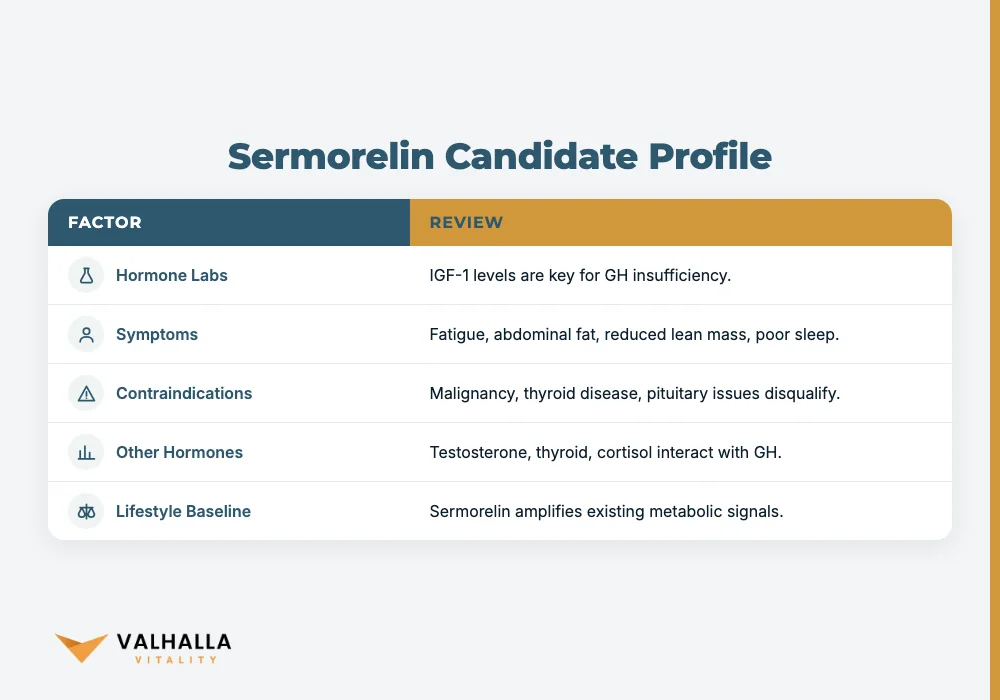
This is where most available content provides limited practical guidance. The candidate profile is specific, and understanding it helps people decide whether a clinical evaluation is worth pursuing rather than committing to a therapy that may not address their actual obstacle.
A provider assessing a patient for sermorelin therapy typically reviews the following:
- Hormone labs: IGF-1 levels and sometimes direct GH stimulation testing. Low or low-normal IGF-1 relative to age-matched reference ranges is the primary indicator of GH insufficiency.
- Symptoms aligned with GH decline: Persistent difficulty reducing abdominal fat despite reasonable diet and exercise, fatigue that does not resolve with rest, reduced lean mass compared to earlier years, disrupted sleep quality, and reduced exercise tolerance form the clinical picture most consistent with declining GH production. These symptoms overlap with other hormonal patterns, which is why comprehensive lab review matters.
- Contraindications: Active malignancy, uncontrolled thyroid disease, intracranial hypertension, and known pituitary pathology disqualify patients. These are identified through intake and labs, not through self-screening.
- Other hormone levels: Testosterone, thyroid hormones, and cortisol all interact with growth hormone function. A comprehensive panel often reveals multiple contributing factors. For men dealing with both low-testosterone symptoms and signs of GH decline, addressing the full hormonal picture matters. The overlap between testosterone and metabolic health in men is worth reviewing before deciding which therapy to pursue first.
- Lifestyle baseline: Sermorelin amplifies metabolic signals that already exist. Patients who have not established a consistent diet and exercise foundation have fewer signals to amplify, and results will reflect that gap.
The clearest candidate for sermorelin weight loss therapy: an adult with lab-confirmed suboptimal GH function whose symptoms align with that deficiency and whose lifestyle habits are already solid enough that a hormonal intervention has something meaningful to support.
Sermorelin therapy compared with other weight management options
Sermorelin occupies a specific niche. It is not a first-line weight loss medication. Its value is conditional on a confirmed GH deficit, and without evidence of GH insufficiency in labs, the metabolic signal from sermorelin has limited traction.
GLP-1 medications produce faster initial weight reduction by significantly reducing appetite and caloric intake. They are most effective when overconsumption is the primary obstacle. Body composition changes from GLP-1 medication differ mechanistically from what sermorelin offers, and the two approaches are sometimes used together under careful provider supervision when different metabolic factors are both at play.
Other weight management options also differ meaningfully from each other and from sermorelin. Tirzepatide, which acts on two incretin hormone receptors simultaneously, produces different clinical outcomes than either GLP-1-only therapy or GH pathway therapy. Each option fits a different patient profile, and a provider, not a comparison chart, is the right decision-maker for an individual case.
Ready to take the next step?
To find out whether your hormone levels may be contributing to difficulty losing body fat, Book Your Consultation with a licensed provider who can review your labs and intake.
FAQ
Does sermorelin cause weight loss directly?
Sermorelin does not burn fat directly. It signals the pituitary to release more growth hormone, which then activates lipolysis, promotes protein synthesis, and raises resting metabolic rate. For people with suboptimal GH levels, those downstream effects may support meaningful body composition changes over time.
How long before sermorelin affects body composition?
Meaningful changes in body fat percentage and lean mass typically take several months to become measurable. Improvements in energy, sleep quality, and exercise recovery often appear earlier and reflect the underlying hormonal response working as intended.
Can sermorelin help with stubborn belly fat?
Growth hormone receptors concentrate in visceral adipose tissue around the abdomen and internal organs. When GH rises in response to sermorelin therapy, those cells mobilize stored fatty acids more readily. The degree of reduction depends on baseline hormone levels, caloric balance, and lifestyle habits alongside therapy.
Is sermorelin therapy safe for weight loss?
Sermorelin has an established safety profile when prescribed and monitored by a licensed provider. Its mechanism preserves natural GH regulatory feedback, limiting the risk of supraphysiologic hormone levels. Provider monitoring includes periodic lab review and dosage adjustment based on response. Availability varies by state.
Does sermorelin work without diet and exercise?
Sermorelin is not a substitute for healthy lifestyle habits. The metabolic signals it creates through elevated growth hormone require a reasonable caloric balance and regular physical activity to produce meaningful body composition change. Therapy works best when it layers on top of a consistent lifestyle foundation.
You May Also Like
 Sermorelin
 Benefits: Sleep, Muscle, Energy, and Skin Health
Sermorelin benefits include improved sleep, lean muscle growth, increased energy, and better skin collagen. Learn how this GHRH peptide therapy works.
November 19, 2026 ETRead more → Tadalafil
 Tablets: How They Work, Uses, and Side Effects
Tadalafil tablets treat erectile dysfunction, BPH, and pulmonary hypertension. Learn how they work, what to expect, and when to talk to a provider.
November 22, 2026 ETRead more → Tadalafil
 Pill: How It Works, Duration, and Daily Use
Tadalafil pill treats erectile dysfunction with up to 36-hour effect. Learn how it works, daily use, side effects, and how it compares to sildenafil.
November 22, 2026 ETRead more →